

When somebody talks about church, you probably think about sermons, stained glass windows or charity outreach. You’re not thinking about hedge fund equity portfolios that are jam-packed with shares of mega-cap tech giants, right?
Well, the Church of Jesus Christ of Latter-day Saints (LDS) has always done things a bit differently.
More Top Stocks Daily: Go behind Wall Street’s hottest headlines with Barchart’s Active Investor newsletter.
That’s part of the reason the church has spent years quietly building one of the most interesting institutional investment portfolios in the country. According to recent SEC filings, LDS investment arm Ensign Peak Advisors now oversees a public stock portfolio worth an estimated $56.6 billion.
That huge number is spread across some 1,700 positions in just about every industry you could think of. But over the past couple of years, Ensign Peak has made some big bets on the expansion of AI and Big Tech. Despite recent trouble with the SEC, those bets have helped establish the LDS Church as one of the globe’s wealthiest religious organizations.
Whether or not you’re a true believer, there’s a lesson or two to be had here for every institutional investor.
The Church’s Portfolio Mirrors Wall Street’s AI Trade
Churches aren’t renowned for being ultra modern or forward-thinking, and that’s what makes Ensign Peak’s holdings so striking. Most Americans probably didn’t even realize that the LDS church had so much money until its financial strategy earned it a little slap on the wrists.
In 2023, the U.S. Securities and Exchange Commission (SEC) looked deeper into Ensign Peak’s holdings and found a couple strategic moves that didn’t sit well. More specifically, Ensign Peak appeared to have obscured the true size of its portfolio through a series of shell companies.
Neither the church nor its investment arm admitted the SEC’s findings, but they did end up agreeing to pay a $5 million fine to put all of that to bed. It didn’t hurt Ensign Peak at all, but it did amplify the public’s interest. The SEC might have had to step in and wag a finger at them, but it definitely looks like the LDS Church really knows what it’s doing here.
After all, Ensign Peak’s portfolio isn’t some conservative portfolio full of Treasuries and dividend utilities. It essentially mirrors the AI-driven tech trades that are dominating Wall Street right now.
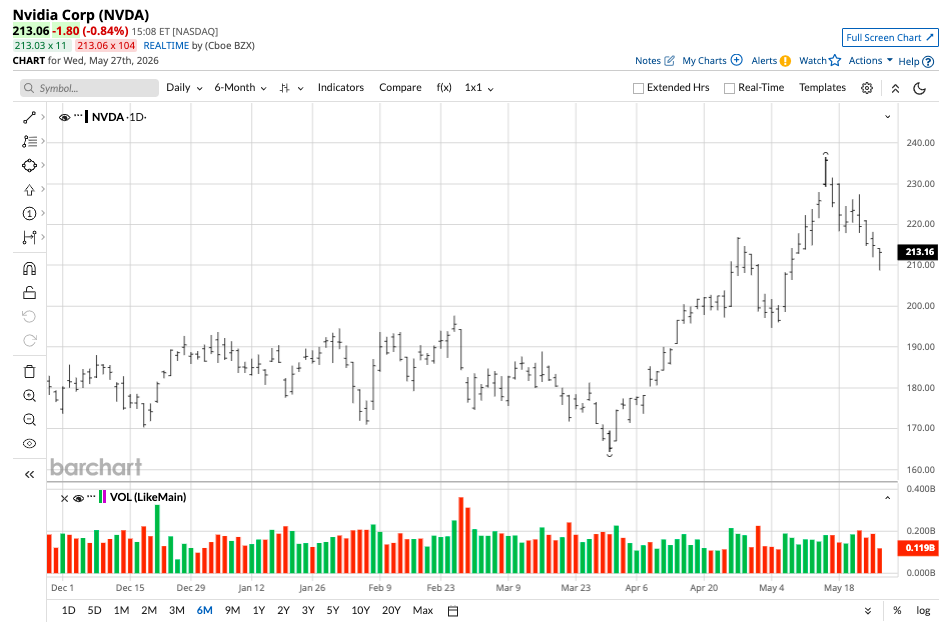
The LDS Church has major holdings in companies such as Nvidia (NVDA), Microsoft (MSFT), Amazon (AMZN), Alphabet (GOOG) (GOOG), Apple (AAPL), Meta Platforms (META) — the list goes on and on. These are the big names pushing advances in AI and driving America’s stock market rally, which means they’re the ones dominating index weightings and earnings growth.
That creates an odd juxtaposition, as you wouldn’t expect a religious institution to want its financial future directly pegged to the continued success of Silicon Valley, semiconductor demand and digital advertising. In fact, Ensign Peak’s moves resemble a genius sovereign wealth fund more than a Christian treasury.
Yet like any other large institutional investor buying up on mega-caps, the church’s portfolio isn’t immune from risk.
Why Is Big Tech a Safe Bet?
Ensign Peak’s investment strategy presents us with a pretty accurate reflection of the broader shift that is (or should be) happening across institutional investing. You see, large-cap tech isn’t about speculative growth anymore. For a lot of institutions, it’s more like the defensive core of the market.
At first glance, that might not look right. We know how volatile tech stocks can be, and the LDS Church has already experienced that lesson first-hand.
After the market turbulence and selloffs caused by President Donald Trump’s global trade tariffs, reports suggest Ensign Peak lost billions on paper. The church’s finances are now so heavily tied to all of the elements that plague large-cap tech companies that any major market wobble poses a risk.
But those wobbles are virtually impossible to sidestep now, and companies like Microsoft and Nvidia seem like the safest possible bet for any institutional investor looking for an easy ride. They generate huge free cash flow and are essentially operating as the backbone of the global digital economy.
Part of this is practical. If you’re a passive investor and you own large index funds at scale, you’re automatically going to get heavily exposed to these companies. But there’s also a conscious and more strategic move to be made here.
Trade-war wobbles aside, it’s fair to say that companies like Microsoft and Nvidia aren’t going anywhere for a couple of decades. That’s why they’re looking attractive compared to risky startups and modern utilities, and it’s why organizations like the LDS Church have invested so heavily.
In this day and age, there’s no such thing as a sure thing. But Ensign Peak’s portfolio has ballooned for a reason, and so it’s worth thinking twice about how they’ve gotten there.
 www.barchart.com
 What Should Investors Take Away from This?
It’s tempting to just dismiss Ensign Peak’s tech-heavy portfolio as an odd curiosity. The fact that the LDS Church has invested heavily in Nvidia stopped you from scrolling because it seems a little funny. But there’s a big takeaway to be had here around the weight markets are placing on Big Tech and how modern capital works.
Like it or not, institutional lines are really blurring here. The economy has started rewarding large-scale capital accumulation, which is why a church owning billions in AI and tech stocks feels both strange and totally logical at the same time.
There’s a lot of market uncertainty going around at the moment, and it’s got a lot of institutions wondering how they’re going to weather the storm. Well, the LDS Church has made a bet that the future belongs to AI infrastructure and the companies that are powering the digital economy of tomorrow.
These companies might not be 100% insulated from supply chain woes in the Strait of Hormuz, but right now they certainly seem to have a more sustainable future than a lot of other big names on Wall Street. That might be a hard pill to swallow for some, but the LDS Church is the richest on the planet for a reason.
On the date of publication, Nash Riggins did not have (either directly or indirectly) positions in any of the securities mentioned in this article. All information and data in this article is solely for informational purposes. For more information please view the Barchart Disclosure Policy here.
More news from Barchart
From ‘Clusters’ to ‘Factories,’ An AI Networking Supercycle Will Lift Marvell Stock Higher American Airlines Stock Pops on New Starlink Contract Jesus Has a Stock Portfolio: NVDA, MSFT, and Other Tech Giants that the Church of Latter-Day Saints Is Betting Big On LUNR Stock Wavers as NASA Selects Rivals Over Intuitive Machines