

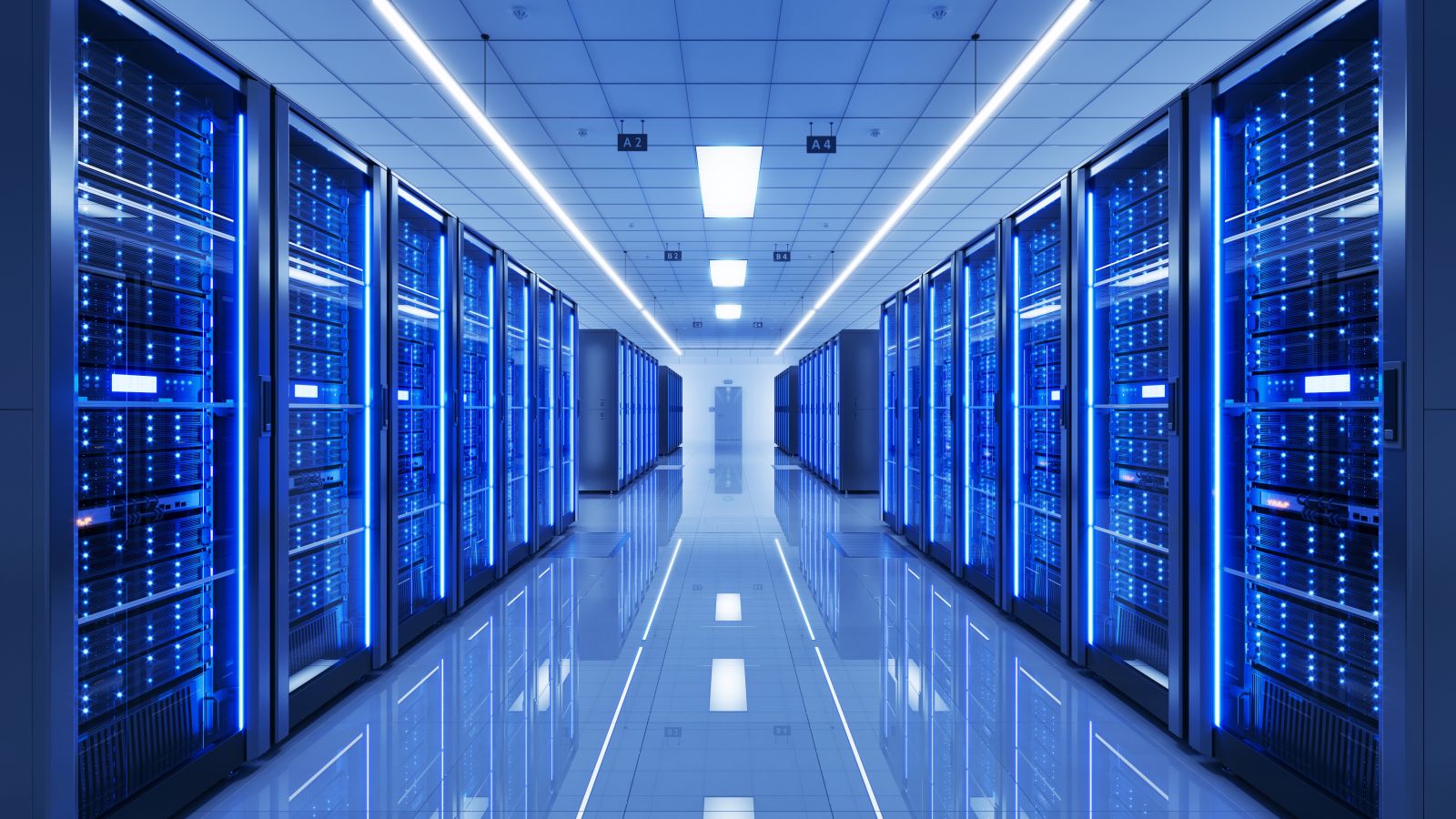
It seems like there’s a new story every week about how artificial intelligence (AI) is singlehandedly draining the U.S. water supply — and nobody can deny the disruptive technology has a big environmental footprint. AI companies are erecting massive server farms that generate huge electricity bills and suck up millions of gallons of water.
As companies like Amazon (AMZN), Alphabet (GOOGL), Meta Platforms (META), and OpenAI race to build up more and more AI infrastructure, eco concerns aren’t misplaced. Data canters do consume a lot of resources, and that’s why Big Tech is receiving some pushback over where these centers are built.
Don’t Miss a Day: From crude oil to coffee, sign up free for Barchart’s best-in-class commodity analysis.
But investors and policymakers are now being forced to rethink the scale of this problem thanks to a viral claim that our insatiable appetite for almonds is hurting the planet even more. Apparently the U.S. almond industry uses exponentially more water than all of the country’s data centers combined. In fact, California’s almond orchards alone consume up to 1.6 trillion gallons of water a year.
This comparison might not be perfect or entirely fair, but it does raise a pretty good point. Whenever we start a debate about resource consumption, the focus is always on whichever industry is the newest or easiest to criticize. Right now, that’s obviously AI. But as always, there’s a bit more to all of this than meets the eye.
Why Data Centers Have Become the Environmental Villain
Like it or not, AI has initiated the largest infrastructure buildout since the early days of the internet. Everybody in Big Tech is pouring billions of dollars into shiny new facilities packed with networking equipment, advanced cooling systems, and loads of GPUs. These facilities need constant access to electricity and water to remain operational.
You see, all the big data centers rely on evaporation cooling systems to prevent their servers from overheating. A single hyperscale facility consumes millions of gallons of water per year, and clusters of facilities are starting to create local infrastructure challenges. Critics argue that all of the concentrated data center development going on is consequently placing too much pressure on local water systems — especially in drought-prone areas of the country.
That’s where almonds enter the discussion.
About 80% of the world’s almonds are grown in California, and this is apparently one of the most water-intensive agricultural industries on the planet. It takes an entire gallon of water to produce just a single almond.
Bring that up to a pound of almonds, and you’re looking at around 400 gallons of water. Then multiply that across California’s major almond acreage, and the industry’s annual water consumption doesn’t take long to reach over 1 trillion gallons.
The almond industry takes up almost 17% of the state’s agricultural water supply, which is more than every household in California combined. Campaigners have been arguing for years that this is unsustainable, but none of those arguments have really penetrated the global news cycle. So, why aren’t almonds receiving the same scrutiny that AI companies are getting hit with?
A lot of it comes down to public perception. Both industries provide economic value, and both consume resources. The difference is that food production seems pretty essential, while data centers feel optional. If you work at Nvidia (NVDA), that might be a matter of perspective. But it’s a difficult argument to win.
Nothing About This Comparison Is Fair
Even if you’ve already converted to almond milk, you’ve got to concede what all of these big data centers achieve.
They’re becoming more and more important in supporting healthcare systems, financial markets, cloud computing, cybersecurity networks and everything in between. And even though data centers consume a significant amount of resources, they’re still not even close to the largest water users in the U.S. economy.
From an investment point of view, that’s an important distinction because these narratives tend to influence regulation. Water consumption alone doesn’t tell the entire story here. Infrastructure, timing, and economic output matter, too.
Even so, it’s important to remember that this viral comparison we’re looking at isn’t actually that accurate to begin with. Agriculture and data centers affect water systems differently, so it’s kind of like comparing apples to oranges.
In agriculture, water use is spread across huge geographic regions. Meanwhile, data centers concentrate consumption in a tiny area. That means a small community will feel the impact of that usage more than it would ever feel the impact of an agricultural operation spanning 1.3 million acres.
The question you’re probably asking yourself now is this: How does all of this affect the AI boom?
Simply put, it probably won’t. The AI buildout isn’t slowing down, and lawmakers are keen to greenlight more and more projects to maintain economic momentum. This trend is going to continue for the next few years no matter what, and so will scrutiny around water and energy consumption.
Investors have just got to be careful not to accept simplistic narratives, because the popular perception that data centers are uniquely resource-intensive is pure nonsense. The actual numbers tell us that there are traditional industries sucking up far more water than any of us could have possibly ever realized, and that context matters.
Are almonds more important than chatbots? To a lot of us, yes. But it’s important to keep these energy debates grounded with a healthy dose of facts and perspective. After all, sometimes the biggest resource drainers aren’t the industries making big headlines. They’re the ones we never even think about.
On the date of publication, Nash Riggins did not have (either directly or indirectly) positions in any of the securities mentioned in this article. All information and data in this article is solely for informational purposes. For more information please view the Barchart Disclosure Policy here.
More news from Barchart
Data Centers Get a Bad Rap for Using Too Much Water and Energy. It Turns Out Almonds Suck Up Even More. Huge, Unusual Volume in Long-Term Puts in Honeywell Shows Investors Are Bullish Will Crude Oil Hit $150? AI Data Centers’ Water Consumption Breaks 264 Billion Gallons in 2025 as Devastating Drought Hits Nearly 63% of U.S.