


Swedish telecom equipment maker Ericsson (ERIC) found itself at the center of a sharp market sell-off on Tuesday after warning that soaring memory chip costs, fueled by the relentless artificial intelligence (AI) boom, are beginning to put pressure on its business. The cautionary remarks overshadowed the company's fiscal 2026 second-quarter earnings report, sending the stock tumbling nearly 13.5% on July 14, which happens to be the stock’s lowest level since February and putting it on track for its steepest one-day decline since early 2025.
The rapid global build-out of AI data centers has tightened memory chip supply, pushing up prices and already forcing companies like Apple (AAPL) to raise the prices of their products. Ericsson's warning suggests the impact of AI-driven component shortages may now be spreading well beyond smartphones and PCs. CFO Lars Sandström told Reuters that the AI infrastructure race is putting pressure on the entire industry, including Ericsson, though the financial impact was limited in the second quarter thanks to the company's resilient component supply chain.
More Top Stocks Daily: Go behind Wall Street’s hottest headlines with Barchart’s Active Investor newsletter.
The pressure isn't limited to memory chips. Ericsson also said the AI boom is driving up costs for the custom chips used in its telecom infrastructure equipment, raising concerns that margin pressure could intensify in the coming quarters. At the same time, investors are navigating another source of uncertainty as the company prepares for a leadership transition, with Per Narvinger set to replace Börje Ekholm as CEO on October 1, 2026. With AI-driven cost pressures mounting, investor sentiment turning cautious, and a new CEO set to take the helm, let's take a closer look at whether Ericsson stock remains an attractive investment today.
About Ericsson Stock
Founded in 1876 and headquartered in Stockholm, Sweden, the company has grown from a small telegraph equipment repair business into one of the world's leading telecom infrastructure providers. Today, Ericsson designs and supplies the hardware, software, and services that power mobile networks, enabling billions of people to stay connected every day. Over nearly 150 years, Ericsson has played a pivotal role in shaping each generation of wireless technology, from 2G and 3G to 4G, 5G, and now the early evolution of 6G.
Beyond telecom infrastructure, the company is expanding its presence in cloud networking, enterprise wireless solutions, network automation, and AI-driven technologies that help telecom operators build faster, smarter, and more efficient networks. With its equipment forming the backbone of mobile connectivity across the globe, Ericsson remains one of the most influential players in the communications industry. Despite its leadership in the global telecom infrastructure market, Ericsson's stock has struggled to keep pace this year.
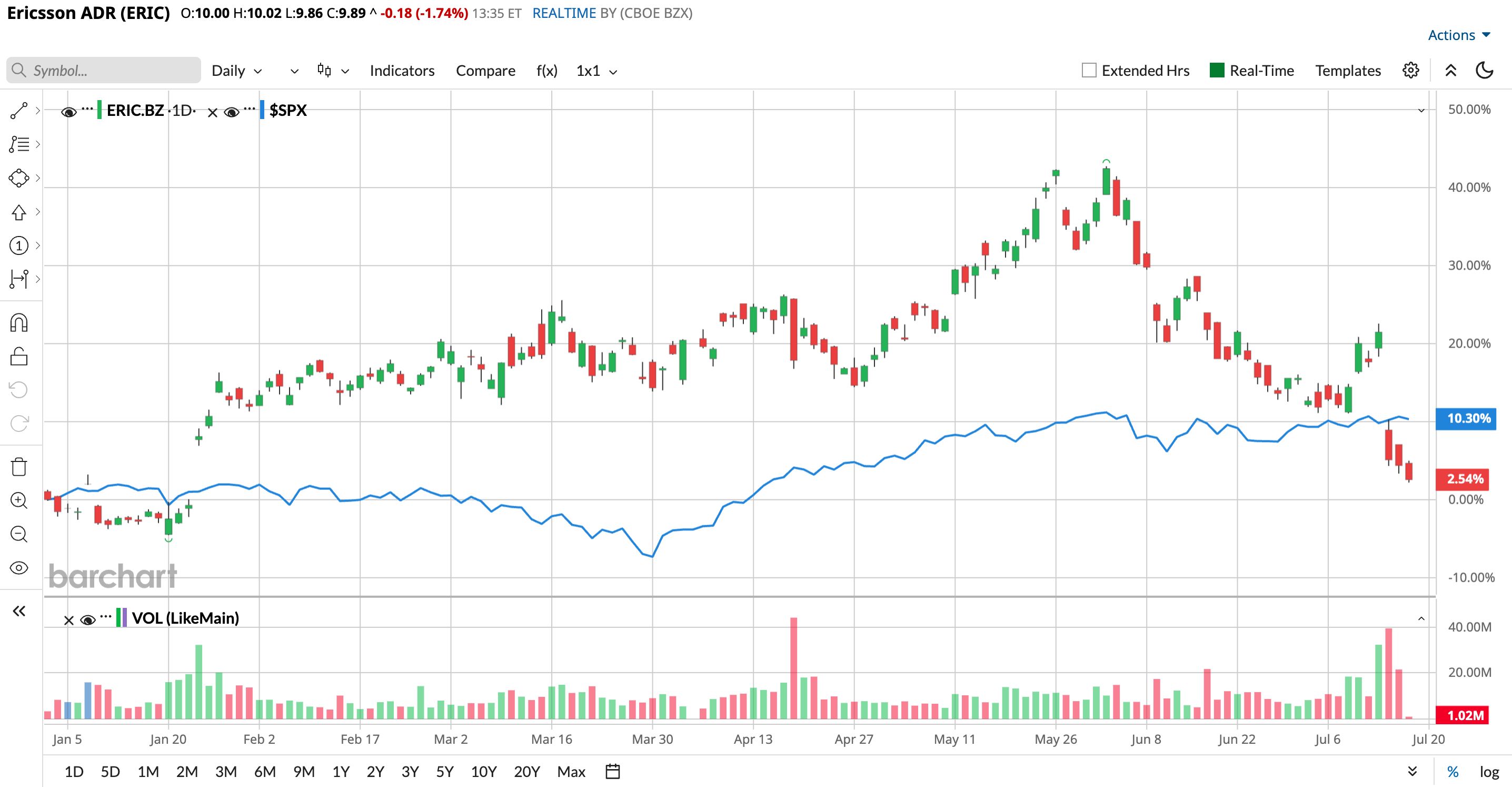
The Swedish telecom giant currently commands a market capitalization of roughly $34 billion, but its shares have fallen 28.29% from their 52-week high of $13.77, reached in February 2026. The recent sell-off has been particularly steep, with the stock plunging 16% over the past month, and much of it can be attributed to investors reacting negatively to the company's latest earnings report and a warning that soaring AI-driven memory chip costs could squeeze margins.
Moreover, concerns surrounding the upcoming CEO transition have further weighed on sentiment. Even so, the bigger picture remains far more encouraging. Ericsson shares are still up 2.33% year-to-date (YTD) and have delivered an impressive 34% gain over the past 12 months, comfortably outperforming the S&P 500 Index's ($SPX) 20.6% return during the past 52 weeks.
 www.barchart.com
 Ericsson’s Q2 Earnings Snapshot
Ericsson's fiscal second-quarter 2026 earnings report, released on Tuesday, July 14, delivered a mixed performance that triggered a sharp market sell-off. While the Swedish telecom giant continued to demonstrate underlying operational resilience, weaker-than-expected revenue overshadowed the results, sending the stock tumbling more than 13% on the day of the release.
The steep decline reflected growing investor concerns that the AI boom, while fueling demand across the technology sector, is also disrupting global hardware supply chains and creating fresh cost pressures for companies like Ericsson. On the financial front, Ericsson reported net sales of SEK 52.7 billion, down 6% on a reported basis and 1% organically from a year earlier.
Diluted earnings per share slipped to SEK 1.22, compared to SEK 1.37 in the prior-year quarter, largely due to a decline in its high-margin Intellectual Property Rights (IPR) licensing business, where revenue fell to SEK 3.4 billion. Another major disappointment was free cash flow before mergers and acquisitions, which plunged from SEK 2.6 billion a year ago to just SEK 0.4 billion.
Management attributed the sharp drop to lower sequential earnings and a buildup of finished goods inventory ahead of heavy third-quarter delivery schedules. Despite those headwinds, Ericsson managed to expand profitability. The company posted an adjusted gross margin of 48.4%, up slightly from 48% a year ago, driven by improved delivery efficiency.
A standout performer was the Cloud Software and Services division, where revenue climbed 5% organically to SEK 14.7 billion, while the segment's adjusted EBITA margin reached a record 12.4%. However, this strength was offset by weakness in Ericsson's largest business segment, Networks, where sales declined 4% organically to SEK 33 billion as slower 5G modernization project deliveries in North America weighed on overall performance.
Ericsson also continued to reward shareholders during the quarter, returning SEK 8.2 billion, including SEK 3.2 billion through share repurchases. Looking ahead, management expects Networks sales growth in the third quarter to exceed the three-year average seasonal trend, while Cloud Software and Services sales growth is projected to be broadly in line with its three-year average seasonality.
The company expects the Networks adjusted gross margin to come in between 48% and 50%, slightly below the second quarter’s 50.4% due to a shift in business mix and a higher proportion of rollout projects. Meanwhile, restructuring charges are expected to remain elevated throughout 2026, although a significant portion has already been recognized during the first half of the year.
How Do Analysts View Ericsson Stock?
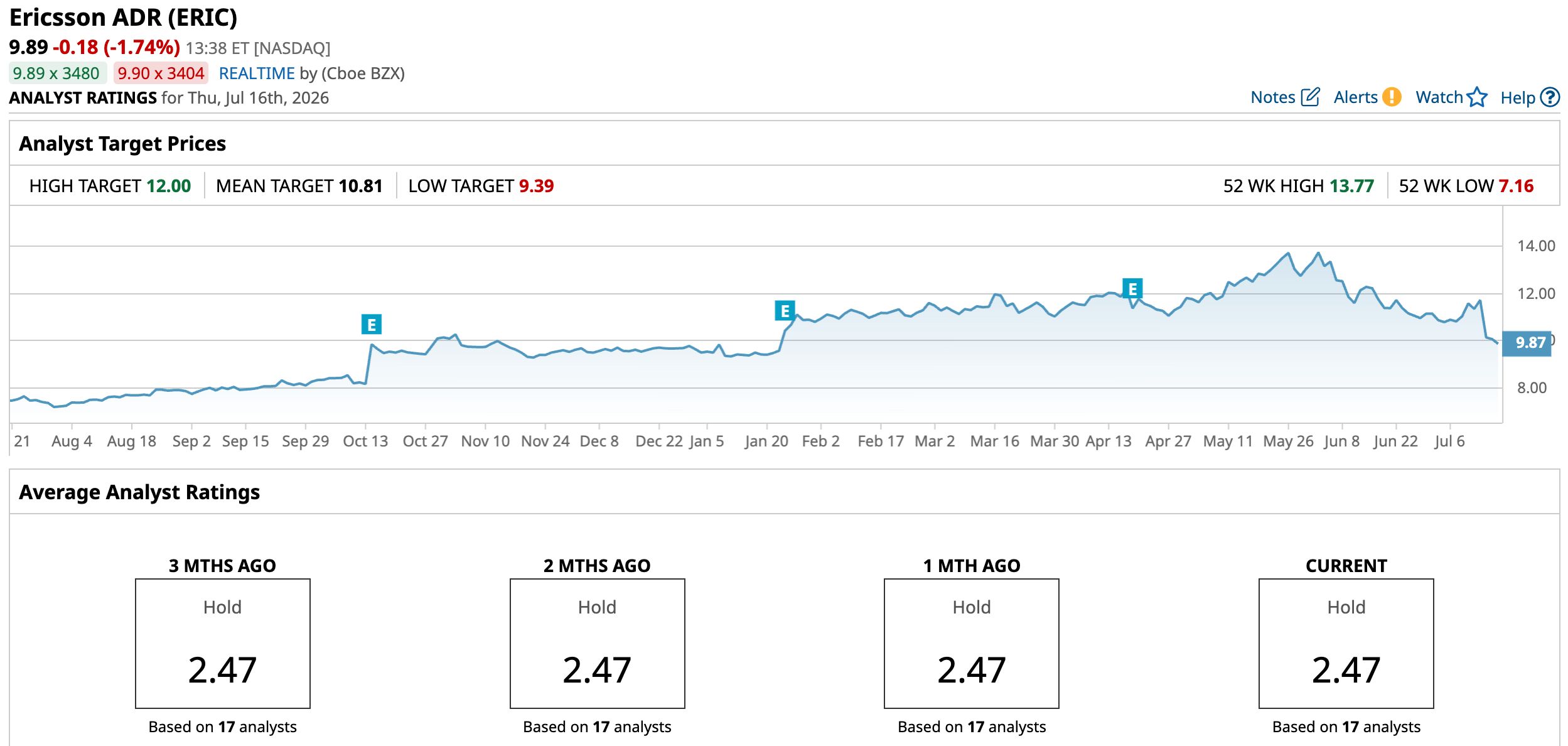
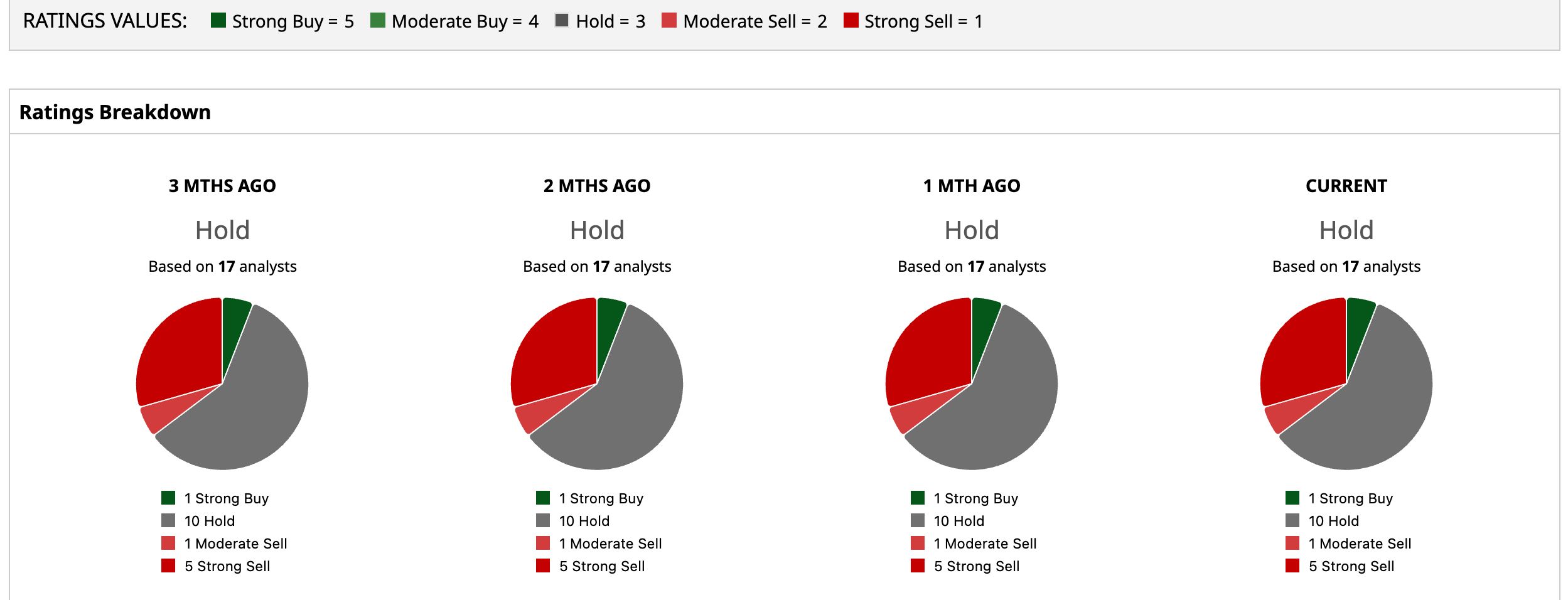
The recent AI-driven cost pressures and upcoming CEO transition have clouded investors' near-term sentiment. And analysts also appear cautious on Ericsson, with the stock earning a consensus "Hold" rating. Among the 17 analysts covering the company, only one recommends a "Strong Buy," while 10 advise "Hold." Meanwhile, bearish sentiment is still evident, with one analyst assigning a "Moderate Sell" rating, and five maintaining "Strong Sell" recommendations.
Despite the cautious outlook, analysts see some room for upside. The average price target of $10.81 implies a modest 9.3% gain from current levels, while the Street-high target of $12 suggests the stock could rally as much as 21.3%.
 www.barchart.com
  www.barchart.com
 On the date of publication, Anushka Mukherji did not have (either directly or indirectly) positions in any of the securities mentioned in this article. All information and data in this article is solely for informational purposes. For more information please view the Barchart Disclosure Policy here.
More news from Barchart
AAP’s Unusually Active $62.50 Call Isn’t a Covered Call. It’s a Bullish Bet on a Beaten-Down Stock. How to Play Cognizant Stock After a Major IBM-Driven Sell-Off Eli Lilly Is Buying AtaiBeckley in $2.8 Billion Deal. What It Means for LLY Stock Wall Street Is Suddenly Bullish on This Under-the-Radar Chip Stock