


Public perception often associates high-profile investors with speculative assets like gold, real estate, or cryptocurrency. As a fan of the 24/7 horse racing TV channel from FanDuel, I have seen Tom Selleck, Henry Winkler, and even J.J. “Dynomite” Walker using their name recognition to hawk products from gold to reverse mortgages.
But this one is different. Because a certain U.S. president with a history of finding opportunity in everything from buildings to steaks, and more recently, crypto, has apparently been linked to active trading in the Vanguard Dividend Appreciation ETF (VIG).
More Yield, Less Trap: Sign up free to get Barchart’s daily Dividend Investor newsletter straight to your inbox.
The latest government securities disclosure detailing June 2026 trading activity across President Donald Trump’s independently managed accounts reveals a surprising level of active rebalancing, particularly a huge transaction in one of Wall Street’s favorite dividend growth ETFs.
Inside the Multimillion-Dollar ETF Move
The financial filing covering June 2026 recorded more than 1,000 individual transactions valued between $78 million and $263 million. Amid active trading across individual equities and fixed income, the single largest transaction in the entire filing was a major position shift.
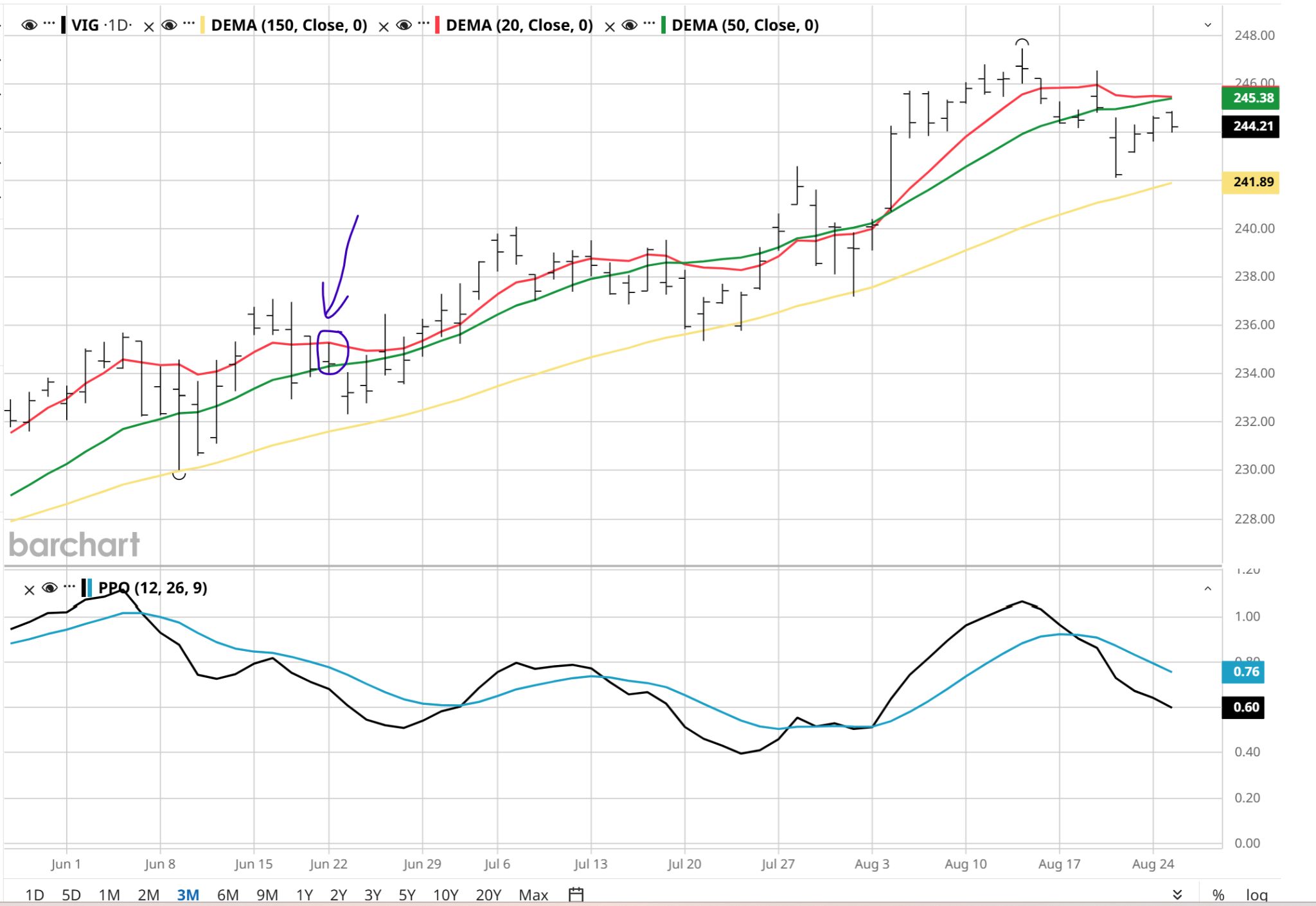
On June 22, the portfolio executed a sale of VIG valued between $5 million and $25 million. Here it is in chart form, with my purple arrow pointed to the circled trading bar for that date.
 www.barchart.com
 VIG isn’t a speculative trading vehicle. It has over $100 billion in assets, and it tracks high-quality U.S. large-cap companies with a proven track record of increasing their regular dividend payouts year after year.
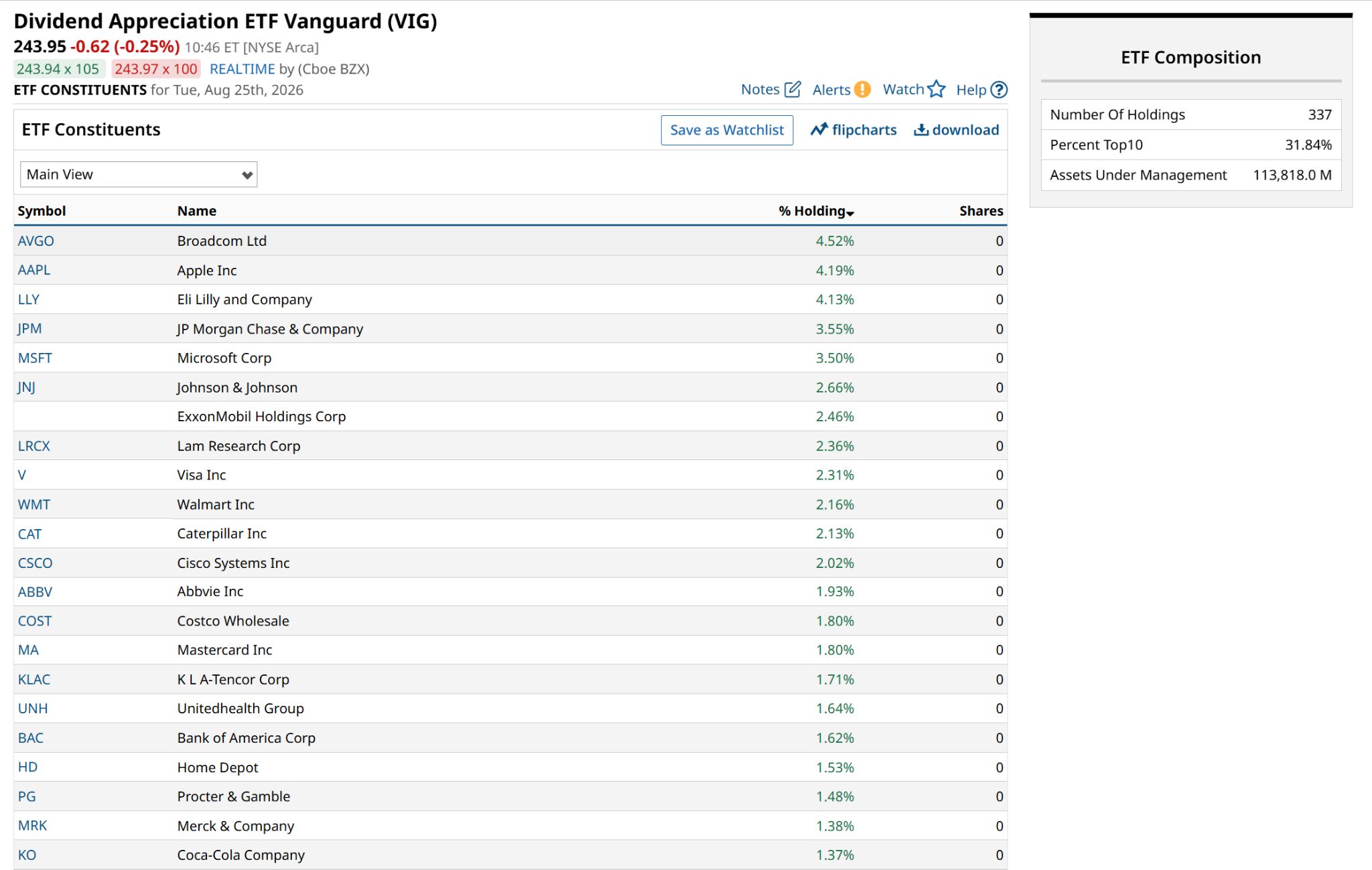
Now, I believe that the ETF’s name is a misdirection of sorts. As we see here, it owns two-thirds of the stocks in the S&P 500 Index ($SPX). That screams high correlation and frankly, many of the biggest stocks have added teeny tiny dividends in recent years in part to qualify to be owned by ETFs like VIG.
Here’s a list of the biggest stocks in this ETF. See a lot of big dividend yielders in there? I don’t. And I know, it’s about dividend growth. My concern for years is that investors see “dividend” and “growth” and assume that they’ll get a lot of both. Especially with market leader Vanguard behind it.
 www.barchart.com
 The fact is, they get growth when the S&P 500 goes up. And when it doesn’t, it typically moves largely in sync, creating “negative growth” if you will.
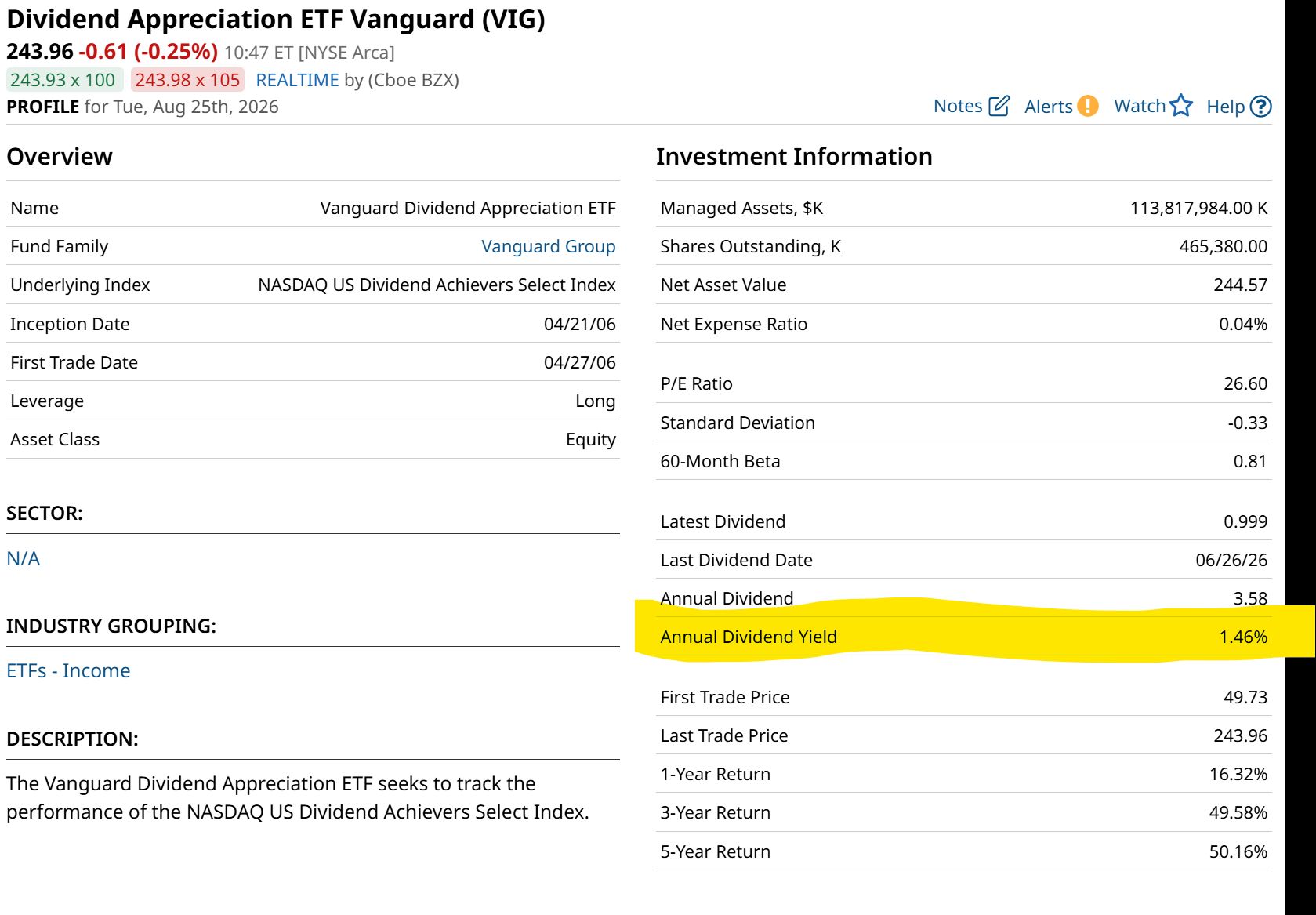
As for the dividend part, while the more than 330 stocks in VIG do grow their dividends, as we see here, the yield is under 1.5%. I for one do not subscribe to the theory that over time, owning stocks growing dividends by 10%-15% a year will amount to enough income to make me forget about what happens to them during market down cycles. And at more than 26x trailing earnings, that’s not enough for me to look at VIG as a “contrarian” idea. No matter what government officials are doing with their trading.
 www.barchart.com
 Moving from my personal opinion on VIG, and back to the multimillion-dollar capital moves inside this dividend-growth core ETF, the best summary I can think of is this: it highlights how institutional managers actively cycle liquidity through cornerstone ETFs when broader market conditions change. VIG is a source of liquidity because of what it owns. And what drives stock market behavior more than anything now is liquidity. Not fundamentals.
A closer look at the broader Trump filing reveals a clear theme: rotating out of high-multiple growth equities and reallocating capital into cash-rich, defensive blue chips. Throughout June, the accounts trimmed positions in volatile tech and software names, including sales in Meta Platforms (META) and Palantir (PLTR), while simultaneously deploying millions into Berkshire Hathaway (BRK.B), Visa (V), Mastercard (MA), and Home Depot (HD). This shift coincided directly with market volatility following the Federal Reserve's policy meeting mid-month, showing a clear preference for pristine balance sheets and pricing power over speculative tech momentum.
As for the reasons these changes were made? The disclosure doesn’t comment on that, nor will I. I’ll just say that when you are moving around money of that size, it is a whole different decision process from being a standard retail investor.
We have the ability to dive deeper, and not have to settle for giant ETFs as a main source of our portfolio management. Because our portfolio size will not move the proverbial needle like eight- or nine-figure trades do.
We have a much wider net to cast. And we should always be seeking to use it. VIG likely isn’t the right fish in the pond for you right now.
Rob Isbitts is a semi-retired CIO, former fiduciary investment advisor, and Barchart columnist. Check out his other work at ETFYourself.com (featuring the Fresh Charts weekly trading post), and ROAR.PiTrade.com, helping investors to better-manage their own portfolios.
On the date of publication, Rob Isbitts did not have (either directly or indirectly) positions in any of the securities mentioned in this article. All information and data in this article is solely for informational purposes. For more information please view the Barchart Disclosure Policy here.
More news from Barchart
Trump Made Big Trades in This Dividend Growth ETF. You Probably Shouldn’t. Dear Dollar General Stock Fans, Mark Your Calendars for August 27 Dividend Aristocrat or Dividend Cuts: How to Evaluate the NKE Stock Payout as the Nike Turnaround Drags On This Dividend Stock Is Set for Growth and Its Yield Matches the 10-Year Treasury