


A shipment of F-35 spare parts that should have been routine has become a national security issue. UPS (UPS) unexpectedly routed a cockpit canopy and weapons-bay door through Hong Kong. Both parts are covered in radar-absorbing stealth material, and Chinese authorities took custody of them and have not returned them. The incident has prompted two congressional committee reviews and a classified Senate hearing. Still, key questions remain unanswered over whether the episode exposed F-35 technology or was ultimately a serious but costly logistics mistake.
A Misrouted Shipment Lands Sensitive Parts in Chinese Custody
In late May, UPS was transporting a cockpit canopy and weapons-bay door from an Australian F-35 to the U.S. for inspection. Both components contained radar-absorbing material designed to reduce the jet’s radar signature. The shipment first stopped in South Korea before being diverted to Hong Kong under circumstances that have not been explained. Chinese authorities subsequently took possession of the components and have not returned them. The incident comes as Xi Jinping visits the U.S. and shortly after a $24 billion Saudi F-35 sale drew lawmakers’ attention. Two House committees and a closed Senate hearing are investigating, while Lockheed Martin Corporation (LMT) says the carrier met Pentagon requirements and that additional oversight measures are being put in place.
More Top Stocks Daily: Go behind Wall Street’s hottest headlines with Barchart’s Active Investor newsletter.
A similar F-35 supply-chain concern in 2022 involved an unauthorized Chinese-origin alloy used in an engine magnet. The issue was resolved within weeks through a Pentagon waiver and did not disrupt deliveries. Analysts note that the canopy and weapons-bay door are standalone hardware and do not contain the classified software or design data that would point to a more serious compromise. There is also no evidence so far of an international diversion, and reporting suggests the incident is unlikely to have a material impact on Lockheed Martin’s financials or backlog.
The incident reflects a genuine oversight failure and has rightly drawn attention. But a misdirected hardware shipment, with no confirmed intent and no evidence that design data was exposed, is a more contained issue than the “secrets in China’s hands” framing implies. So far, there are also no signs that it has disrupted Lockheed’s F-35 program.
About LMT Stock
Lockheed Martin is one of the world’s largest aerospace and defense companies. It designs, builds, and supports military aircraft, missiles, helicopters, satellites, space systems, and other advanced defense technologies for the U.S. government and allied countries around the world. The company operates through four segments. The company is best known for producing advanced military and aerospace technology used in national defense and security. Founded in 1912, the company is headquartered in Bethesda, Maryland.
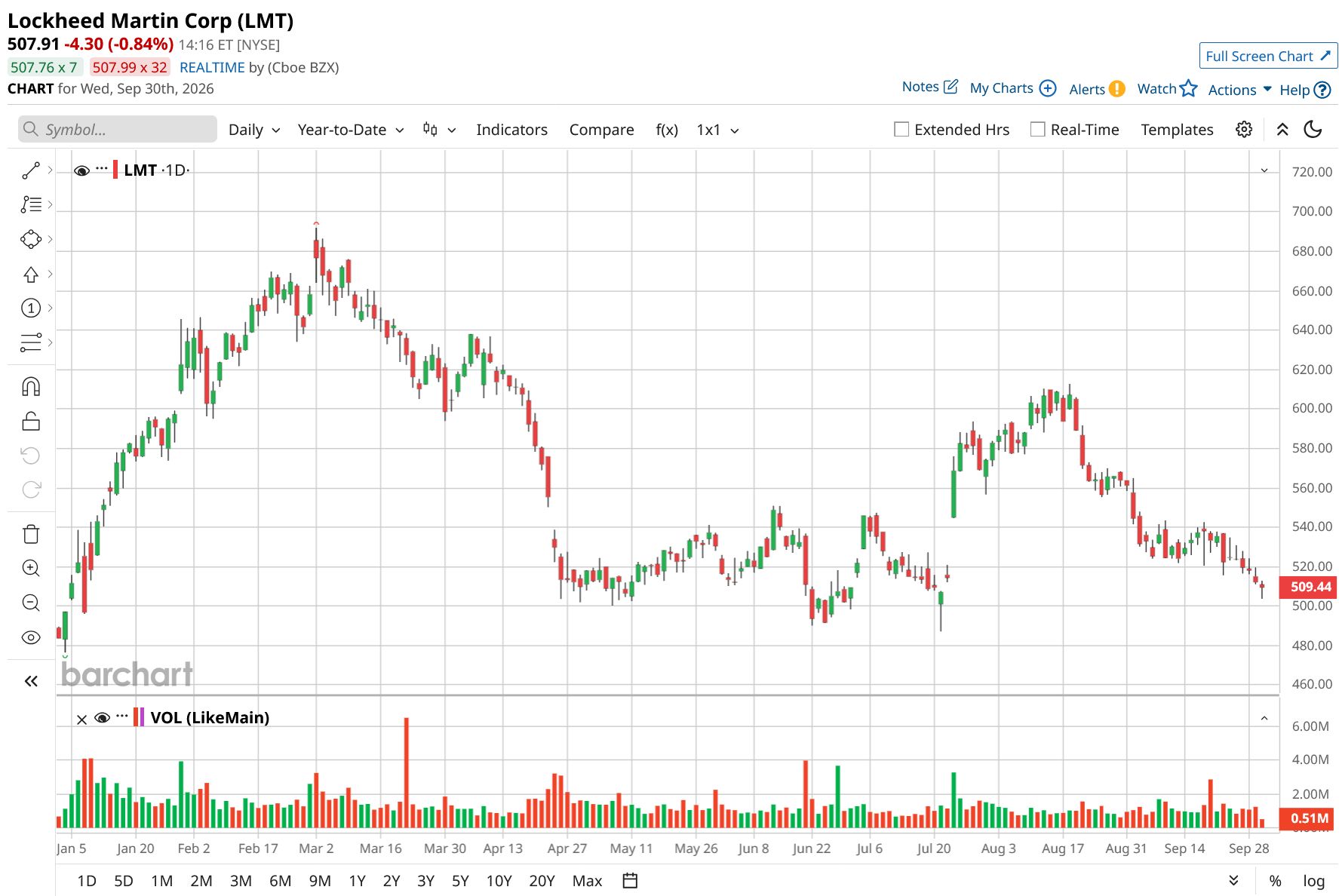
Over the past year, LMT shares have been up 2.3%, outperforming iShares US Aerospace & Defense ETF’s (ITA) slight dip of 0.43% during the same period. The trend has continued for LMT shares this year, with the stock up 6% year-to-date (YTD), whereas the ETF is down 3%. The stock has been fairly volatile, climbing from roughly $508 at the start of July to $608 by mid-August and then down to $517.
 www.barchart.com
 Lockheed Martin Raises Outlook as Missile Demand Surges
Lockheed Martin reported its second-quarter fiscal 2026 earnings on July 23. It reported revenue of $20.1 billion, up 11% year-over-year (YoY). The earnings per share came in at $7.94, comfortably beating the Wall Street consensus of $7.23. The company described the quarter as one of strong execution across all business lines, with growth in missiles and fire control, aeronautics, rotary and mission systems, and space. The company said it is benefiting from a shift toward multi-year contracts and from greater demand for combat-proven systems such as the F-35, THAAD, PAC-3, and HIMARS.
Looking forward, LMT raised its full-year 2026 guidance across several key measures. The company now expects its sales to be $79.75 billion to $81.75 billion. It also lifted its operating profit target to $8.5 billion to $8.7 billion and its free cash flow outlook to $7 billion to $7.2 billion. Moreover, capital spending guidance was set at $2 billion to $2.4 billion, reflecting more efficient munitions build-out plans.
What Do Analysts Expect for LMT Stock?
Wall Street’s view on Lockheed Martin is mixed but generally positive. UBS analyst Gavin Parsons reiterated a “Buy” rating with a price target of $674. In contrast, JPMorgan analyst Seth Seifman maintained a “Hold” rating and set a price target of $620. LMT stock received a “Sell” rating from Goldman Sachs, along with a price target of $503.
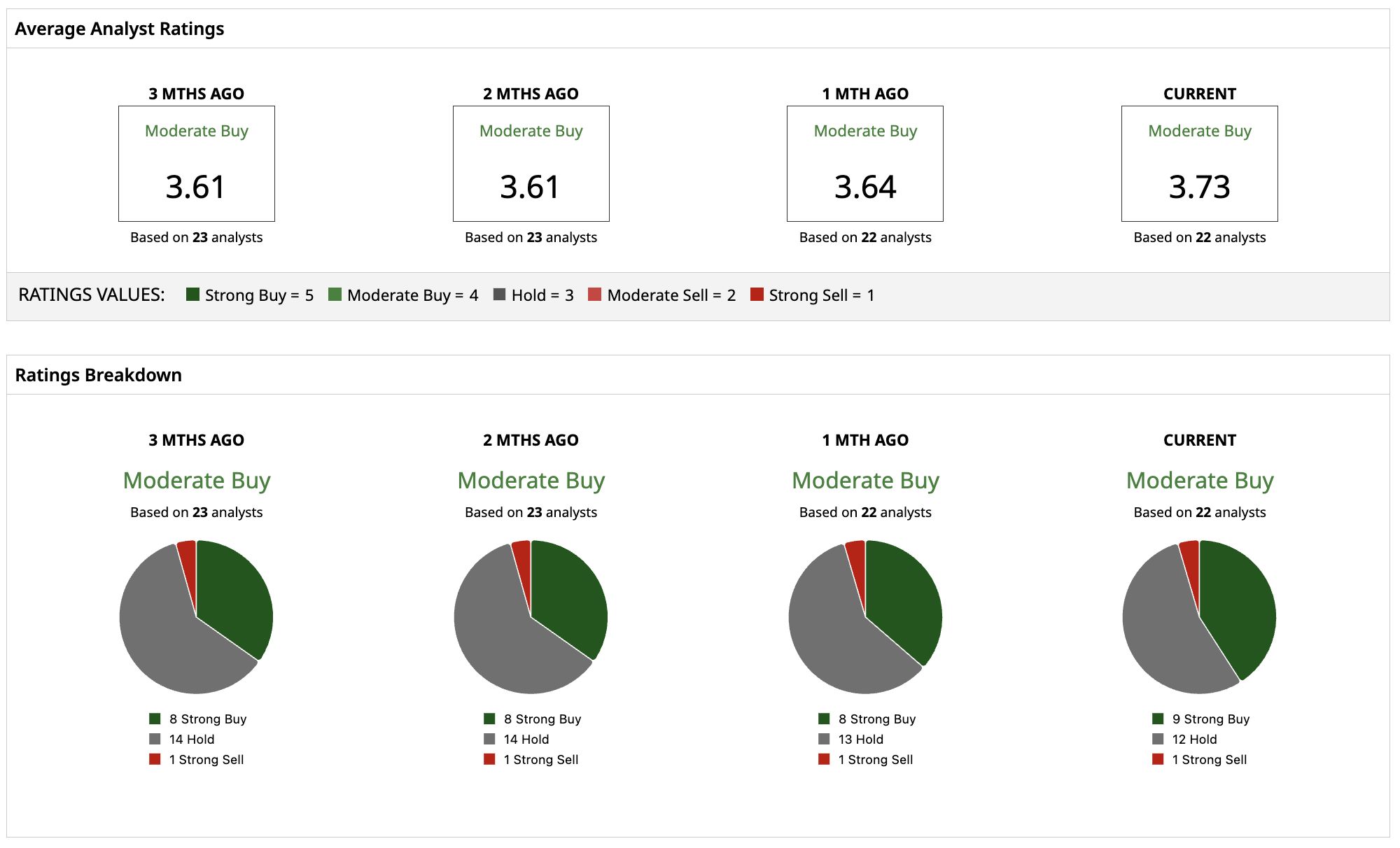
Based on 22 Wall Street analysts covering the stock, LMT holds a consensus “Moderate Buy” rating. Out of those, nine have a “Strong Buy” rating, 12 have a “Hold” rating, and one has a “Sell” rating. The mean price target of $646.33 reflects 27% upside from the current levels. The stock’s high price target of $775 implies 53% upside from the current share price.
 www.barchart.com
 On the date of publication, Jabran Kundi did not have (either directly or indirectly) positions in any of the securities mentioned in this article. All information and data in this article is solely for informational purposes. For more information please view the Barchart Disclosure Policy here.
More news from Barchart
Hewlett Packard Stock Just Got a Big Boost Powered by AMD Dear Accenture Stock Fans, Mark Your Calendars for October 1 How a UPS Transport Gone Wrong Apparently Left Lockheed Martin’s Secrets in China’s Hands Target Stock Just Scored a New 'Buy' Rating. Here's Why.