


We all know how weight loss works, at least in the “internet” shortcut kind of way. Calories in, calories out, and hopefully more out than in. Simple.
However, weight loss isn’t always as simple as a mathematical formula, and an entire industry has been built to fill that gap. Think supplements, meal-replacement shakes, fat burners, appetite suppressants, diet programs, fitness plans, and other products promising to make the process easier. The industry has been growing for years, but recently, there’s been a massive shift.
More Top Stocks Daily: Go behind Wall Street’s hottest headlines with Barchart’s Active Investor newsletter.
You've likely heard of GLP-1 and its rising prominence in the weight-loss industry. Statistically, you probably know somebody who's on one. But do you know how it all actually works? Which companies are dominating the landscape, and which are poised to take over?
Because behind the headlines is a race worth billions, and the winners are still undecided. Let's break it down.
What Is GLP-1 and How Does It Work?
So let’s cover GLP-1 briefly.
When you eat, your digestive system releases a hormone called glucagon-like peptide-1, or GLP-1. It’s the natural signal that tells your body, “Hey, buddy, you’ve had enough cake.” The hormone prompts your pancreas to release insulin, signals your stomach to empty more slowly, and tells your brain you're full.
For many of us, this hormone naturally breaks down and disappears from our system in minutes.
But what if you could extend that “fullness” period?
That’s exactly what the engineered version of GLP-1 offers. This version resists natural breakdown and can stay active in the body for a full week instead of a couple of minutes. One shot can dial down appetite, blood sugar, and digestion for days at a time.
And the result? Patients feel fuller, eat less without constantly fighting hunger, and can lose significant weight while using it.
But the benefits don’t stop there.
Because GLP-1 also affects blood sugar, metabolism, and potentially other important systems in the body, researchers are exploring uses beyond weight loss and diabetes. Areas being studied include cardiovascular disease, fatty liver disease, kidney disease, and even conditions involving the brain and nervous system.
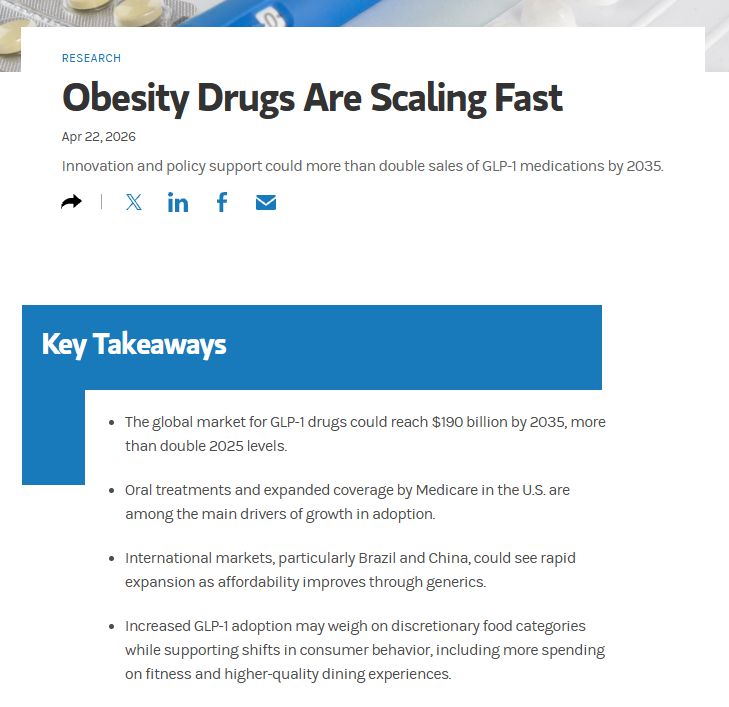
So it's no surprise that GLP-1's popularity has translated into massive dollar value. Morgan Stanley Research expects global sales of type 2 diabetes and obesity drugs to reach $190 billion by 2035, more than double the roughly $79 billion recorded in 2025.
 Screenshot courtesy of www.morganstanley.com
 And that’s just some of the current potential use cases so far. If GLP-1 proves useful for other widespread conditions, its potential market value could be massively underestimated. We could be looking at millions of patients being treated for a much broader range of metabolic and chronic diseases.
Semaglutide vs. Tirzepatide, the Two Leading GLP-1 Drugs
When talking about GLP-1, two drugs dominate the conversation.
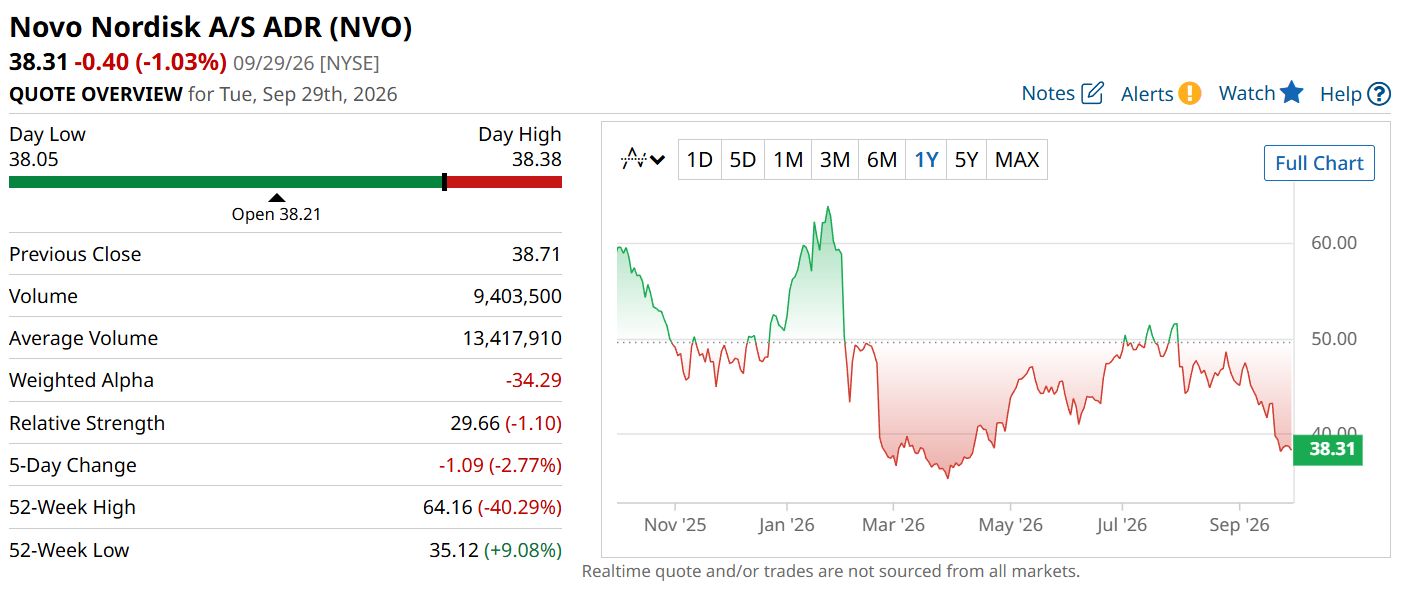
Semaglutide is a synthetic peptide that mimics GLP-1, binding to its receptors to slow gastric emptying, reduce appetite, and improve insulin sensitivity. Novo Nordisk (NVO), a Danish pharmaceutical company best known for developing the blockbuster drugs Ozempic and Wegovy, created it. The core compound patent, though, is beginning to expire worldwide, opening the door to generic competition in other markets. More on that later.
 Screenshot courtesy of www.barchart.com
 There’s also tirzepatide, which, by most metrics, is the more advanced molecule of the two. At the risk of being too technical, it binds two incretin receptors at once, GLP-1 and GIP (glucose-dependent insulinotropic polypeptide), a dual action sometimes nicknamed the "twincretin" effect. It basically gives the body two signals instead of one, making it potentially twice as effective.
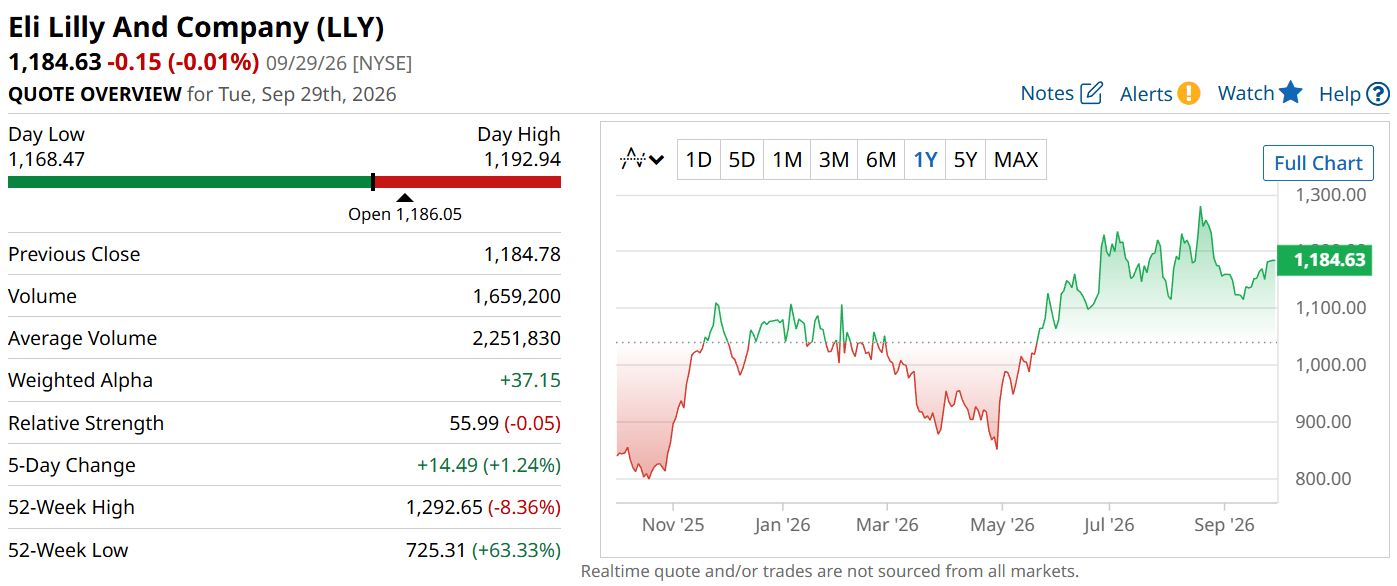
Tirzepatide is manufactured by Eli Lilly (LLY) and was instrumental in helping the company reach a $1 trillion valuation.
 Screenshot courtesy of www.barchart.com
 Unlike semaglutide, tirzepatide still has years of exclusivity left. Its core composition-of-matter patent - essentially the full legal protection for the substance in the U.S. - won’t expire until 2036, with secondary patents on formulation and dosing regimens stretching into 2039. Timelines are roughly the same across global markets.
Why GLP-1 Is a Drug Platform, Not Just One Product
When market experts talk about tirzepatide, semaglutide, or GLP-1 in general, most of them collectively refer to the substances as a “platform” - and for good reason.
When a drug “product” hits the market, it typically targets one condition. Eventually, though, those products get replaced with something better, or at least the new thing displaces the old one as the “only option.”
Take aspirin, for example. Launched by Bayer in 1899, the drug was the most popular over-the-counter pain reliever for many years, a position it held into the mid-20th century. It lost the top spot, though, when acetaminophen/paracetamol and ibuprofen were developed around the late 1950s.
A drug “platform” is different. Instead of holding one position until something better replaces it, a platform keeps expanding the ground it stands on. And right now, GLP-1 manufacturers are aiming to expand in at least four directions at once.
The first is new indications. GLP-1s didn't stop at diabetes, or even obesity. Tirzepatide is already approved for sleep apnea in obese patients, while Wegovy has added approvals for cardiovascular risk reduction and MASH, a liver disease that had only one approved drug treatment until this class arrived. Both molecules also have active late-stage trials chasing new indications.
Nor did the introduction of new drug classes in the platform even cannibalize the sales of the old one. When Wegovy was introduced, it didn’t take market share from Ozempic. Instead, the two drugs largely served different patient populations and indications, while the overall GLP-1 market kept expanding.
Then there's delivery format. Both drugs launched as injections, which is fine for many people… but chances are you know someone who wouldn’t let a needle near their skin unless their life was on the line.
Novo launched an oral version of Wegovy in January 2026, after the FDA approved it in December 2025. Eli Lilly followed in April 2026 with its own oral GLP-1, orforglipron, which is sold as Foundayo.
That simple expansion - from injection to oral delivery - will open the door to a new, larger pool of potential customers, to the tune of two to three times the number.
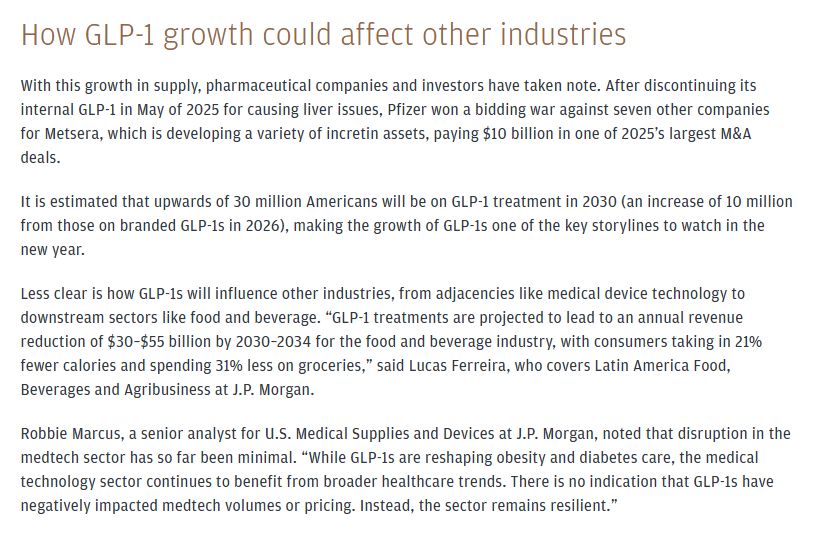
Yes, JPMorgan estimates that roughly 10 million Americans were on GLP-1s in 2025, a figure that could reach 25 million to 30 million by 2030, with pills as one driver alongside lower prices and broader Medicare access.
 Screenshot courtesy of www.jpmorgan.com
 The third is next-generation molecules, where the platform logic becomes clearest. Semaglutide is a single-hormone agonist, delivering around 15% average weight loss. Tirzepatide adds a second hormone target and pushes that closer to 21%.
Eli Lilly’s retatrutide, a new triple-hormone agonist now in late-stage clinical trials, averaged 28.3% weight loss at 80 weeks in its TRIUMPH-1 trial. But it did somewhat worse in patients with diabetes or cardiovascular disease, at roughly 21% to 23%.
Bariatric surgery, a family of procedures that shrink the stomach or reroute the digestive tract, typically helps patients lose 25% to 35% of their body weight within the first year or two.
That means GLP-1 drugs are close to reproducing the same result as a major medical procedure.
Again, each successive development isn’t necessarily a replacement for the old molecule. Even if retatrutide becomes widely available, tirzepatide isn’t going away anytime soon. It’ll probably just occupy a cheaper rung on the market ladder.
How GLP-1 Drugs Are Reshaping the Food Industry
Lastly, the GLP-1 platform is expanding into the second-order effects of weight loss. These are the clearest signs that a drug has stopped being “just” a drug and is now so much more.
Think about it. Weight loss is a common lifestyle target, even outside medical conditions that require it. If consumers worldwide have easy access to GLP-1 products, they’ll likely eat less. Translation: less grocery and food spending.
The numbers already back this up. A Cornell study of household purchase data found that grocery spending fell about 5% within six months of a household adopting a GLP-1, and that increased to more than 8% for higher-income households. The dip also shrinks over time and fades once people stop the drug.
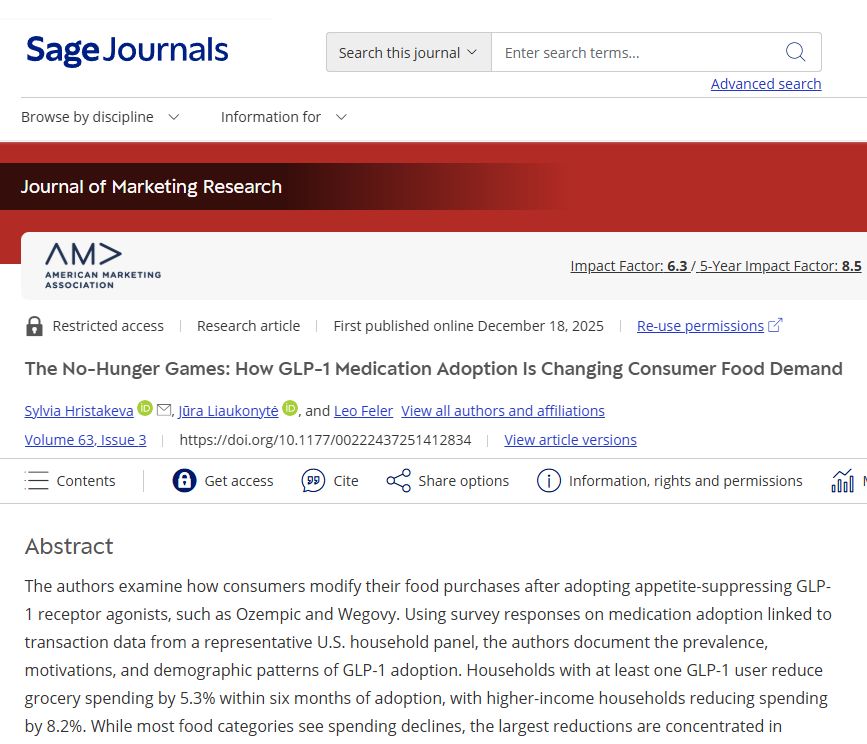 Screenshot courtesy of www.journals.sagepub.com
 It's no exaggeration to say the GLP-1 platform has the potential to reshape the food industry as it is today. Food and snack manufacturers can't ignore those numbers, because if this trend continues, reduced food spending will roll over them like a tidal wave and drag their precious market share back to sea.
Right now, snacks are likely to be hit the hardest. Confectionery, chocolate, and savory snacks are at risk, which could affect sales of products like Doritos, Lay’s, Hershey’s, Cheetos, Toblerone, and Reese’s:
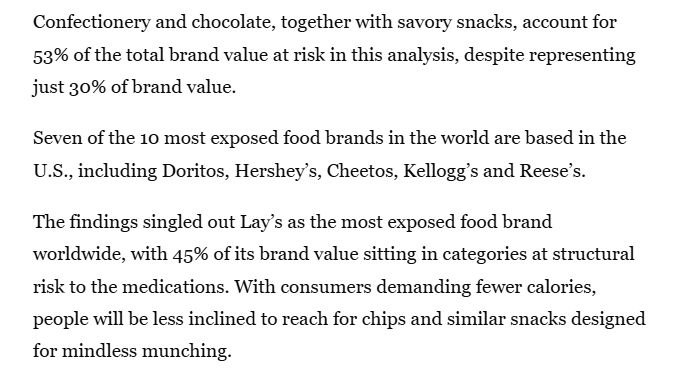 Screenshot courtesy of www.fooddive.com
 That puts a target on companies like PepsiCo (PEP), The Hershey Company (HSY), and Mondelez (MDLZ). The three haven't had a great past couple of years, even without the GLP-1 worries.
PepsiCo has been the weakest of the group, with North American snack volumes and pricing both under pressure, and an activist investor now pushing for change. Hershey's troubles have mostly come from soaring cocoa costs rather than falling demand, though volumes are sliding even as profits recover. Mondelez has held up best, helped by its exposure to emerging markets. GLP-1 will add real pressure on top of these problems.
Add it all up, and the message for food makers is clear: the GLP-1 wave is already reaching the checkout aisle.
Who Is Winning the GLP-1 Race, Eli Lilly or Novo?
So, GLP-1 is already affecting multiple industries. But who's benefiting?
Two names have already come up: Novo and Eli Lilly. But their positions have shifted more than the headlines suggest.
Eli Lilly is now the clear frontrunner. Tirzepatide has taken the lead in new U.S. prescriptions, and the company's momentum carried it into trillion-dollar territory.
Novo Nordisk, the pioneer, has had a rougher stretch. Growth has slowed, guidance has been cut, and a leadership change and a major restructuring followed. The company that built the market is now fighting to keep its place. Novo's oral Wegovy launch is its best chance to close the gap, and how it fares will say a lot about whether the pioneer can reclaim ground.
Beyond the leaders, new contenders are lining up.
Pfizer's GLP-1 Strategy After the Metsera Deal
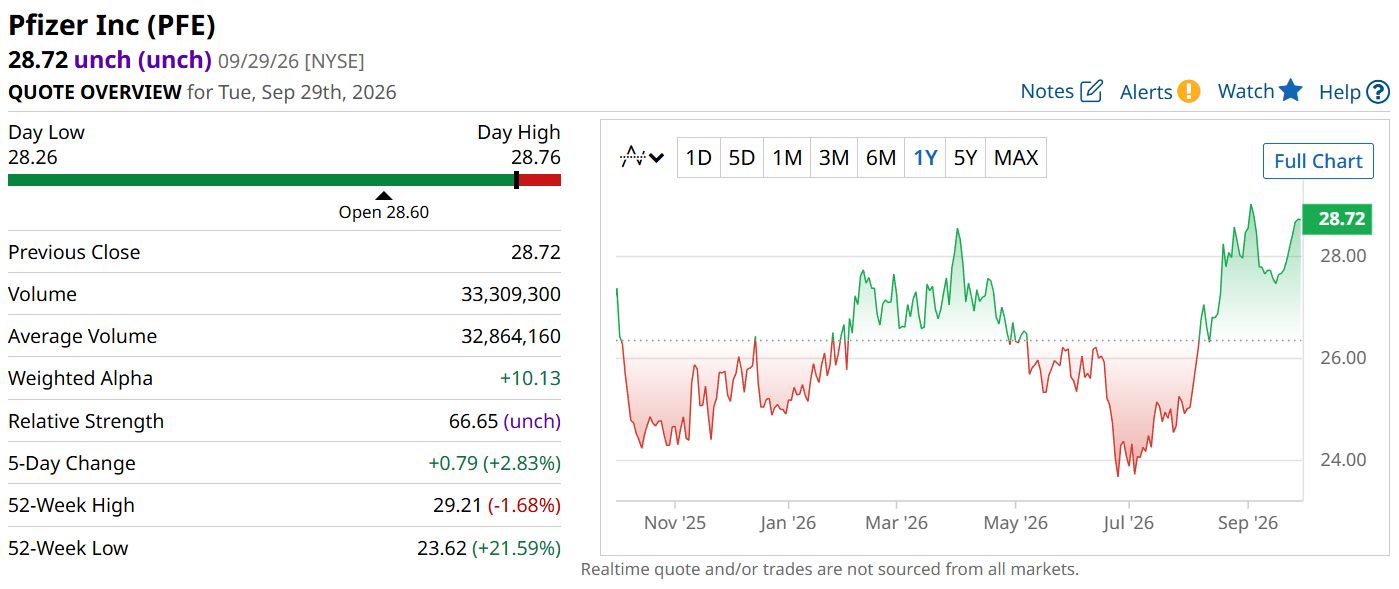 Screenshot courtesy of www.barchart.com
 Pfizer (PFE) entered a bidding war with Novo to acquire the promising clinical-stage drug company Metsera.
The company first agreed to buy the obesity biotech in late September 2025 for an initial enterprise value of about $4.9 billion. Novo Nordisk then interrupted with a rival offer of $6.5 billion upfront. What followed was a two-week scramble of lawsuits, raised bids, and regulatory warnings. Pfizer went to court to try to block Novo's deal, and the FTC flagged concerns about Novo's bid structure.
Finally, Pfizer completed the acquisition, valued at up to $10 billion, in November 2025.
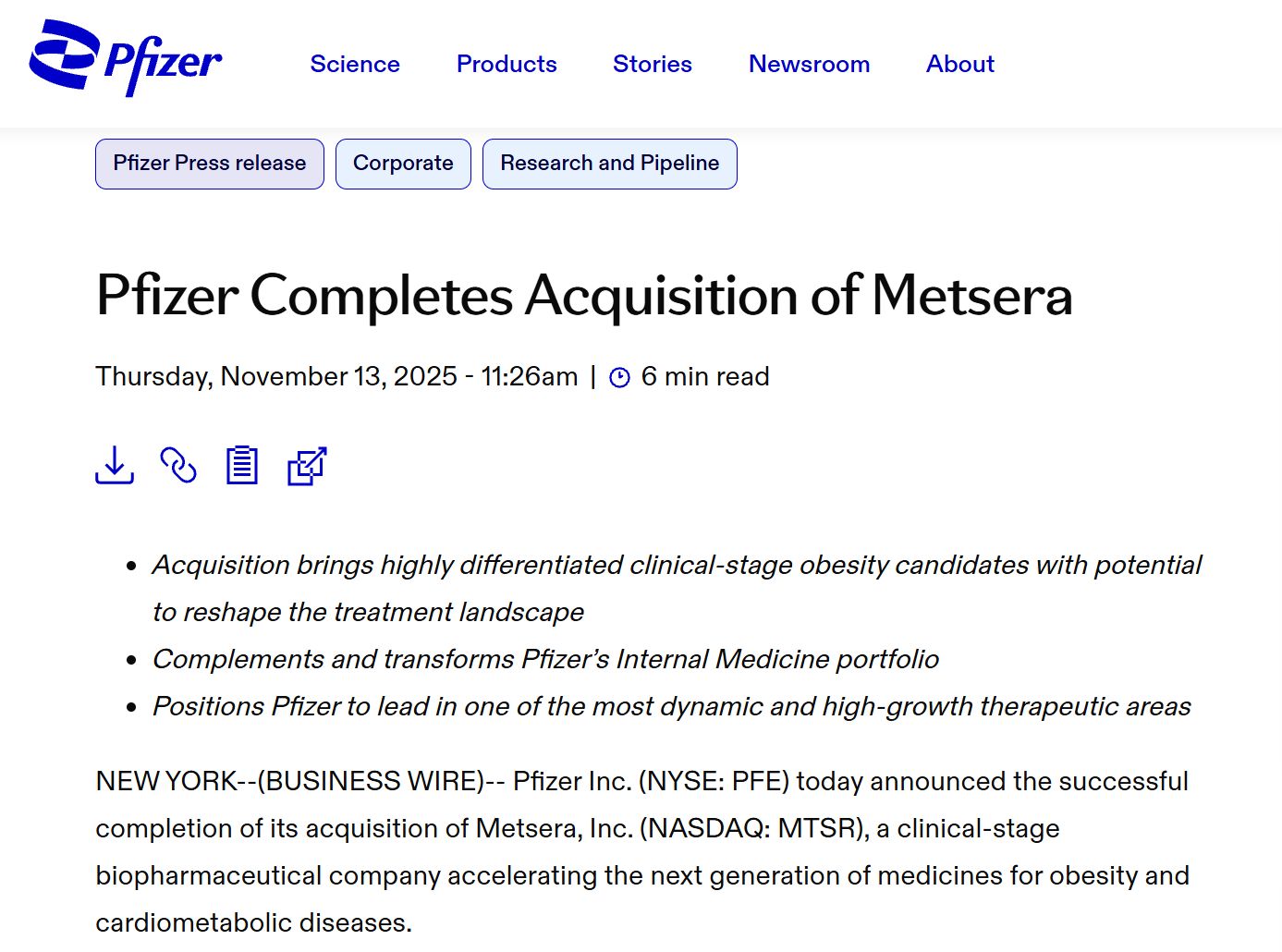 Screenshot courtesy of www.pfizer.com
 Since closing, Pfizer has moved quickly to turn its purchase into a working pipeline. Metsera's lead drug, now called berobenatide, posted placebo-adjusted weight loss of up to 12.3% at 28 weeks with once-monthly dosing, and Pfizer has already started its first Phase 3 trials.
The company plans ten Phase 3 studies in 2026, aiming to show that a monthly shot can compete with weekly injections from Eli Lilly and Novo Nordisk.
Amgen's MariTide and Less Frequent GLP-1 Dosing
 Screenshot courtesy of www.barchart.com
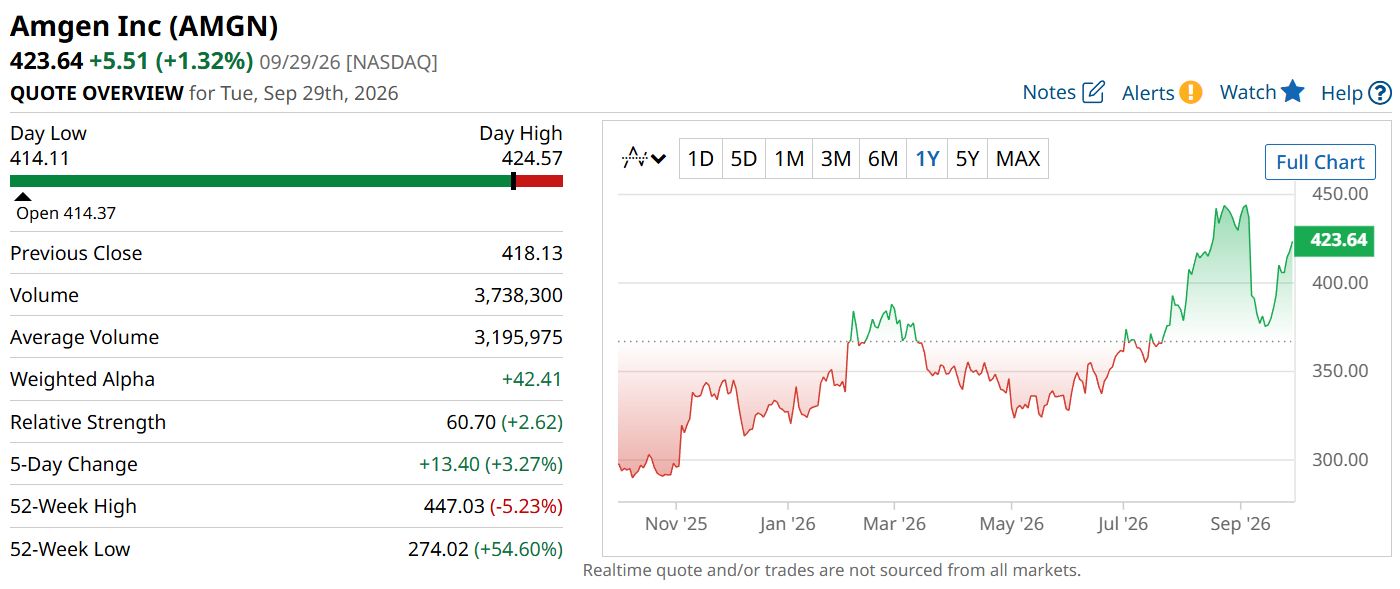
 Biotech company Amgen (AMGN) is also taking a different approach to GLP-1.
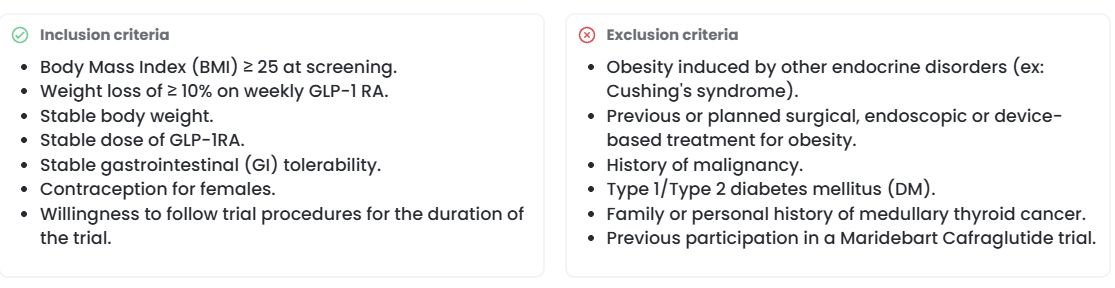
One of the biggest concerns about consistent GLP-1 use is how often you need to take it. Staying on the drug means sticking to a schedule, and every injection or pill is another chance to fall off it.
Novo and Eli Lilly offer both weekly injections and daily pills. Pfizer is aiming for monthly injections.
Amgen is designing its own GLP-1 candidate, MariTide (maridebart cafraglutide), to be longer-acting. It would start with monthly injections, then transition to as few as four to six doses per year.
Phase 2 results support that idea, since most participants maintained their weight loss for another 52 weeks on a lower monthly dose or a quarterly dose. That said, the run wasn't clean: Phase 2 saw high vomiting and discontinuation rates, which is why Phase 3 uses a gentler dose-escalation plan.
The drug also works differently from tirzepatide. Where Zepbound activates the GIP receptor, MariTide blocks it.
MariTide is now in Phase 3 through the MARITIME program, which covers weight management, cardiovascular outcomes, heart failure, and sleep apnea. One study, MARITIME-SWITCH, enrolls patients moving from weekly tirzepatide or semaglutide to an every-eight-week or quarterly schedule.
 Screenshot courtesy of www.veeva.com
 Amgen is, in no uncertain terms, coming after Novo and Eli Lilly’s customers.
Roche's GLP-1 Pipeline, Enicepatide and Petrelintide
 Screenshot courtesy of www.barchart.com
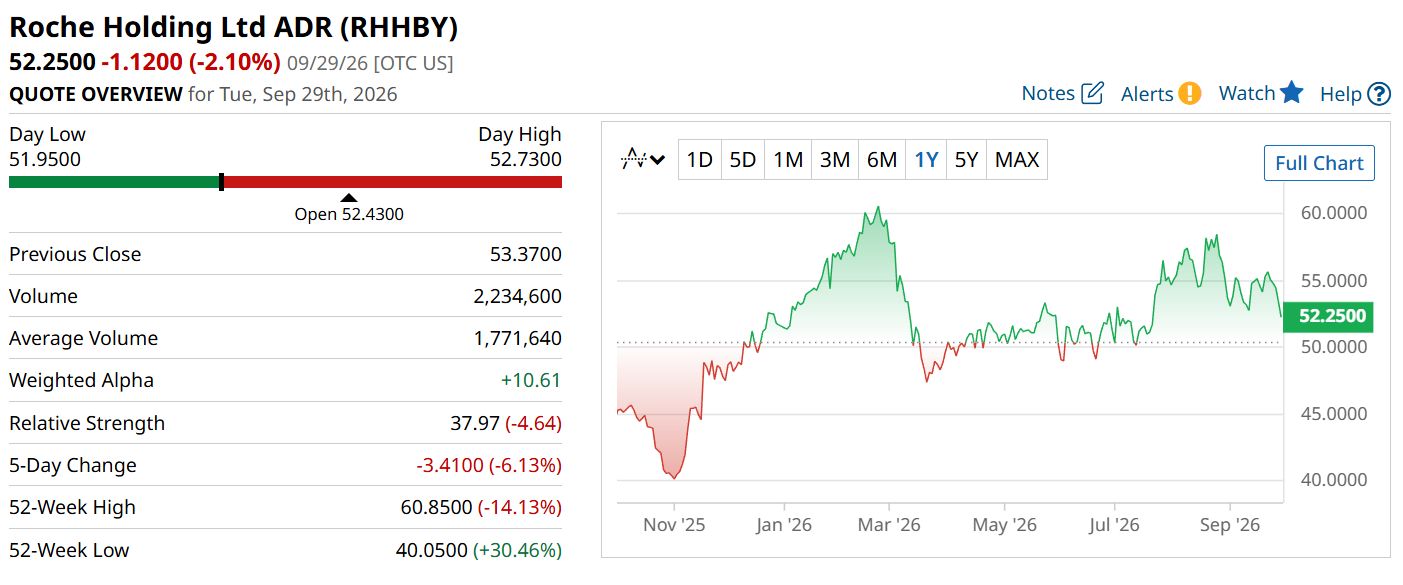
 Roche Holding (RHHBY), meanwhile, is coming at the market from two angles. It entered the GLP-1 market through its acquisition of Carmot Therapeutics and a partnership with Zealand Pharma. Roche acquired Carmot for $2.7 billion cash upfront, plus up to $400 million in milestone payments. The Zealand Pharma deal, for its part, was worth up to $5.3 billion, including $1.65 billion upfront.
Its first angle is enicepatide, formerly CT-388, originally developed by Carmot. This is a dual GLP-1/GIP agonist that works like tirzepatide. In Phase II, it produced 22.5% placebo-adjusted weight loss at 48 weeks at the highest dose, without reaching a plateau. On Roche's more conservative measure, the figure is 18.3%. That is close to tirzepatide's average of roughly 21%.
 Screenshot courtesy of www.roche.com
 Promising, but it’s still in the early stages and needs Phase 3 confirmation.
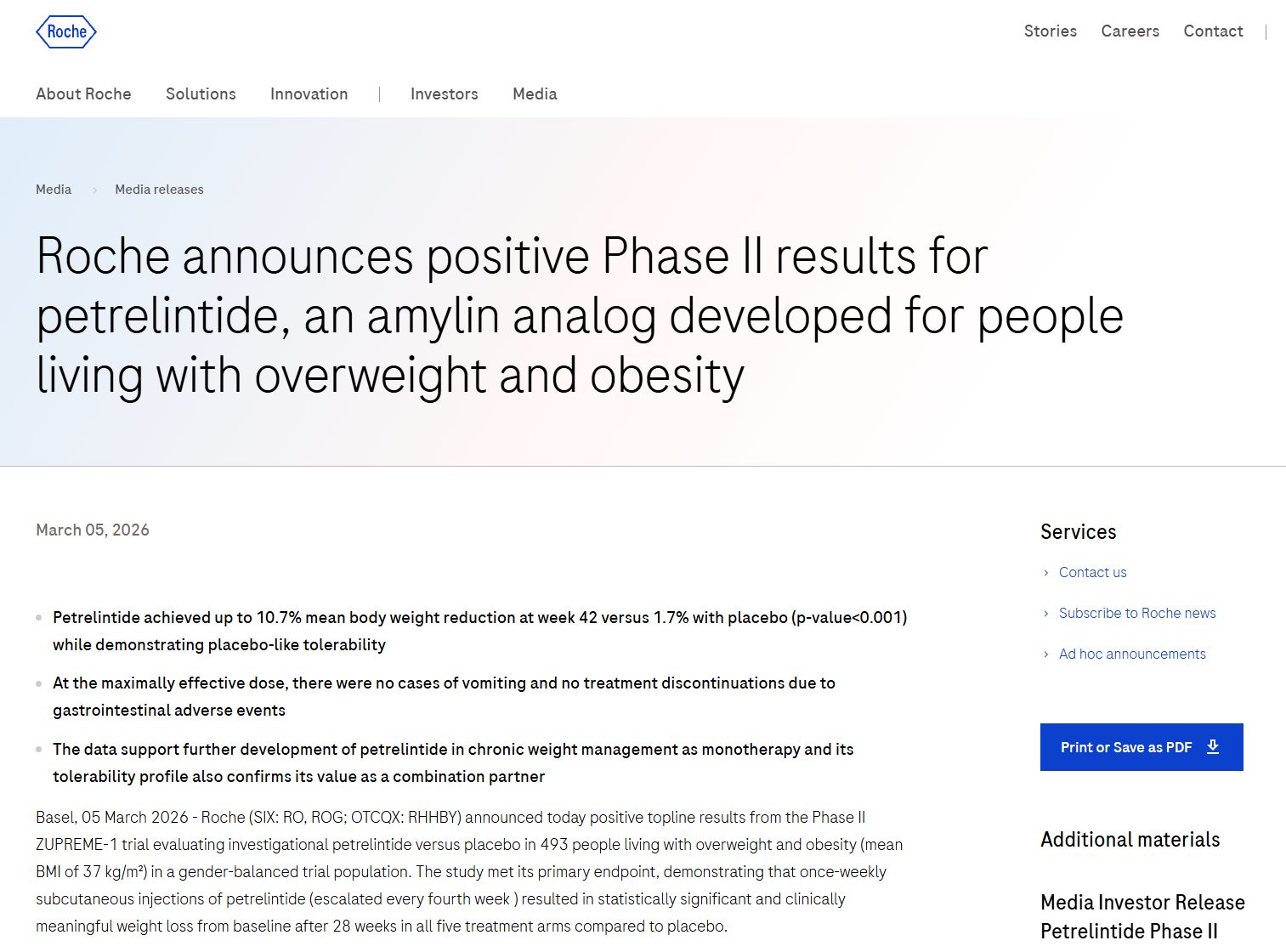
The second angle is petrelintide, from Zealand. It’s a once-weekly amylin analog. Amylin is another hormone that helps regulate appetite, and petrelintide works differently from GLP-1 drugs. In the Phase 2 ZUPREME-1 study, it produced up to 10.7% mean weight loss at 42 weeks versus 1.7% with placebo, and the companies say its tolerability is close to placebo. That makes it a potential alternative for patients who quit GLP-1 drugs because of side effects.
Zealand announced on September 22 that the Phase 3 ZUPREME program has begun. It consists of three trials covering patients without type 2 diabetes, patients with it, and patients with established cardiovascular disease. Roche and Zealand are also developing a fixed-dose combination of petrelintide and enicepatide.
If it works, one shot could deliver GLP-1/GIP power with amylin's gentler side effects, making it a more tolerable choice for some patients.
AbbVie's Amylin Drug ABBV-295 Enters the Obesity Race
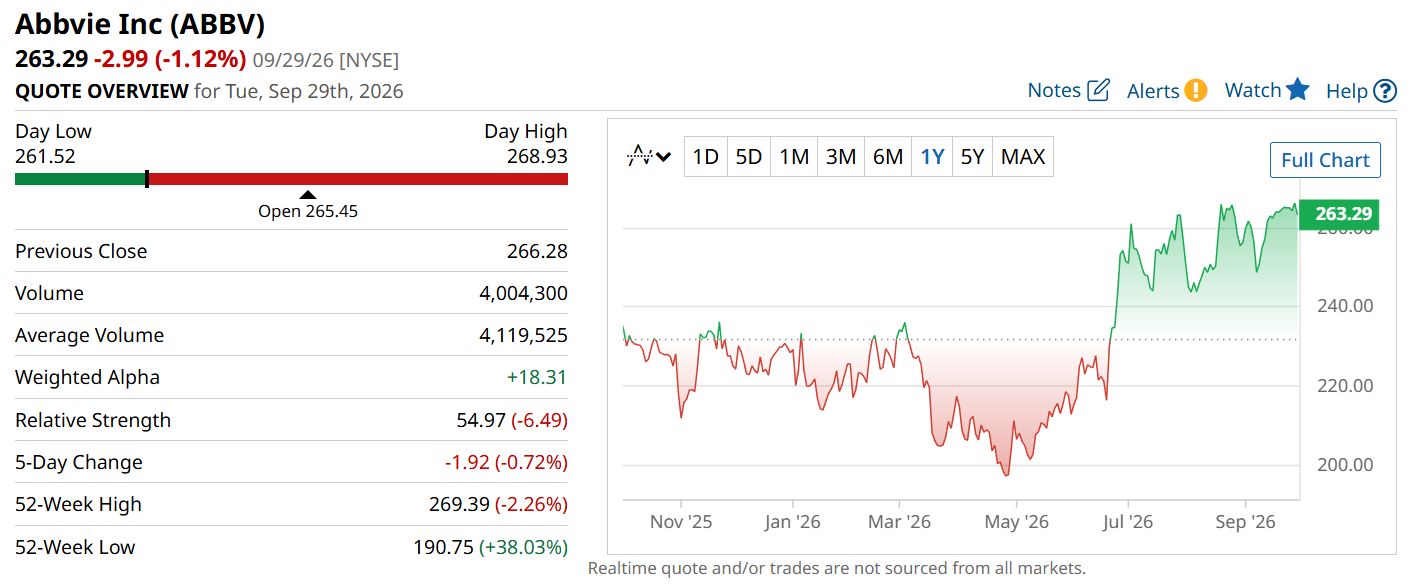 Screenshot courtesy of www.barchart.com
 Deals also seem to be a favored entry point into the GLP-1 market. AbbVie (ABBV) went a similar route by licensing a long-acting amylin analog from Danish biotech Gubra in 2025. The company paid $350 million upfront, with up to $1.875 billion in milestones. Those numbers alone tell you how much these drug companies value a spot in the GLP-1 market.
Its drug, ABBV-295, is also a long-acting amylin analog. It targets amylin and calcitonin receptors, a different pathway from GLP-1 and GIP drugs.
In Phase 1, weekly dosing produced 7.75% to 9.79% weight loss at week 12. Groups that moved to every-other-week or monthly dosing after week 5 lost 7.86% to 9.73% at week 13, and the placebo group lost about 0.25%. One caveat: participants had a BMI under 30, and most were men.
Translation? The drug continues to work with just a few doses. That gives AbbVie a possible edge in convenience, since fewer injections could make it easier for patients to stay on treatment. Again, though, it’s just in Phase 1.
China's Growing Role in the GLP-1 Market
The competition goes beyond who’s developing what and extends to who’s developing where.
Some of the most interesting entries in the GLP-1 race are coming from China.
Innovent's mazdutide, a GLP-1/glucagon agonist partnered with Eli Lilly, was approved there in June 2025. In Phase 3, its 9 mg dose produced an average 16.65% weight loss over 60 weeks, with weight loss reaching 19.6% among participants without type 2 diabetes, and up to 20.08% in Innovent's own analysis.
Eli Lilly isn’t the only one buying into the Chinese GLP-1 market. Pfizer agreed to pay up to $495 million, including milestones, for mainland China commercialization rights to Sciwind Biosciences’ ecnoglutide, then licensed an oral GLP-1 from YaoPharma for $150 million upfront and up to $2.1 billion in total.
Novo also struck a deal with Hengrui on Sept. 29, paying $300 million upfront for a once-weekly oral GLP-1/GIP candidate, in a deal worth up to $2.6 billion. The drug hasn't been through Phase 1 yet, so it's a bet on potential.
The evidence so far points to China becoming an important source of GLP-1 molecules, delivery methods, and, more importantly, a fresh batch of new competitors. Western pharmaceutical giants are already willing to spend billions for access to these candidates, and that could make Chinese drugmakers an increasingly important force in the global GLP-1 market. The next big GLP-1 drug could well come from a Chinese laboratory.
GLP-1 Risks Every Patient and Investor Should Know
New frontiers in drugs never come without risks. In fact, it’s even riskier than your typical business. Let’s talk about what the GLP-1 platform is facing.
First, pricing pressures are still uneven, and it’ll take time to settle down. Governments and insurers are pushing hard on GLP-1 costs. Competitors are piling into the market, which could force companies to lower their prices. That’d be good news for patients, but it could put pressure on companies' revenue and margins. That’s why today's list of winners might not be the same in two to three years.
Then there's generic semaglutide. India, Canada, and Brazil are among the markets where it could put significant pressure on branded products, and Indian manufacturers already launched their versions in March 2026.
There's also the ongoing problem of compounded and gray-market versions. These alternatives expand access to semaglutide, but they also create additional competition for branded drugs and raise concerns about product quality, dosing, manufacturing standards, and patient safety.
Then comes the biggest risk: side effects and long-term safety.
GLP-1 has been on the market since 2005. Years of clinical data have accumulated on the platform. Still, these timelines are blips compared with the long-term safety questions that remain. Right now, gastrointestinal problems such as nausea, vomiting, diarrhea, and constipation are among the most common side effects, while regulators also warn about more serious complications involving the gallbladder, pancreas, and kidneys.
These more serious complications are thankfully rare. But widespread use exposes the drug to a larger population, in which more uncommon problems may emerge. Who knows what health effects GLP-1 may have 20, 30, or even 50 years down the line?
For investors, picking the wrong candidate today may lead to massive losses later. Many of the drugs covered here are in early clinical trials. Sure, their early results look promising, but so do many of the drugs that go through trials every year in the U.S. Do you know the failure rate for clinical drug trials?
Roughly 9 out of 10 drugs that enter Phase 1 never reach approval.
More drugs fail in Phase 2, where fewer than 30% of candidates advance, but that doesn’t mean passing Phase 2 is a sure ticket to the public market. So when you’re betting on GLP-1 trials today, know there's a big chance a candidate might fail.
That’s why promising trial results shouldn't be the only factor. Check the pipeline progress, other GLP-1 products already generating revenue, how long its patents and exclusivity can protect its market share, and how much financial power it has to fund the next generation of drugs.
Because if you’re betting on a one-off and it fails, your money’s as good as gone.
What's Next for GLP-1 Drugs?
GLP-1 has grown from a treatment for diabetes and obesity into something much larger. New indications, oral pills, longer-lasting treatments, next-generation molecules, and combination therapies are all expanding the platform and the number of patients it could eventually serve.
That creates a massive opportunity for pharmaceutical companies. Eli Lilly and Novo already have proven products generating billions in sales, while companies like Pfizer, Amgen, Roche, and AbbVie are investing heavily to carve out their own piece of the market. And don't forget, the Chinese drugmakers are also becoming increasingly important as Western companies look overseas for new molecules and technologies.
But investors need to remember that a massive market does not automatically make every company in it a good investment. Patent expirations, pricing pressure, competition, safety concerns, and clinical trial failures can all change the picture quickly.
The GLP-1 race is still in its early innings. Some companies will emerge as long-term winners, while others will spend billions chasing drugs that never reach the market. For investors, the challenge is figuring out which companies have the science, pipeline, patents, and financial strength to stay in the race.
On the date of publication, Rick Orford did not have (either directly or indirectly) positions in any of the securities mentioned in this article. All information and data in this article is solely for informational purposes. For more information please view the Barchart Disclosure Policy here.
More news from Barchart
Eli Lilly vs. Novo: The Hidden Battle Behind the Weight-Loss Platform Reshaping Industries Micron Just Reported Earnings in the Middle of a Memory Shortage. Here Are the Numbers You Need to Know. This Analyst Just Downgraded Moderna Stock. Here's Why. FTC Launches Sweeping Probe Into Anthropic and OpenAI — Just as a $2 Trillion IPO Hangs in the Balance