

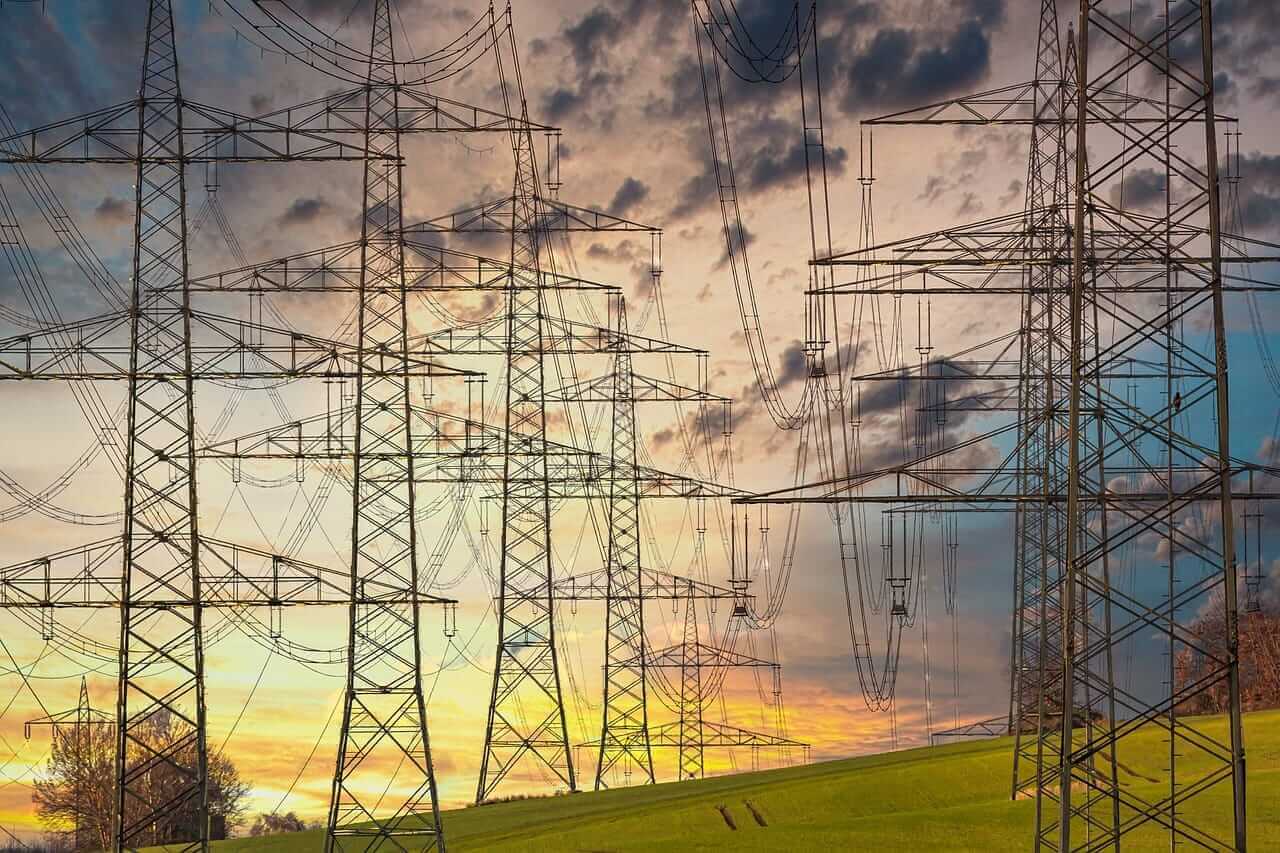
Everybody hates to open up an energy bill to find a huge number they weren’t expecting. But it’s a real kick in the teeth when you haven’t done anything to warrant a rate increase. You’ve not installed an EV charger, bought a hot tub, or started leaving all the lights on to combat seasonal blues. The price has gone up just because the power company feels like charging more.
Well, that’s the stark reality: around 46,000 households are facing it right now in Northern California.
Don’t Miss a Day: From crude oil to coffee, sign up free for Barchart’s best-in-class commodity analysis.
Earlier this month, Pacific Power asked state regulators to approve a 57% increase in electricity rates. That proposal would add about $120 per month onto the typical household bill, and you’ve got to admit the optics aren’t great. After all, we’re in the middle of a cost of living crisis, right? And it doesn’t help that Pacific Power is owned by Berkshire Hathaway (BRK.A) (BRK.B) Energy, because you know the guy who owns that company isn’t hurting for cash.
Then again, there are actually some uncomfortable complications here. Nobody wants to pay higher bills. But the way Pacific Power is spinning it, a rate increase today could end up insulating customers from much bigger costs tomorrow. And like it or not, that looks like the direction things are headed for households all over the country.
A 57% Rate Hike Is a Lot to Swallow
This all stems back to a general rate case that Pacific Power filed with the California Public Utilities Commission (CPUC) on Nov. 6. The filing is requesting an increase of approximately $103.4 million in annual revenue, which would impact 46,000 customers across Siskiyou, Del Norte, Modoc, and Shasta counties.
That doesn’t sound like a lot of customers for a densely populated state like California, and it’s not. Although the company’s turf covers more than 11,000 square miles, Pacific Power has a really sparse customer base compared to other utility providers in the state. Where Pacific Gas and Electric (PCG) serves around 79 customers per square mile, Pacific Power only has about four.
Why does that comparison matter? Because electricity infrastructure isn’t magically cheaper to build and maintain just because there aren’t as many people around. Pacific Power still has to repair, protect, and inspect miles and miles of power lines across remote terrain covered by mountains and forests.
So, the company is arguing that this 57% rate increase is a necessary evil. It would also be offset by a separate 14% rate decrease that’s already scheduled to take effect in January 2027. But for struggling families in Northern California, that’s still a big jump. Why now?
The primary culprit here is the cost of wildfires. According to Pacific Power's CPUC filing, about 79% of the proposed increase would directly fund fire mitigation measures. And they're not just talking about sending out more teams to clear branches away from overhead cables. The company’s been slowly installing insulated power lines, upgrading equipment, and replacing wooden power poles with new steel and fiberglass poles.
Now, Pacific Power says it needs to turn to vegetation management and new fault detection tech to prevent electrical failures. Given that some 60% of the company’s service area sits inside designated high fire-threat districts, you can see why any and all risk mitigation sounds worthwhile.
The Alternative Could Cost Way More
Unfortunately for ordinary customers like you and I, there’s a pretty strong financial argument for allowing utility companies to recover reasonable safety investments through higher rates. After all, if a company can’t generate enough revenue to maintain the network, that means it’ll have to cancel upgrades and end up wasting more money on emergency repairs.
As a result of wildfire litigation, Pacific Power has been arguing that its financial position is becoming more and more tenuous. The company is part of Pacificorp, whose credit rating has taken a hit recently. It’s difficult to feel bad for a faceless utility company, sure. But if that utility company can’t access capital on reasonable terms, it can’t provide a reliable service for customers either.
So, the CPUC could reject this rate increase, and everybody in Northern California would be really pleased, for the short term at least. But when the next wildfire comes, the associated costs would probably make that $120 per month seem very reasonable.
Still, there is another tangent to this story. And it's the fact that this isn’t the only rate hike request that Pacific Power has submitted this year. Remember that litigation trouble we just talked about? Well, it’s set the company back by $340.5 million worth of liability claims. As a result of those legal costs, they’ve already asked the CPUC to tack on another $39.17 to everybody’s electricity bill in order to help them make up the difference.
Customers are definitely entitled to question that one. After all, regulators have already proposed a $27 million penalty on California utility companies for failing to meet wildfire mitigation plan requirements. So, it turns out not every expense is an unavoidable cost of doing business. Some of these rate proposals genuinely are down to a company trying to save its own skin.
The bottom line here is that Berkshire Hathaway needs to make one heck of a case to its customers. Normal families shouldn’t be expected to absorb every financial shock that a big business incurs. Then again, refusing to fund grid improvements leaves communities even more exposed to fire damage and expensive repairs in the future.
That leaves customers between a rock and a hard place, and it's not just Northern California we're talking about here. With climate change rearing its ugly head all over the place, these kinds of rate hikes are probably going to become a lot more common all over the country. Unfortunately, there’s not a lot we can do but brace for impact.
On the date of publication, Nash Riggins did not directly have a position in any of the securities mentioned in this article. All information and data in this article is solely for informational purposes. For more information please view the Barchart Disclosure Policy here.
More news from Barchart
Why Berkshire Hathaway Wants to Raise Your Electricity Bill by $120 a Month How to Play OKLO Stock as Oklo Secures Key Fuel Supply for Its Ohio Plant Fermi Stock Drops After Q3 Results: How a $200M Hyperscaler Deal Could Drive a Recovery Sugar Prices Face Seasonal Headwinds: Will Energy Markets Add More Selling Pressure?