

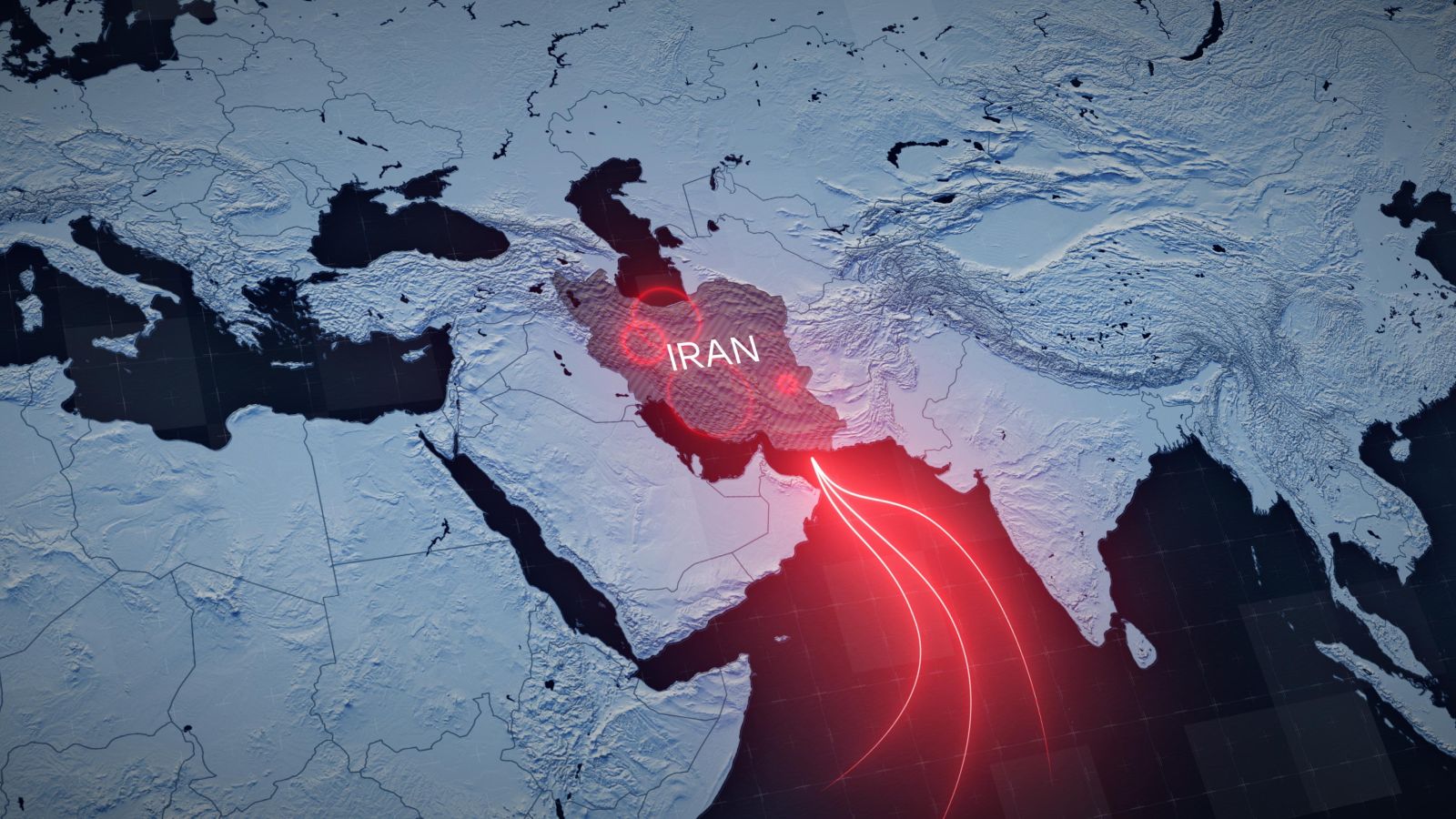
May WTI crude oil (CLK26) today is up +6.57 (+6.96%), and May RBOB gasoline (RBK26) is up +0.0825 (+2.74%). Crude oil and gasoline prices are moving sharply higher today on doubts about the sustainability of the US-Iran ceasefire. The Strait of Hormuz remains blocked, and Israeli attacks on Lebanon threaten to derail the ceasefire. Crude prices fell from their best levels after NBC reported that President Trump asked Israel to scale back attacks on Lebanon to ensure the success of the Iran negotiations.
The US and Iran both accused each other of violating the ceasefire, with a key disagreement over whether the truce extends to Lebanon. President Trump pledged to keep US troops in the Persian Gulf ahead of Saturday’s talks with Iran, while Iran warned there may be mines in the strait. It remains to be seen if there will be a permanent end to the Iran war as Iran has shown little willingness to accept US demands to eliminate its nuclear program or retire its ballistic missile arsenal.
Don’t Miss a Day: From crude oil to coffee, sign up free for Barchart’s best-in-class commodity analysis.
Persian Gulf oil producers have been forced to cut production by roughly 6% due to the closure of the Strait of Hormuz as local storage facilities reach capacity. The Strait of Hormuz normally handles a fifth of the world’s oil. The Strait of Hormuz remains largely closed, with Iran still restricting access and preventing energy flows to global markets. Iran’s deputy foreign minister said today that oil tankers and other vessels seeking to transit the strait must communicate with Iranian authorities to ensure their safe passage. There are more than 800 vessels trapped in the Persian Gulf, with over 1,000 vessels waiting on both sides of the strait to transit. Before the war, the average daily volume of ships transiting through the strait was about 135.
Crude prices also have support after Saudi Arabia’s state producer, Saudi Aramco, raised the price of its main oil grade to Asia by $17 a barrel for May delivery, the biggest jump on record.
In a bearish factor for crude, OPEC+ on Sunday said it will boost its crude output by 206,000 bpd in May, although that production hike now seems unlikely given that Middle East producers are being forced to cut production due to the Middle East war. OPEC+ is trying to restore all of the 2.2 million bpd production cut it made in early 2024, but still has another 827,000 bpd left to restore. OPEC’s March crude production fell by -7.56 million bpd to a 35-year low of 22.05 million bpd.
Mounting crude supplies in floating storage are a bearish factor for oil prices. According to Vortexa data, about 290 million bbl of Russian and Iranian crude are currently in floating storage on tankers, more than 40% higher than a year ago, due to blockades and sanctions on Russian and Iranian crude. Vortexa reported Monday that crude oil stored on tankers that have been stationary for at least 7 days fell -3.9% w/w to 130.25 million bbl in the week ended April 3.
The most recent US-brokered meeting in Geneva to end the war between Russia and Ukraine ended early as Ukrainian President Zelenskiy accused Russia of dragging out the war. Russia has said the “territorial issue” remains unresolved with Ukraine, and there’s “no hope of achieving a long-term settlement” to the war until Russia’s demand for territory in Ukraine is accepted. The outlook for the Russia-Ukraine war to continue will keep restrictions on Russian crude in place and is bullish for oil prices.
Ukrainian drone and missile attacks have targeted at least 28 Russian refineries over the past eight months, limiting Russia’s crude oil export capabilities and reducing global oil supplies. Also, since the end of November, Ukraine has ramped up attacks on Russian tankers, with at least six tankers attacked by drones and missiles in the Baltic Sea. In addition, new US and EU sanctions on Russian oil companies, infrastructure, and tankers have curbed Russian oil exports.
Wednesday’s EIA report showed that (1) US crude oil inventories as of April 3 were +1.5% above the seasonal 5-year average, (2) gasoline inventories were +3.6% above the seasonal 5-year average, and (3) distillate inventories were -4.2% below the 5-year seasonal average. US crude oil production in the week ending April 3 fell -0.4% w/w to 13.596 million bpd, mildly below the record high of 13.862 million bpd posted in the week of November 7.
Baker Hughes reported last Thursday that the number of active US oil rigs in the week ended April 3 rose by +2 to 411 rigs, just above the 4.25-year low of 406 rigs posted in the week ended December 19. Over the past 2.5 years, the number of US oil rigs has fallen sharply from the 5.5-year high of 627 rigs reported in December 2022.
On the date of publication, Rich Asplund did not have (either directly or indirectly) positions in any of the securities mentioned in this article. All information and data in this article is solely for informational purposes. For more information please view the Barchart Disclosure Policy here.
More news from Barchart
Exxon Mobil Stock Is Trading on an Iran War Thesis. How Should You Play XOM Here? 1 Stock to Play the Iran War Energy Shock This Is Not Your Father’s Gold Market Anymore Let’s Get This Strait: Amid Hormuz Closure, Oil Prices Are the Only Macro Force That Matters