

Intel Corporation’s (INTC) capex story is getting more attention because the company is spending more while the market is starting to focus on supply, not just demand. On July 23, Intel said 2026 capex will rise above $20 billion, and it expects 2027 spending to be even higher.
Importantly, the chip industry is still trying to keep up with strong AI-related demand. Capacity is tight, advanced packaging is still hard to get, and chipmakers are being forced to spend more to stay in the game.
More Top Stocks Daily: Go behind Wall Street’s hottest headlines with Barchart’s Active Investor newsletter.
That upward revision is the quiet catalyst now drawing attention to Intel. It has also drawn fresh attention to whether the foundry operation can finally convert process progress and capacity investment into large-scale external customer wins.
Can the higher spend prove a quiet positive for Intel Foundry, or will execution once again determine whether the capital generates the returns investors are waiting for?
Intel’s Rising Capex and Richer Valuation
Intel designs and manufactures semiconductors, processors, and related technologies for personal computers, data centers, and manufacturing clients worldwide. The company is headquartered in Santa Clara, California, and its operations span advanced chip design, fabrication, and foundry services for external customers.
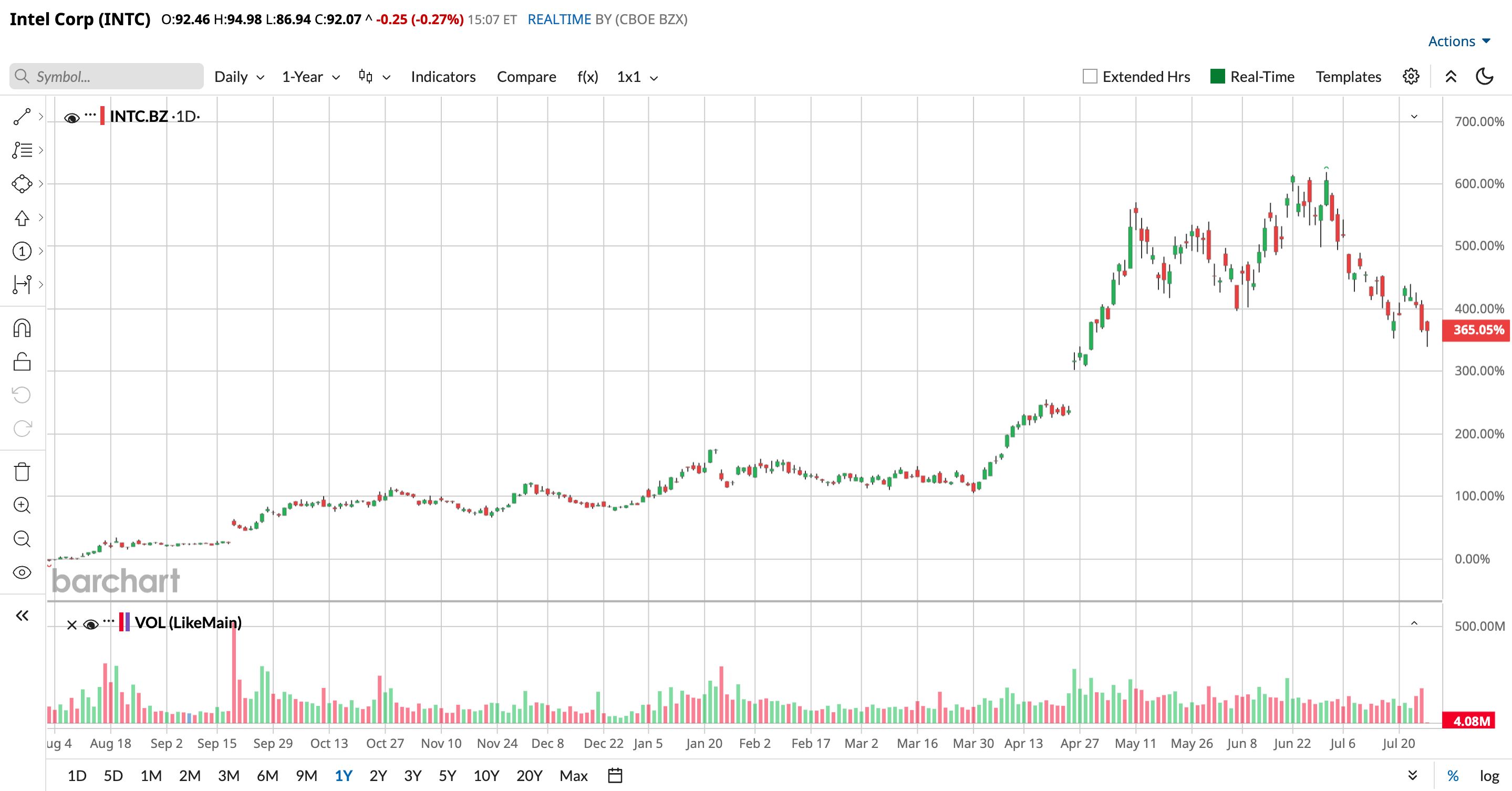
INTC is up 144% year-to-date (YTD) and 335% over the past 52 weeks.
 www.barchart.com
 Its $464 billion market cap supports a premium 9.53 times price-to-sales ratio versus the sector median of 3.47 times. The 154.95 times forward price-to-earnings also sits well above the sector median of 24.77 times, showing investors are pricing in a lot of future improvement.
Intel reported Q2 2026 financial results on July 24, with revenue of $16.13 billion, up 25% from Q2 2025. Their gross margin reached 41.8%, up 12.1 points, while R&D and MG&A fell 8% to $4.0 billion.
This helped operating margin move to 17.2%, up 21.1 points, while net income attributable to Intel came in at $2.2 billion. That translated into diluted EPS of $0.42, reinforcing the case that spending can still coexist with improving profitability.
Intel’s Foundry Gains a Customer Signal
Intel’s foundry story got a real customer test when Fortinet agreed to co-develop the Fortinet Security Processor 6 (SP6) on Intel 4. Fortinet said the chip will combine its own security chip expertise with Intel’s design, packaging, and manufacturing strengths, which gives Intel a more visible role in a real external project.
That step fits with the broader foundry progress Intel has been trying to show. At the 2026 VLSI Symposium, Intel Foundry laid out its process roadmap and plans, then said 18A-P had entered risk production.
Intel said 18A-P is the first improved version of 18A, with 9% better performance, 18% lower power use, and at least 20% better heat resistance. That makes it easier to reuse existing designs and brings the process closer to real customer use.
Apple (AAPL) adds another possible boost, though it is still more of a future catalyst than a sure bet. Apple could start with lower-end chips, and any advanced product may take two to three years to arrive. Volume production could still land in late 2027 or early 2028.
Together, these updates suggest Intel is still moving its foundry roadmap forward in a more concrete way.
Analyst Confidence Builds
Intel’s next earnings report is due on October 22, and analysts expect September quarter EPS of $0.16, up from $0.11 a year earlier. That suggests 45.45% growth year-over-year (YOY), which keeps the stock in focus.
That is partly the reason that the recent commentary has sounded more constructive. Jim Cramer called Intel his No. 1 stock, which shows how much attention the name is drawing again.
Meanwhile, Wedbush took a firm view ahead of earnings, keeping a “Neutral” rating. They said Intel can still benefit as demand for computing power keeps rising.
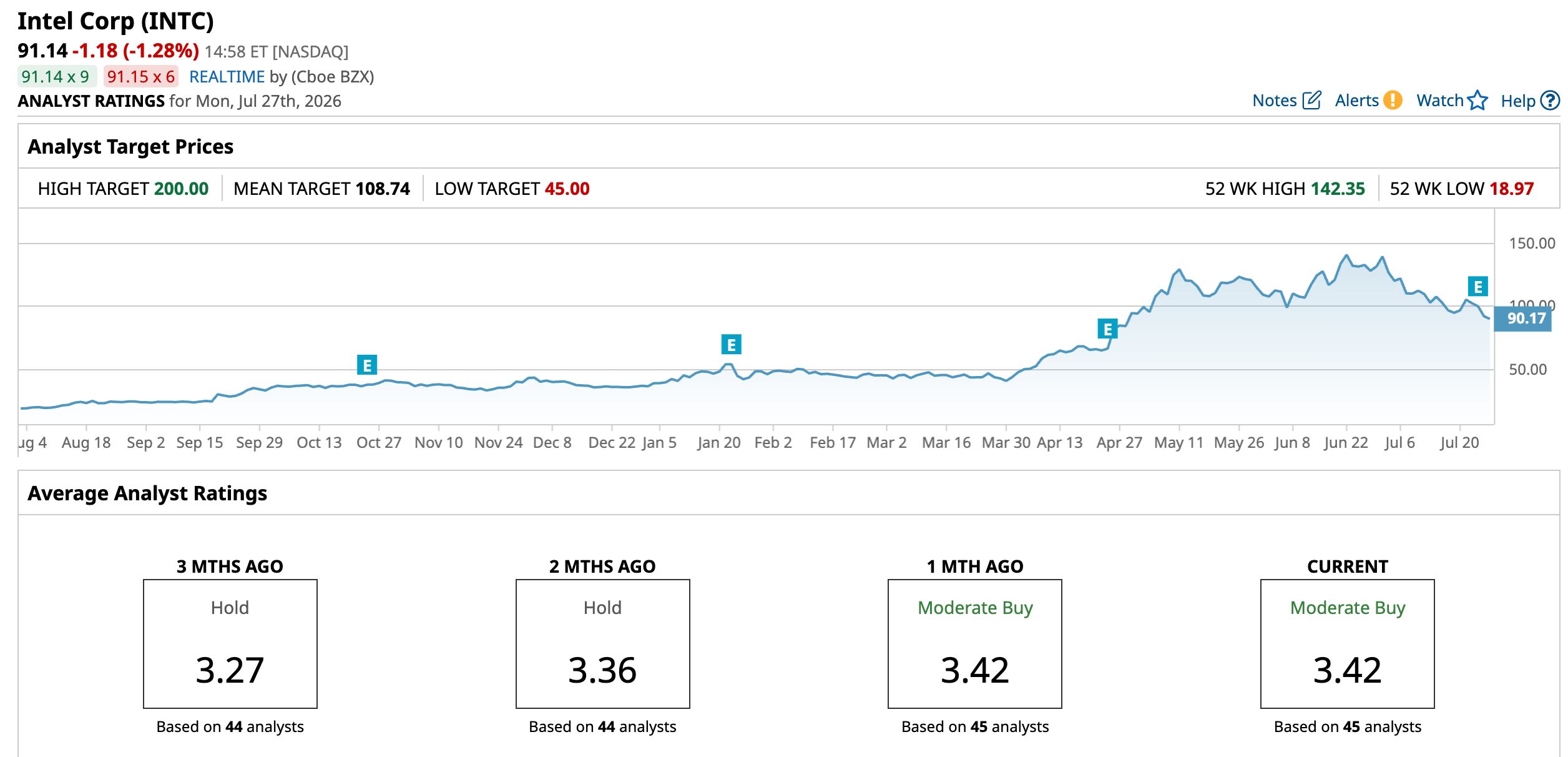
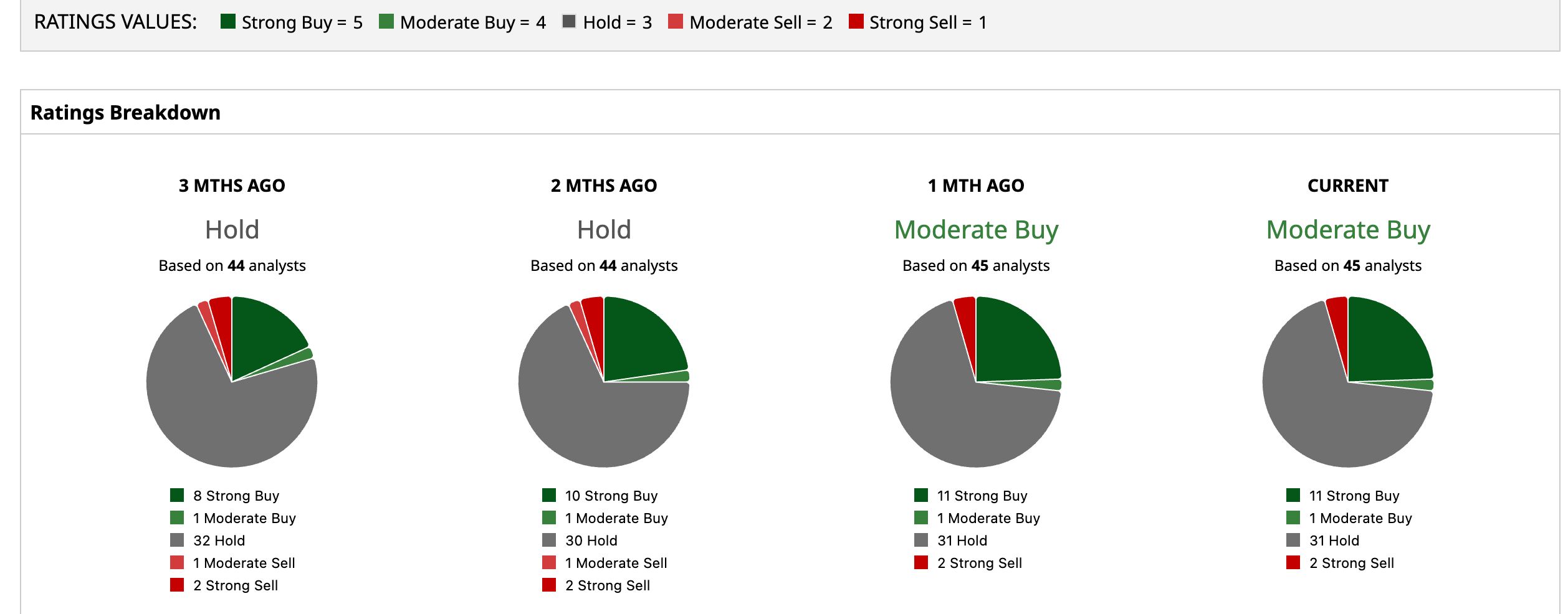
The broader Street view is even more supportive. Across 45 analysts, Intel carries a “Moderate Buy” consensus rating. The average price target is $108.74, indicating a 19.3% upside from the current price. This gap suggests the market still sees room for more upside if Intel keeps delivering.
 www.barchart.com
  www.barchart.com
 Conclusion
Intel’s capex plan is a true positive for the foundry story, but the market still wants proof that the spending turns into customer wins and better execution. That is the real test, and it is still ahead. Intel’s shares are most likely to stay firm if Intel keeps showing progress on foundry traction and process milestones. The path higher still looks open, but it may come in steps rather than one clean breakout, as long as the next updates keep backing up the story.
On the date of publication, Ebube Jones did not have (either directly or indirectly) positions in any of the securities mentioned in this article. All information and data in this article is solely for informational purposes. For more information please view the Barchart Disclosure Policy here.
More news from Barchart
Why Microsoft Stock Could Stay Under Pressure Despite Bullish Q4 Outlook Intel’s Capex Plans Offer a Quiet Positive for the Foundry Business. The Real Test Is Still Execution. Wedbush Just Raised Its Price Target on Seagate Stock. Here's Why. Albertsons Stock Is Plunging After the Grocery Giant Slashed Its Outlook. Consumer Weakness Is to Blame.