


Kraft Heinz (KHC) has not been a story of growth in recent years. Volumes are down, revenues are under pressure, and the stock is trading below its 52-week high price. However, according to RBC Capital Markets, it appears that investors might have overlooked what lies ahead.
RBC recently initiated its coverage of Kraft Heinz with a price target of $32 and an “Outperform” rating. Analyst Nik Modi forecasts that the packaged food giant will start organic growth in 2027 when its organic revenue growth is estimated to reach 0.9% versus the consensus estimate of 0.4%. The thesis is partially driven by approximately $700 million of additional investments into pricing, innovation, and marketing in 2026. As a result, 2027 will be the test year for Kraft Heinz: the company has to show that increasing investment into its brands can lead to higher volumes and growth of revenues.
More Top Stocks Daily: Go behind Wall Street’s hottest headlines with Barchart’s Active Investor newsletter.
About Kraft Heinz Stock
Headquartered in both Pittsburgh and Chicago, The Kraft Heinz Company is one of the largest producers of packaged foods and beverages in the world. The company's brand list includes Heinz, Kraft, Philadelphia, Lunchables, Capri Sun, and Oscar Mayer. Currently, the market capitalization of Kraft Heinz is about $29 billion.
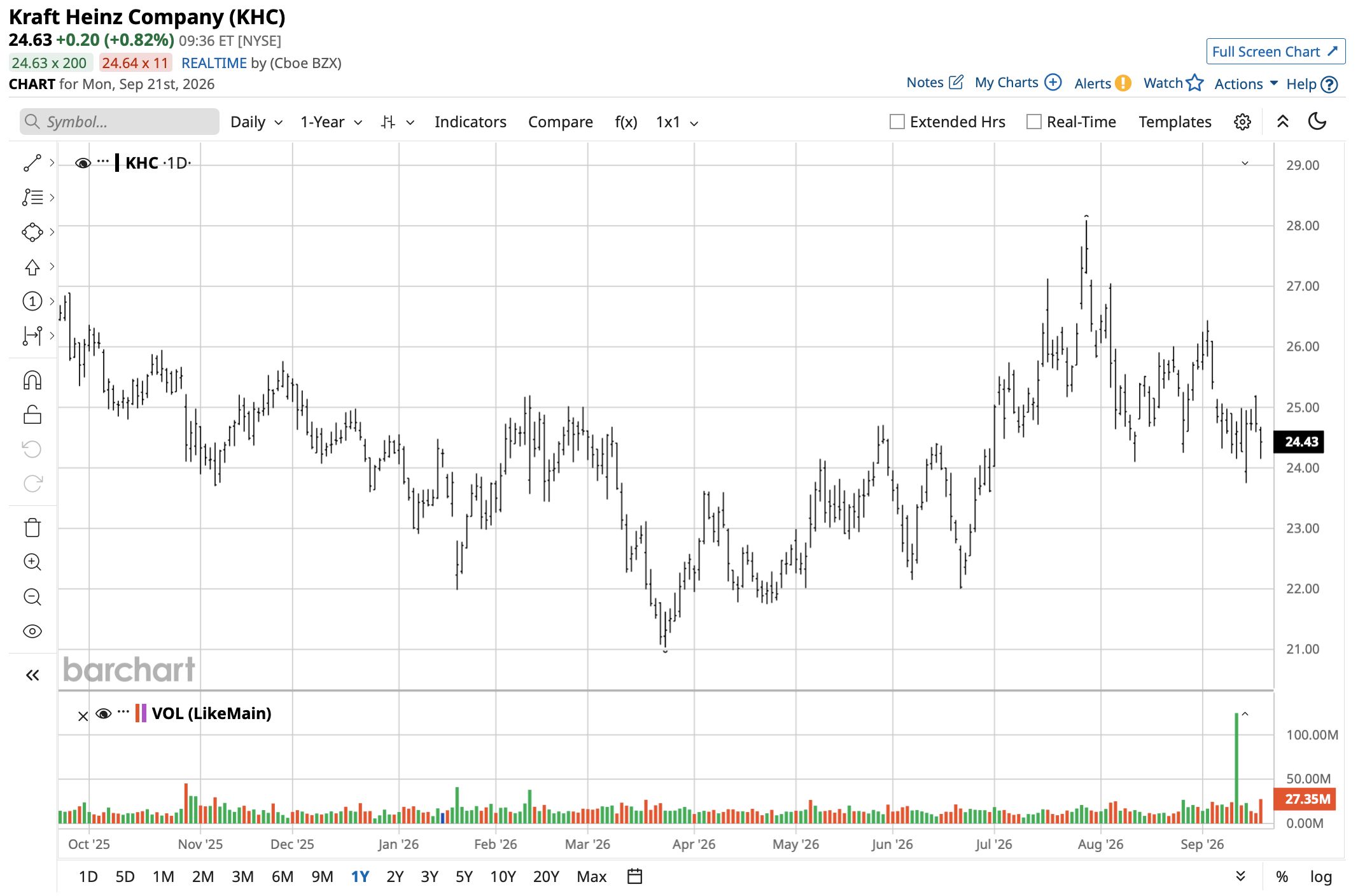
KHC stock is trading around $24, having a 52-week price range from $21.03 to $28.09. The stock is approximately 13% below its 52-week high price despite recovering around 16% since its low, and it lags the S&P 500 Index ($SPX), which is still in the green for 2026.
 www.barchart.com
 The valuation is one of the elements of RBC's thesis that stands out. The current multiple of KHC is approximately 11.9 times of forward earnings and 1.16 times of sales. Moreover, KHC's forward P/E ratio is below several previous highs of the stock reached this decade. This suggests that investors are currently not paying a lot for the growth. It makes sense given the weakness in the volumes but becomes more interesting if RBC turns out to be correct.
Another element of the story is income. Kraft Heinz distributes a quarterly dividend of $0.40 per share ($1.60 annually); that means the current forward yield is about 6.5%. The most recent declared dividend payment date is Sept. 25.
Kraft Heinz Outperforms on Earnings
Although the performance of Kraft Heinz remains under pressure, its Q2 earnings results were better than expected. The adjusted EPS was $0.56 (vs. the $0.53 consensus estimate), while the revenues reached $6.26 billion (also better than the expected $6.18 billion). Still, the net sales were down by 1.4%, while organic net sales decreased by 1.3%. The adjusted EPS also declined by 18.8% year-over-year (YoY) from $0.69.
Some of the reasons behind this performance can be found in the sales mix. Pricing added 1.3 percentage points of growth, but the volumes / mix declined by 2.6 percentage points. The adjusted operating income declined by 18.4% to $1 billion due to additional marketing expenditures, the negative impact from volumes / mix, inflationary manufacturing and logistics costs, and higher variable compensation costs.
However, management turned more optimistic regarding its revenues. Kraft Heinz raised its 2026 organic net sales outlook, expecting to see a decline of 0.5% to 2%. The EPS is expected to be between $2.03 and $2.09. For the current quarter, Barchart provides a consensus EPS estimate of $0.43 vs. $0.61 in the corresponding quarter last year.
More importantly, for RBC's thesis, management raised its planned incremental investments by $100 million to approximately $700 million for 2026. It is all about spending more on brands, product innovation, and marketing in order to start growing the revenues in 2027. RBC specifically mentions such innovative products as PowerMac and Capri Sun Hydrate, which try to address consumer needs and not protect the existing shelf space.
What Do Analysts Expect for KHC Stock?
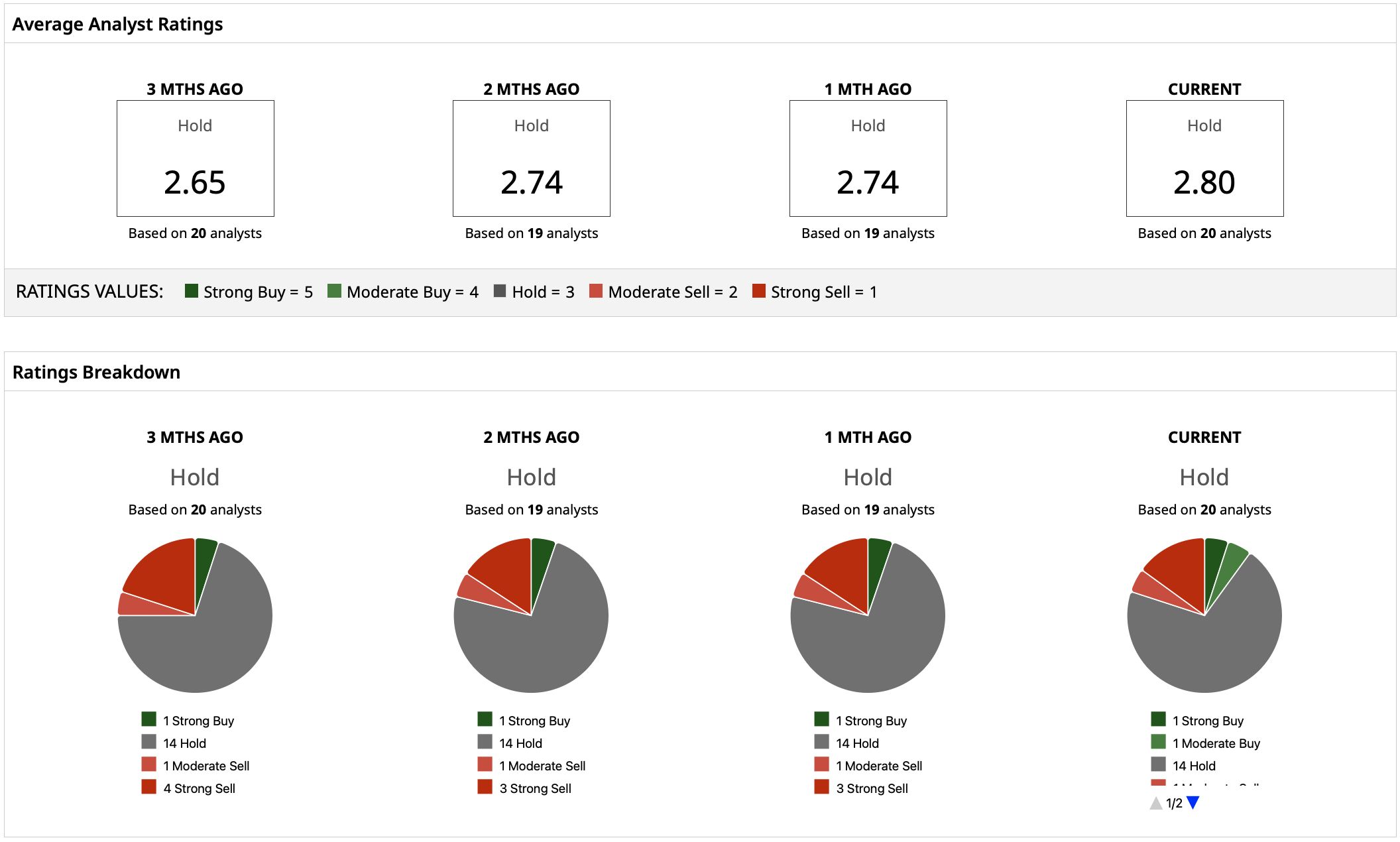
Wall Street is considerably more cautious on Kraft Heinz than RBC. KHC stock currently has a “Hold” rating consensus. This is a crucial difference from RBC's recent “Outperform” call, which suggests that the broad analyst community does not yet consider the future growth of 2027 that RBC expects. The mean price target of KHC is $24.67, while the lowest price target is $19. At the current price of about $24, KHC is trading almost exactly at its mean target. RBC is considerably more optimistic here with its newly issued price target of $32, which implies potential upside of approximately 33%.
 www.barchart.com
 On the date of publication, Yiannis Zourmpanos did not have (either directly or indirectly) positions in any of the securities mentioned in this article. All information and data in this article is solely for informational purposes. For more information please view the Barchart Disclosure Policy here.
More news from Barchart
RBC Is Bullish on Kraft Heinz Stock and Expects Growth to Return in 2027 Huawei Is Ramping Up to New Chips in 2027. What That Means for Nvidia Stock Now. Meta’s Muse Is Dominating the App Store. What This Means for META Stock. This Blue-Chip ‘Loser’ Just Might Offer Contrarians a Pleasant Surprise