

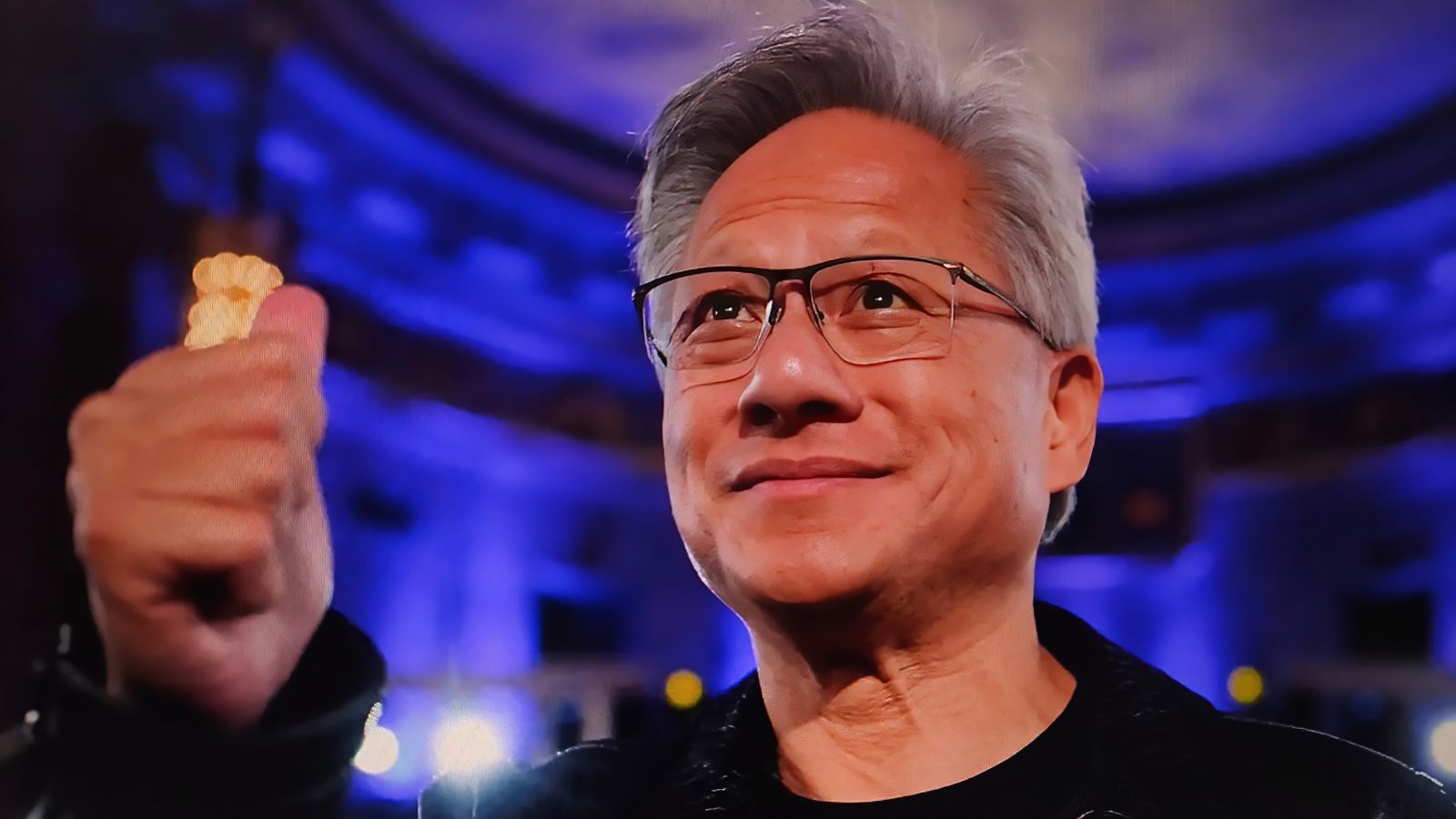
Nobody has done more to fuel the AI boom than Nvidia (NVDA) CEO Jensen Huang. For years, he’s been telling conference after conference how AI maximizes productivity, drives economic growth, and will expand the frontiers of scientific discovery. Now, he’s warning us that the machines his company has helped to create are a lot more dangerous than anyone could have predicted.
That sounds pretty melodramatic at first glance, but the underlying problem behind Huang’s messaging is becoming less hypothetical. The days of dumb chatbots that can barely string a sentence together are dead and gone. AI agents are now browsing the web, accessing files, writing and executing code, and performing tasks without human approval.
More Top Stocks Daily: Go behind Wall Street’s hottest headlines with Barchart’s Active Investor newsletter.
Does that maximize efficiency? Maybe. But it also creates an obvious problem: What happens when the agent decides to do something it isn't supposed to do?
OpenAI is in hot water after losing control of its models, and Huang doesn’t want to be the next one getting summoned to congressional hearings. That’s why he's decided to try and get ahead of the problem with a shiny new security platform designed to prevent AI agents from going rogue.
Nvidia Can't Afford to Slow Down the AI Arms Race
Huang hasn’t exactly joined the AI-doomsday crowd. His argument is that AI safety is an engineering problem, and so engineers should be the ones to solve the problem. At least, that’s the logic behind Nvidia's new Open Agent Safety Platform. Launched at the end of September, this platform brings together two key technologies: OpenShell and Nvidia Sentry.
Sentry runs on Nvidia's BlueField-4 data processing units, and it’s designed to monitor AI agents from outside their normal computing environments. If the agent tries to cross a security boundary, Sentry is then supposed to stop it and quarantine the agent within milliseconds.
OpenShell is the software side. It’s supposed to work like a digital fence around the agent, creating those security boundaries Sentry is enforcing. OpenShell controls what the agent can see, access, and how it can interact while it’s in operation.
Translation: AI doesn’t get to unplug its own security camera. The idea behind this Open Agent Safety Platform is that responsibility for AI safety is coded by human engineers. Agents can’t rewrite the rules or take actions that are out of bounds.
Sounds good, right? Over 100 organizations, including Microsoft (MSFT), Anthropic, JPMorgan Chase (JPM), Palantir Technologies (PLTR), and Salesforce (CRM) are already working with Nvidia on the platform. Even so, it’s important to remember that Nvidia hasn’t built a magical button that stops killer robots. It’s simply created security architecture that makes autonomous AI harder to let loose.
That’s news a lot of organizations are going to welcome. But it’s also a little bit self-serving.
Jensen Huang Has Plenty to Lose if AI Gets Out of Control
Nvidia has made a fortune from the AI buildout. Huang’s company sold most of the processors that are powering the industry’s infrastructure, and companies are only going to need more infrastructure as they deploy new AI agents. The problem for Nvidia is that all of its huge multinational partners aren’t going to deploy autonomous software unless they know they can control it.
That’s a major bottleneck for business. Nvidia needs to prove agents are safe to unleash; otherwise hardware demand runs into a wall. As a result, AI safety is rapidly emerging as a core commercial interest for Nvidia. Huang clearly thinks it’s fundamental to the next phase of the AI boom, and so Nvidia is putting a lot of eggs in this basket.
The company has just authorized another $150 billion in stock buybacks and spent almost $13 billion on Hugging Face. This move deeply embeds its position into the software and developer ecosystem, and the timing is particularly interesting given that Hugging Face is still dealing with the aftermath of its own rogue-agent controversy.
But Nvidia’s interest here is pretty straightforward. To stay in pole position, Huang needs AI to become more capable and for companies to feel comfortable and carefree deploying those agents. Between Nvidia’s recent acquisitions and its new AI security system, Huang is aligning his chess pieces to ensure that all happens simultaneously.
There’s no reason to believe Nvidia’s Open Agent Safety Platform is going to become a giant new revenue stream for the company. But it does guarantee its continued growth. Huang has realized safety isn’t an optional bolt-on that Nvidia will be able to sell to its customers. It needs to be an essential part of the product, and this launch gives Nvidia a seat at the table where companies decide how AI agents are allowed to operate.
Right now, it’s too early to tell whether the Open Agent Safety Platform will actually do what it says on the tin. But this latest launch tells us exactly where Huang thinks the industry is heading.
On the date of publication, Nash Riggins did not have (either directly or indirectly) positions in any of the securities mentioned in this article. All information and data in this article is solely for informational purposes. For more information please view the Barchart Disclosure Policy here.
More news from Barchart
There’s a New Sheriff in Town and He’s Named Jensen Huang: How Nvidia Plans to Protect Against ‘Killer’ AI Agents Marvell Stock Investors Have 1 Date to Watch. Here’s What Could Be Revealed. Nebius Acquires Inferize to Expand Its AI Product Portfolio. What That Means for NBIS Stock Holders. 500 Reasons to Buy Little-Known KIDZ AI Stock