

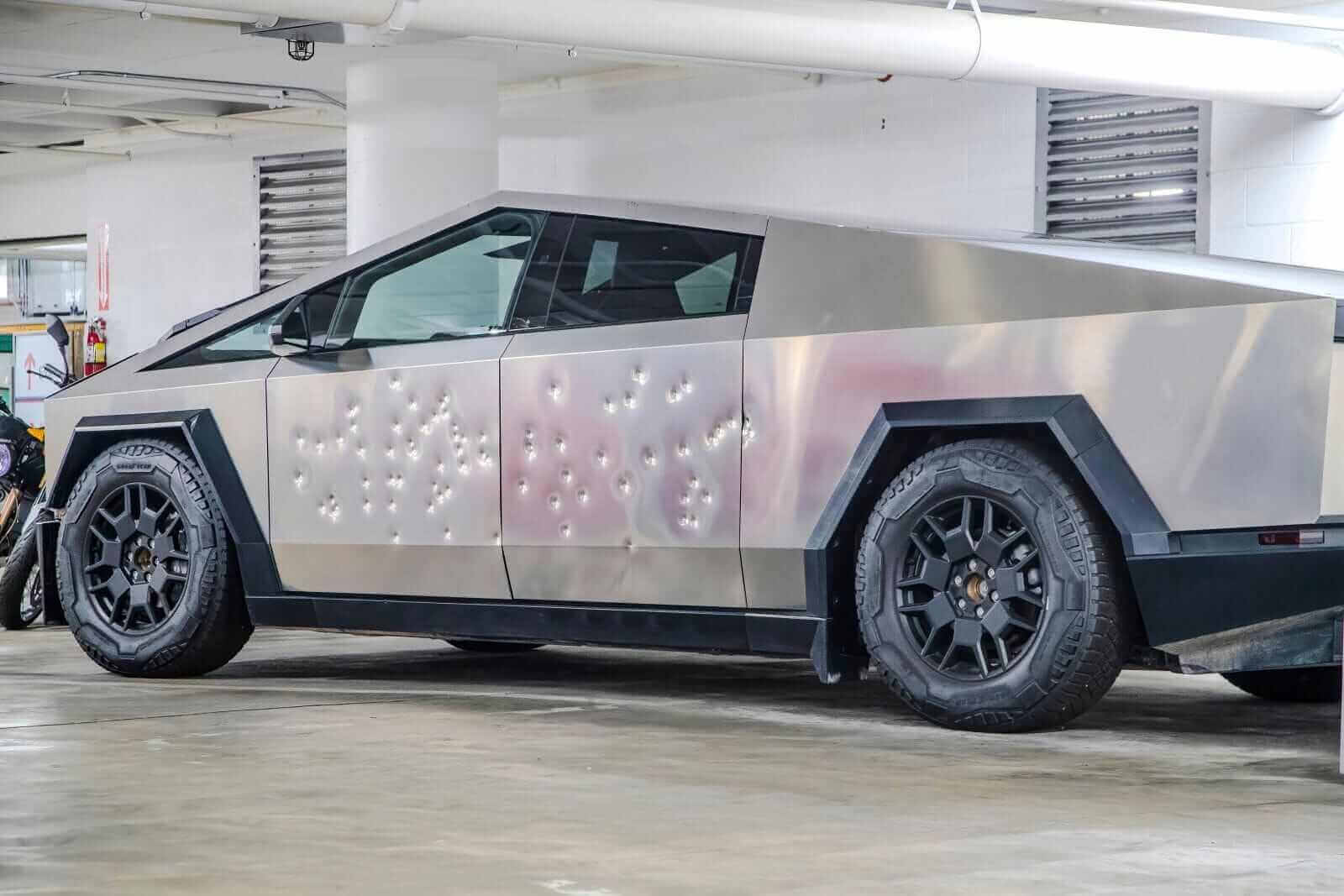
After the discontinuation of Model X and Model S, Tesla (TSLA) has announced that it will cease production of its electric pickup truck, the Cybertruck. Announcing this through a post on X, CEO Elon Musk confirmed that production of the vehicle at the company's Gigafactory in Texas will cease, while shifting focus towards the Cybercab, Tesla's two-seat, fully autonomous EV, primarily designed to operate as a driverless taxi.
Marking the end of an unsuccessful era, the Cybertruck's story since its first public appearance in 2019 has been fraught with unwelcome events, culminating in its eventual demise.
More Top Stocks Daily: Go behind Wall Street’s hottest headlines with Barchart’s Active Investor newsletter.
Promise of a Revolution
With the Cybertruck, Musk wanted to do what he did with his earlier vehicles to the pickup truck industry, dominated by the incumbents, such as Ford (F) and General Motors (GM). Hinted at by Musk in 2017, the world got a first glimpse of the Cybertruck on November 21, 2019, at the company's design center in Hawthorne, CA. Deviating from the look of a conventional pickup truck, the Cybertruck grabbed instant attention due to its exterior, which it claimed would provide exceptional durability, resistance to dents and corrosion, and protection against certain projectiles.
However, ominously, the two windows cracked after metal balls were thrown at them. Musk blamed the earlier sledgehammer demonstration to display the toughness of its doors for the crack. Yet, Tesla still received 146,000 reservations by November 23, 2019, and subsequently said the figure had reached 250,000 within five days of the unveiling as Tesla's three iterations of the pickup truck gained considerable traction.
Notably, the entry-level version was supposed to start at $39,900, offer 250 miles of range, tow up to 7,500 pounds and accelerate from zero to 60 mph in 6.5 seconds. The $49,900 dual-motor version promised 300 miles of range, 10,000 pounds of towing capacity and a 0–60 mph time of 4.5 seconds. Finally, the flagship tri-motor version was priced at $69,900, with more than 500 miles of range, over 14,000 pounds of towing capacity and acceleration to 60 mph in under 2.9 seconds. Tesla also advertised a payload capacity of up to 3,500 pounds, a 6.5-foot cargo bed, seating for six adults, adaptive air suspension, and up to 16 inches of ground clearance.
Executional Nightmare
However, since then, the Cybertruck took four long years to start sales. This was due to supply-chain and production challenges, which pushed production to 2023. The first customer deliveries eventually took place on November 30, 2023. Moreover, this led to a rise in prices, which shrank the customer count even more. The initial $39,900 starting price became $60,990 at the 2023 launch. The dual-motor version started at $79,990, while the Cyberbeast flagship was priced at $99,990.
Other specifications also changed, leaving customers even more irked. Instead of the original 500-mile range promised, the initial Cybertruck offered an advertised range of about 320 miles, while the dual-motor version offered roughly 340 miles. The original 14,000-pound towing promise also gave way to a maximum production rating of 11,000 pounds. Finally, the payload specification was reduced from 3,500 pounds to approximately 2,500 pounds, and the production vehicle accommodated five occupants rather than the originally promised six.
All this was reflected in the sales, which declined each year from 2024 (its first full year of sales) till the fourth quarter of 2026. While the start was somewhat healthy, with sales of 38,965 Cybertrucks in 2024, the figure declined to 20,237 units in 2025 and just 11,586 units in 2026. It must also be noted that this was the period of federal EV tax credits, which made the showing even more dire; however, with a market share of 30.4% in the period, the Cybertruck remained the market leader in electric pickup vehicles.
Yet, despite a market-leading position, the writing was on the wall for the Cybertruck, replete with slowing sales (a far cry from Musk's projections of a 250,000 annual production target) and numerous recalls. Moreover, Musk's increasing ambitions for AI and humanoid robots made the Cybertruck even less of a priority.
Notably, Tesla could eliminate production-related expenses associated with manufacturing a relatively low-volume vehicle, while at the same time, efficiently utilizing its installed capacity for a product with a stronger demand while also potentially freeing up funds for its ambitious Terafab, the massive chip manufacturing initiative to be jointly developed by SpaceX (SPCX), Tesla, xAI, and Intel (INTC).
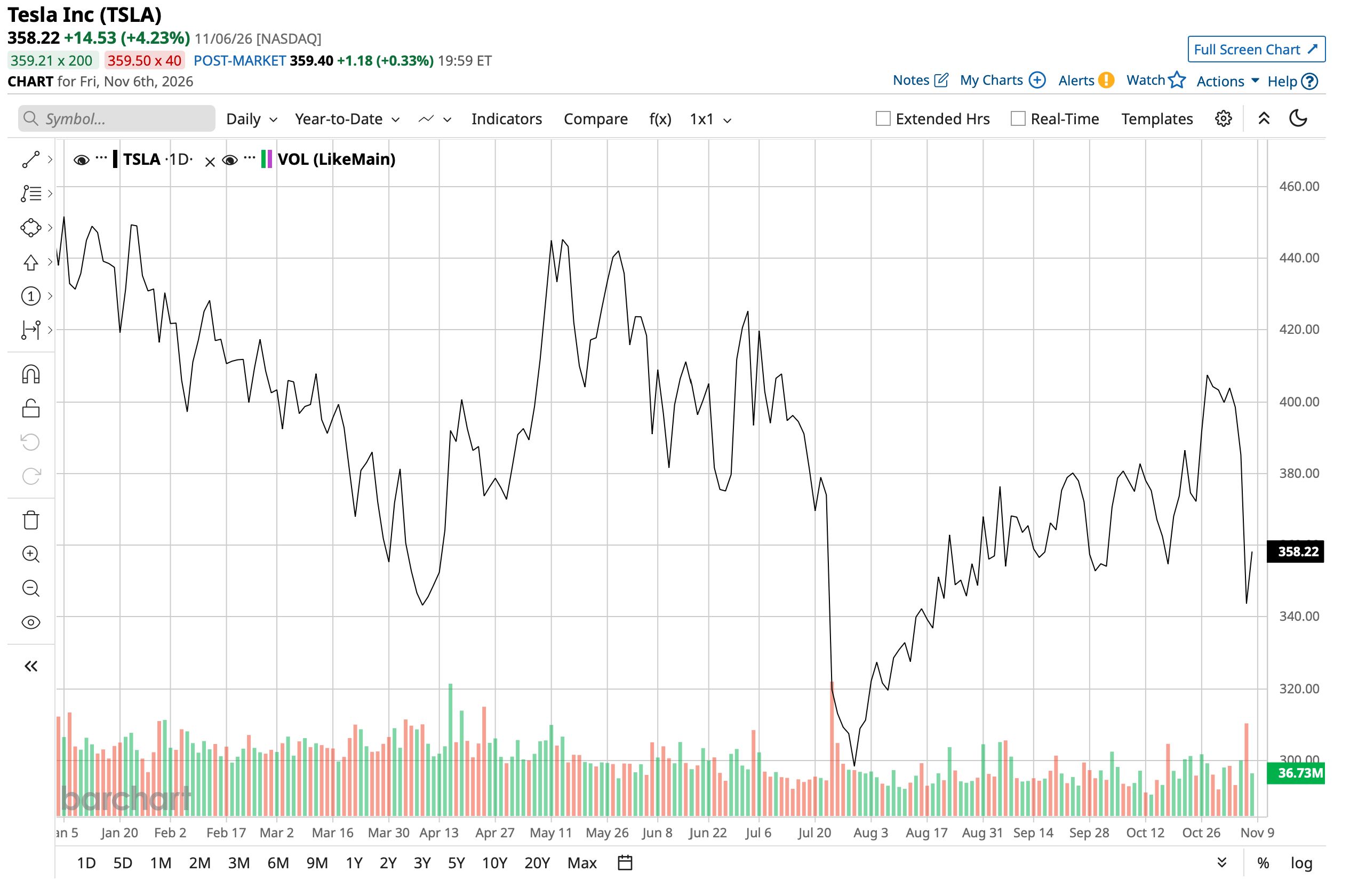
Tesla currently commands a market cap of $1.4 trillion, with the stock down 20.4% on a YTD basis.
 www.barchart.com
Analyst Opinion on TSLA Stock
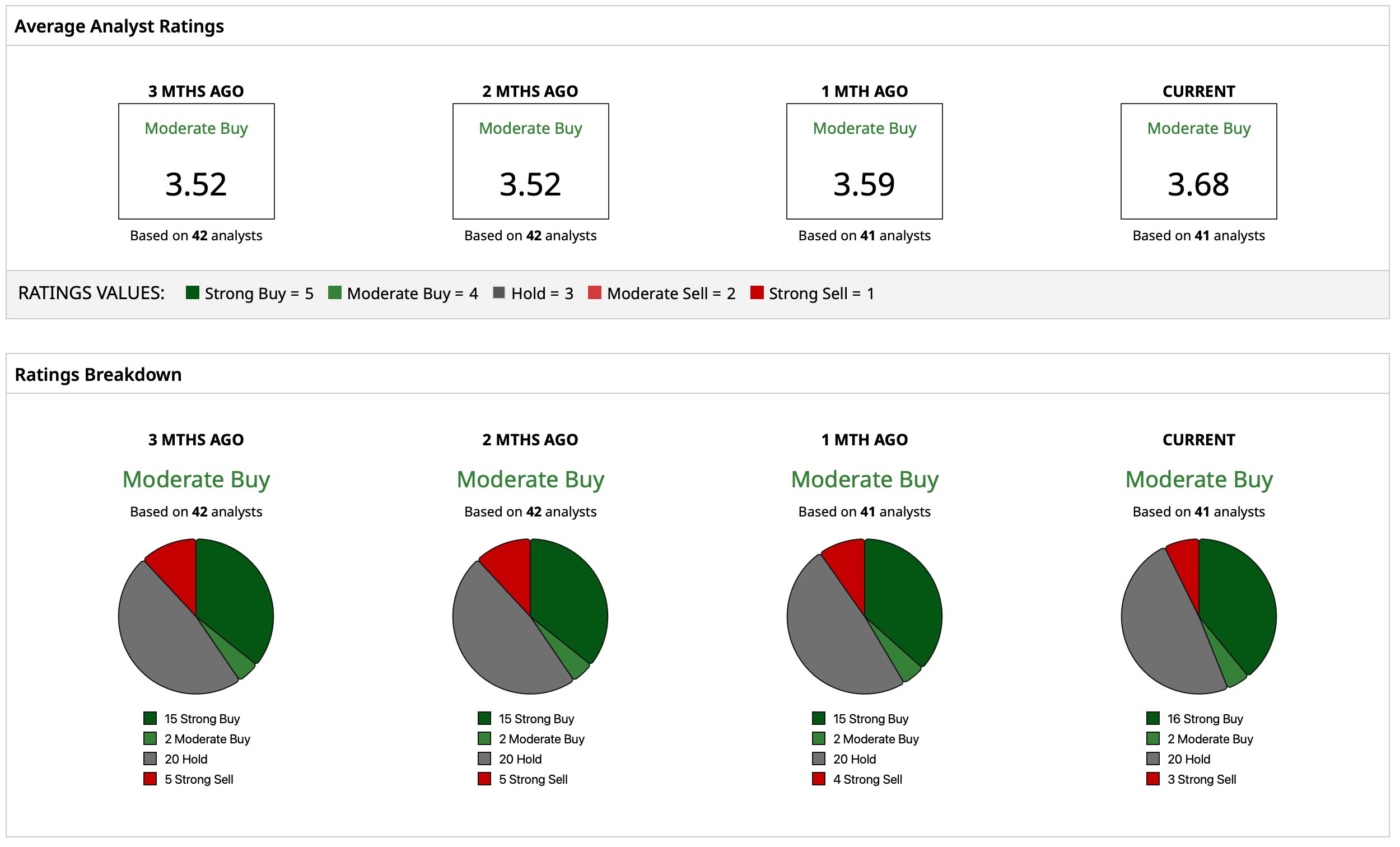
Amid all this, analysts' sentiments around Tesla remain cautiously optimistic. They have assigned an overall rating of “Moderate Buy” for the stock, with a mean target price of $414.94, which denotes a potential upside of 15.8% from current levels. Out of 41 analysts covering the stock, 16 have a “Strong Buy” rating, two have a “Moderate Buy” rating, 20 have a “Hold” rating, and three have a “Strong Sell” rating.
 www.barchart.com
On the date of publication, Pathikrit Bose did not directly have a position in any of the securities mentioned in this article. All information and data in this article is solely for informational purposes. For more information please view the Barchart Disclosure Policy here.
More news from Barchart
Want to Get Paid $1,000 a Year for 10 Years? Just Live Right Next to a Data Center. Cybertruck Production Is Set to End as Elon Musk Finally Closes the Coffin on a Multi-Year Executional Nightmare Down 44% From All-Time Highs, Here’s Why You Should Consider Buying the Micron Stock Dip Palantir vs. AMD: Both Stocks Have Pulled Back More Than 20%, But 1 Is a Better Value Buy Here