

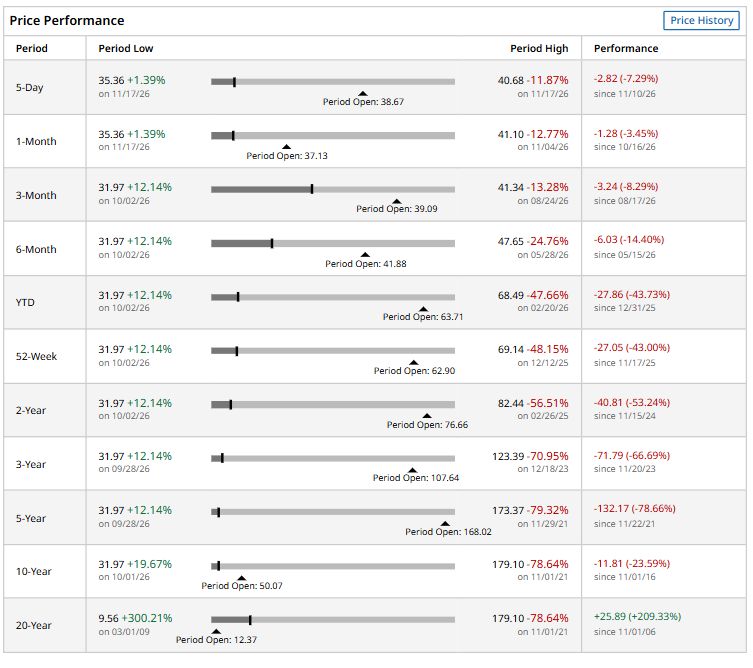
Nike (NKE) stock is under significant selling pressure. Shares are down about 44% year-to-date and are trading nearly 48% below their 52-week high. The decline reflects macroeconomic headwinds impacting consumer spending, intensifying competition across the global athletic footwear and apparel industry, and evolving consumer preferences. These challenges have weighed on Nike’s revenue and profitability, and, in turn, its share price.
Although Nike stock has experienced a significant correction, it isn’t undervalued. Nike’s turnaround strategy remains in its early stages, and meaningful improvements in revenue growth, profitability, and market positioning are likely to take time.
More Top Stocks Daily: Go behind Wall Street’s hottest headlines with Barchart’s Active Investor newsletter.
Nike's Long-Term Recovery Strategy: Aiming for Growth by Fiscal 2031
At its Investor Day, Nike outlined a long-term financial framework focused on restoring sustainable growth, strengthening profitability, and improving shareholder returns through fiscal 2031. Using fiscal 2027 as the base year, the company is targeting $5 billion in incremental revenue by fiscal 2031.
Performance Sports is expected to serve as the main contributor to this expansion, accounting for approximately $4 billion of the targeted incremental revenue. The remaining $1 billion is expected to come from the Sportswear segment. This allocation highlights management's intention to prioritize performance-oriented categories as a key driver of future growth.
 www.barchart.com
However, Nike's projected recovery follows a relatively extended timeline. Fiscal 2027 and fiscal 2028 are expected to remain investment-focused years, with management prioritizing business improvements and overall revenue quality. Although revenue declines are expected to moderate in fiscal 2028, the company does not anticipate returning to growth until fiscal 2029.
The growth outlook becomes more optimistic in fiscal 2030 and fiscal 2031, when Nike expects revenue growth to accelerate and outperform the broader market. This improvement is contingent on strategic investments generating stronger returns, a more favorable revenue mix, and productivity initiatives translating into meaningful operating efficiencies. While the targets indicate management's confidence in the long-term strategy, the extended recovery period also highlights the execution risks investors must consider.
Productivity Initiatives to Support Margin and Payouts
An important component of Nike's turnaround strategy is its Pace productivity initiative, which is expected to generate approximately $2.5 billion in annualized run-rate savings by fiscal 2031. The benefits are scheduled to begin in fiscal 2027, with savings expected to increase more meaningfully during fiscal 2029 and fiscal 2030.
Nike expects improvements in revenue quality, gross margin expansion, and productivity to collectively support operating margins of approximately 12% to 14% by the end of fiscal 2031. Based on these assumptions, management is targeting adjusted earnings per share of $3.00 to $3.50 by fiscal 2031.
Despite the investment requirements associated with its turnaround, Nike intends to maintain capital returns to shareholders. Including fiscal 2027, the company expects to distribute approximately $12 billion in cumulative dividends through the end of fiscal 2031.
Why It’s Still Early to Buy Nike Stock
Despite the substantial correction in Nike’s share price, investors should exercise caution before initiating a position, as the company’s recovery is expected to take several years. Although its fiscal 2031 growth targets, $2.5 billion productivity savings program, and efforts to restore operating margins provide reasons for optimism, these initiatives are unlikely to translate into an immediate improvement in financial performance.
Nike expects elevated investments to continue through fiscal 2027 and fiscal 2028, while a meaningful return to revenue growth may not materialize until fiscal 2029. This prolonged recovery period, along with execution challenges, intensifying competition, and persistent uncertainty surrounding consumer spending, could constrain the stock’s near-term upside.
Operational headwinds also remain significant. Weakness across Nike’s sportswear portfolio, the Jordan brand, and its Greater China business is likely to continue pressuring revenue and profitability. Furthermore, analysts project a 21.5% decline in earnings in fiscal 2027, reflecting the impact of promotional activity, increased discounting, and ongoing efforts to rebalance the marketplace and strengthen the brand’s competitive positioning.
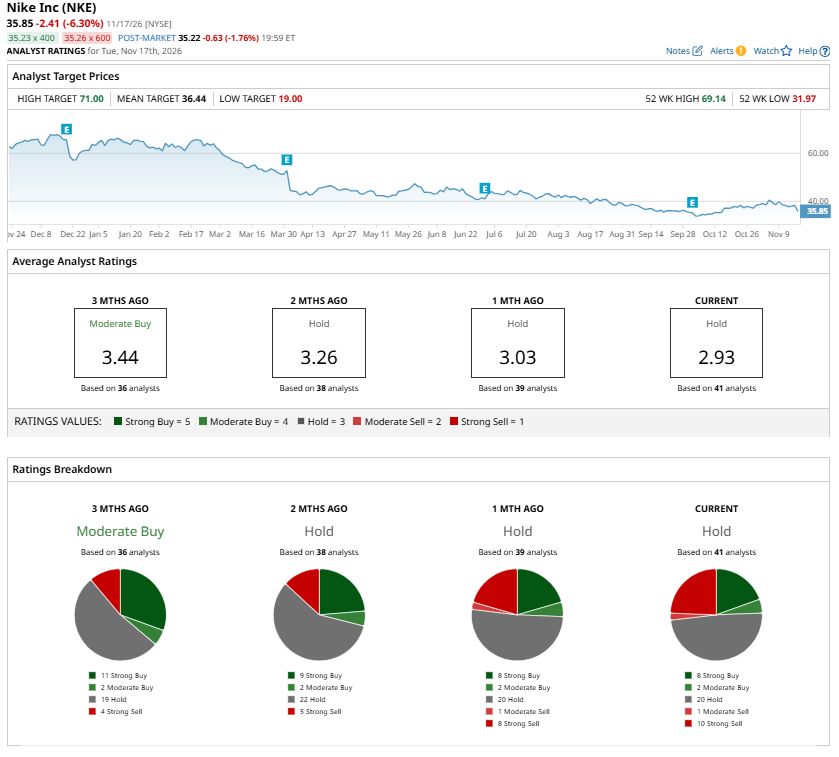
Overall, Nike’s long-term recovery prospects appear promising, but the investment case depends on successful execution and sustained improvement in operating fundamentals. The current “Hold” consensus rating among analysts reflects near-term uncertainties. Consequently, investors should remain on the sidelines until there is clearer evidence of improving revenue trends, margin stabilization, and earnings recovery.
 www.barchart.com
On the date of publication, Amit Singh did not directly have a position in any of the securities mentioned in this article. All information and data in this article is solely for informational purposes. For more information please view the Barchart Disclosure Policy here.
More news from Barchart
Dear Nvidia Stock Fans, Mark Your Calendars for December 10 What Might the Break in the S&P Mean for the Commodity Complex? Nike Stock Is Down 44% This Year. Why It’s Still Too Early to Buy. Turn Coca-Cola into an Income Machine with This Options Play