
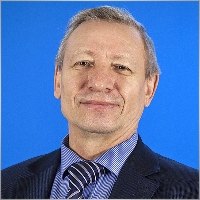
Mansur Gilmullin
Mathematician, Researcher, Data Scientist в Fuzzy Technologies
Нидерланды
https://fuzzy-technologies.github.io/ Открыть профиль на MQL5
For more than 50 years, my professional life has been devoted to mathematics: algebra, number theory, mathematical modeling, teaching, and the development of formal methods for data analysis. I graduated from the Faculty of Mechanics and Mathematics of Kazan State University with a degree in Applied Mathematics, and later completed postgraduate studies in Algebra and Number Theory.
For many years, I worked in higher education: I taught algebra, number theory, number systems, computer algebra, elementary and advanced mathematics, and the history of mathematics. I also supervised students’ research projects and took part in training future specialists in mathematics and computer science.
I hold a Candidate of Pedagogical Sciences degree, a Russian PhD-level academic degree in education and teaching methodology, and the academic title of Associate Professor. I am the author of scientific, educational, methodological, and popular science works on mathematics, mathematics education, and the history of mathematical science. In recent years, I have also been involved in research and development related to algorithmic trading, numerical time series analysis, anomaly detection, and the application of mathematical models to automated decision-making.
Today I work at Fuzzy Technologies, a small engineering team that builds platforms, services, and algorithms for automated market analytics, algorithmic trading, and risk assessment. We develop analytical and trading tools that combine rigorous mathematics, probabilistic models, data processing, anomaly filtering, and fuzzy inference methods.
My main interest in this work is translating mathematical ideas into clear algorithms: filters, probabilistic estimates, flexible fuzzy scales, anomaly-processing rules, and decision-making models. Over the years of teaching, I have become used not only to working with complex structures, but also to explaining them in clear language. In trading systems, this is especially important: users should understand not only the result, but also the logic, limitations, and intended scope of an algorithm.
For me, a trading robot is not a “magic button” and not an attempt to guess the future. It is an engineering system that should carefully work with probabilities, noise, outliers, market regimes, and predefined risk management rules.
Our methods and algorithms are based on probabilistic models, return and volatility analysis, target price reachability estimation, anomaly filtering, fuzzy logic, and clear decision-making rules. We use Bayesian updating to refine estimates as new data becomes available, our own modification of the Hampel filter to detect outliers in numerical time series, probabilistic target estimation to analyze possible price movement scenarios, and fuzzy scales to interpret market states.
I do not consider it correct to promise an exact result when the very nature of the data is probabilistic, and the boundaries between market states are often fuzzy. The financial market is an environment of uncertainty, noise, and constantly changing regimes. That is why, in our products, we focus not on loud forecasts, but on verifiable rules, risk control, honest testing, and a clear description of limitations.
I have a particular interest in anomaly detection methods, expert systems, fuzzy sets, and the application of mathematical methods in cybersecurity, data analysis, and trading. In such tasks, absolute certainty is rare: data may be incomplete, noisy, or contradictory. That is why I consider it especially important to build models that do not replace risk with nice-sounding words, but take it into account when designing the algorithm.
The Fuzzy Technologies products published here are developed as engineering tools for MetaTrader 5. Their purpose is to provide users with a transparent, verifiable, and reproducible algorithmic system: without martingale strategies, without grid recovery, without promises of guaranteed profit, and without relying on manual, emotionally driven decisions.
We pay attention not only to entry signals, but also to market noise filtering, risk control, logical robustness, and the clarity of algorithm behavior. For me, a good algorithm is not one that looks beautiful in a single test, but one whose rules can be explained, verified, and applied with an understanding of its limitations.
In addition to research and engineering work, I continue to popularize mathematics and the history of science through my popular science blog “Mathematics with Mansur-abiy” (in Russian). For me, this is not just a hobby, but a continuation of the same professional path: mathematics is valuable not only for its formulas, but also for its culture of thinking, discipline of reasoning, and ability to work with the limitations of models and ideas.
My approach to algorithmic trading can be described as follows: rigorous mathematics, careful engineering, verifiable rules, respect for risk, and no unnecessary promises.
Графики и идеи

У пользователя пока нет торговых идей
Browse ready-made trading ideas or select a symbol and create your own
Go to Charts and Trading Ideas