

MiniMed Group, Inc. MMED recently announced results from a new randomized crossover study showing that glycemic outcomes remained nearly identical when patients used its MiniMed 780G automated insulin delivery system with either the Simplera Sync sensor or Abbott’s Instinct sensor. The findings, published in Diabetes Technology & Therapeutics , highlighted that the SmartGuard algorithm — rather than the sensor itself — serves as the primary driver of clinical performance.
The study evaluated 24 adults with type 1 diabetes across two six-week crossover periods and showed strong Time in Range metrics with both sensors, while no severe hypoglycemia or diabetic ketoacidosis cases were reported. MiniMed also shared updated real-world data from more than 20,000 U.S. users of the MiniMed 780G system, further supporting the consistency and effectiveness of its SmartGuard algorithm across different sensor integrations.
Likely Trend of MMED Stock Following the News
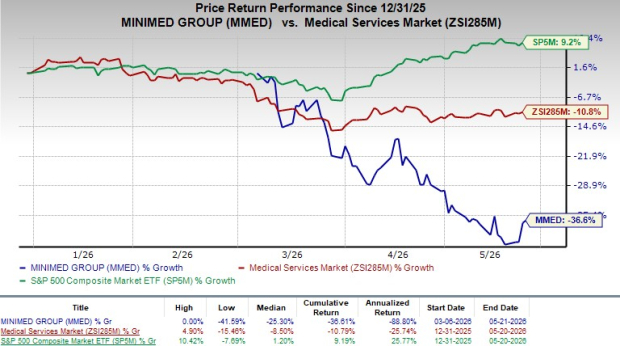
Shares of MMED have traded flat since the announcement on Thursday. In the year-to-date period, shares of the company have lost 36.6% compared with the industry’s 10.8% decline. However, the S&P 500 has risen 9.2% during the same timeframe.
The study results are likely to strengthen MMED’s long-term competitive positioning in the automated insulin delivery market by reinforcing the effectiveness and flexibility of its SmartGuard algorithm. Demonstrating consistent glycemic outcomes across multiple sensor options can improve customer confidence, support broader adoption of the MiniMed 780G platform and reduce dependence on a single sensor ecosystem. The findings may also help MiniMed expand partnerships, improve user retention and drive recurring revenue growth from its integrated diabetes management ecosystem over time.
MMED currently has a market capitalization of $3.27 billion.
Image Source: Zacks Investment Research
More on the Study Results
The randomized crossover feasibility study was designed to evaluate whether glycemic outcomes differed when the MiniMed 780G automated insulin delivery system was paired with either the Simplera Sync sensor or Abbott’s Instinct sensor.
The trial included 24 adults with type 1 diabetes, who were randomized to use one sensor for six weeks before switching to the alternate sensor for another six weeks. A new insulin pump was used during each crossover phase to eliminate any algorithm memory carryover effects. Results showed highly consistent performance across both sensors, with Time in Range levels of 79.1% for Instinct users and 80.6% for Simplera Sync users. HbA1c levels remained nearly identical at 6.7% and 6.8%, respectively, while mean sensor glucose and time spent in Auto Mode also remained closely aligned.
Notably, both sensors exceeded internationally recommended glycemic targets established by the American Diabetes Association, while no cases of severe hypoglycemia, diabetic ketoacidosis or unexpected device-related issues were reported during the study. The latest findings were further supported by real-world evidence from more than 20,000 U.S. MiniMed 780G users, which demonstrated consistent glucose control outcomes across different sensor integrations.
Management believes the expanding body of evidence validates the strength of the SmartGuard algorithm and supports the company’s strategy of offering users greater flexibility in sensor choice while maintaining strong clinical performance.
Industry Prospects Favoring the Market
Per a report by Grand View Research, the global insulin delivery devices market size was estimated at $19.3 billion in 2025 and is expected to reach $35.2 billion by 2033, expanding at a CAGR of 7.8% from 2026 to 2033.
Growth is largely attributed to the rising global prevalence of diabetes, which has heightened the demand for advanced and user-friendly solutions for diabetes management.
Other News
In March, MiniMed secured FDA clearance for MiniMed Flex, its next-generation smartphone-controlled insulin pump designed with a compact, screenless form factor for improved convenience and discretion. The device is roughly half the size of the MiniMed 780G pump and integrates the company’s SmartGuard adaptive algorithm with Meal Detection technology to automate insulin delivery in real time. At launch, MiniMed Flex is expected to support the company’s latest sensor portfolio, including Simplera Sync and Abbott’s Instinct sensor.
Also, MiniMed received CE Mark approval in Europe for integrating Abbott’s Instinct sensor with its MiniMed 780G automated insulin delivery system. The approval expanded sensor options for users of the company’s flagship insulin delivery platform, which is already compatible with the Guardian 4 and Simplera Sync sensors. Notably, the Instinct sensor offers up to 15 days of wear time, compared with seven days for MMED’s existing compatible sensors, providing users with greater flexibility and convenience.
MMED’s Zacks Rank & Key Picks
Currently, MMED carries a Zacks Rank #3 (Hold).
Some better-ranked stocks from the same medical industry are Pacific Biosciences of California PACB, Globus Medical GMED and Biodesix BDSX.
Pacific Biosciences of California, currently carrying a Zacks Rank #2 (Buy), reported a first-quarter 2026 adjusted loss per share of 12 cents, which surpassed the Zacks Consensus Estimate by 29.4%. Revenues of $37 million missed the Zacks Consensus Estimate by 9.3%. You can see the complete list of today’s Zacks #1 Rank (Strong Buy) stocks here.
PACB’s earnings are estimated to decline at a rate of 12.2% against the industry’s 16.9% growth in 2027. The company beat earnings estimates in each of the trailing four quarters, with the average surprise being 29.76%.
Globus Medical, carrying a Zacks Rank #2 at present, reported first-quarter 2026 adjusted earnings per share of $1.12, which outpaced the Zacks Consensus Estimate by 21.7%. Revenues of $760 million surpassed the Zacks Consensus Estimate by 4%.
GMED has an estimated long-term earnings growth rate of 10.2% compared with the industry’s 12.6% rise. The company beat earnings estimates in each of the trailing four quarters, with the average surprise being 26.26%.
Biodesix, currently carrying a Zacks Rank of 2, reported a first-quarter 2026 adjusted loss per share of 81 cents, which beat the Zacks Consensus Estimate by 35.71%. Revenues of $26 million beat the Zacks Consensus Estimate by 12.3%.
BDSX has an estimated earnings growth rate of 36% for 2026 compared with the industry’s 13.4% rise. The company beat earnings estimates in three of the trailing four quarters and missed once, with the average surprise being 25.56%.
7 Best Stocks for the Next 30 Days
Just released: Experts distill 7 elite stocks from the current list of 220 Zacks Rank #1 Strong Buys. They deem these tickers "Most Likely for Early Price Pops."
Since 1988, the full list has beaten the market more than 2X over with an average gain of +23.9% per year. So be sure to give these hand picked 7 your immediate attention.
See them now >>Want the latest recommendations from Zacks Investment Research? Today, you can download 7 Best Stocks for the Next 30 Days. Click to get this free report
Globus Medical, Inc. (GMED): Free Stock Analysis Report
Pacific Biosciences of California, Inc. (PACB): Free Stock Analysis Report
Biodesix, Inc. (BDSX): Free Stock Analysis Report
MiniMed Group, Inc. (MMED): Free Stock Analysis Report
This article originally published on Zacks Investment Research (zacks.com).