

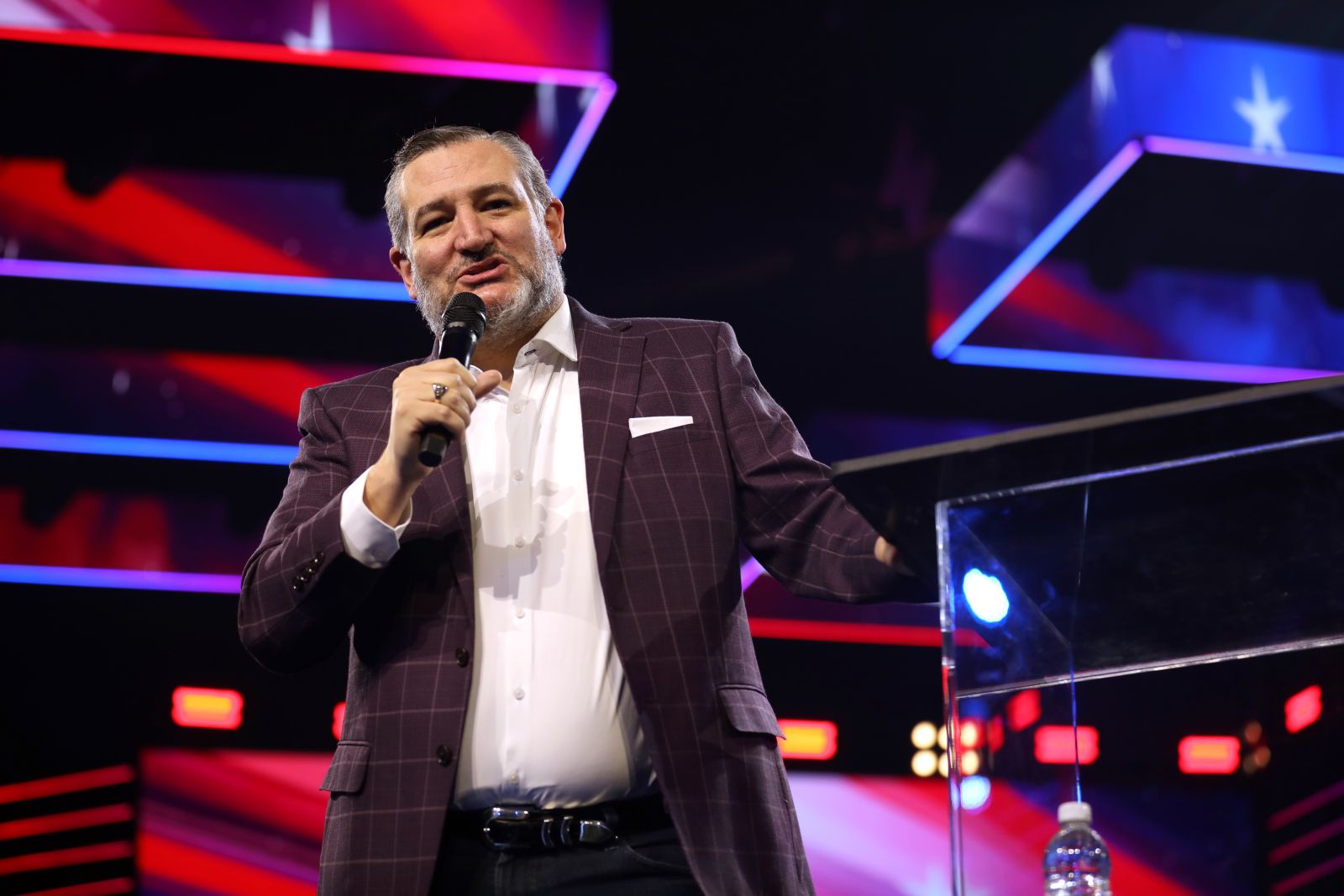
Senator Ted Cruz says the fight over tariffs inside the Trump administration comes down to two positions, and he named the Treasury Secretary as being on his side. "There are two camps in the Trump administration," Cruz said on the PBD Podcast in a clip published in early September. "Camp number one views tariffs or the threats of tariffs as leverage to get our trading partners to open up their markets, to reduce their tariffs, to repeal non-tariff barriers. I think Scott Bessent is in that camp. I am very much in that camp. There's a second camp that views tariffs not as leverage to open up foreign markets, but as the end in and of itself. They just want high tariffs forever."
His characterization of the second camp is his own and should be read as such. "It's pretty closely linked to an isolationist foreign policy," he said. "The idea is we don't want to deal with the world at all. We want high tariffs and just stay at home and say to hell with everyone."
More Top Stocks Daily: Go behind Wall Street’s hottest headlines with Barchart’s Active Investor newsletter.
Sponsored Content: Own a Piece of the Platform Opening the Private Markets. StartEngine’s latest round is now open to the public.
On Fox Business on April 3, 2025, Cruz said: "Tariffs are a tax on consumers, and I'm not a fan of jacking up taxes on American consumers. So my hope is these tariffs are short-lived, and they serve as leverage to lower tariffs across the globe." Four days later, his own podcast ran an episode on the same two-sided framing, with Cruz describing "angels and demons" on the president's shoulders urging him to use tariffs as leverage or keep them permanently. In January 2026, Axios published donor-meeting recordings in which he made the argument again.
One thing complicates the clean read: When the Supreme Court struck down the emergency-powers tariffs in February, Cruz said publicly that the ruling was wrong. He wants the tariffs temporary and the president's authority to impose them broad, which are not the same position.
Cruz's placement of Bessent is Cruz's claim about somebody else, so what Bessent has said himself matters. In an interview published by the Treasury in April 2025, he said the president "uses tariffs to negotiate," adding that "we'll have substantial tariff income in the beginning. Manufacturers will build their factories here. The tariffs will drop." On ABC that November, he said, "the real goal of the tariffs is to re-balance trade and make it more fair." That is the leverage argument in his own words.
That is the leverage argument in his own words. Hours after the February ruling, he told the Economic Club of Dallas that "no one should expect that the tariff revenue will go down." On September 1, a day before the Cruz clip was published, he told G20 counterparts that the rest of the world "probably needs to take a hard look at what they should be doing to protect their citizens' jobs, their manufacturing base." Recommending tariffs to other countries is not obviously a negotiating posture.
The baseline matters before any of this means anything. The Supreme Court struck down the emergency-powers tariffs on February 20, 2026. They were replaced within days by a 10% global tariff under Section 122 of the Trade Act, which expired at its 150-day limit in July, and then by a Section 301 action covering roughly 60 economies at 10% or 12.5%, in force since July 24. Sectoral tariffs under Section 232 were never affected: 50% on steel, aluminum, and copper, 25% on autos and heavy trucks, 100% on patented pharmaceuticals from later this month. Canada faces 50% duties on hundreds of product lines under a 1930 statute, and its retaliation took effect on Sept. 8.
Through all of that, the rate barely moved. The Yale Budget Lab put the average statutory tariff rate at 11.0% in late August; the Tax Foundation put the applied rate at 11.7% on Sept. 2. The legal authority underneath the tariffs was demolished and rebuilt twice this year, and the cost to importers stayed roughly where it was. Whatever anyone in either camp intends, that is what permanence looks like in the data.
The revenue tells a stranger story. Treasury's monthly statements show $269.2 billion in gross customs duties in the first 10 months of fiscal 2026 against $114.7 billion in refunds, for $154.5 billion net. Net customs revenue was negative in May, June, and July as refunds from the struck-down tariffs went out, and cumulative net collections have fallen roughly $34 billion from their April peak. A camp that wanted tariffs purely for revenue has had an expensive year.
What would settle Cruz's argument is observable: a sunset date, a removal trigger, or a negotiated reduction that holds. Until one appears, the rate is the answer. Readers can watch it land on a name like Caterpillar (CAT), whose stock Barchart has covered moving on trade policy before, or on the shelf price of something as ordinary as a $0.99 can of iced tea.
On the date of publication, Caleb Naysmith did not have (either directly or indirectly) positions in any of the securities mentioned in this article. All information and data in this article is solely for informational purposes. For more information please view the Barchart Disclosure Policy here.