

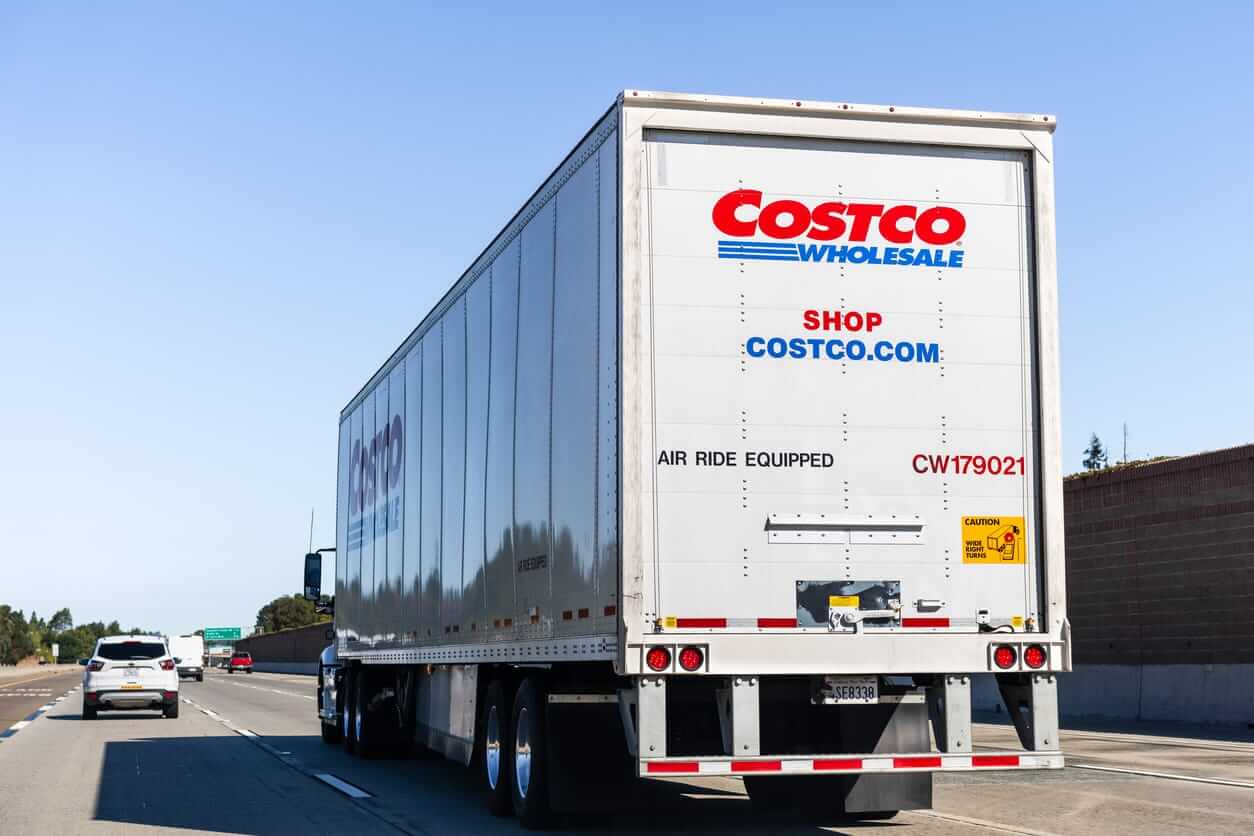
The U.S. fuel crisis stemming from the ongoing war in Iran has now reached the retail shelf, with Costco Wholesale (COST) nearly doubling the price of its Kirkland Signature full-synthetic motor oil from roughly $30 to $58 per 5-quart two-pack, while simultaneously capping purchases at two units per membership every seven days.
It’s an extraordinary move for a retailer whose entire brand identity rests on bulk buying at deep discounts, and it signals that severe supply chain disruptions are spreading well beyond the gasoline pump.
Don’t Miss a Day: From crude oil to coffee, sign up free for Barchart’s best-in-class commodity analysis.
The root cause is unmistakable: the closure of the Strait of Hormuz and repeated attacks on Middle Eastern energy infrastructure – including a damaging March 2026 airstrike on Qatar's Pearl GTL facility and last week's drone attack on Saudi Arabia's critical East-West pipeline – have drained global oil inventories by more than 500 million barrels since the conflict began in February.
Chevron (CVX) CEO Mike Wirth nodded to those stats when he said at an industry conference Friday that “we don’t have nearly the buffers in the system that we did when it began.”
Refined Product Prices Spike
Brent crude (CBX26) surged above $109 per barrel on Monday, up from under $72 in early July, while U.S. diesel set a record at $6.23 per gallon and gasoline climbed to $4.31. The International Energy Agency (IEA) now projects a third-quarter global deficit of 1.8 million barrels per day, more than double its prior estimate.
WTI crude futures (CLV26) earlier set a new four-month high of $106.75 per barrel.
Motor oil sits at the end of a brutal triage inside the refinery. Base oil – 80% to 90% of a finished motor oil product – comes from the same barrel of crude as gasoline and diesel, and when crack spreads on transportation fuels are running roughly a dollar per gallon above year-ago levels, refiners rationally prioritize fuel output over lubricant feedstock.
The United States imports more than 40% of its Group III base oils from the Middle East, and CEO Holly Alfano of the Independent Lubricant Manufacturers Association told “Newsweek” that Group III prices have surged 235% since the war began, with physical damage to production facilities; South Korean supply constraints; and elongated shipping timelines compounding the shortage.
On top of this, modern synthetic oils must meet increasingly rigorous standards – including GM's Dexos1 Gen 3 certification and seven additional API SP laboratory tests – adding layers of licensing and testing cost that cannot simply be reformulated away.
Energy Prices Shock US Consumers
Administration officials, including Energy Secretary Chris Wright, have dismissed the disruption to key oil infrastructure in Saudi Arabia as a “temporary” disruption to oil prices.
But rising energy prices have been a direct shock for consumers, and the restrictions implemented by Costco seem designed to discourage hoarding – particularly given the supply chain uncertainties.
In the background, annual CPI inflation accelerated to 3.4% in August, well above the Fed's 2% target, and 10-year Treasury yields ($TNX) have breached 5% for the first time since 2007.
Fed Rate Hikes Won’t Help Supply-Driven Inflation
The Federal Reserve is widely expected to raise its benchmark rate by 25 basis points on Wednesday to a range of 3.75% to 4.0%, with the CME FedWatch tool showing a 94.5% probability of a hike.
But for global energy markets, at least, there is a fundamental mismatch between the tool being deployed and the problem it is meant to solve: the primary driver of higher prices is a physical supply shock, not excess demand that higher borrowing costs can meaningfully curtail.
Raising interest rates cannot reopen the Strait of Hormuz, repair a damaged Saudi pipeline, or restore destroyed base-oil production capacity in the Persian Gulf. It cannot redirect refinery output from high-margin diesel into lower-margin lubricant base stocks.
A rate hike may modestly restrain aggregate demand and anchor inflation expectations, but it does so at the cost of higher mortgage rates – already above 7% – elevated credit card APRs above 22%, and increased pressure on an economy that is growing near potential at roughly 2% real GDP.
How the Fed Could Fumble the Ball Here
Moody's economist Mark Zandi warned that “The odds of a serious Fed policy mistake are uncomfortably high and rising,” noting that aggressive tightening in the face of supply-driven inflation risks triggering layoffs and a “self-reinforcing negative cycle” without addressing the underlying cause of rising prices.
The market for Group III base oil is not expected to normalize until the end of next year at the earliest, when new domestic production capacity comes online – meaning that even if the Fed hikes rates multiple times, American consumers could continue to face motor oil purchase limits, record diesel prices, and household energy cost increases that Brown University's tracker already estimates at more than $816 per family since February – a bill climbing at roughly $1 million every two minutes.
This article was created with the support of automated content tools from our partners at Sigma.AI. Together, our financial data and AI solutions help us to deliver more informed market headline analysis to readers faster than ever.
On the date of publication, Sarah Holzmann did not have (either directly or indirectly) positions in any of the securities mentioned in this article. All information and data in this article is solely for informational purposes. For more information please view the Barchart Disclosure Policy here.
More news from Barchart
Why UBS Just Turned Bearish on NuScale Power Stock Marathon Petroleum Stock Just Hit New Highs, But Oil Price Risks Remain 10-Year Yield Surges to 19-Year High: Here’s What Traders Need to Know Now Goldman Sachs Expects Fed Chair Kevin Warsh to Raise Rates This Week — But Not Because of Oil Prices.