

In today’s post-Fed interview with Michelle Rook, we talked about how energy sector volatility is spilling over into grains; why a rate hike could spark fresh buying interest for commodities; what to expect for soybeans ahead of a key US-China summit; and how gas prices are still a wild card for US beef demand.
Watch our conversation and check out the full transcript below.
Don’t Miss a Day: From crude oil to coffee, sign up free for Barchart’s best-in-class commodity analysis.
Michelle Rook: Welcome to Markets Now. I'm Michelle Rook with Darin Newsom, Senior Market Analyst at Barchart. As we start off Thursday, we are seeing red on the board except for the cattle market.
Darin, thanks for being with me. Let's talk just a little bit about the grain space. First of all, it feels like we're setting back here maybe in tandem with a little correction in some of these energy markets, or what do you see as pressuring the market this morning?
Darin Newsom: Michelle, I think there could be a little bit of spillover pressure from the energy sector. We know that crude oil, diesel fuel, these sorts of things moved lower overnight through early Thursday morning because of the same old, same old, with the US president saying hopefully, hopefully his war on Iran is near an end. Nothing absolute, but enough to cause algorithms to start selling after what has been an explosive week to the upside.
We saw some pressure overnight in the soybean oil market. Soybean meal (ZMZ26), surprisingly enough, continues to lead. We've got a little bit of pressure coming on in the corn. I will say that it's still early, as you mentioned. Really, the only thing that matters is where we close the session. The late great Gary Wilhelmi used to say, "The only price that matters is the close." We could be anywhere. We have no idea what the next headline's going to be, what the next social media post is going to be, so we could be anywhere. As you mentioned, as of this morning, at least a little bit of early pressure in some of the grains.
Michelle Rook: Let's talk a little bit about yesterday's Fed action. We saw a raise in interest rates by a quarter point, first time in three years. Talk about what this means for agriculture. Will we see, because of inflationary concerns, more investment money come into the commodities in general?
Darin Newsom: I think it could. I almost said – if funds were intelligent, and what we're seeing today in the energy sector certainly, again, indicates that they are not – but if funds are intelligent and long-term investors are intelligent, they're going to look for those markets that are actually showing bullish supply and demand situations, and this is where they're going to take their money over into.
I think we could see some money coming out of US stocks, and that would make sense given the overly inflated stock prices that we've got going on right now. We could see some of that.
If it does come over into commodities, I would look for not only sectors, but markets that do have bullish supply and demand. So I would still say livestock are more bullish, at least short term, than grains. You obviously have the energy sector. We have to wonder who's going to buy, say, West Texas Intermediate crude oil (CLV26) north of $105.
And with diesel already making new record highs, do these markets have to set back to find some new buying, or will funds just come in? I think we're going to be looking at some of those markets.
And as far as the grains go, we still have longer-term concern. We can see this in the March-May, May-July soybean spreads and the May-July corn spreads, that there is still some longer-term concern. I think funds may sit back a little bit and wait to see what develops in South America, as we go through planting season and growing season before they get overly excited about pouring money into grains.
Michelle Rook: Well, they've already poured a lot of money in the grains. Case in point, we've got record long positions by the funds in soybeans, in soybean meal, near-record long in the corn market. What gets them to keep adding to those positions if they're already this long?
Darin Newsom: I appreciate you clarifying that. That's absolutely right, Michelle. When we've already seen these record positions established, this is why I think if we look at the shorter-term supply and demand, I don't think it's going to be drawing more fund money into grains. I don't think there's any fundamental backing to pull more money into grains. I think the grains need to sell off, particularly as harvest continues to roll along here across the US.
So over this fall quarter, I think we could see some pressure in the grain markets, and if the markets fall far enough, maybe that's what starts to invite some of that investment money back.
Michelle Rook: Let's talk about harvest. Do you anticipate we're going to see the normal amount of harvest pressure that we do from a seasonal standpoint or not?
Darin Newsom: I think it could. What my thought is, there could actually be a bit more because the dollar rally in corn, the dollar-plus rally in soybeans, talking about Dec corn (ZCZ26), November soybeans (ZSX26), cash markets did follow to a certain degree. My guess is that there was more forward contracting, some pricing of 2026 production. I think we're going to see more come into the pipeline right at harvest, say, the 30-45 days of harvest, and that could put some heavier than expected pressure on the market.
It'll also be interesting to see how this works with basis, as these bushels come into town, as they actually make their way off the truck and into cash sales, if this starts to put some pressure, some heavier than expected or heavier than normal pressure on the basis market.
Michelle Rook: Right now, we do have some harvest delays, don't we, because of the wet weather? Actually, we've seen the cash market pretty strong in a lot of those areas, right?
Darin Newsom: We have, because you're right. We've seen this big rain system, and the last couple three rain systems move from the plains into the Midwest. Maybe the corn wasn't quite ready, maybe the soybeans aren't quite ready. We took a trip through western part of Iowa, and there was still a lot of green in the field. It's not like it's causing huge harvest delays, but in areas it will be causing some harvest delays. We'll see. We'll see how long this lasts.
Looking at the latest 6- to 10-day forecast, things are supposed to clear up, and it's supposed to be more harvest-friendly by the time we get another week, week and a half down the road.
Michelle Rook: Some disappointing corn yields so far is what I'm hearing. Maybe a little bit better on beans. What are you hearing?
Darin Newsom: Yes, but we knew this: that the corn yields are probably going to be down. Let's remember that that's what we're going to hear because everybody wants to be bullish corn. We're going to hear that yields are worse than expected. They're going to be lower than expected. Let's see what the market has to say.
The Dec-March spread, still neutral. We're still seeing a little bit of carry occasionally strengthening in the Dec-March. More a reflection, most likely, of some of those bushels coming to town. We'll also see the carry strengthen in the May-July. This is telling us that while yields may not be as good as what we've seen in the last couple of years, it's certainly not a disaster, at least not at this point.
Michelle Rook: Got you. What about soybeans? We're not that far from the contract high we hit last Friday. Will we see more buying going into the China-US summit next Thursday, especially now that we're hearing that President Xi maybe had a stroke? Don't know if that's true or not.
Darin Newsom: Yes, and we won't know. Am I skeptical about this? Yes, but that should surprise nobody.
Michelle Rook: I was going to say, I would be shocked if you weren't. [laughter]
Darin Newsom: I would be shocked if the meeting is actually held. We'll see. When it is held, we already know what we're going to hear. On the US side, we're going to hear this was the greatest thing since sliced bread and the invention of the wheel, that China's going to buy absolutely everything the US produces from now to the end of time, and China's going to say, "No, that's not what happened at all. We talked about computer chips and this sort of thing."
Who's right; who's wrong? We know both sides tend to not quite tell the truth. At the end of the day, when the dust is settled, I don't think anything's going to change. There's still going to be a trade war. China's still going to be buying some US soybeans as a secondary supply until they have a better feel for what's coming out of Brazil next year.
Michelle Rook: The other thing that hasn't changed is the Russia-Ukraine situation is not getting any better. We're down here this morning, but is the market just getting tired of those headlines? Is that why we're down, or are we starting to see maybe some ideas we're going to get a lot of winter wheat planted? I don't know.
Darin Newsom: Again, we're coming up on five years of this now. The deck of global wheat supply and demand has been reshuffled many times, and so far, the US continues to be dealt out. I always get a kick out of the fact that the day that the wheat sector rallies, everyone says, "Oh, it's the Russia-Ukraine situation."
As you said, the situation hasn't changed. It's not going to change anytime soon. Yes, we get a little pickup in volatility when Putin starts talking about nuclear weapons, but he's done that so many times.
Michelle Rook: Yes, and the algos chase those headlines unfortunately.
Darin Newsom: Oh, certainly, certainly. We see it again this morning with the US president saying, "Hopefully, hopefully, the end of the Iran war is near." No timeline, nothing definite, but we've got energy selling off.
You're absolutely right, the algos pick up on these things. They read it as bearish, and so they sell.
Michelle Rook: The other question I should have asked you, but I'll put it in conjunction with exports this morning. Soybean exports good at 62.5 million bushels this morning, corn pretty good at a little over 40 million bushels. Exports have been good so far. Demand has been holding strong, even with the little higher prices.
What happens going forward? Do you see it staying strong, especially with what happens with the dollar here now that we're starting to raise interest rates?
Darin Newsom: A couple interesting things in your question there, Michelle. Number one, global exports. The global export game isn't necessarily economic as much as it is political these days. The underlying value of a country's currency, I don't think, plays as strong a role as it might have back in the day. Now, that being said, the early bump here that we're seeing in soybean exports is what we used to see seasonally when the US would sell and ship nearly everything, what? 75%, 80%, by the time we got halfway through the marketing year, so the six months, say from September through February, that the US was in the spotlight.
We could see more of that given how many exports were pulled out of Brazil by China last year. Some of those secondary supplies China's been buying could certainly move this first half of the market year. Then we'll see what happens. As for corn, it looks very similar to what we saw last year, when most of the shipments the US made were in the September, October, early November timeframe, and then it kind of fell off after that.
Michelle Rook: Yes, we front-loaded last year, though, because we had no soybean program. That was part of the change, I guess, or shuffling of the deck chairs.
Just one last question about the cattle market. We've had a pretty good recovery here off the lows. We hit 50% retracements, couldn't get through them. If we get this higher cash trade again this week, will the market keep going, or what do you see?
Darin Newsom: Again, I think this is one of the areas, this is one of the sectors, particularly the two cattle markets, where we could see some fund money start to come back over, because again, the fundamentals didn't change. Those in the know did everything they possibly could to break this market, and they continue to do whatever they can do to break the US cattle and beef industry, but the fundamentals just simply aren't changing.
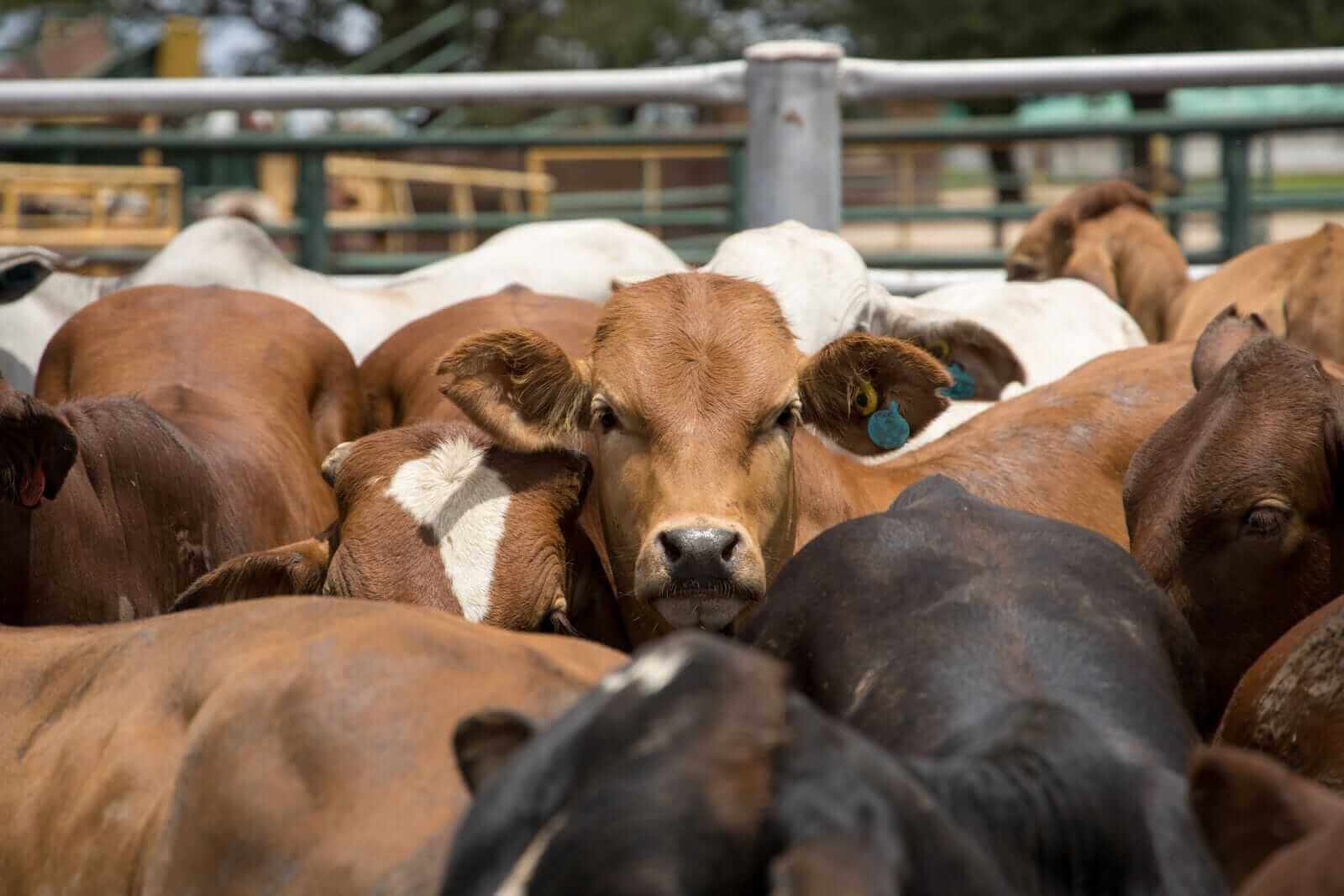
Now, having said that, we could finally see a crack in US demand if these fuel prices stay high. I think this could be what finally breaks US demand for high-priced beef. As of right now, we look at future spreads, we look at basis, we look at all these things in relation to the futures market, and it looks like it could be what starts to draw some money back into both live (LEV26) and feeder cattle (GFV26).
Michelle Rook: Let's hope that's the case. Like you said, consumer demand, higher interest rates, higher credit card bills, it all works together. All right. Thanks so much, Darin Newsom, senior market analyst with Barchart and Markets Now.
On the date of publication, Darin Newsom did not have (either directly or indirectly) positions in any of the securities mentioned in this article. All information and data in this article is solely for informational purposes. For more information please view the Barchart Disclosure Policy here.
More news from Barchart
How the Fed Rate Hike Could Help Cattle Futures Rope In Fresh Fund Money What Could the Fallout Be to the Fed's Rate Hike? Corn, Soybean Prices Get a Mixed Bag from the USDA’s Monthly WASDE Report Can Soybeans Remain in the Teens?