

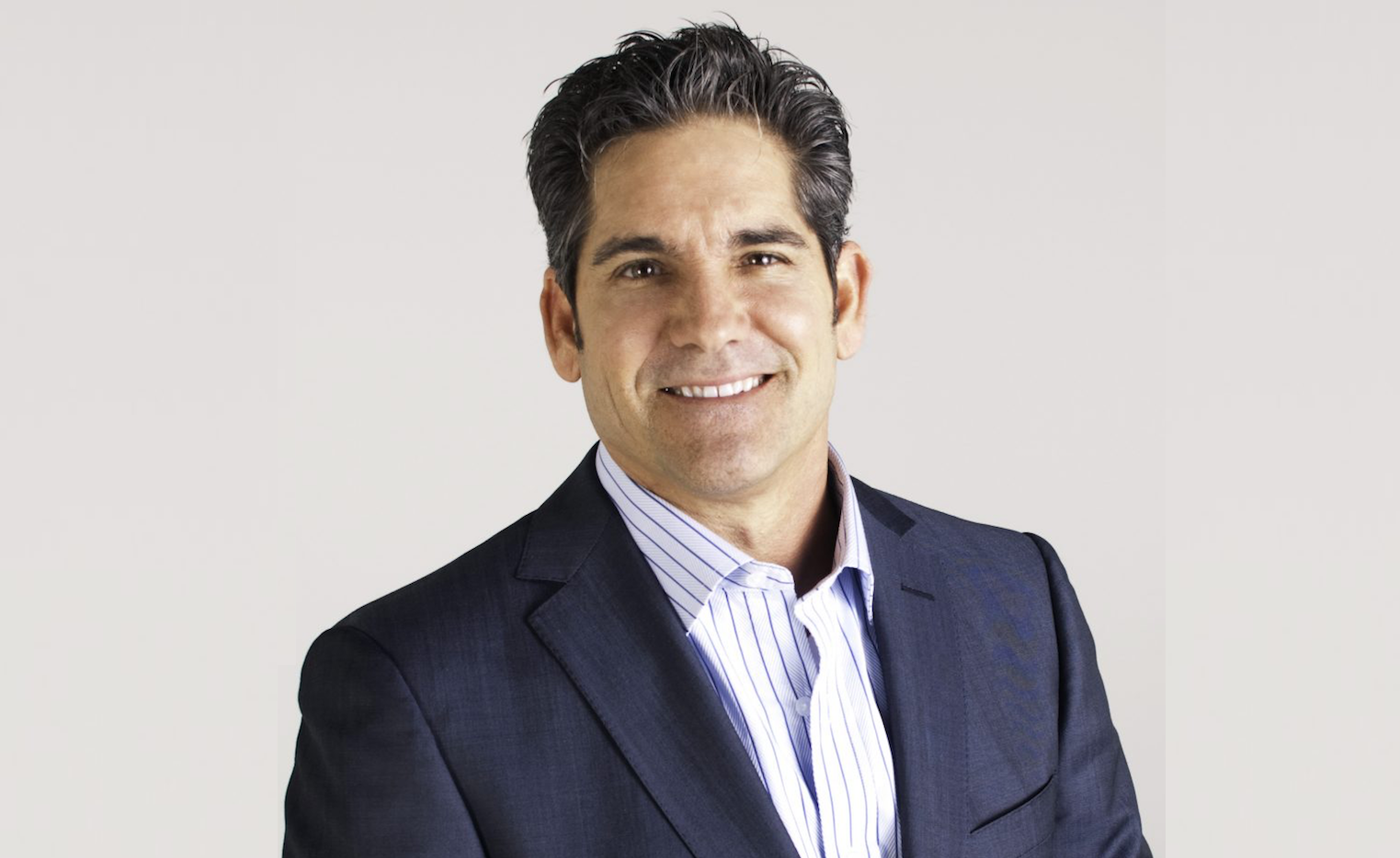
SpaceX's (SPCX) June stock market debut was the most envied payday of 2026. Shares were priced at $135, and an analysis by the investment platform Hill.com, reported by Fortune and The New York Times, estimated that more than 4,000 current and former employees became millionaires on paper. Grant Cardone, in a clip posted to his YouTube channel in September, looked at one of those new millionaires and delivered a verdict: "She's broke. She's broke now. She just doesn't know it."
The employee is hypothetical. Cardone calls her Helen. "Let's just take Helen that works at SpaceX that got a million dollars yesterday, okay?" he said. "If she sells her stock, but she can't, by the way, but if she did, she'd sell her stock, she'd pay $400,000 in taxes, she has 600 grand left," and, as he put it, "she has 600 grand left to live on for 30 years." The interview appears to have been recorded during IPO week in June, when Cardone said Elon Musk had minted "4,800 millionaires" in a matter of days, a figure that is his own and runs a little higher than the published estimate.
More Top Stocks Daily: Go behind Wall Street’s hottest headlines with Barchart’s Active Investor newsletter.
Sponsored Content: A $9 Trillion Flying Car Market Is Taking Shape. This Company Is Open to Investors.
Six hundred thousand dollars spread over 30 years is $20,000 a year, which is below the federal poverty guideline for a two-person household, set at $21,150 for 2025 by the Department of Health and Human Services. That is the number that makes "she's broke" land. Everything feeding it, though, rests on Cardone's assumptions: the $400,000 tax bill, the 30-year horizon with no other income, and a lump sum left sitting in cash. The top federal rate of 37% plus a state levy could approach his figure for a high earner in a high-tax state, but an employee holding shares long enough for capital gains treatment would owe considerably less. His aside that she "can't" sell yet refers to the lock-up restrictions that typically bar insider sales for months after a listing.
The verdict serves a rule Cardone has repeated for years: "I only live extravagantly from free cash flow. The only time I spend money is when it's passive income. I never spend any of my earned income, ever," he said. "And I believe this, this is financial advice right here. Okay? Like if a person only spent their passive income, only passive, they would never ever be broke." It is the same thinking behind his long-running advice to the middle class to stop saving and start buying assets that pay, which isn't new.
What is new is his own SpaceX trade. "Like SpaceX, I wasn't in SpaceX for more than a day because it doesn't cash flow. I want cash flow," he said. On June 13, the outlet Traders Union reported that Cardone had said on X, in a post since deleted, that he sold his shares at $175. The stock had been priced at $135, climbed as high as $225.64 in its first days of trading, fell to $104.83 in early August, and was trading near $170 in early October. Measured against the current price, his exit was roughly a wash, though he missed both the spike above $200 and the slide below $110. Barchart's own look at SpaceX stock at the IPO argued the shares were priced for perfection, and the first four months have tested that.
Cardone went further than most advisers would: "You don't need cash, you need cash flow. So, you don't need liquidity either. People shouldn't have liquidity, okay?" he said, adding that "making 6% of your money today cannot be something that people consider doing." The mainstream view runs the other way: most planners tell households to hold three to six months of expenses in cash before investing anything.
Importantly, Cardone's company, Cardone Capital, sells real estate funds to retail investors on exactly the cash-flow-over-liquidity thesis he describes in the clip. The advice is also the product. That does not make the arithmetic wrong, but a reader weighing it should know who is doing the math.
Strip away the hypothetical and the clip reduces to one question Cardone wants a new millionaire to ask: is this money, or is it something that makes money? A million dollars of SpaceX stock that cannot yet be sold is neither, in his telling. Whether a reader agrees with the answer, the question is the part of the clip worth keeping.
On the date of publication, Caleb Naysmith did not have (either directly or indirectly) positions in any of the securities mentioned in this article. All information and data in this article is solely for informational purposes. For more information please view the Barchart Disclosure Policy here.
More news from Barchart
‘She’s Broke Now. She Just Doesn’t Know It’: Grant Cardone Says a SpaceX Employee Who Just Became a Millionaire and Sold Stock Is Making a Mistake Nasdaq Futures Climb as Chip Stocks Rebound on New OpenAI Revenue Report Arista Networks Stock Is Expensive, But Don’t Count It Out Just Yet How to Play AMD Stock as It Continues to Explore a Foundry Partnership With a Korean Tech Giant