

Chips, memory, and power have been at the center of debates over AI infrastructure bottlenecks. But Broadcom (AVGO) CEO Hock Tan believes the next major constraint could be money. Speaking at the DBS Asia Future Forward Conference in Singapore, he suggested that access to financing could constrain AI development more than shortages of hardware or electricity.
Tan expects supply constraints to ease, pointing to the pattern of shortages that have appeared and subsided over the past two years. He also believes memory tightness will improve within a year as wafer and power constraints also ease. However, demand remains a difficult challenge. According to Tan, the industry still cannot supply all the computing infrastructure customers want, and that imbalance could continue through 2029 or possibly 2030.
More Top Stocks Daily: Go behind Wall Street’s hottest headlines with Barchart’s Active Investor newsletter.
He also cautioned that many investors don’t fully understand the assets they are buying and are treating the AI boom like a casino. Although OpenAI’s annualized revenue is close to $50 billion, he pointed out that training AI models remains expensive. As a result, strong revenue doesn’t necessarily translate into lasting profits.
Demand Is Strong, But Sentiment Is Shaky
For Broadcom, the outlook presents both an opportunity and a risk. Strong AI demand remains a positive, but customers must have the financial capacity to keep purchasing the necessary infrastructure. Strategists cited by the Financial Times said the selloff reflects investor sentiment rather than weakening demand, as rising bond yields and concerns about AI returns weighed on chip stocks. China is another factor to watch, with CXMT reporting advances in DRAM that Societe Generale says could weigh on memory makers.
Tan’s comments do not alter the demand outlook, but they shift the focus. If supply is no longer the main constraint, Broadcom’s next challenge is whether customers can continue financing the buildout and generate sufficient returns to justify the spending.
About Broadcom Stock
Broadcom operates as a technology company that develops, designs, and supplies semiconductor devices and infrastructure software solutions. The company’s products are used across data centers, networking, AI infrastructure, cloud computing, and broadband markets. It operates in the Infrastructure Software and Semiconductor Solutions segments. Broadcom was incorporated in 1961 and is based in Palo Alto, California.
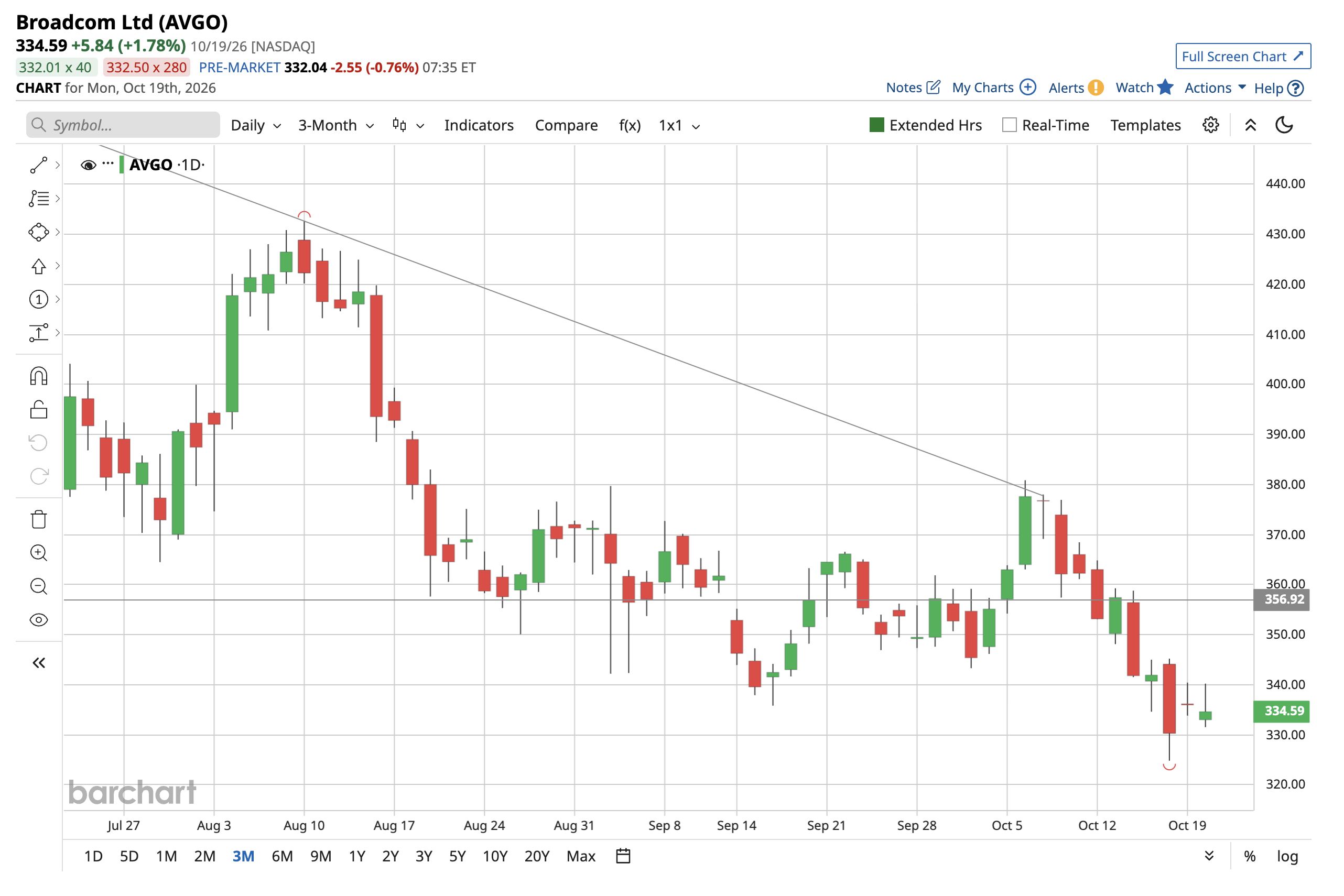
Over the past 12 months, the stock slipped around 4%, significantly underperforming the broader semiconductor sector. In comparison, the iShares Semiconductor ETF (SOXX) generated strong gains of about 71% during the same time period. The stock’s weaker performance was mainly driven by its rich valuation and margin pressure from its expanding AI chip business. The trend has continued this year as well, with the stock down 3% while the ETF gained 60% over the same period.
 barchart.com
AI Chip Demand Fuels Broadcom’s Ambitious Growth Outlook
Broadcom reported its third-quarter fiscal 2026 earnings on Sept. 2. It reported revenue of $29.6 billion, up 86% YoY. Non-GAAP EPS came in at $3.32, comfortably beating the Wall Street consensus of $3.21. The company’s semiconductor business remained the main growth engine. Semiconductor solutions revenue increased 127% year-over-year to $20.8 billion, led by AI chips. Free cash flow in the quarter was a record $13.7 billion and represented 45% of revenue.
Looking forward, Broadcom forecast revenue of $34.8 billion for the fourth quarter, which would be up 93% from a year earlier. The company guided for semiconductor revenue of $26.1 billion and AI semiconductor revenue of $21.7 billion, up 236% YoY. Management also projected full-year fiscal 2026 AI semiconductor revenue of $58 billion. The company said capital spending will rise to $1.4 billion in the fourth quarter as it expands manufacturing capacity.
What Do Analysts Expect for AVGO Stock?
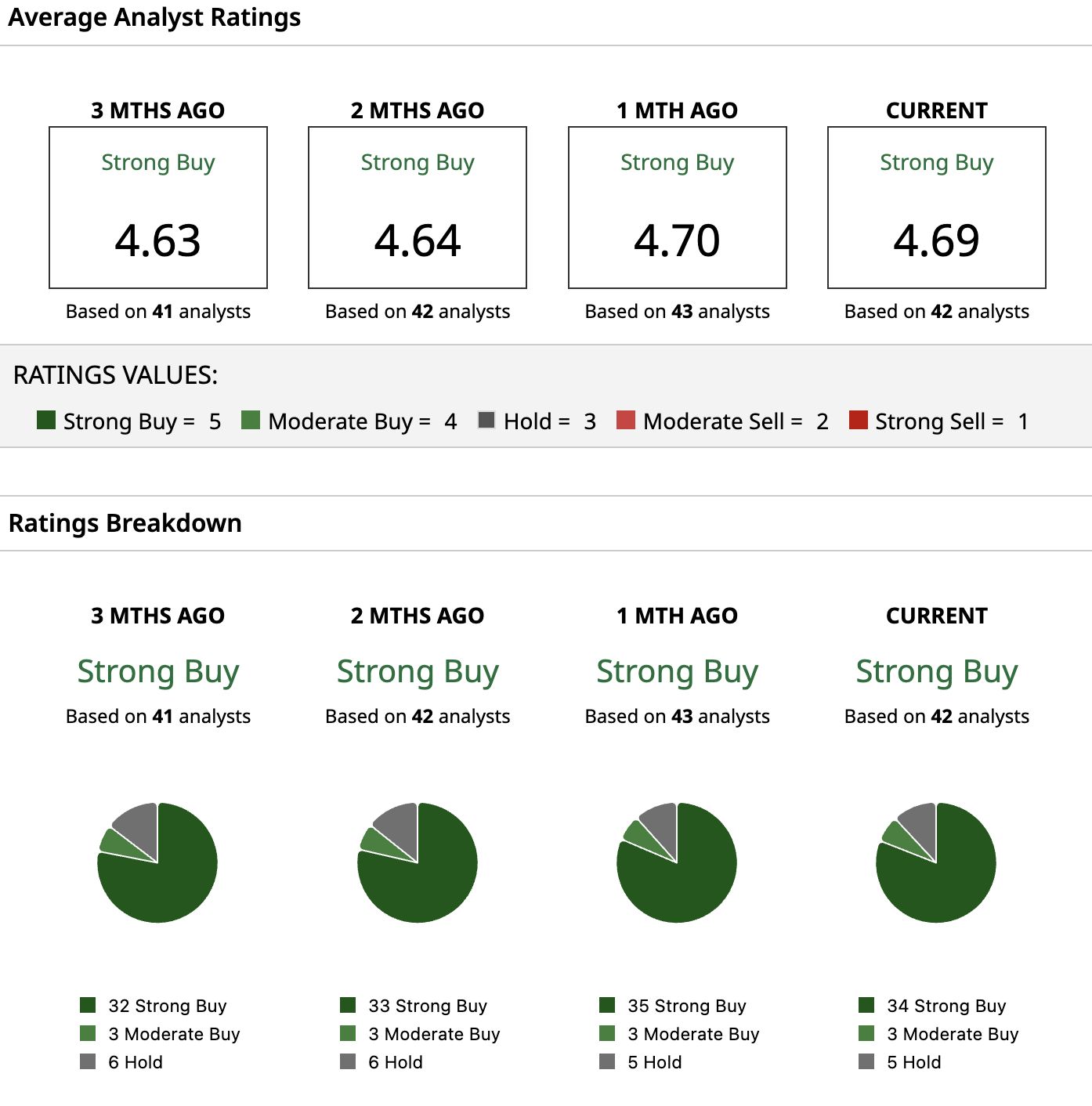
Following its earnings, Wall Street remained mostly bullish on the stock. UBS analyst Timothy Arcuri reiterated a Buy rating and set a price target of $470. Similarly, the stock received a Buy rating from Bernstein along with a price target of $575. Based on 43 Wall Street analysts, the stock carries a “Strong Buy” rating. Its mean price target of $524 reflects 45% upside from current levels. Even the lowest price target of $350 sits just below the current share price.
 barchart.com
On the date of publication, Jabran Kundi did not have (either directly or indirectly) positions in any of the securities mentioned in this article. All information and data in this article is solely for informational purposes. For more information please view the Barchart Disclosure Policy here.