

Performance. It’s the scorecard of investing. Past performance is given way too much emphasis, but that hasn’t stopped retail investors en masse from getting sucked into buying what just worked.
But there’s one guarantee about past performance: You can’t have it! It is in the past. So if you choose to chase ghost return numbers, that’s on you.
More Yield, Less Trap: Sign up free to get Barchart’s daily Dividend Investor newsletter straight to your inbox.
And the FOMO is just the tip of the iceberg here. It’s the complacency on the part of so many self-directed investors that continues to puzzle me.
If you’re someone who uses exchange-traded funds (ETFs) as part of your investing process, you may have noticed a strange hurdle in your online research. Specifically, a level of noise, gamification and “cool” factor exists.
And it can be very difficult to break through to the stuff that is actually knowledge, education and factual insight.
I say this after touring Instagram for 30 minutes, with the anticipation that comes from knowing that once I stop my scroll on an “influencer” discussing their “5 favorite ETFs for new investors” or something similar, the algorithm will serve me up a dozen more just like it.
Now, I don’t fault anyone from trying to add to the conversation about smart investing. But where this whole pipeline from social media influencer to unsuspecting newbie investors loses me is that it does not take into account how markets now function.
And in so doing, I think it sets up an entire generation of would-be investors for a replay of past stock market cycles. That is, they invest thinking that the only “risk” is not doing what everyone else is doing – when in reality, the risk is that their experience with the stock market, at this stage of the cycle, could cause them to turn away from investing at all.
My two prime examples: US Bitcoin investors and Japanese equity investors. Yes, those two, which on the surface have nothing in common, right? Wrong. They have a lot in common, just during different time frames.
On the surface, those two groups have nothing in common. In reality, they share the exact same psychological DNA. They’re just separated by three decades.
The Trauma of the Cycle Peak: Tokyo 1989 & Crypto 2021
Look at Japan in the late 1980s. The Japanese economic miracle was considered unstoppable. Books were written about how Tokyo’s corporate machine would own the 21st century.
I had a firsthand look at this, since my first job out of college in 1986 was as an investment assistant for a Japanese bank in NYC. At the time, the grounds of the Imperial Palace in Tokyo were famously valued higher than the entire state of California. So that gives you an idea of what the world was like.
Japanese retail investors poured into equities at the very top. When the Nikkei 225 ($NKY) peaked just under 39,000 in December 1989, it felt like free money.
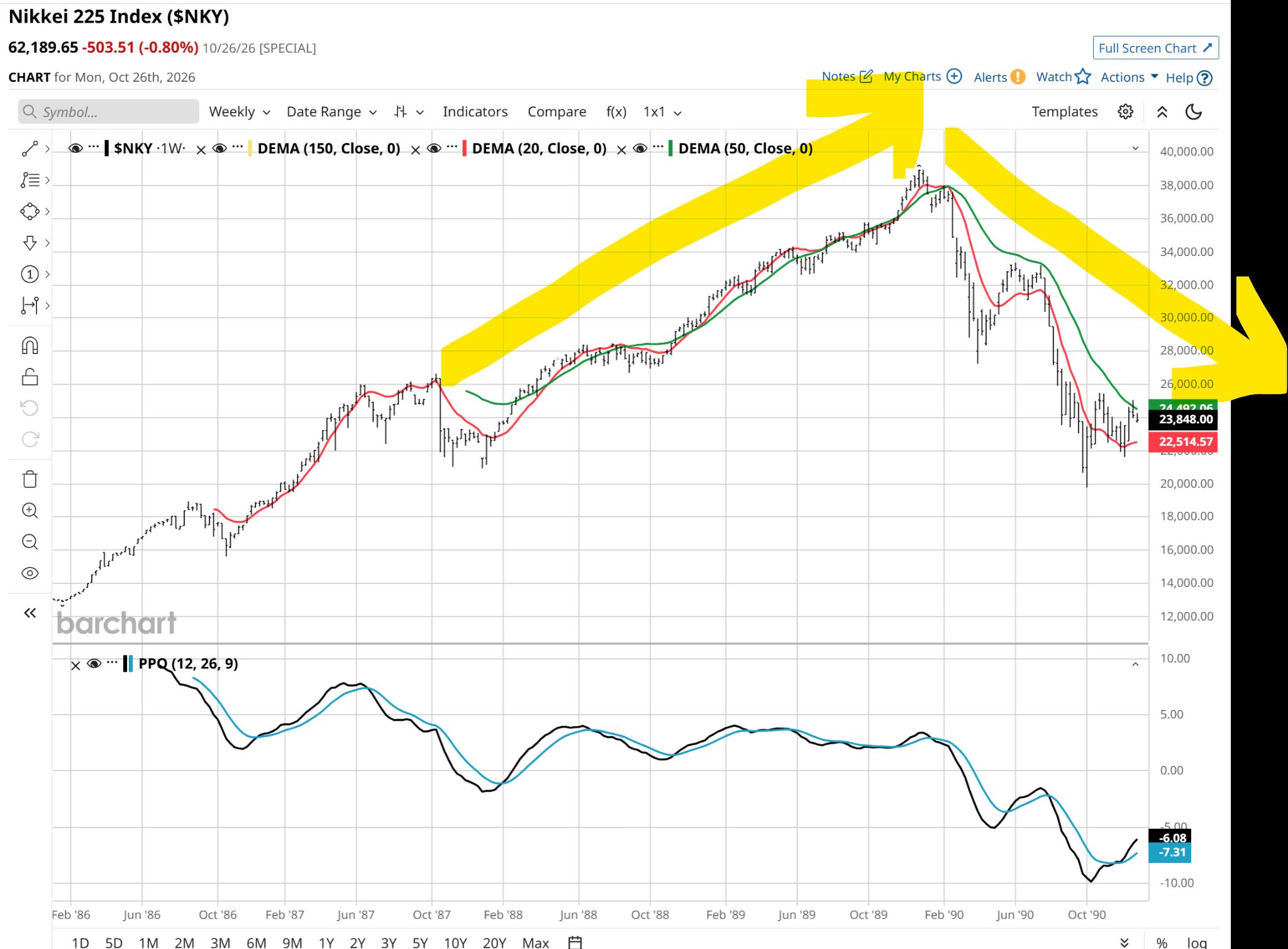 Nikkei 225 historical chart.
Then came the reckoning. The bubble burst, the market plummeted, and it took 34 years just for the Nikkei to claw its way back to that 1989 peak.
The real tragedy wasn't just the paper losses. It was a generational trauma. Millions of everyday Japanese citizens were so emotionally scarred by that wipeout that they swore off equities for the rest of their lives, hoarding cash in negative-yielding bank accounts.
Remember: just because time passes, it doesn’t mean human emotions change that much.
In fact, we might be seeing the early stages of a similar plight playing out right now, in the form of South Korean investors. This is the iShares MSCI South Korea ETF (EWY), the semiconductor-fueled benchmark that is now down 30% from its peak of just four months ago.
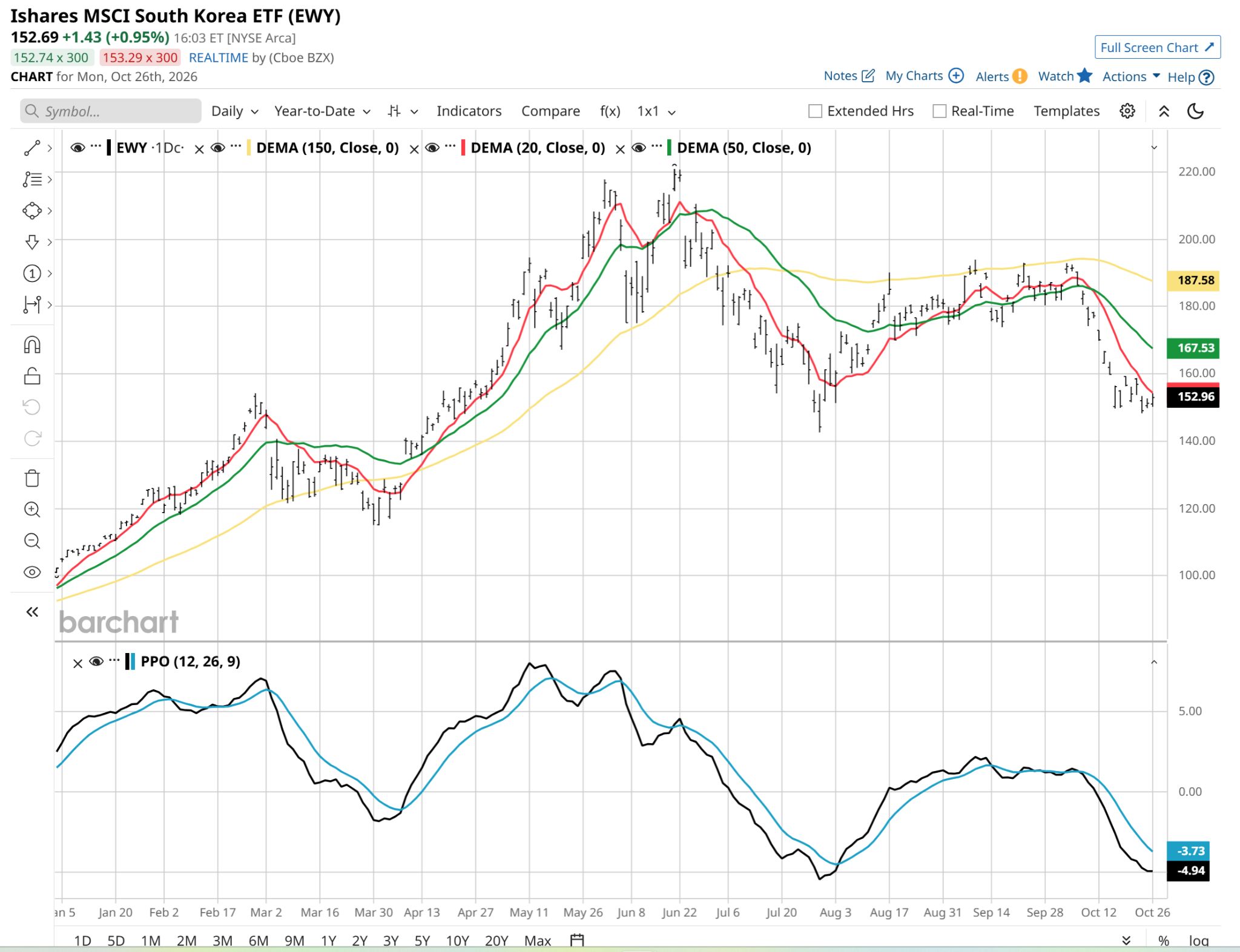 EWY year-to-date.
Fast-forward to 2021 and early 2022 with US Bitcoin (BTCUSD) and speculative tech investors. Remember this wild ride, which peaked about 18 months after the iShares Bitcoin Trust ETF (IBIT) and 11 other Bitcoin ETFs debuted?
After a more than 50% selloff, IBIT still sits well off its high, and has underperformed T-bills for about five years.
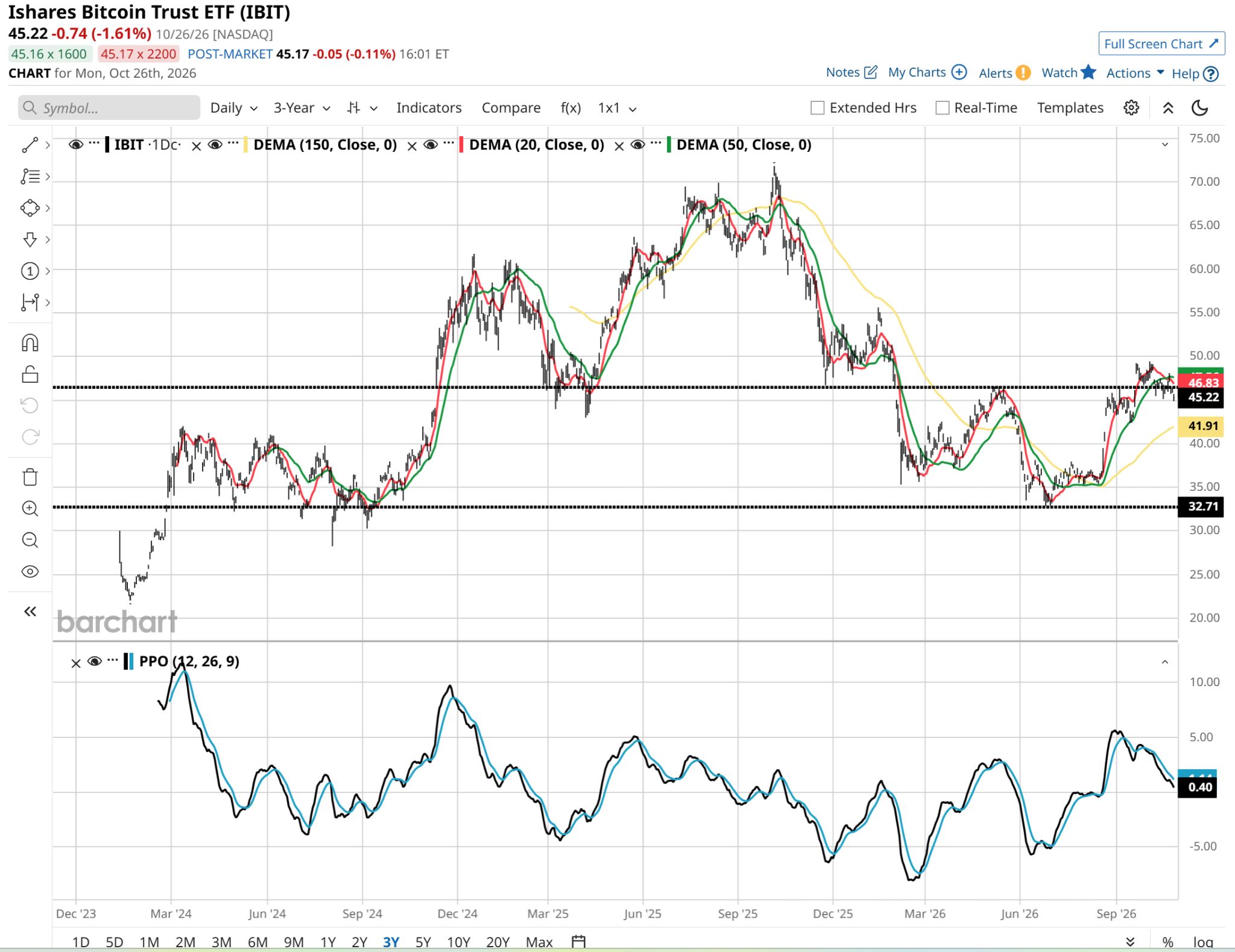 IBIT 3-year chart.
How did we fall into this research gap-trap?
An army of social media influencers told a brand-new generation of retail buyers that cash was trash, traditional valuation metrics were for boomers, and the only rule was to "HODL" into eternity.
When Bitcoin cratered 75% and high-beta tech names dropped 80% to 90%, millions of first-time investors didn't learn risk management. Instead, they felt cheated, liquidated at the bottom, and walked away from compounding altogether.
What the Data Actually Says About "Finfluencers"
This isn't just an old CIO being cynical about social media. Academic researchers have actually studied this phenomenon, and the numbers are staggering.
A landmark study published by researchers at the Swiss Finance Institute, titled "Finfluencers," analyzed over 29,000 financial influencers across tens of millions of posts to measure the actual investment skill and alpha behind their recommendations:
55% of finfluencers were classified as "antiskilled." Following their advice generated a monthly abnormal return (negative alpha) of -2.3%, which annualizes to a devastating loss of nearly -24% on a risk-adjusted basis. 17% were "unskilled," producing zero outperformance relative to a standard benchmark. Only 28% provided advice that added any demonstrable positive value.Even worse, the researchers discovered what they termed an inverse skill-follower relationship: the least skilled and most antiskilled finfluencers had the highest follower counts and the highest engagement.
Add to that industry data revealing that less than 2% to 4% of financial influencers have any formal credentials whatsoever, no CFA charter, no CFP certification, no Series 65 license, and zero experience managing client assets through a full market cycle. They are performers. Not analysts.
The live results are something I might decide to start tracking more closely here. During my 30-minute Instagram tour, I saw the same faulty logic come up, again and again. For example, finfluencers recommended ETFs with overlapping holdings, and offered no explanation.
A little overlap never hurt anyone too much, but there’s another aspect to this new generation of financial advice that’s more disturbing. Recall that social media algorithms are programmed to reward dopamine, certainty, and hype. The louder, more aggressive, and more simplistic the prediction, the more the algorithm feeds it to the public.
With that in mind, influencers who preach that the broader stock market will go up all the time, and that diversification can still be achieved by simply buying more ETFs with different names, sure do get those heart emojis going in the replies.
But as the saying goes, please pay no attention to the lack of a viable long-term strategy behind the curtain.
By no means am I suggesting anything other than this: investors should not take online investing advice at face value. Do your own homework, with a skeptical eye. Just as I’d expect you to do with anything I write here.
How To Be Your Own Finfluencer
So, how do you combat this constant push of noise disguised as investment research hitting your scroll day and night, weekday and weekend, on multiple platforms?
We really can’t escape it. In fact, when I was at dinner the other night with a sportswriter friend, and explained to him that I write about the “sport” of investing, he politely said: “Just don’t be one of the hundreds of people pitching me to invest with them.”
And that’s really the point. If you want to call yourself a “DIY” (do it yourself) investor, you need to do it yourself! Copying from someone else’s test paper doesn’t mean you’ll get an A – or that you’ll walk away knowing anything even if you do.
In fact, sometimes if you do get an A in investing, that’s just the first letter of “Ass-Whipping.” And I suspect that’s what the next true bear market will do to a lot of unsuspecting newbies. Been there, done that, and now I write about it.
I even created a Substack some years ago, which I still run, called ETF Yourself. Yes, there’s a double meaning implied there. But the full explanation is, “Learn to build portfolios, using ETFs, by yourself!”
And whether you follow my research and perspectives on ETF investing or anyone else’s, I’d recommend you get in the habit of challenging everything. That’s the best way to learn. As they used to say when I was on a trading desk decades ago, “Try to kill the idea. If you can’t, buy it.”
Human behavior repeats itself. And we are just about there.
To help you along, just briefly, here is a set of ETFs most commonly referenced by social media investing mavens. There happen to be a dozen of them, so maybe this is the “Faker’s Dozen?” I’ll leave that to the masses to decide.
No advice here, other than to know what you own and why you own it.
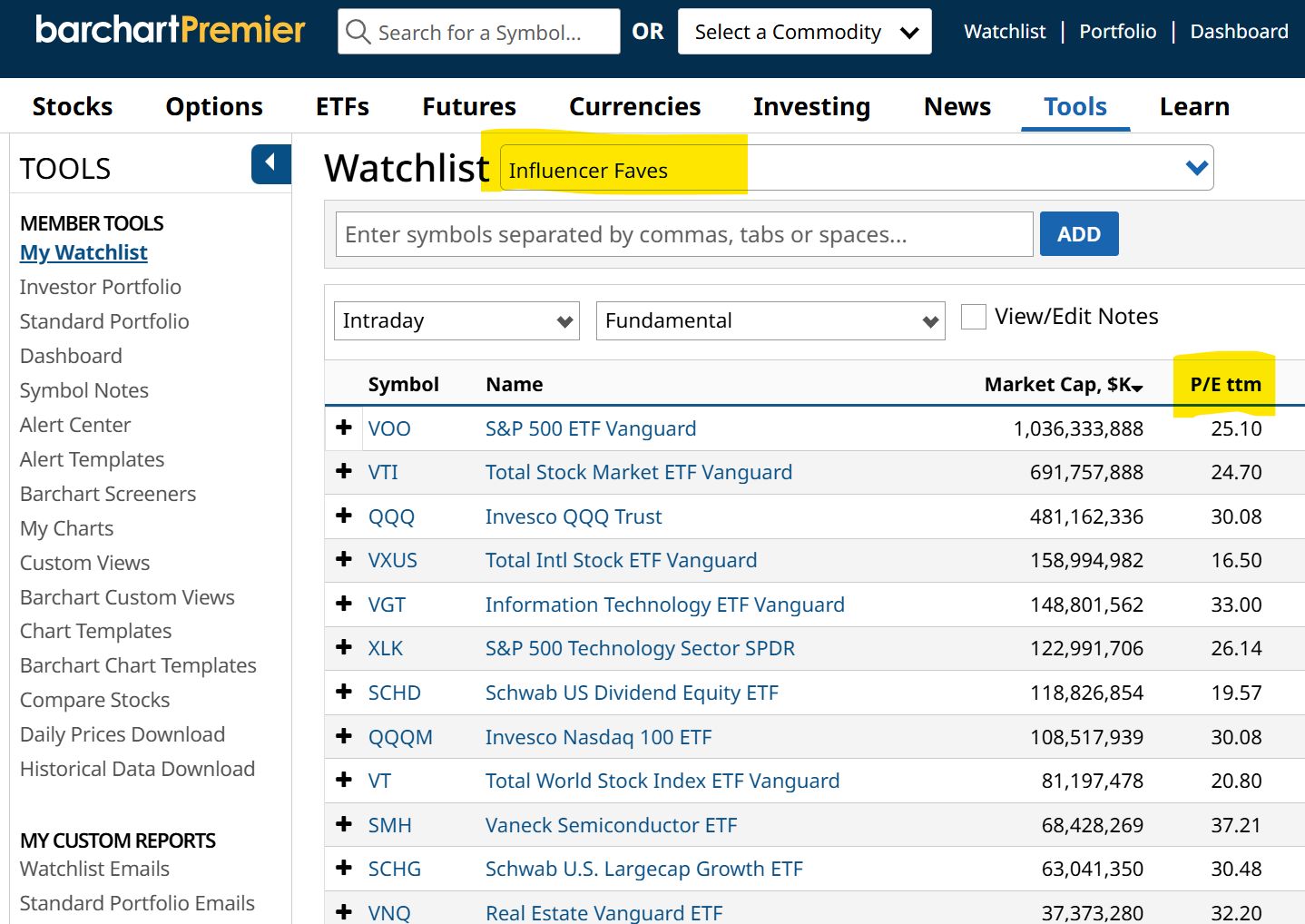 Rob's “Influencer Faves” watchlist.
I could (and probably will) cover this topic again, to dive deeper into the flaws inherent in a list like this. For now, here’s a look at how some of these finfluencer-favorite ETFs tend to move in lockstep. When the market sells off, these social media stars collapse together.
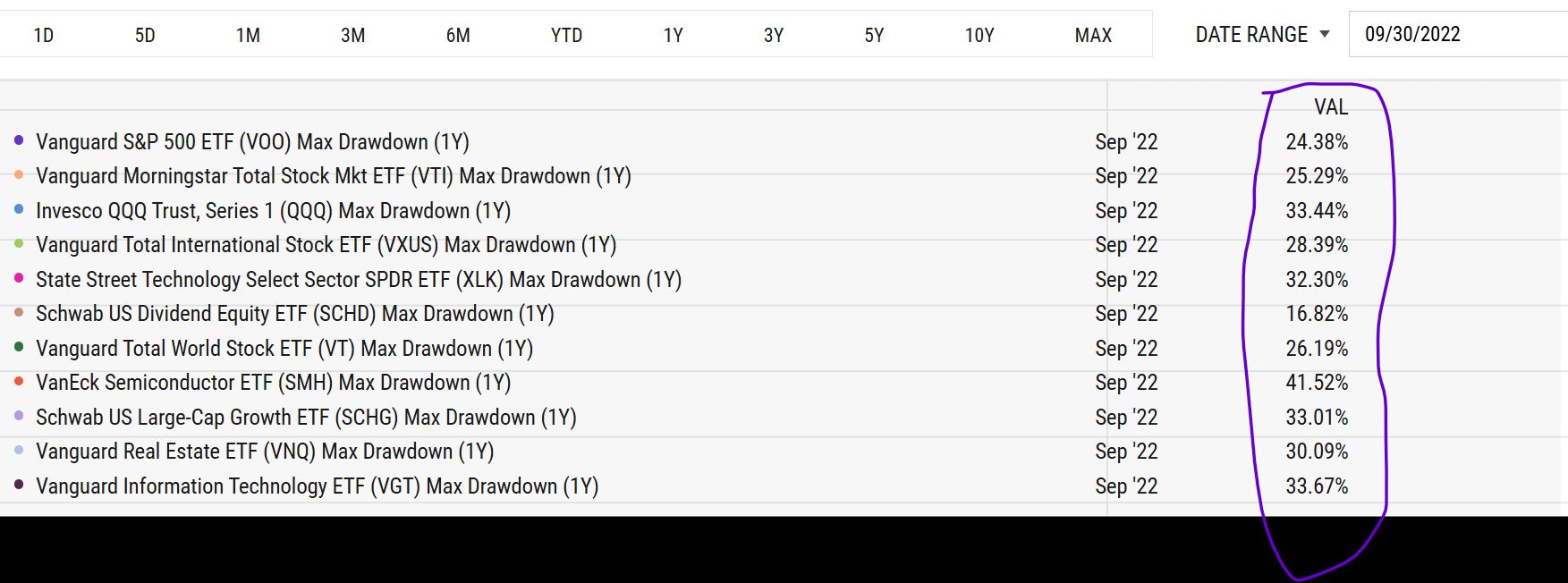 Max ETF drawdown during year ending Sept 2022.
And this is just one case (ending 9/30/2022) of how these ETFs tend to mirror one another. It’s just a matter of whether you end up with holding the bag on a drop of 25%, 40%, or somewhere else in that range.
Translation: this is not diversification. This is a collection of investments. Buying a variety of these is sort of like saying, “I eat a balanced diet: steak, burgers, hot dogs and pork. Nothing else, but look, I’m diversified.”
Right, all the way to the emergency room.
Social Media Performers vs. Stock Market Performance
There is a fundamental difference between a social media performer and true stock market performance.
A performer gets paid by ad revenue, broker referral links, and sponsorship fees. If their five favorite high-beta tech ETFs drop 30% tomorrow, they don't lose their livelihood. They simply delete the video, pivot to the next trending topic, and post another video about how "everything is on sale."
Real investing, on the other hand, is quiet, disciplined, and often boring. It understands that you can play offense and defense at the exact same time. It’s a study that recognizes the past is an indicator of risk management, but not returns.
Sometimes, markets drop and come right back. Other times, they don’t. I see many signs that if the latter occurs, this year or next, there’s a wide swath of the investing population for whom that basic ETF info they are pummeled with on social media might end up being a real rug pull.
Rob Isbitts is a semi-retired CIO, former fiduciary investment advisor, Barchart columnist, and straight-talker. Download his new free e-book on hedged bond investing for retirement at ETFYourself.com. His research and model portfolios are at ROAR.PiTrade.com.
On the date of publication, Rob Isbitts did not directly have a position in any of the securities mentioned in this article. All information and data in this article is solely for informational purposes. For more information please view the Barchart Disclosure Policy here.
More news from Barchart
Investors Beware — This ‘Faker’s Dozen’ of Instagram-Famous ETFs is Just Going for Likes and Followers If You Think the Anthropic IPO Will Be a Bust, Here’s How to Profit Ahead of the Hotly Anticipated Anthropic IPO, This ETF Promises Access to the Claude Maker’s Ecosystem. Don’t Be Fooled Into Thinking You Get ANT Stock. How to Manage Your Portfolio in a Volatile Market, Protect Your Nest Egg, and Profit from the Turmoil