

Delta Air Lines ( DAL) sits at the center of several trends shaping airline economics in 2026. Fuel volatility, premium demand, loyalty monetization and technology-driven personalization are all visible in its current setup.
For investors, the issue is how much of Delta’s advantage can translate into durable earnings support. United Airlines Holdings, Inc. ( UAL) offers a peer comparison because network carriers face similar fuel, capacity and international demand tests. American Airlines Group Inc. ( AAL) provides another reference point where revenue segmentation and cost control remain central to investor debate.
Delta Shows Premium Travel Staying Strong
Delta’s revenue base continues to show that higher-yield travel remains firm. In the June quarter, premium revenue grew 17% year over year, while diverse revenue streams accounted for 61% of total revenues, up 2 points from the prior-year period.
Corporate demand also strengthened. Corporate sales grew double digits across all sectors, and premium corporate sales rose more than 25%, helped by demand for Delta Comfort and Delta Premium Select. That mix matters because airlines are no longer competing only on volume. Carriers with more premium exposure and better customer segmentation may be better positioned to defend revenue quality when fuel spikes or macro conditions become less predictable.
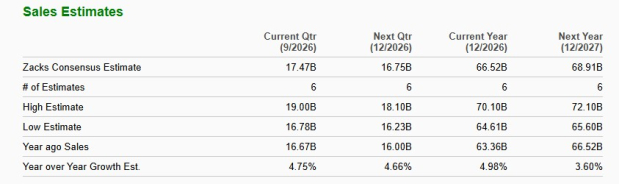
The Zacks Consensus Estimate for sales shows year-over-year growth for the third quarter of 2026, fourth quarter of 2026, full-year 2026 and 2027.
DAL Loyalty Model Is Becoming More Valuable
Delta’s loyalty ecosystem is becoming a larger part of its investment story. Loyalty and related revenues grew 19% in the June quarter as SkyMiles engagement expanded beyond air travel and deeper into partner activity.
American Express remuneration reached $2.4 billion in the quarter, up 16% year over year. The growth was supported by accelerating card acquisitions and the seventh straight quarter of double-digit growth in cardholder spend.
The value of the model is that it extends Delta’s economics beyond the seat sale. Enhanced travel benefits with American Express, partner activity and higher member engagement can help reduce dependence on purely cyclical airfare demand.
Delta AI Tools Deepen Customer Reach
Technology is becoming part of Delta’s revenue and loyalty strategy. Delta Sync now supports logged-in experiences across onboard channels, giving the company more ways to understand customers and tailor engagement during the trip.
Delta Sync seatback is on more than 400 aircraft, with a log-in rate of more than 40%. Delta Sync Wi-Fi log-in rates are approaching 50%, and about 30% of those customers remain in the platform.
Delta also plans to begin installing Amazon Leo low Earth orbit satellite technology on 500 aircraft starting in 2028. The broader point is not connectivity alone. Better logged-in engagement can improve personalization, retailing and long-term customer value.
DAL Reflects the New Margin Battleground
Delta’s results also show why airline profitability remains exposed to external shocks. Adjusted fuel expense rose 77% year over year in the June quarter, while adjusted fuel price increased 75% to $3.93 per gallon.
The September-quarter outlook assumes an all-in fuel price of approximately $3.15 per gallon, including a refinery benefit of 5 cents per gallon. The refinery can help offset some pressure, but it does not eliminate fuel risk.
Cost discipline is equally important. Non-fuel cost per available seat mile increased 6.8% year over year in the June quarter, and wage, crew-related and recovery costs remain elevated. Delta is biasing capacity lower to protect margins, underscoring that the industry’s battleground is increasingly about profitability per seat, not just filling aircraft.
Delta Ratings Fit a Trend-Driven Story
The bottom line is that Delta has several constructive trend signals, but fuel and cost volatility keep the story balanced. Premium demand, loyalty growth and technology-led personalization support revenue durability, while cost inflation limits the margin for error.
DAL currently carries a Zacks Rank #3 (Hold). That ranking fits a stock with favorable business drivers but enough earnings sensitivity to prevent a more decisive near-term signal. You can see the complete list of today’s Zacks #1 Rank (Strong Buy) stocks here.
The Style Scores are more supportive. DAL has a Value Score of A, Momentum Score of A and VGM Score of A, suggesting attractive value and trading characteristics across the Zacks Style Score framework. Its Growth Score of C tempers the picture, making the stock a trend-positive airline name that still requires discipline around costs, fuel and execution.
Research Chief Names "Single Best Pick to Double"
From thousands of stocks, 5 Zacks experts each have chosen their favorite to skyrocket +100% or more in months to come. From those 5, Director of Research Sheraz Mian hand-picks one to have the most explosive upside of all.
This company targets millennial and Gen Z audiences, generating nearly $1 billion in revenue last quarter alone. A recent pullback makes now an ideal time to jump aboard. Of course, all our elite picks aren’t winners but this one could far surpass earlier Zacks’ Stocks Set to Double like Nano-X Imaging which shot up +129.6% in little more than 9 months.
Free: See Our Top Stock And 4 Runners UpWant the latest recommendations from Zacks Investment Research? Today, you can download 7 Best Stocks for the Next 30 Days. Click to get this free report
Delta Air Lines, Inc. (DAL): Free Stock Analysis Report
United Airlines Holdings Inc (UAL): Free Stock Analysis Report
American Airlines Group Inc. (AAL): Free Stock Analysis Report
This article originally published on Zacks Investment Research (zacks.com).