


The Zacks Medical – Products industry is navigating an uneven operating environment where macroeconomic headwinds are colliding with strong structural healthcare demand. Rising tariffs, persistent inflation in electronic components, freight and raw materials, as well as supply-chain normalization challenges are pressuring margins and forcing manufacturers to rely on pricing actions, productivity initiatives and supply-chain diversification. Operational disruptions, product remediation efforts and elevated R&D spending are also weighing on near-term profitability.
Despite these challenges, underlying demand remains resilient, supported by healthy procedural volumes, hospital capital spending, aging demographics and growing prevalence of chronic diseases. At the same time, rapid innovation across AI-enabled diagnostics, robotic-assisted surgery, cardiovascular interventions and digital care platforms is creating new growth opportunities and expanding addressable markets.
These contrasting forces suggest that while the industry's near-term outlook remains constrained by cost pressures, companies with differentiated technologies, innovation pipelines and disciplined execution are best positioned to outperform.
Terumo TRUMY, QuidelOrtho QDEL, Lumexa Imaging Holdings, Inc. LMRI and Brainsway BWAY are countering industry pressures through pricing actions, cost-control initiatives, differentiated innovation pipelines, and focused execution across their core growth franchises and rising demand for advanced diagnostic solutions.
Industry Description
The industry includes companies that provide medical products and cutting-edge technologies for healthcare services, including Abbott Laboratories, Stryker and Boston Scientific. These companies are primarily focused on research and development and cater to vital therapeutic areas like cardiovascular, nephrology and urology devices.
The increase in procedure volumes is driving sales, particularly for surgical products and services. At the same time, cost-cutting measures are helping companies improve their bottom-line performance.
However, the industry’s profitability picture is under significant strain. War-related disruptions are likely to cut into margins and may force companies into another complex and costly supply-chain restructuring.
Major Trends Shaping the Future of the Medical Products Industry
Innovation Continues to Create New Growth Engines: The industry's strongest growth driver remains continuous product innovation. Companies are accelerating investments in AI-powered imaging, robotic-assisted surgery, electrophysiology, structural heart therapies, diabetes care and digital health platforms to capture expanding clinical opportunities. Per the FDA list, there are currently more than 1,500 FDA-cleared AI/ML-enabled devices, and the figure is likely to increase as several medical device makers are actively developing such devices for efficient and faster diagnosis and treatment. Remote patient monitoring platforms are projected to reach $30.9 billion by 2026-end and $110.7 billion by 2033, per a Grand View research report.
New product launches, broader regulatory approvals and increasing physician adoption are helping companies penetrate higher-growth therapeutic categories while improving procedural efficiency and patient outcomes. Robust innovation pipelines are also supporting pricing power and strengthening long-term competitive positioning across the medical products landscape.
Migration to Ambulatory and Home-Based Care: The U.S. market is experiencing a sustained shift from inpatient hospital settings to ASCs and home-based monitoring. The ASC market is set to reach $205 billion by 2030, per a Grand View Research report, driven by procedure cost efficiency, CMS policy changes and expanded device portfolios tailored for outpatient use. Coupled with increased adoption of wearables and connected devices, care decentralization is reshaping technology requirements, pricing structures and competitive dynamics for device makers.
Accelerating Innovation in Robotics and Specialty Therapeutics: Surgical robotics and specialty cardiovascular interventions are driving the next wave of value creation, with robotics poised to witness a 10.5% CAGR, per a Grand View Research report, and pulsed-field ablation transforming electrophysiology standards.
Intuitive Surgical’s platform evolution, entry of versatile competitors and expansion of structural heart solutions (TMVR, PFA) highlight a winner-take-all dynamic. Innovation, clinical outcome evidence and ecosystem lock-in are creating durable advantages in profitability and return on invested capital (ROIC), while commoditized hardware businesses remain under pressure.
Procedure Recovery and Hospital Spending Support Demand: Healthy procedure volumes, favorable demographic trends and resilient hospital capital spending continue to support industry growth. Aging populations, the rising prevalence of chronic diseases and the growing adoption of minimally invasive procedures are driving sustained demand across the cardiovascular, orthopedic, neuromodulation and diagnostic markets. Hospitals also continue to invest in advanced imaging systems, robotics and workflow automation to improve productivity and patient care, providing manufacturers with strong recurring demand despite broader macroeconomic uncertainty.
Tariffs and Cost Inflation Continue to Pressure Margins: The industry's biggest challenge remains rising input costs stemming from tariffs, inflation and supply-chain pressures. Higher prices for semiconductors, metals, freight and other critical components are squeezing margins, while some companies continue to navigate operational disruptions and remediation costs. Although manufacturers are offsetting part of the pressure through pricing actions, productivity initiatives and supply-chain optimization, elevated costs are likely to remain a key headwind for earnings growth in the near term.
Zacks Industry Rank
The Zacks Medical Products industry falls within the broader Zacks Medical sector.
It currently carries a Zacks Industry Rank #169, which places it in the bottom 32% of more than 245 Zacks industries.
The group’s Zacks Industry Rank, which is basically the average of the Zacks Rank of all member stocks, indicates dull near-term prospects. Our research shows that the top 50% of the Zacks-ranked industries outperform the bottom 50% by a factor of more than 2 to 1.
Before we present a few medical product stocks that you may want to consider for your portfolio, let’s take a look at the industry’s recent stock-market performance and valuation picture.
Industry Performance
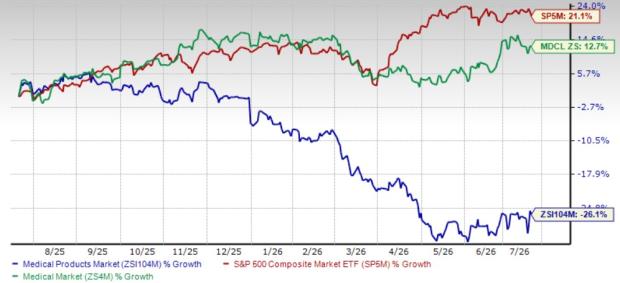
The industry has underperformed its own sector as well as the Zacks S&P 500 composite over the past year.
Stocks in this industry have collectively declined 26.1% against the Zacks Medical sector’s rise of 12.7%. The S&P 500 has increased 21.1% in the same time frame.
One-Year Price Performance
Industry's Current Valuation
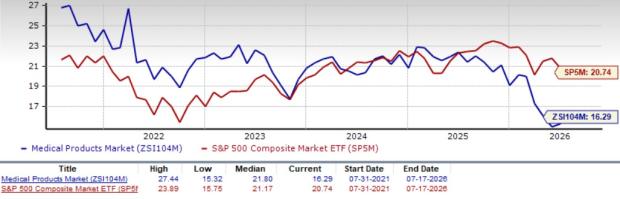
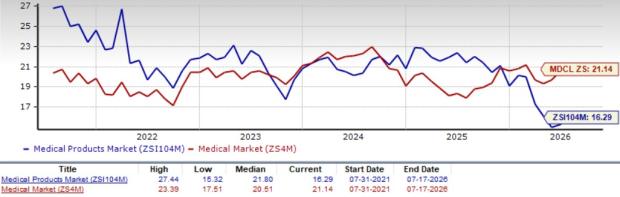
On the basis of the forward 12-month price-to-earnings (P/E), which is commonly used for valuing medical stocks, the industry is currently trading at 16.3X compared with the S&P 500’s 20.7X and the sector’s 21.1X.
Over the past five years, the industry has traded as high as 27.4X and as low as 15.3X, with the median being 21.8X, as the charts show.
Price-to-Earnings Forward Twelve Months (F12M)
Price-to-Earnings Forward Twelve Months (F12M)
4 Potential Winning Medical Product Stocks
BrainsWay continues to emerge as one of the industry's fastest-growing niche medtech companies, driven by expanding adoption of its Deep TMS platform. Strong system placements, a growing installed base, recurring multi-year contracts and improving reimbursement coverage are supporting sustained revenue visibility.
Additional catalysts include expanding clinical indications, the SWIFT protocol, strategic investments in mental health networks and Neurolief, and a large untapped market opportunity for non-invasive neuromodulation therapies. Still, continued investment in commercialization, reimbursement expansion and broader physician adoption remain necessary, while geopolitical and supply-chain uncertainties could modestly affect execution.
For 2026, BrainsWay has guided revenues of $66-$68 million (27-30% growth), operating margin of 13-14% and adjusted EBITDA of $12-$14 million, indicating strong bottom-line expansion.
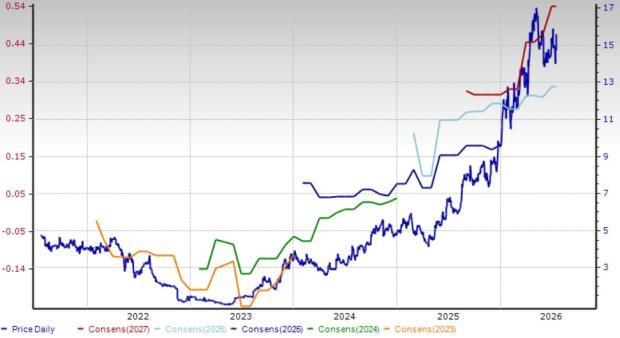
For this Israel-based company, the Zacks Consensus Estimate for fiscal 2026 revenues is pegged at $68.5 million, projecting 31.2% growth. The consensus mark for EPS is pinned at 33 cents per share, implying an 8.3% decline year over year. The company delivered a trailing four-quarter average earnings surprise of 72.23%.
Presently, the company sports a Zacks Rank #1 (Strong Buy). You can see the complete list of today’s Zacks #1 Rank stocks here.
Price and Consensus: BWAY
Terumo appears well positioned for a strong second half of 2026, supported by broad-based growth across its Cardiac & Vascular, Neuro, Blood & Cell Technologies and Pharmaceutical Solutions businesses. Continued demand in North America, pricing actions, expanding neurovascular adoption, growth in CDMO and PLAJEX businesses, and the first full-year contribution from Terumo Organ Technologies should sustain high-single-digit revenue growth while profit expands faster than sales. The absence of large one-time restructuring charges also strengthens earnings visibility.
However, U.S. tariffs, higher raw material costs and geopolitical uncertainty remain key risks, although management expects pricing and cost-control initiatives to offset much of the pressure.
The company expects revenues and operating profit to grow 8% and 20%, respectively, in 2026. For this Japanese company, the Zacks Consensus Estimate for 2026 revenues of $7.69 billion indicates year-over-year growth of 2.4%. The consensus estimate for earnings of 70 cents per share indicates an improvement of 14.8%. Presently, the company carries a Zacks Rank #2 (Buy).
Price and Consensus: TRUMY
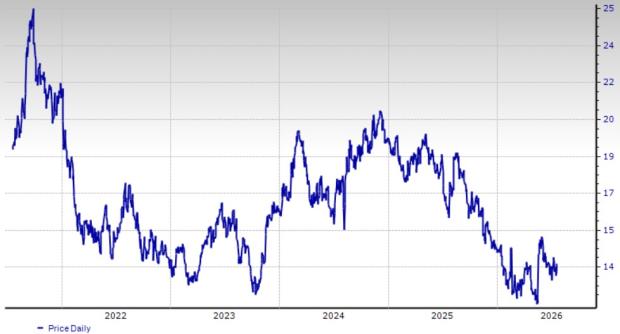
Despite a difficult first quarter, QuidelOrtho's long-term outlook is improving as its growth increasingly shifts beyond seasonal respiratory testing. The LEX Diagnostics acquisition strengthens its point-of-care molecular diagnostics portfolio, while the U.S. launch of the high-sensitivity troponin assay and international rollout of the VITROS 450 platform should support higher laboratory revenues in the second half.
Management also expects margin expansion through restructuring, procurement savings and facility consolidation. Nevertheless, a weak respiratory season, China IVD pricing reforms and geopolitical disruptions affecting Middle East orders could continue to pressure near-term growth and profitability.
For this San Dieogo, CA-based company, the Zacks Consensus Estimate for 2026 revenues is pegged at $2.68 billion, suggesting a decline of 1.8%. The consensus mark for earnings per share (EPS) is pinned at $1.87, indicating a decline of 11.8%. However, revenues and earnings are likely to improve 2.7% and 25.7%, respectively, in 2027. The company delivered a trailing four-quarter average negative earnings surprise of 15.66%. Presently, the company carries a Zacks Rank of 2.
Price and Consensus: QDEL
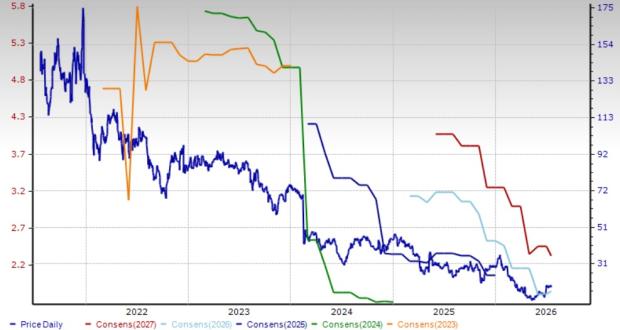
Lumexa's growth prospects remain supported by structural shifts toward outpatient imaging and rising demand for advanced diagnostic modalities. Robust PET and MRI growth, accelerating de novo center openings, tuck-in acquisitions, expanding joint ventures with health systems and increasing adoption of AI-enabled imaging solutions provide multiple growth levers for the second half of 2026.
Favorable industry trends, including aging demographics, preventive screening and site-of-care migration, further strengthen the outlook. However, weather-related volume disruptions, seasonal payer mix changes and cybersecurity-related compliance costs could create intermittent operational headwinds despite management's strong execution.
For this Raleigh, NC-based company, the Zacks Consensus Estimate for 2026 revenues is pegged at $1.07 billion, projecting 298% growth. The consensus mark for EPS is pinned at 77 cents, implying a 302.6% improvement year over year. The company delivered a trailing four-quarter average negative earnings surprise of 685%. Presently, it carries a Zacks Rank #2.
Price and Consensus: LMRI
Radical New Technology Could Hand Investors Huge Gains
Quantum Computing is the next technological revolution, and it could be even more advanced than AI.
While some believed the technology was years away, it is already present and moving fast. Large hyperscalers, such as Microsoft, Google, Amazon, Oracle, and even Meta and Tesla, are scrambling to integrate quantum computing into their infrastructure.
Senior Stock Strategist Kevin Cook reveals 7 carefully selected stocks poised to dominate the quantum computing landscape in his report, Beyond AI: The Quantum Leap in Computing Power .
Kevin was among the early experts who recognized NVIDIA's enormous potential back in 2016. Now, he has keyed in on what could be "the next big thing" in quantum computing supremacy. Today, you have a rare chance to position your portfolio at the forefront of this opportunity.
See Top Quantum Stocks Now >>Want the latest recommendations from Zacks Investment Research? Today, you can download 7 Best Stocks for the Next 30 Days. Click to get this free report
Terumo Corp. (TRUMY): Free Stock Analysis Report
QuidelOrtho Corporation (QDEL): Free Stock Analysis Report
Brainsway Ltd. Sponsored ADR (BWAY): Free Stock Analysis Report
Lumexa Imaging Holdings, Inc. (LMRI): Free Stock Analysis Report
This article originally published on Zacks Investment Research (zacks.com).