


Altimmune ALT is heading into 2026 with a catalyst-heavy calendar tied to pemvidutide, its lead clinical asset. The setup is straightforward: investors are underwriting pivotal execution in metabolic dysfunction-associated steatohepatitis and looking for proof-of-concept in alcohol-related disease programs.
That concentration can create outsized upside on good news and sharp downside on missteps.
ALT’s Near-Term Setup Centers on Two 2026 Events
The first key milestone is the planned start of a global phase III registrational study in metabolic dysfunction-associated steatohepatitis in the second half of 2026, targeting patients with moderate-to-severe liver fibrosis. Management expects 52-week data in 2029, but the 2026 start is the gating event that moves pemvidutide into a pivotal setting.
The second 2026 catalyst is top-line phase II data from the RECLAIM study in alcohol use disorder, expected in the third quarter of 2026. Enrollment for RECLAIM was completed in November 2025, ahead of schedule, which keeps the timeline intact heading into next year.
Altimmune, Inc. Price and Consensus
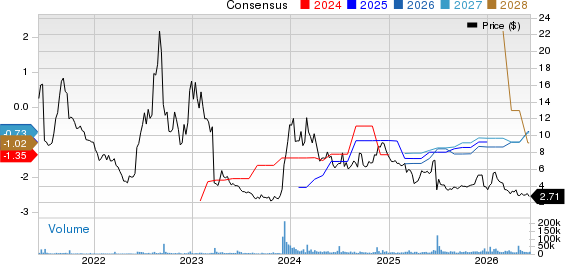
Altimmune, Inc. price-consensus-chart | Altimmune, Inc. Quote
A third marker investors may watch is enrollment progress in the RESTORE phase II study in alcohol-associated liver disease. Enrollment is expected to be completed by the third quarter of 2026, providing another read on execution even before efficacy data is available.
Altimmune’s MASH Thesis Depends on Pivotal Execution
The phase III PERFORMA start matters because it is the step that turns phase II signals into a program designed for registration. Altimmune has highlighted alignment with the Food and Drug Administration on key late-stage parameters, which helps reduce design uncertainty as the company moves into PERFORMA.
The stakes are high because the company’s value proposition is heavily tied to pemvidutide across multiple indications. That dependence cuts both ways: success can validate a “pipeline in a product” narrative, while failure in a pivotal metabolic dysfunction-associated steatohepatitis program would likely be a major downside catalyst given how central pemvidutide is to the investment case.
That binary profile is also why 2026 is so important. Even without clinical readouts from PERFORMA in 2026, simply initiating the study on time can support confidence that the timeline toward 2029 data remains credible.
ALT’s Phase II Evidence Investors Are Leaning On
In the phase IIb IMPACT study, pemvidutide delivered statistically significant metabolic dysfunction-associated steatohepatitis resolution without worsening fibrosis at 24 weeks, and that response was sustained through 48 weeks. The company also pointed to clear signs of reducing liver scarring by 48 weeks, alongside continued improvement in markers of liver damage and inflammation.
Top-line 48-week results highlighted statistically significant reductions versus placebo in non-invasive markers of liver fibrosis, including Enhanced Liver Fibrosis and liver stiffness, with improvements that deepened from the 24-week mark.
The dataset also included metabolic benefits, reductions in liver fat and inflammation markers, and meaningful weight loss. Notably, the higher-dose group (1.8 mg) showed weight reduction through 48 weeks without plateauing, while tolerability remained favorable with low discontinuation rates and no serious treatment-related adverse events reported.
Altimmune’s Cash Runway Into 2029 Lowers Timing Risk
Altimmune’s financial position improved into the first quarter of 2026, with cash, cash equivalents and short-term investments of $332 million as of March 31, 2026 versus $274 million as of Dec. 31, 2025.
The company raised $75 million in a registered direct offering and $8 million via an at-the-market program in January to February 2026 and then completed an oversubscribed public offering in April 2026 with $225 million in gross proceeds. Pro forma cash was roughly $535 million as of April 30, 2026.
Management expects that cash runway to support operations into 2029, which can lower timing risk by reducing near-term funding pressure as the company advances phase III plans in metabolic dysfunction-associated steatohepatitis and continues its phase II alcohol use disorder and alcohol-associated liver disease trials.
ALT’s Dilution and Financing Overhang Still Exists
Even with a strengthened balance sheet, Altimmune remains a pre-revenue clinical-stage biotech with no marketed products, which keeps external financing central to its operating model.
That reality can translate into dilution risk over time. The company has indicated it may still raise additional funds if market conditions are favorable, a reminder that opportunistic capital raises can remain part of the story even with a longer runway.
Altimmune’s Competition Checklist for Buyers
Competition is a key constraint on upside across all three target areas. In metabolic dysfunction-associated steatohepatitis, pemvidutide faces a crowded field spanning GLP-1 drugs and combination incretins, FGF-21 therapies, thyroid hormone receptor beta agonists, and other emerging mechanisms. Major competitors include Novo Nordisk NVO and Eli Lilly LLY, alongside metabolic dysfunction-associated steatohepatitis-focused developers such as Madrigal Pharmaceuticals MDGL and Viking Therapeutics (VKTX).
In alcohol-associated liver disease, large pharmaceutical companies are pursuing multiple approaches, including FGF-21, GLP-1 and RNA-based programs. In alcohol use disorder, pemvidutide would compete with approved options like Vivitrol as well as generic therapies including naltrexone and acamprosate. The net effect is that even strong data may not automatically translate into clear commercial leadership.
ALT’s Valuation Snapshot and What It Implies
On a relative basis, the stock has been framed through trailing 12-month book value per share. ALT recently traded at 1.24 times trailing book value, compared with 1.39 times for the Zacks sub-industry, 3.71 times for the Zacks sector, and 8.01 times for the S&P 500.
Over the past five years, the book value multiple has ranged from 0.71 times to 5.25 times, with a five-year median of 2.34 times. That context suggests the current multiple sits below the longer-term midpoint, but still within a historical band.
The stated $3 price target approach is tied to a 1.4 times trailing 12-month book value multiple. In practical terms, that framework implies expectations for performance that tracks more “in-line” outcomes than a high-conviction upside scenario, placing even more emphasis on 2026 execution as the driver of sentiment.
Altimmune’s Zacks Rank
ALT currently carries a Zacks Rank #2 (Buy). You can see the complete list of today’s Zacks #1 Rank (Strong Buy) stocks here.
Research Chief Names "Single Best Pick to Double"
From thousands of stocks, 5 Zacks experts each have chosen their favorite to skyrocket +100% or more in months to come. From those 5, Director of Research Sheraz Mian hand-picks one to have the most explosive upside of all.
This company targets millennial and Gen Z audiences, generating nearly $1 billion in revenue last quarter alone. A recent pullback makes now an ideal time to jump aboard. Of course, all our elite picks aren’t winners but this one could far surpass earlier Zacks’ Stocks Set to Double like Nano-X Imaging which shot up +129.6% in little more than 9 months.
Free: See Our Top Stock And 4 Runners UpWant the latest recommendations from Zacks Investment Research? Today, you can download 7 Best Stocks for the Next 30 Days. Click to get this free report
Novo Nordisk A/S (NVO): Free Stock Analysis Report
Eli Lilly and Company (LLY): Free Stock Analysis Report
Altimmune, Inc. (ALT): Free Stock Analysis Report
Madrigal Pharmaceuticals, Inc. (MDGL): Free Stock Analysis Report
This article originally published on Zacks Investment Research (zacks.com).