

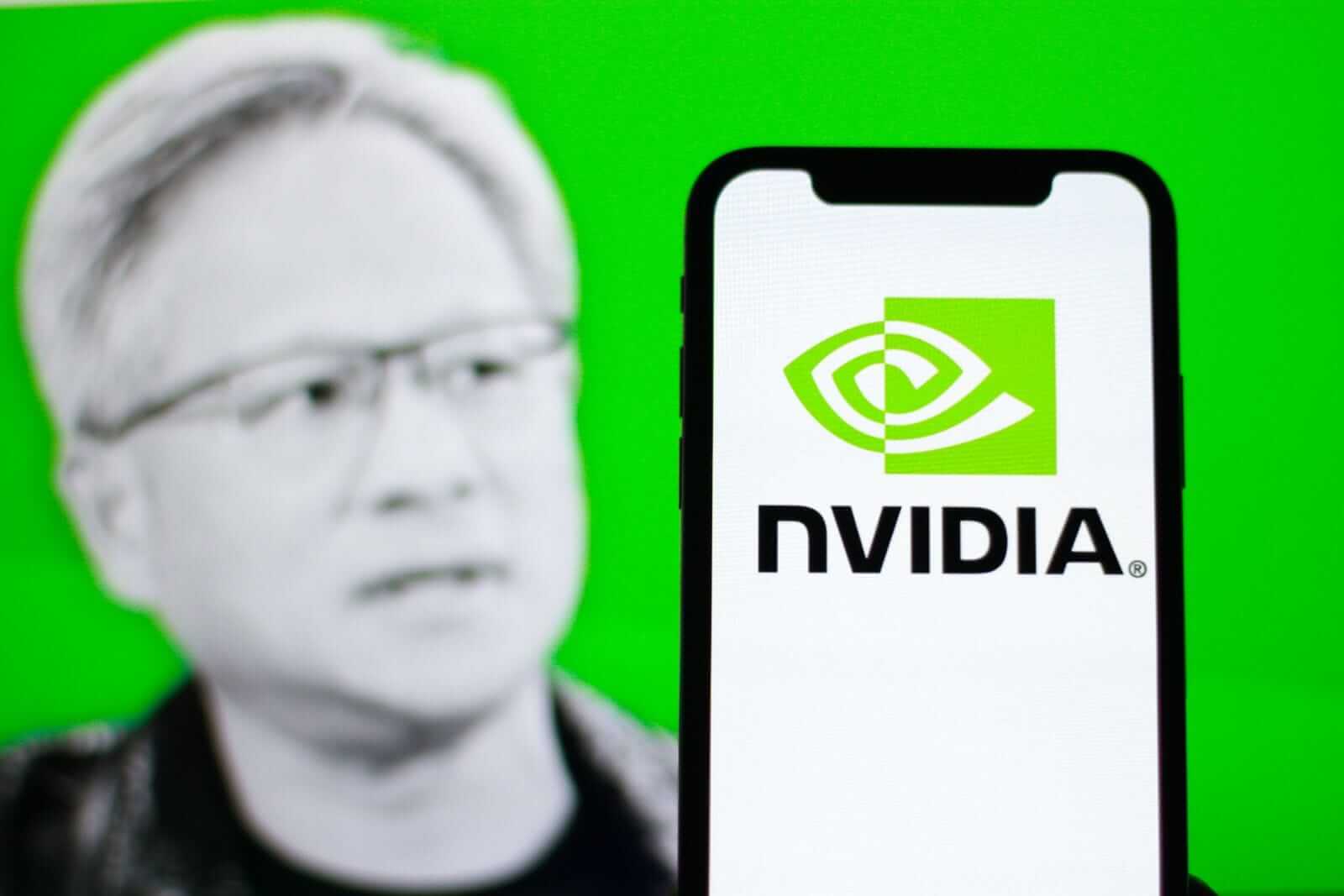
Semiconductor stocks have been at the heart of the market’s powerful rally, fueled by relentless spending on artificial intelligence (AI) infrastructure. Chipmakers have powered major indices to record highs this year as hyperscalers poured hundreds of billions of dollars into data centers, advanced processors, and high-bandwidth memory. But after months of near-vertical gains, the sector suffered a sharp pullback, raising a familiar question: Is this the start of something more serious, or simply another reset in an otherwise durable uptrend?
Nvidia (NVDA) Chief Executive Officer Jensen Huang is firmly in the latter camp. Often referred to as the “Godfather of AI,” Huang has argued that investors should not overreact to the latest chip rout—and that the pullback may actually represent a buying opportunity. His thesis is straightforward: the AI buildout is still in its early innings, and the infrastructure being constructed today will form the foundation of an AI-driven future.
More Top Stocks Daily: Go behind Wall Street’s hottest headlines with Barchart’s Active Investor newsletter.
So is Huang right that the chip rout is a buy-the-dip moment for long-term investors? Or does the recent volatility suggest a more cautious approach is warranted? Let’s take a closer look.
Why Nvidia’s CEO Isn’t Worried About the Chip Sell-Off
Chipmakers have driven the market to record highs in recent months. However, that rally came to a halt at the end of last week. Everything started when Broadcom (AVGO) issued below-consensus FQ3 AI semiconductor revenue guidance late last Wednesday. It sent its shares sharply lower on Thursday and triggered a broad-based sell-off across the chip sector. The sector took an even larger hit on Friday after a blowout U.S. jobs report boosted expectations for a Federal Reserve rate hike this year. The chip rout rippled through global markets, with South Korea’s Kospi and Japan’s Nikkei Stock Average posting sharp losses on Monday. Still, the “Godfather of AI” not only believes investors should not worry about the sell-off, but also argues that they should be buying the dip.
Nvidia CEO Jensen Huang, responding to questions during a trip to Seoul about how the sell-off should be viewed, said the industry remains in the early stages of building infrastructure that will form the foundation of an AI-driven future. “We’re at the beginning of it, and whatever happened to the stock market, you should be very happy because now you can buy at a discount,” Huang said. “Everybody should be very excited.”
Huang has repeatedly argued that AI will reshape large segments of the global economy and fundamentally change how people work and live. And that, in turn, will fuel massive demand for the data centers, and of course for chips, required to power future AI services. “It is a foregone conclusion that AI will be infrastructure for the world, just like the internet was infrastructure for the world,” Huang said.
It appears investors were persuaded by Huang’s comments, as chip stocks staged a partial rebound on Monday. However, that rebound was short-lived, as the chip sell-off continued on Tuesday and Wednesday.
AI Data Center Spending Keeps the Chip Bull Case Intact
Against the backdrop of recent volatility, investors should clearly separate the facts from the noise. And the key fact here is that the fundamentals of the semiconductor sector remain strong as investment in AI data centers continues. Let’s dive a bit deeper into this.
The so-called hyperscalers — Alphabet (GOOG) (GOOGL), Meta Platforms (META), Microsoft (MSFT), and Amazon (AMZN) — plan to spend up to $725 billion this year on capital expenditures (capex), with the bulk allocated to AI data centers. And they are expected to spend significantly more in 2027, with their capex projected to exceed $1 trillion. Zooming in, 45% to 60% of data center infrastructure spending goes directly toward semiconductor hardware and computing components. With that, this massive spending translates directly into enormous revenue for makers of graphics processing units, memory chips, and central processing units.
Another important point is that AI demand remains supply-constrained, with shortages continuing across memory, GPUs, and increasingly CPUs. When demand exceeds supply, prices inevitably rise. And we received confirmation of this during the hyperscalers’ Q1 earnings calls. Microsoft said higher component prices accounted for about $25 billion of its record capex guidance, while Meta attributed its $10 billion increase mainly to rising memory prices. That means AI hardware suppliers hold unprecedented pricing power, enabling them to pass through higher input and component costs while protecting — and often expanding — their margins.
Following the Q1 earnings season, Wall Street analysts broadly raised their revenue forecasts for U.S. chip companies, driven by accelerating hyperscaler capex. At the same time, margin forecasts crept higher due to supply constraints. The combination of higher revenue expectations and expanding margin assumptions ultimately led to a sharp increase in earnings projections across much of the sector. Moreover, neither chipmakers nor their data center customers have signaled any slowdown in AI demand, giving these projections a kind of extra confirmation. So, it becomes clear that much of this year’s chip rally is grounded in improving fundamentals.
Putting it all together, the facts strongly support Mr. Huang’s view that the industry is still in its early stages and that chipmakers will continue to benefit from hyperscalers’ massive spending, which actually makes dip-buying a compelling opportunity for long-term investors. The only recommendation I would make to investors is to be more selective with their picks, as after such a stellar run many positives are already priced in and the margin for error has become minimal. Whether ironic or not, Nvidia’s forward price-to-earnings multiple on Wednesday once again fell below that of the benchmark S&P 500 Index ($SPX), as the AI giant’s shares were not spared from the broader semiconductor sector sell-off. The last time this happened was in early April, when NVDA was trading above $176, and I called the stock a bargain. I see no reason not to view it the same way at current levels.
On the date of publication, Oleksandr Pylypenko did not have (either directly or indirectly) positions in any of the securities mentioned in this article. All information and data in this article is solely for informational purposes. For more information please view the Barchart Disclosure Policy here.
More news from Barchart
Nvidia CEO Jensen Huang Isn’t Worried About the Chip Rout. The Numbers Back Him Up on NVDA Stock. Gold Mining Stocks Look Like a ‘Gold Mine.’ Start Buying Now Before Time Runs Out. A Top-Heavy S&P 500 Approaching Its ‘Terminal’ State Should Keep Baby-Boomer and Gen X Investors Up at Night Why Wells Fargo Is Warning That Surging AI Token Costs Is a Death Knell for Hyperscaler Stocks Like Meta and Microsoft