


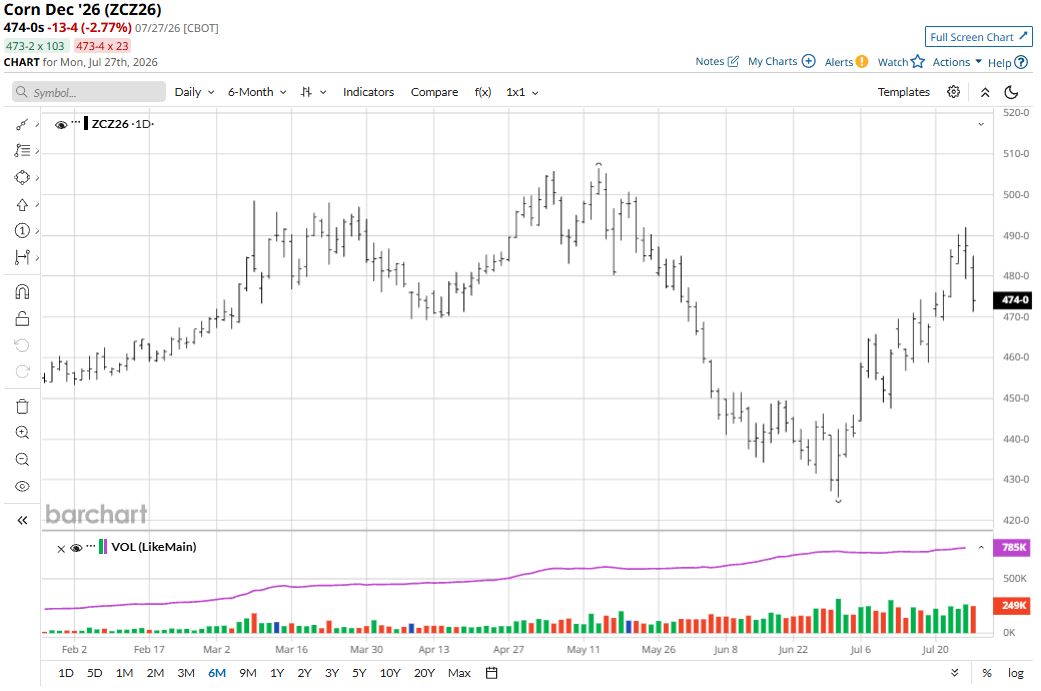
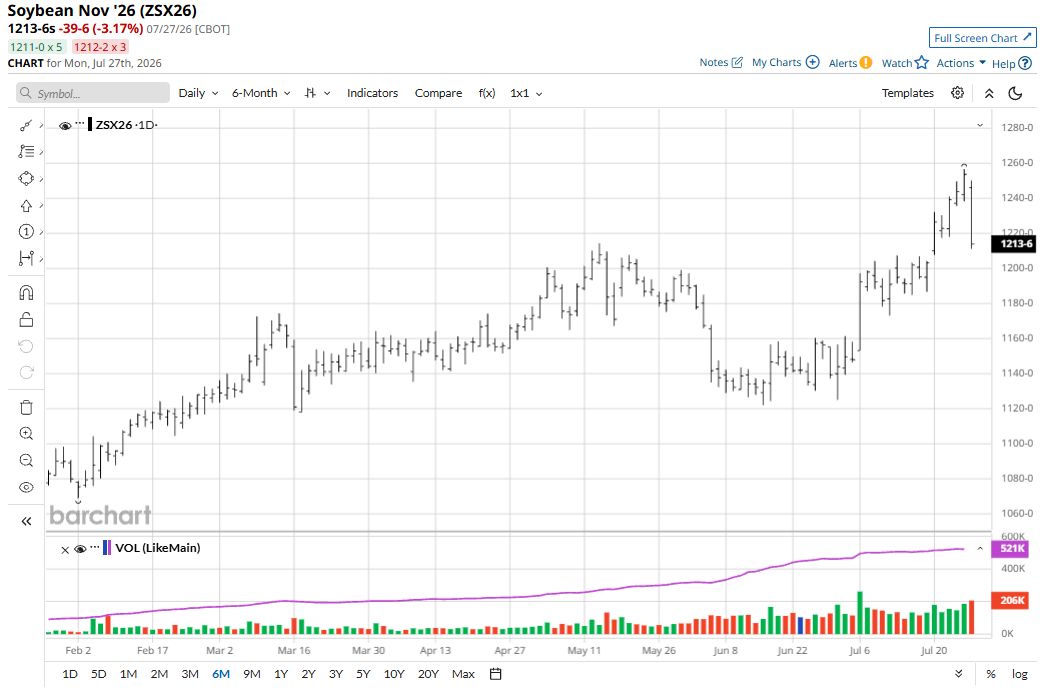
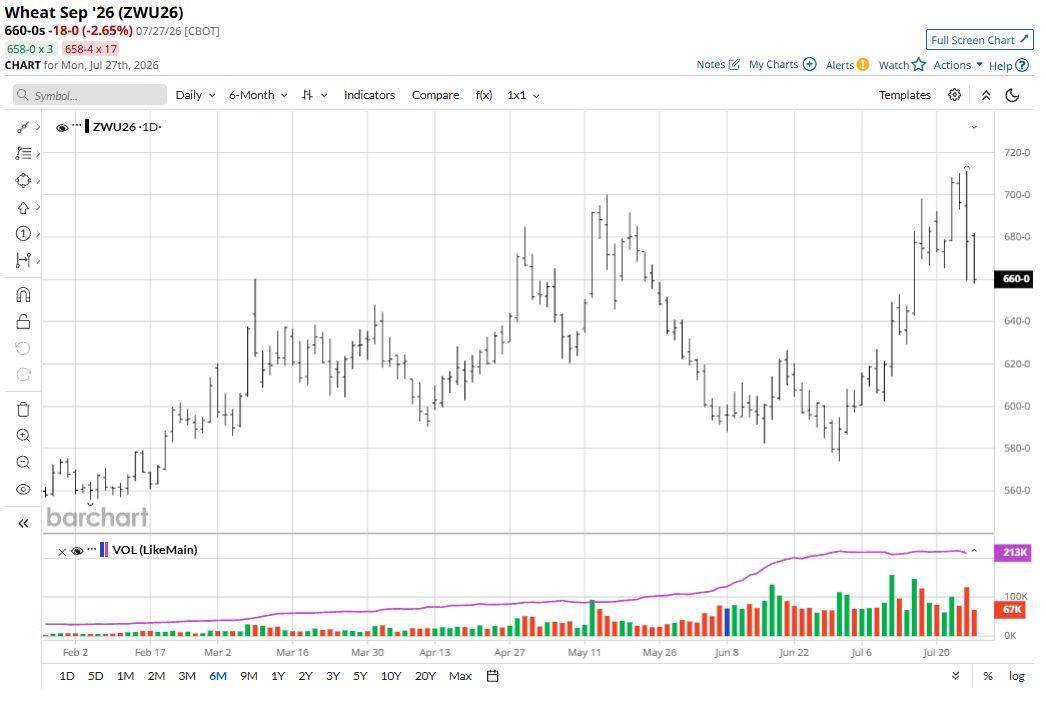
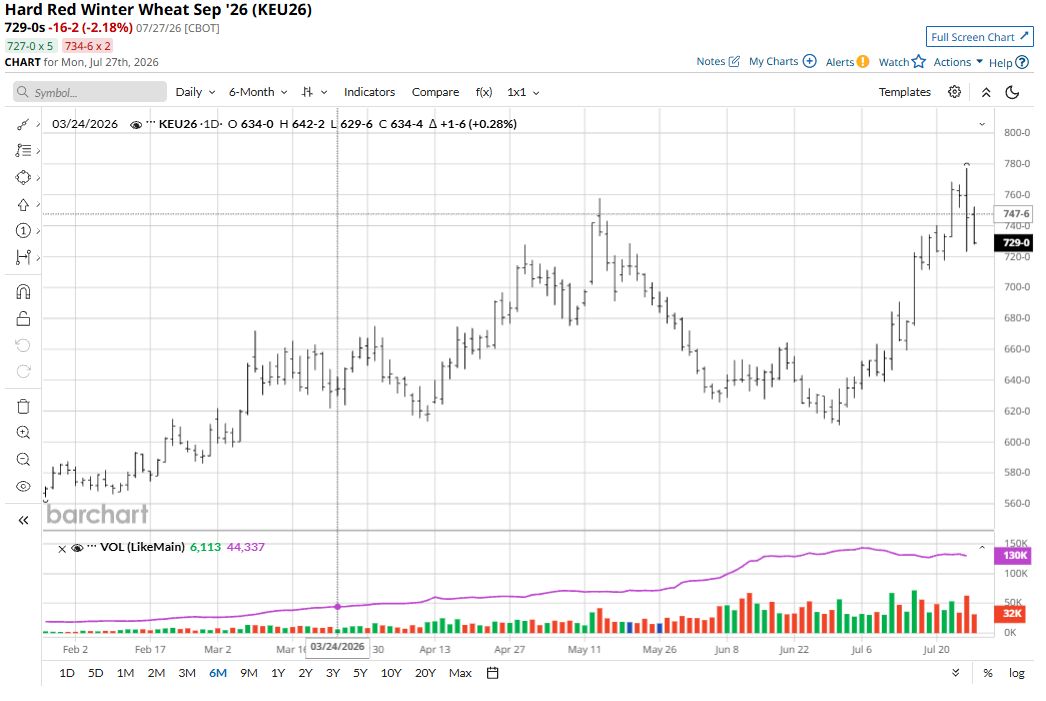
December corn (ZCZ26) futures prices on Friday closed steady at $4.87 1/2 but hit a two-month high early in the session and for the week were up 20 cents. November soybeans (ZSX26) on Friday rose 9 3/4 cents to $12.53 1/2, hit a contract high, and for the week gained 50 1/2 cents. September soft red winter (SRW) wheat (ZWU26) futures lost 18 1/4 cents to $6.78, after hitting a contract high early on. For the week, September SRW was down 4 3/4 cents. September hard red winter (HRW) wheat (KEU26) Friday fell 14 1/2 cents to $7.45 1/4, after also hitting a contract high early on. For the week, September SRW was up 13 cents.
Corn and Soybean Prices Trending Up as Intense Heat Bakes Midwest
An intense and persistent heat dome has settled over most of the Midwest the past several days and is expected to remain in place until at least mid-week. It’s wilting corn and soybean crops and rapidly reducing soil-moisture reserves in the region.
Don’t Miss a Day: From crude oil to coffee, sign up free for Barchart’s best-in-class commodity analysis.
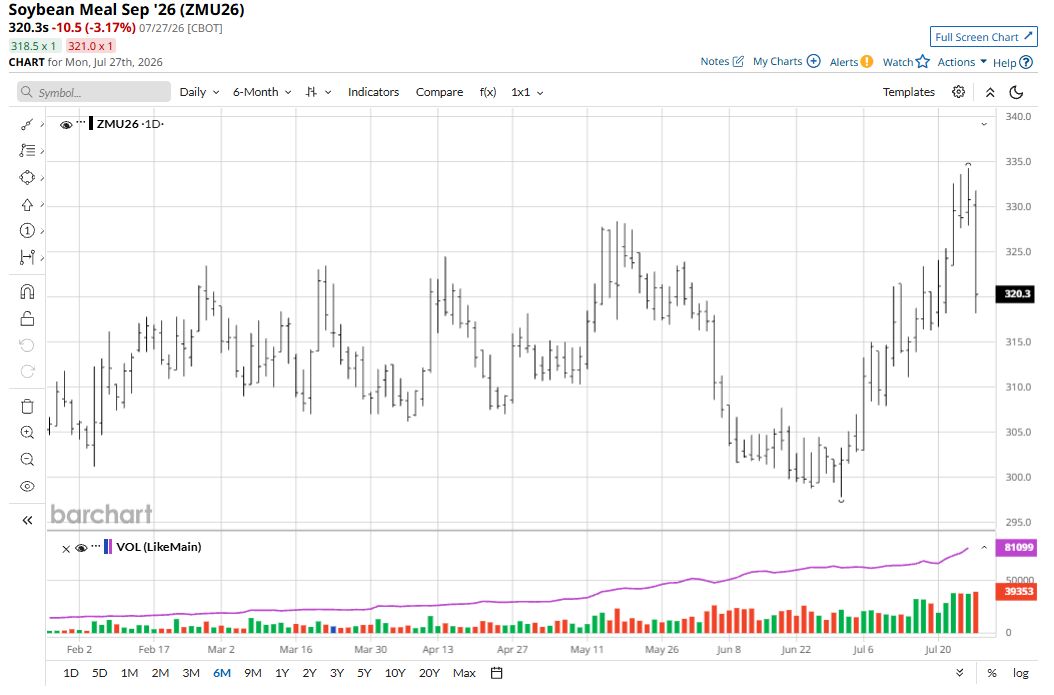
The corn futures market paused to end last week on some mild profit-taking pressure as the bulls stopped to catch their breath. Soybean and soybean meal (ZMU26) futures bulls kept their foot on the gas as prices stretched to new highs in their current price uptrends. These price uptrends should keep the bulls in the driver’s seat this week.
 www.barchart.com
 www.barchart.com
 www.barchart.com
However, any significant changes in the Corn Belt weather forecast could derail the weather-market rallies in the grain markets. There’s an old saying that strong bull markets in the grains need to be fed a steady diet of fresh fundamental news for those rallies to be extended. Bears can argue that the less-than-ideal weather in the Midwest may now be mostly factored into grains futures prices.
Friday’s solid losses in crude oil (CBU26) futures prices were also negative for the grains. Crude oil is the leader of the raw commodity sector and the recent rally in crude prices played a part in the upside price action for the grains. Grain traders will be keeping a closer eye on crude oil prices this week.
Grain traders will also closely examine Monday afternoon’s weekly crop progress report updates, especially the “good to excellent” condition ratings for the corn and soybean crops.
Winter wheat futures prices on Friday also fell under heavier selling pressure. More downside price action in wheat futures this week would likely at least limit the upside in corn and soybean futures.
Soybean traders will also be looking to see if the USDA reports any fresh daily flash sales of U.S. soybeans this week, hoping China will continue to be a buyer. The pace of sales to China slowed somewhat, according to last week’s export sales report, but new-crop sales remain at their highest for this time of year since 2022.
U.S.-China relations will remain near the front burner of the soy complex futures markets. Recent U.S. swipes at China for U.S. election meddling and fresh U.S. tariff threats have some soybean traders worried that a scheduled September meeting between President Donald Trump and Chinese President Xi Jinping may be canceled by China. However, the Trump administration maintains that the U.S.-China summit meeting in the U.S. is still a go. A positive outcome of the September meeting could mean more China purchases of U.S. ag commodities.
The Pro Farmer crop tour in late August will be coming into corn and soybean futures traders’ focus as the month of July ends.
Profit-Taking Hits Winter Wheat Futures to Produce Some Chart Damage
The winter wheat futures markets on Friday saw heavy profit-taking pressure and weak long liquidation after prices scored contract highs in the overnight trade. Friday’s price action produced technically bearish “key reversals” down on the daily bar charts for September SRW and HRW futures, which are early technical clues of near-term market tops being in place. However, the bulls can correctly argue that weather markets in grains can produce higher daily volatility like Friday’s, and that technical signals in weather markets can become less reliable.
 www.barchart.com
 www.barchart.com
Also bearish for wheat late last week, Euronext wheat futures fell sharply on reports that Ukraine is discussing mechanisms to keep vessels moving through its big Odessa ports, raising hopes that Black Sea exports may avoid major disruption, according to Reuters.
Good harvest weather is occurring in the central U.S. Plains and in parts of the Midwest and that’s also a negative for futures prices. The favorable harvest should continue through the next week to 10 days, despite a few showers and thunderstorms and brief delays, according to weather forecasters. However, U.S. spring wheat areas in the U.S. northern Plains and southern Canada’s Prairies are stressed and losing some yield potential.
Let me know what you think. I enjoy hearing from my valued Barchart readers all around the globe. Email me at jim@jimwyckoff.com.
On the date of publication, Jim Wyckoff did not have (either directly or indirectly) positions in any of the securities mentioned in this article. All information and data in this article is solely for informational purposes. For more information please view the Barchart Disclosure Policy here.