

Alphabet (GOOGL) has been spending at a pace that would make even the most aggressive capital spender blush. The company expects 2026 capital expenditures of $195 billion to $205 billion, with artificial intelligence (AI) infrastructure accounting for much of that spending. That has created an obvious concern for shareholders: How long will it take for all those expensive servers to generate a return?
Google Cloud CEO Thomas Kurian just supplied an unusually concrete answer. Speaking at the Goldman Sachs Communacopia + Technology Conference, Kurian said the aggregate payback period on Google's AI servers is less than two years. More importantly, he said the payback period for Google's own silicon is roughly half that — implying a period of less than one year.
More Top Stocks Daily: Go behind Wall Street’s hottest headlines with Barchart’s Active Investor newsletter.
 www.barchart.com
 Google's Own Chips May Be the Secret Weapon
Google does not have to buy every AI accelerator from Nvidia (NVDA). It has spent years developing its own Tensor Processing Units (TPUs), allowing it to design chips around its specific workloads.
Kurian said Google's accelerator business, including TPUs, is already more than twice the size of the next-largest hyperscaler's accelerator business. He also said Google offers 2.7 times better price performance for AI training and 80% better price performance for inference, compared with the relevant alternatives.
That helps explain why Google's enormous capital budget does not necessarily represent an enormous financial burden, despite producing negative free cash flow last quarter for the first time ever.
If a server pays for itself in less than two years — and proprietary silicon pays back in roughly one year — Google can recycle that capital into the next generation of infrastructure much faster than a simple comparison of annual capex suggests.
The Cloud Numbers Are Already Catching Up
The financial results provide some evidence that the strategy is working. Alphabet reported $24.77 billion of Google Cloud revenue in the second quarter, up 82% year-over-year (YOY), while its cloud backlog reached $514 billion. Alphabet also said nearly 90% of Fortune 100 companies were using Gemini Enterprise. That's a potent combination — rapidly expanding revenue today and a massive pool of contracted business ahead.
Kurian added that most Google Cloud infrastructure contracts run for about five years. He also said customers committing to $100 of spending typically end up spending more than $150, allowing Google to expand revenue after the initial contract.
That makes the AI spending cycle more interesting than simply asking whether Google is overspending on servers. The company is building infrastructure, monetizing that infrastructure through cloud customers, and then using proprietary chips to improve the economics.
The Bottom Line
Alphabet's roughly $200 billion capex plan for 2026 looks far less frightening if Google's AI infrastructure really pays back in under two years — and its own silicon in roughly one year.
Granted, Kurian's figures are company disclosures, not guarantees. AI demand could slow, chip economics could deteriorate, or competitors could close Google's performance gap.
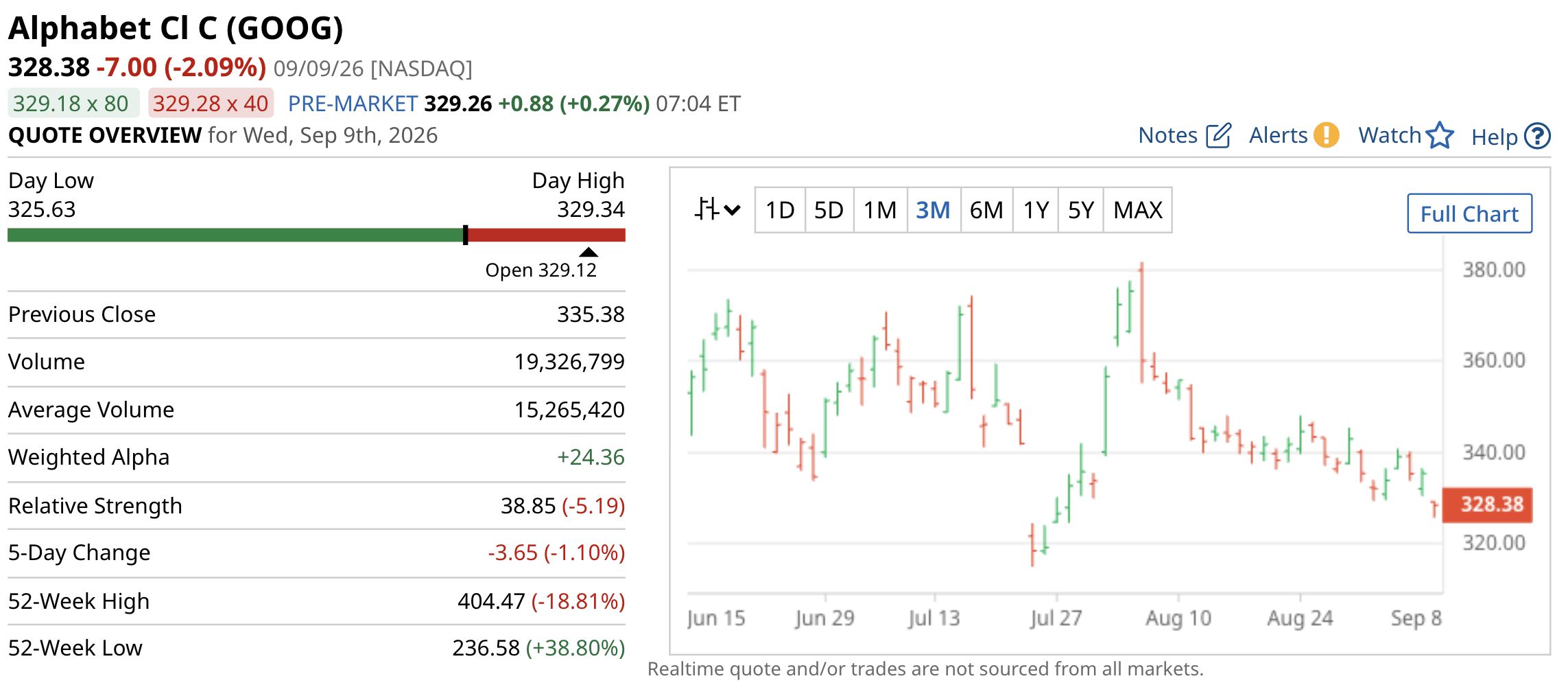
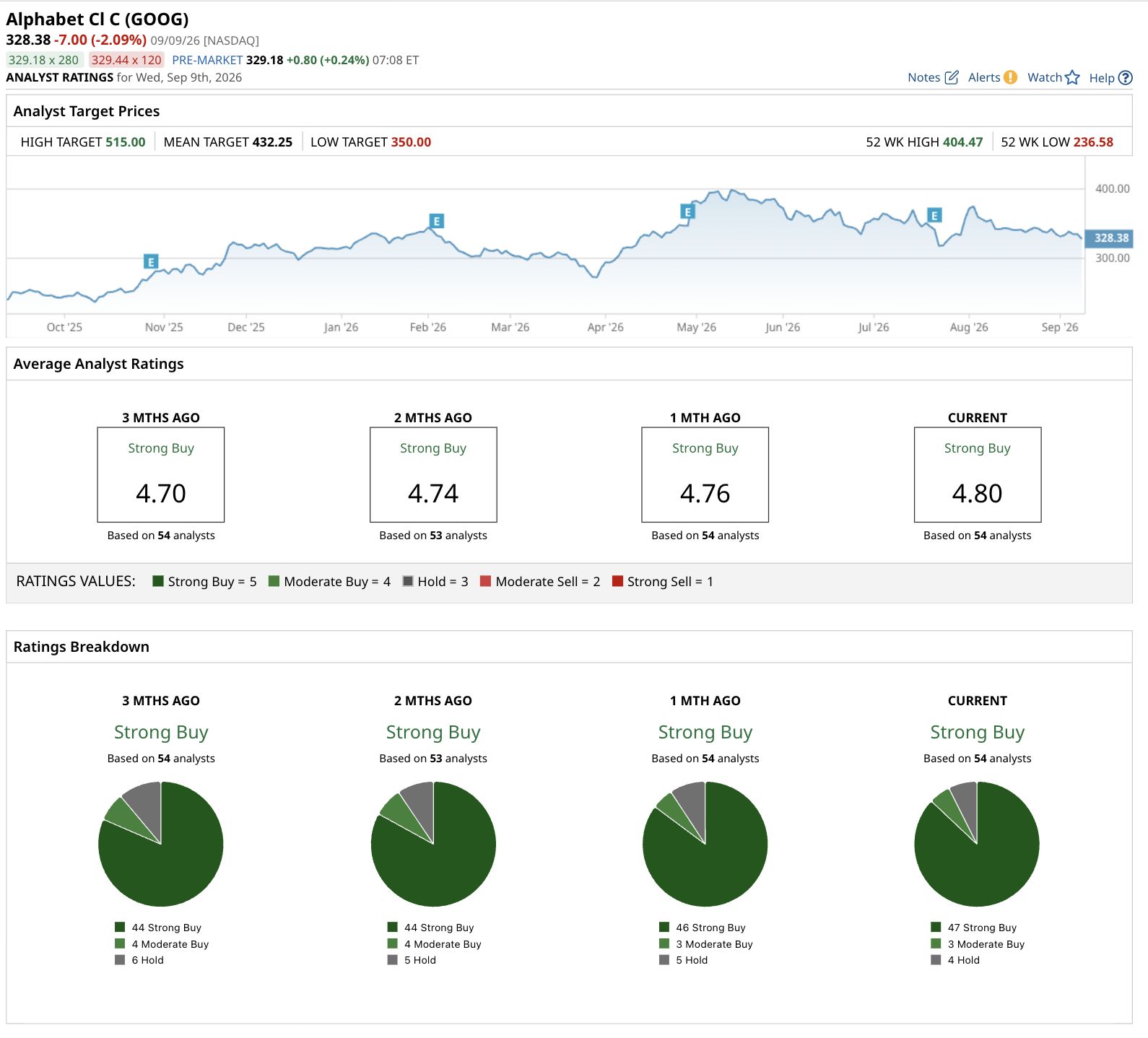
Yet, the latest numbers point in the opposite direction. Google Cloud revenue grew 82% in Q2, backlog reached $514 billion, and Google's custom accelerator business is already more than twice the size of the next-largest hyperscaler's accelerator business. GOOGL stock trades at roughly 16 times both trailing and forward earnings, with a PEG ratio of less than 1 times. Wall Street maintains a consensus “Strong Buy” rating for GOOGL stock based on 54 analysts with coverage.
For investors, that makes Alphabet look less like a company simply spending $200 billion on the AI boom and more like one building an AI infrastructure machine designed to pay for itself. Alphabet remains one of the more compelling ways to participate in AI spending without betting entirely on someone else's chips.
 www.barchart.com
 On the date of publication, Rich Duprey did not have (either directly or indirectly) positions in any of the securities mentioned in this article. All information and data in this article is solely for informational purposes. For more information please view the Barchart Disclosure Policy here.
More news from Barchart
Dear UnitedHealth Stock Fans, Mark Your Calendars for October 1 Foxconn Just Delivered a Major Bullish Signal for Nvidia Stock Why AMD Stock Forecast Has Room to Run ‘Not a Marketing Stunt’ — Ex-OpenAI and Anthropic Researcher Who Quit Explains Why They Keep Building AI That ‘Could Kill Us All’ Within 10 Years