

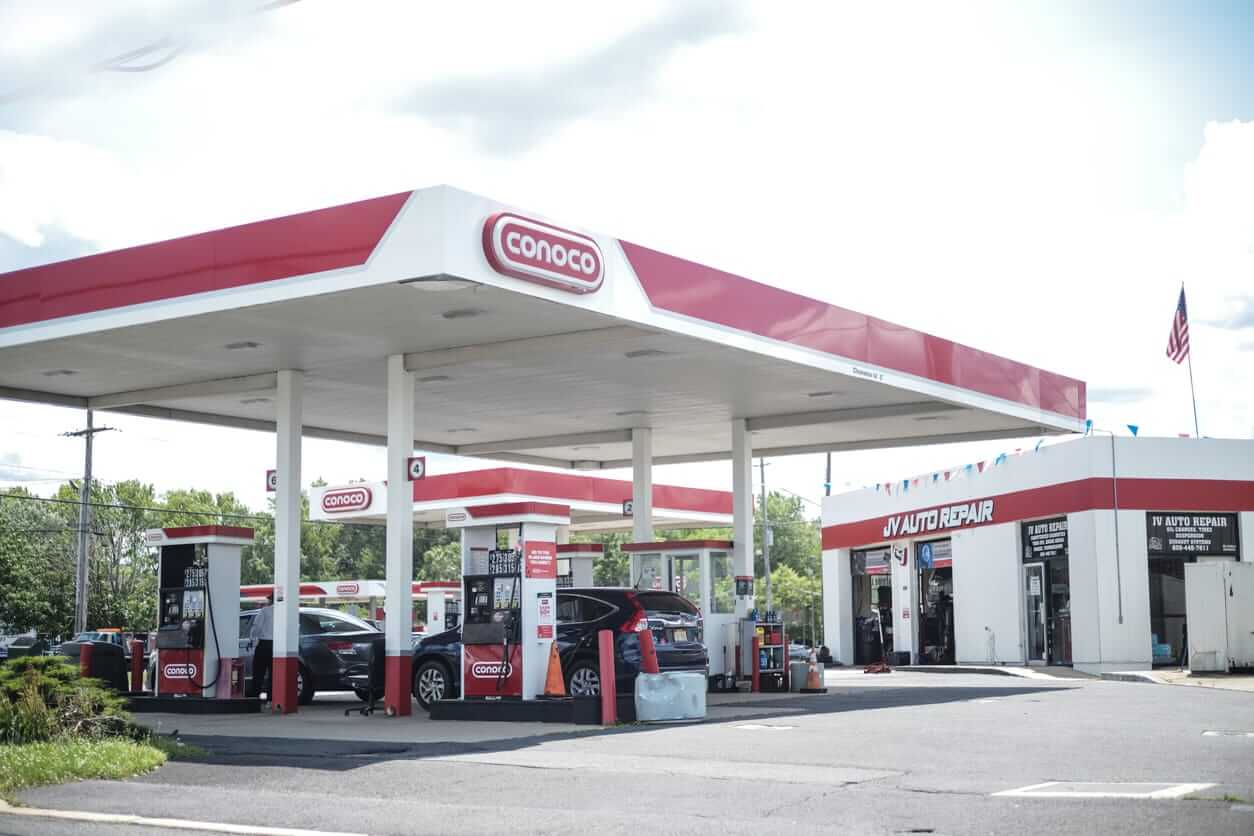
Oil futures have been rising, but recently hit a peak. ConocoPhillips (COP) reported strong Q2 earnings on Aug. 6, and COP stock may be fairly valued. However, shorting COP puts and vertical put credit spreads are attractive alternatives for value investors.
COP closed at $137.35 on Friday, Sept. 11, a recent three-, six-, and 12-month peak. That followed WTI Oct. futures contract (CLV26) spiking above $104 late Thursday, Sept. 10.
Can’t Get Enough Options?: Join the list for Barchart’s daily unusual options report, delivered free.
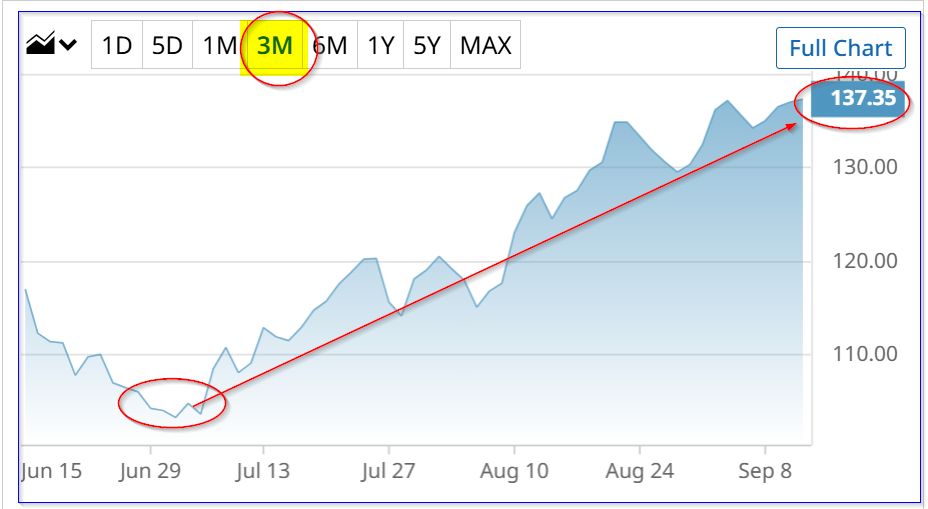 COP stock - last 3 months - Barchart - Sept. 11, 2026
 The market clearly believes that Conoco's Q3 earnings and cash flow will be strong, given how high oil and gas prices have been this quarter. Barchart's CLV26 chart below shows the recent peak in oil futures.
Oil has been rising due to ongoing tensions and kinetic action between the U.S. and Iran, as well as in other areas in the Middle East where oil is transported.
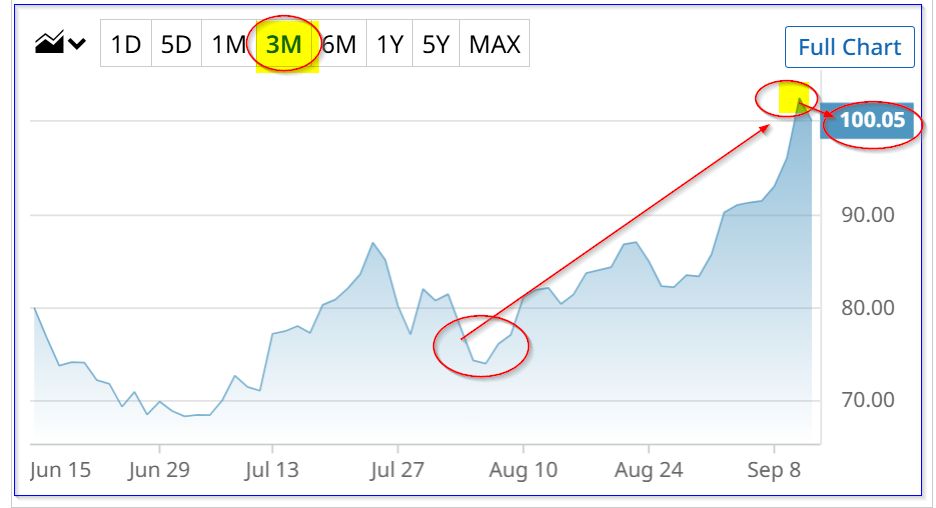 WTI oil futures (CLV26) - last 3 months - Barchart - Sept. 11, 2026
 Strong Results and Analysts Forecasts
This follows its strong Q3 earnings and cash flow report on Aug. 6. In Q3, Conoco generated 2,248 million barrels of oil equivalent per day (MBOED), 4.1% below last year's 2,346 MBOED.
However, it was higher than its prior guidance of 2,185 MBOED to 2,215 MBOED, as I described in my last Barchart article on ConocoPhillips (July 27).
Moreover, for all of 2026, it's guiding for higher production: 2.295 to 2.325 MBOED. That could push the stock higher.
Conoco is generating enough to cover its basic requirements. For example, its Q2 operating cash flow was $7.2 billion, and $11.7 billion in the first half. That was more than enough to cover dividend payments so far this year of $2.0 billion, $3.0 billion in buybacks, and $6.0 billion in capex (i.e., $11.0 billion total outflows).
COP Could Be Fairly Valued to Undervalued
Moreover, management reiterated its guidance for 2026, and analysts now forecast 2026 revenue of $72.58 billion and $10.63 in earnings per share (EPS).
That means COP, at $137.35, COP is trading at a forward price/earnings (P/E) metric of 12.92x. That is at the upper end of its 5-year P/E range, according to Seeking Alpha (12.38x).
However, COP stock's implied volatility (IV) is low at just 31.25%, according to Barchart. Its IV Percentile is only 41%, meaning only 41% of the time over the past year has IV been lower. That makes it attractive to buyers of stocks with low IV Percentiles who believe IV could rise.
In addition, analysts still have higher price targets for COP. For example, Yahoo! Finance's analyst survey has a $145.44 price target, and Barchart's mean survey PT is $147.12. These PTs are +6.50% higher than Friday's close (using the midpoint of both PTs).
That's not particularly exciting. As a result, instead of buying COP stock, some investors may want to short out-of-the-money (OTM) puts, or do vertical put credit or call credit spreads.
Shorting OTM COP Puts and Vertical Put Credit Spreads
For example, look at the Oct. 16 expiry period, a month away. It shows that the $130.00 put strike has a midpoint premium of $2.21. That means an investor who posts $13,000 in collateral can sell short this put and immediately collect $221 in their account.
This works out to an expected yield to expiration of 1.70% (i.e., $221/$13,000) over the next month. That works out to an annualized expected return (ER) of 20.4% over the next year. This is much higher than owning COP shares, based on its PTs.
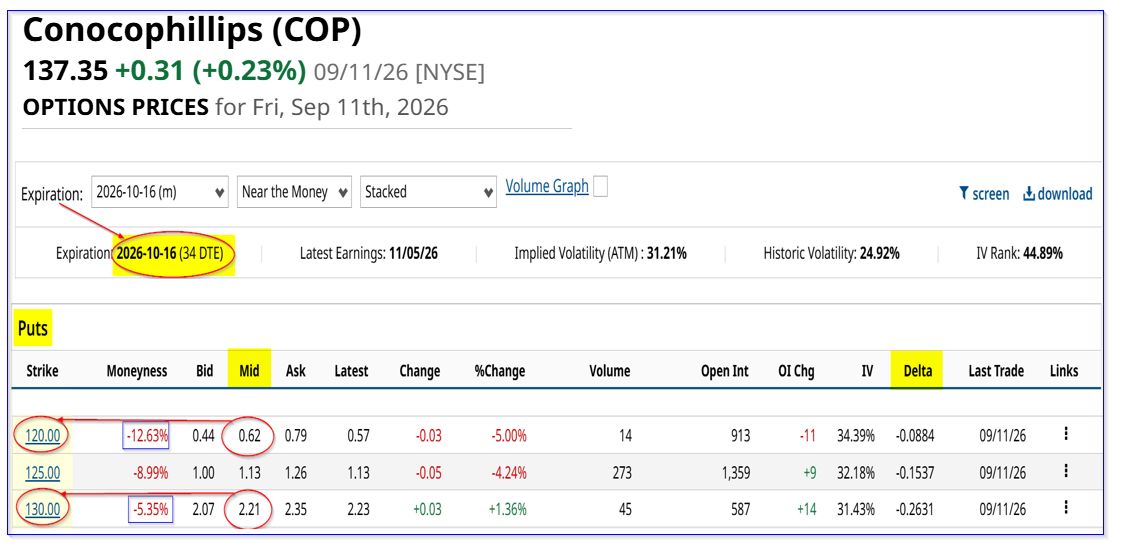 COP puts expiring Oct. 16 - Barchart - As of Sept. 11, 2026
 However, some investors don't have $13,000 to tie up in one stock. An alternative, although much riskier, is to do a vertical put credit spread.
This means that in addition to shorting the $130 put, an investor buys a $120 put. The spread play results in a credit, but the collateral is much lower, only $1,000 (i.e., ($130-120) x 100):
$221 - $62 cost = $159 net credit
$159 / $1,000 collateral = 15.9% over one month
This is a very attractive return, especially if both puts expire worthless. However, there is a higher risk here. If COP closes between $130 and $120, the investor's collateral takes a hit. Say it closes at $125:
$130-$125 = -$5 x $100 = -$500 (debit)
$159 net credit - $500 debit = -$341 loss
At $120 or lower, the $1,000 loss less $159 net credit, results in a max loss of $841 for this play. That is much worse than an OTM short-put play, where the worst that can happen is the investor buys 100 COP shares at $130.
In other words, a vertical put credit play has to be watched and managed.
For example, at a lower spread of a $130 short/$125 long put, a $500 spread (with a $1.13 premium) would result in a net credit of $108. That is a 21.6% return with a max loss of $392.
The bottom line is that an investor can earn significantly higher returns than buying COP with short-put plays and spreads, although the latter have much higher risks.
On the date of publication, Mark R. Hake, CFA did not have (either directly or indirectly) positions in any of the securities mentioned in this article. All information and data in this article is solely for informational purposes. For more information please view the Barchart Disclosure Policy here.
More news from Barchart
Is ConocoPhillips Stock Worth Buying Here? - Shorting COP Puts and Credit Spreads are Better Plays 3 ETFs, 3 Bearish Bets — Inside Yesterday’s Unusual Options Activity Deadlocked AST SpaceMobile Stock Still Has a Shot as a Quick Scalp Microsoft Price Targets Are Rising - Short Put MSFT Plays Are Attractive Here