

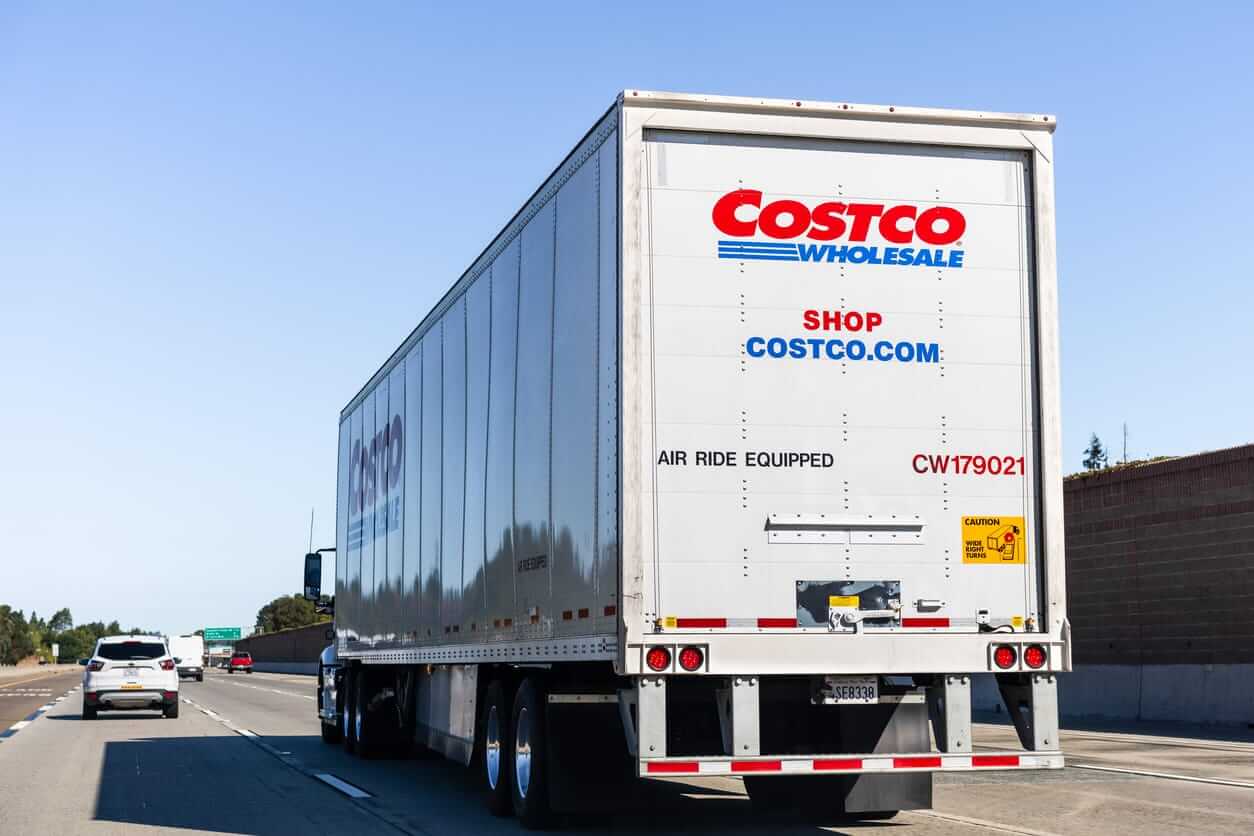
Costco Wholesale (COST) is known for holding prices down, so its recent move was out of the ordinary. The retailer nearly doubled the price of its Kirkland Signature full-synthetic motor oil. The 10-quart pack, which was previously priced around $30, is now being sold for $58. Costco also capped members at two packs a week and put limits on its Mobil 1 packs, too.
Here’s the issue that forced the price hike. Synthetic oil depends on something called Group III base oil, and the U.S. imports close to 44% of it from the Persian Gulf. Conflict in the region has made this complicated. A March airstrike on a major Qatari facility made it worse, knocking out a big chunk of global supply for at least a year. At the same time, refiners are turning crude into diesel and jet fuel instead, since those pay far better than motor oil right now.
More Top Stocks Daily: Go behind Wall Street’s hottest headlines with Barchart’s Active Investor newsletter.
So, the shortage explains the price, but not the timing. Why would a company famous for cheap bulk goods double its oil prices, especially when Walmart (WMT), Amazon (AMZN), and AutoZone (AZO) haven’t followed? The reason Costco raised its prices first also comes down to how it operates. Costco carries a limited selection and leans heavily on its Kirkland brand. When a key input like Group III base oil runs short, that concentrated selection can make the squeeze more visible. Rivals stock a wider range of brands, giving shoppers alternatives when one product gets harder to source. Costco's bulk model can make it among the first to show the strain, as seen during the toilet paper run of 2020.
Costco will report earnings on Sept. 24. The release will mark a new test of the low-price bulk model that shaped how Costco handled this shortage.
About Costco Stock
Costco is a membership-based retailer that operates large warehouse stores and online shopping platforms. The company sells a wide range of products, including groceries, household goods, electronics, clothing, and its own private-label products. Costco buys the majority of its merchandise directly from suppliers and routes it to cross-docking consolidation points or directly to warehouses. The company operates more than 900 locations across several countries, with most stores located in the U.S. and Puerto Rico. In addition to its physical stores, Costco runs its e-commerce business in major markets including the United States, Canada, the United Kingdom, Mexico, Japan, South Korea, Taiwan, and Australia. Founded in 1976, the company is headquartered in Issaquah, Washington.
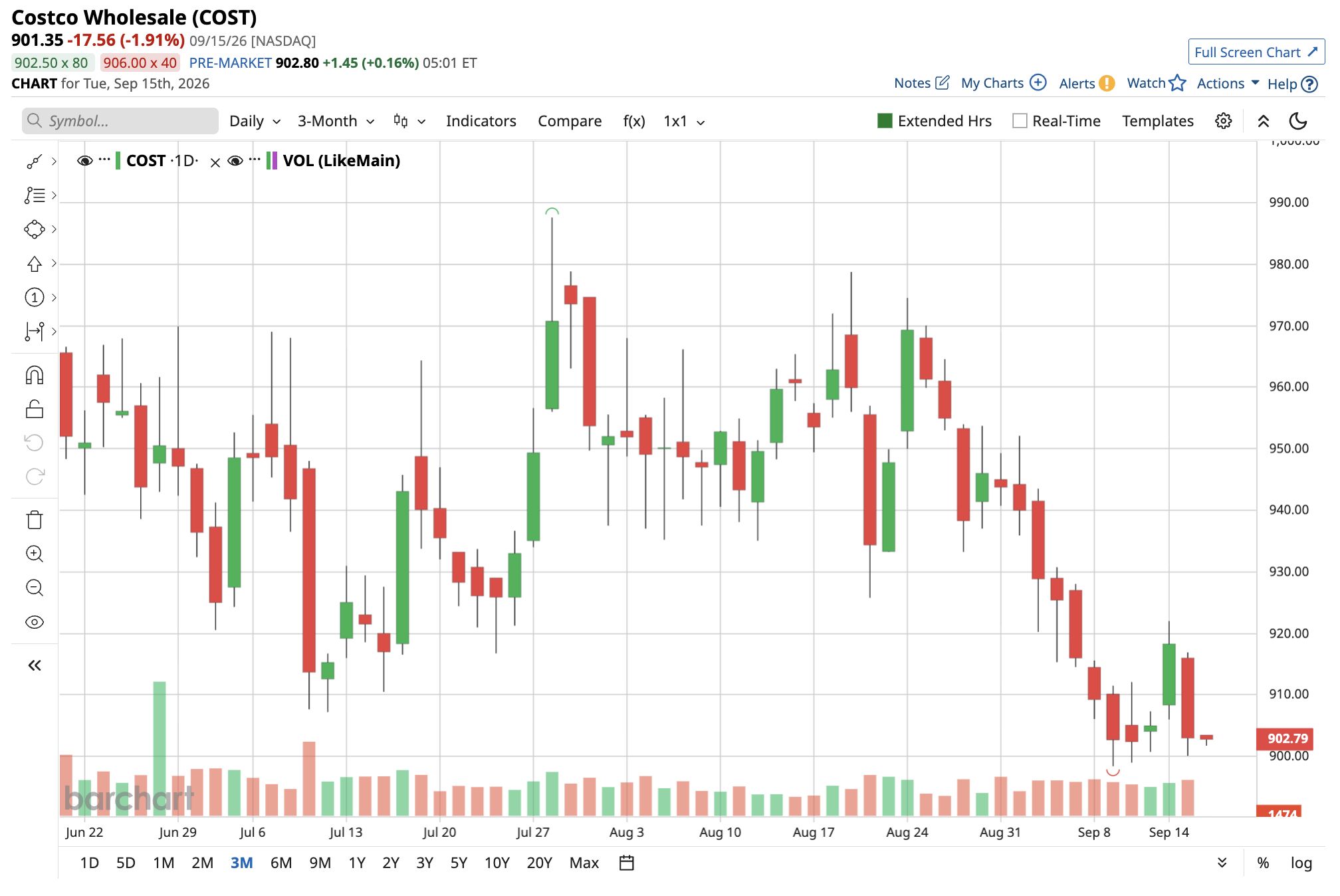
COST stock has declined 7% over the past year, underperforming the Consumer Staples Select Sector SPDR ETF (XLP), which has delivered returns of 4% during the same period. Costco stock has been fairly volatile, falling from roughly $1,096 in mid-May to $912 by early July, then climbing to $974 in just a few weeks' time. The pullback was largely driven by valuation concerns and slowing sales growth rather than any significant change in Costco’s underlying business performance. Currently, the stock trades near $891 per share.
 www.barchart.com
 The valuation looks rich, which is nothing new for this stock. The forward price-to-earnings (P/E) ratio of 40 times sits below its five-year average of around 44 times. That is a high multiple, especially for a retail stock that is down roughly 19% from its 52-week high. The price-to-sales (P/S) ratio of around 1.3 times also trades at a small premium to its five-year average of 1.2 times. That looks low on paper, but it is still above the sector median.
The EPS outlook is steady rather than spectacular. Analysts expect growth of almost 14% in fiscal 2026, followed by earnings growth of 10% in fiscal 2027. That growth trajectory is modest and doesn’t fully explain the high multiple.
The balance sheet is a clear strength. Costco holds $20 billion in cash against about $8 billion in debt, leaving it net cash positive by roughly $12 billion. That strength gives Costco flexibility that thinner rivals don't have. Overall, investors pay up for the firm’s reliability, and the valuation reflects that.
Costco Plans Major Capital Investments to Fuel Long-Term Growth
Costco announced its third-quarter fiscal 2026 earnings on May 28, 2026. The company reported a strong quarter with year-over-year (YOY) growth in net income and net sales. Costco reported revenue of $69.15 billion, up 12% YOY. EPS came in at $4.93, missing the Wall Street consensus estimate of $4.98. On the membership and renewal front, the company ended the quarter with 82.9 million total paid members, 148.5 million cardholders, and a renewal rate of 92.2% in the U.S. and Canada. Interest expense for the quarter was $32 million, whereas interest income was $130 million.
Looking forward, Costco reaffirmed its longer-run unit growth ambitions. The company is targeting 30-plus net new openings per year in the coming years, while narrowing its fiscal 2026 forecast to 26 net new openings. CFO Gary Millerchip also said the company expects capex of $6.5 billion for the full year.
Evercore ISI analyst Gregory Melich asked about inflation and gasoline profitability on the earnings call. Millerchip said that inflation increased slightly during the quarter, and added that while Costco earned a bit more profit from gasoline sales YOY, gas margins were lower as a percentage of sales.
What Do Analysts Expect for COST Stock?
On Sept. 8, Freedom Broker upgraded COST stock to a “Buy” from a “Hold” with a price target of $1,030 per share. The firm believes Costco continues to perform better than many other U.S. retailers, supported by its strong business model and consistent results. In addition, Goldman Sachs analyst Kate McShane reiterated a “Buy” rating on COST stock and assigned a price target of $1,159. In contrast, RBC Capital analyst Steven Shemesh maintained a “Hold” rating and set a price target of $1,000.
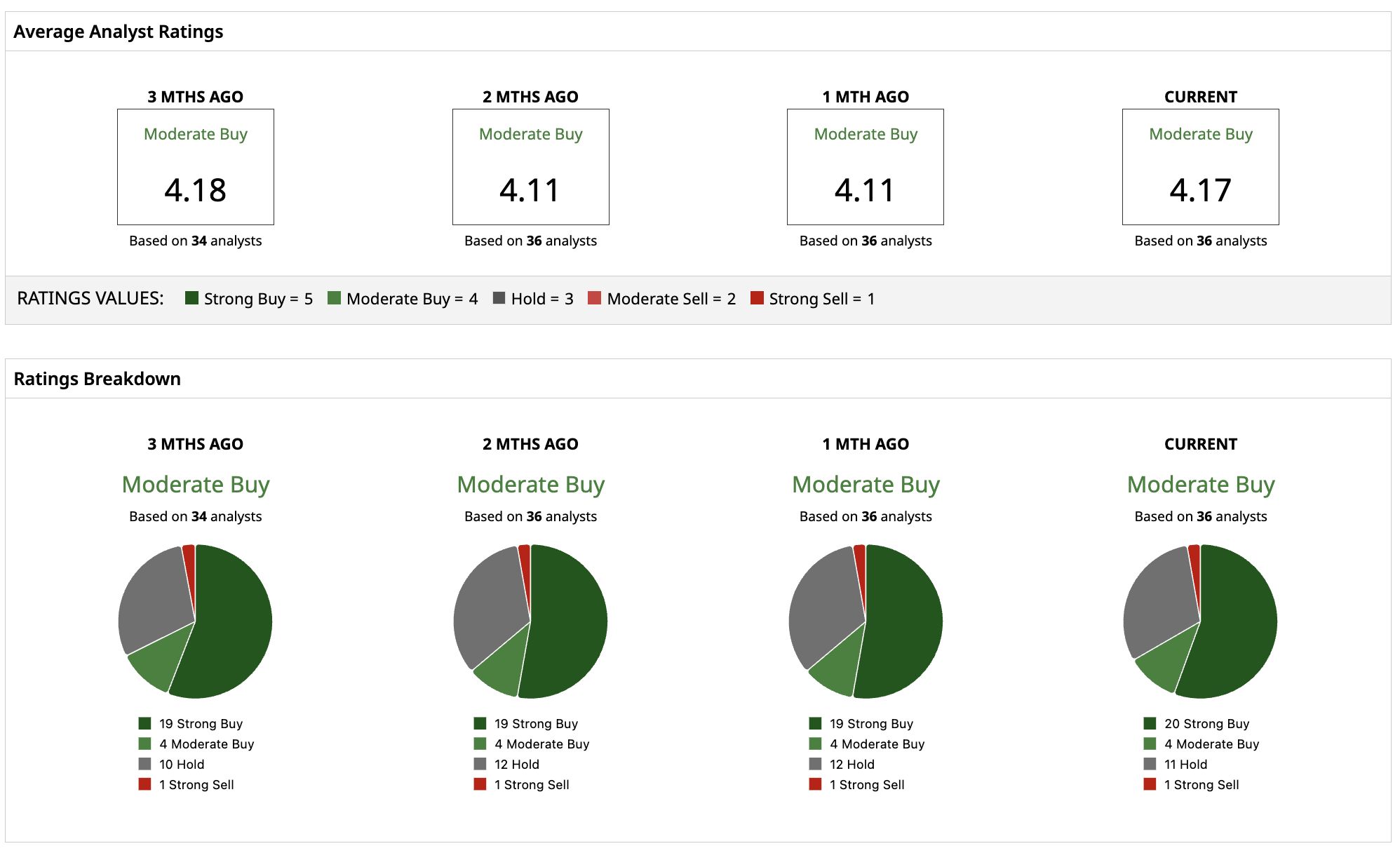
Based on 36 Wall Street analysts covering the stock, Costco holds a consensus “Moderate Buy” rating overall. Out of those analysts, 20 have a “Strong Buy” rating, four have a “Moderate Buy” rating, 11 have a “Hold” rating, and one has a “Strong Sell” rating. The mean price target of $1,095.53 reflects 23% potential upside from current levels, while the high price target of $1,315 implies 48% potential upside from here.
 www.barchart.com
 On the date of publication, Jabran Kundi did not have (either directly or indirectly) positions in any of the securities mentioned in this article. All information and data in this article is solely for informational purposes. For more information please view the Barchart Disclosure Policy here.
More news from Barchart
Natera Stock Has Excellent Technical ‘DNA’ as NTRA Sets a New All-Time High A $3 Billion Reason Why CoreWeave Stock Is Down Today Unusual Options Activity: Institution Bets Big on XP With Moonshot Bull Call Spread Musk Calls $10 Trillion in Starship Revenue ‘Not Impossible.’ Here Are 2 Things You Need to Know About His Bold Projection.