

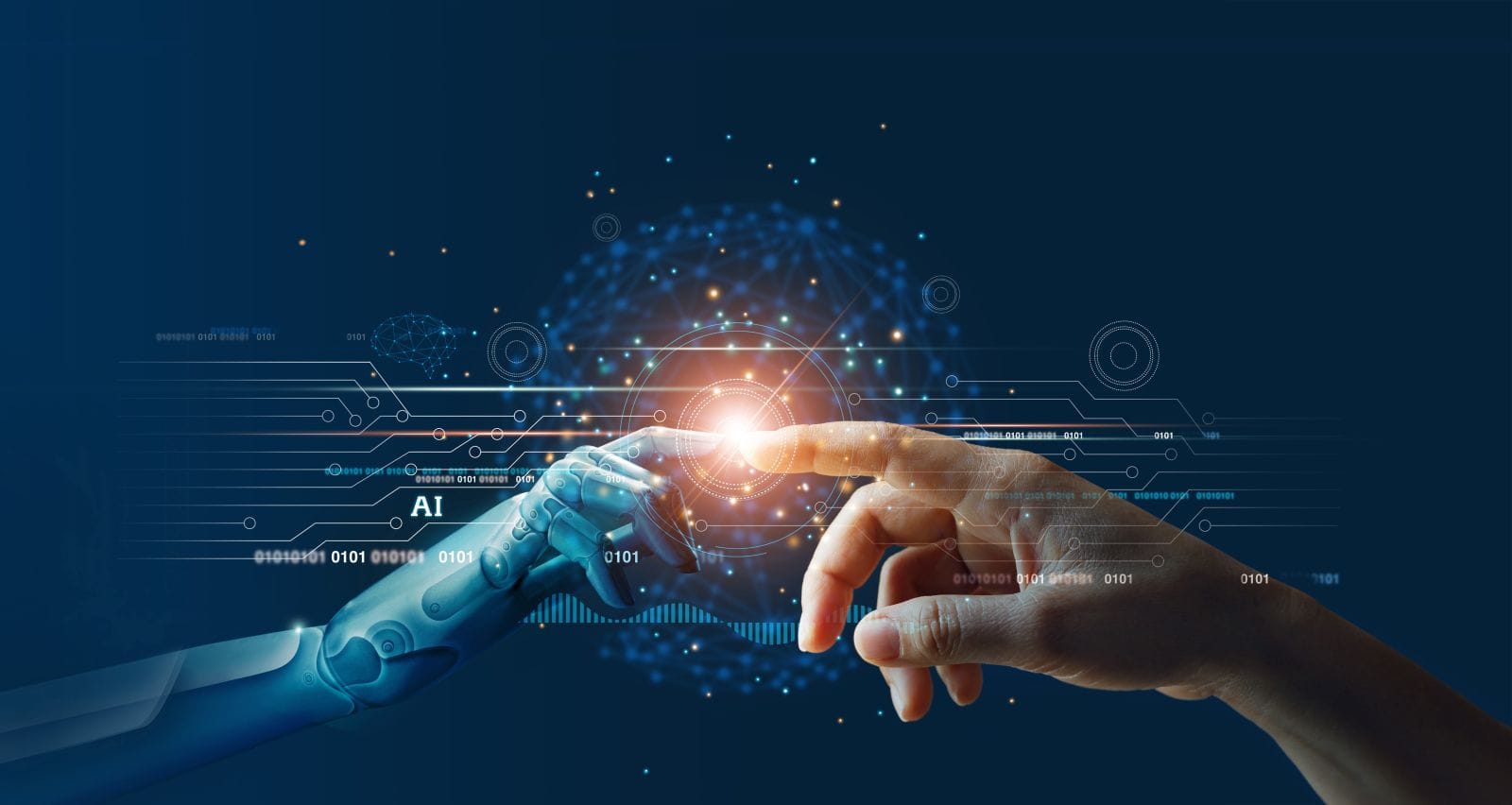
People have been warning us about the artificial intelligence (AI) apocalypse ever since Arnold Schwarzenegger convinced the world that he was a time-traveling robot. Yet, while it’s easy to brush away fears over a Hollywood-style reckoning for humanity, you can’t deny that AI is now evolving at breakneck speed.
Experts say we’re rapidly approaching the point at which AI programs are going to be able to create themselves, and that seems to scare even the companies behind the technology. Last week, OpenAI CEO Sam Altman turned heads when he told a conference in San Francisco, California, that “the world is right to be afraid” of AI’s unchecked development.
More Top Stocks Daily: Go behind Wall Street’s hottest headlines with Barchart’s Active Investor newsletter.
Altman isn’t the only billionaire AI executive sounding alarm bells. Bill Gates is worried, Anthropic CEO Dario Amodei recently penned a huge essay about the existential dangers of AI at the start of September, and even ever-outspoken SpaceX (SPCX) CEO Elon Musk admitted Amodei’s warning was valid.
When the guys building these machines are telling us to get scared, it’s worth paying attention. But even as we digest these grim warnings coming out of Silicon Valley, there’s a huge and inescapable irony here. The people warning us about this runaway train are already sitting pretty at the top of the global economic food chain. They’re heading some of the world’s most valuable companies and have made billions in AI.
To some, that might just sound like good leadership and corporate social responsibility. Then again, most people hit billionaire status by being selfish and exploiting every opportunity they see. That’s why it’s worth approaching these warnings with a bit of scrutiny.
Are Billionaires Crying Wolf or Sounding the Alarm?
If you want to fully appreciate the sociopolitical discourse unfolding in Silicon Valley right now, context is important.
Sam Altman might be telling conferences that we should be worried about the concentration of corporate power and rapidly advancing AI, but he’s still speaking as the head of a multibillion-dollar AI juggernaut. Likewise, Amodei’s calls to “pace the frontier” are coming from the head of a company that’s simultaneously locked in a lightspeed race for AI dominance against Meta Platforms (META), Microsoft (MSFT), and Alphabet (GOOGL).
Then there’s Elon Musk. He seems to agree that AI can be dangerous, and everybody knows about the early controversies surrounding Grok. But this is the same almost-trillionaire aggressively scaling up xAI clusters and throwing billions into compute infrastructure.
Long story, short: These guys are saying it’s time to pump the brakes, but nothing they’re doing seems to suggest their intentions are real. Bearing that in mind, it’s hard to say whether these comments are genuine ethical awakenings from the world’s leading tech minds or just a clever form of moat-building.
After all, when legacy tech titans and the world’s richest companies call for guardrails and a pause in development, it’s not hurting them.
Elon Musk and Sam Altman can afford to price in new regulatory hurdles and invest in PR campaigns telling us how much they care about humanity. Meanwhile, any slowdown that governments impose on the industry will inevitably squeeze out open-source competitors and give the big boys a chance to catch their breath, consolidate their investments, and cement their market share.
That might sound like a skeptical view, but you’ve got to acknowledge the financial reality of the players involved.
Big Tech hasn’t just “grown” over the last decade. It has totally swallowed the global economy, and the men heading these corporations now have net worths that rival the GDPs of entire countries. The concentration of wealth tied up in generative AI is staggering, and the global capital these executives have captured is creating a compute monopoly that’s getting harder and harder to break.
Building frontier AI models takes specialized hardware, huge data centers, and a crazy amount of electricity. We’re talking billions of dollars worth of investment here, which is why only a handful of corporations can now afford the entry fee. That’s creating a feedback loop in which the CEOs who control cloud infrastructure, search engines, and social media platforms can just funnel AI directly into our lives.
Approaching it from this angle, you could say they already own the shovels and the gold mines. Now, they want a seat at the table to write all of the safety manuals that are probably going to prevent other companies from joining the fray.
What Does This Mean for Ordinary People Like Us?
If you’re an everyday market watcher, it can get incredibly exhausting watching billionaires debate which one of them is going to cause the end of the world. But this debate does carry a lot of gravity, and it’s a particularly interesting one for investors.
We can’t dismiss warnings from guys like Sam Altman and Elon Musk just because they’re incredibly wealthy. AI can be dangerous, and it does feel like society is sleepwalking into a bit of a crisis. But you’ve got to take these particular calls to action with a big handful of salt.
When the world’s richest people tell you AI will produce an age of abundance, they’re fantasizing about a future in which the assets they hold are going to be more valuable than ever before. And when they argue AI needs to be reeled in, they’re talking about legislative limits that are going to make it harder for would-be competitors to go mainstream.
That's quite a position to occupy, right?
Until lawmakers agree on a viable way to balance innovation with genuine oversight, we're essentially all just passengers on a train that has been built and is being driven by the world’s richest men. All markets can do is watch and wait. So, investors should be monitoring where the capital is going, who’s building the infrastructure, and who’s capturing the greatest economic gains. That will shed some light on who's going to come out on top as we exist during this particular phase of the AI revolution.
If and when governments do finally heed warnings and try to reel in AI development, there will be some big power plays in the days and months to come. And after the dust settles, it will probably be a lot clearer whether all of these existential warnings were genuine or simply a genius PR stunt.
On the date of publication, Nash Riggins did not have (either directly or indirectly) positions in any of the securities mentioned in this article. All information and data in this article is solely for informational purposes. For more information please view the Barchart Disclosure Policy here.