
INSTITUTIONAL MACRO & TECHNICAL ANALYSIS: CAD/JPY STRUCTURAL CONFLUENCE
Asset: CAD/JPY (Canadian Dollar / Japanese Yen)
Timeframe: 4-Hour (H4)
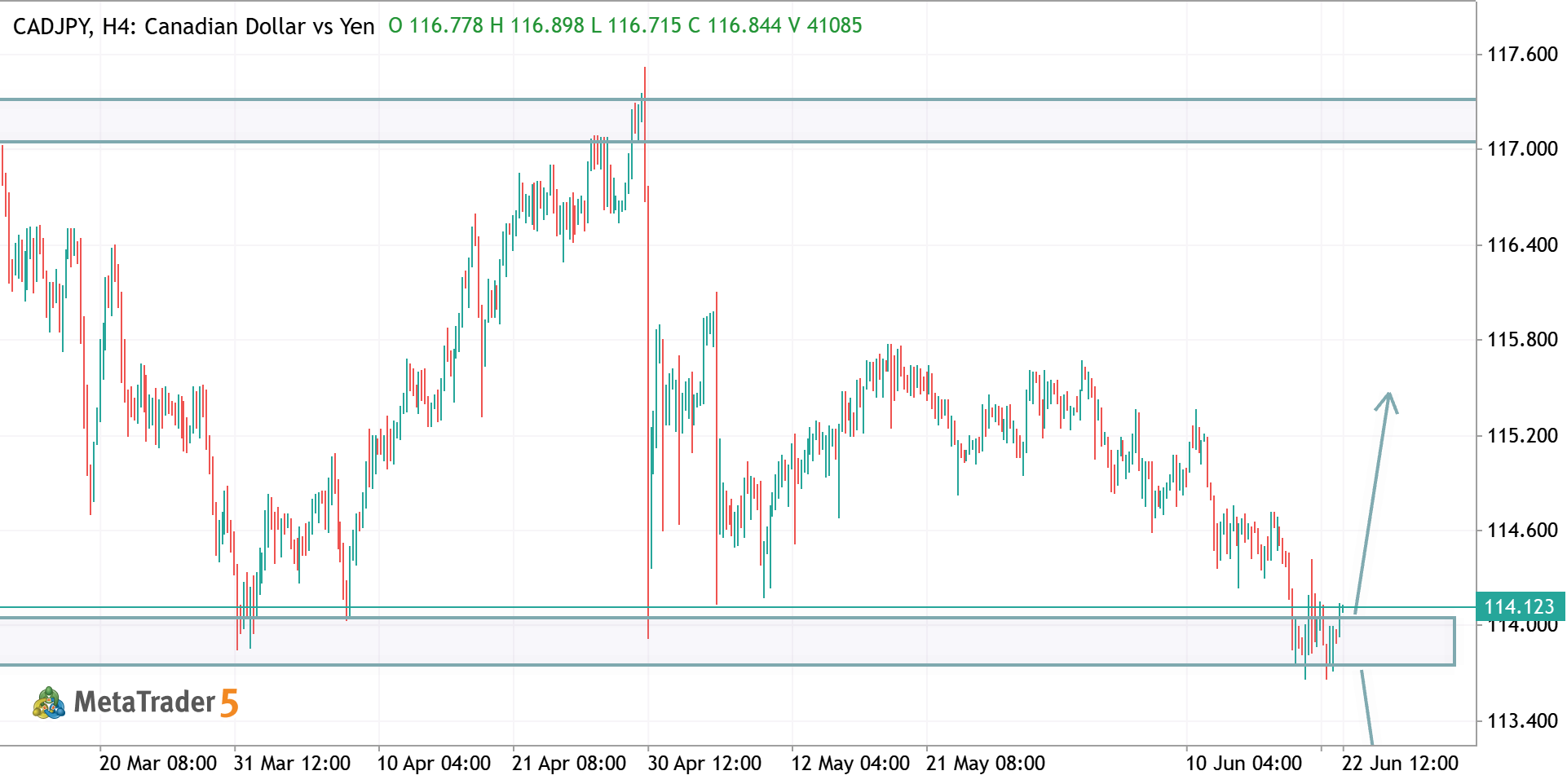
Direction: Tactical Long (Bullish Bias)
1. EXECUTIVE SUMMARY
When analyzing major currency crosses, long-term trade sustainability relies heavily on underlying macroeconomic alignment, while precise execution timing depends entirely on pure market structure. This report examines a highly technical buy setup developing on CAD/JPY.
By filtering recent price developments through a rigorous multi-pillar valuation model, a clear structural floor is identified. The macroeconomic sub-metrics are working together to shield and support a tactical long execution from current levels.
2. THE MACRO FOUNDATIONS (QUANTITATIVE BIAS)
A systematic assessment of global institutional pillars establishes a supportive fundamental weight for the pair:
The Positive Swap/Carry Advantage: Canada maintains a baseline interest rate of 2.25% versus Japan's 1.00%. This 1.25% interest rate differential inherently favors the Canadian Dollar. Trading long means your position aligns with a positive overnight carry, protecting capital during development and retest phases.
*Global Risk Appetite: With the universal volatility index (VIX) sitting securely in the 15–20 band, global markets are experiencing mild risk-on sentiment. During periods of stable risk tolerance, institutional asset managers historically rotate out of low-yielding safe havens like the Japanese Yen and allocate capital toward growth and commodity-linked assets like CAD.
*Economic Growth Differential: Canada’s forward-looking manufacturing Purchasing Managers' Index (PMI) indicates a stable expansion between 50–55, outperforming Japan’s flatlining baseline hovering right around 50. This macro divergence provides an organic fundamental safety cushion beneath the pair.
The Strategic Counterweight: The Bank of Japan retains a hawkish policy stance, which limits the probability of a runaway, open-sky breakout. For this reason, the broader macro baseline sits at a conservative, net-neutral positive score. While a balanced macro climate suggests caution, the underlying components offer clear fundamental backing for long exposure at local structural discounts.
3. TECHNICAL PLAYBOOK & ORDER FLOW MECHANICS
On the 4-Hour timeframe, price action has executed a textbook institutional liquidity hunt, sweeping down into the major demand belt before finding strong, responsive buying pressure.
The order flow is executing sequentially through our institutional structural playbook:
Momentum Pause -> Minor Structure Formation -> Internal Break -> Retest -> Lower Timeframe Confirmation -> Expansion
The Sweep and Pause: The aggressive downward momentum paused abruptly after dipping below the key psychological level, effectively hunting sell-side liquidity and stopping out weak long hands.
Minor Structure & Internal Break: Institutional buyers stepped in aggressively at the lows, absorbing the selling volume and forcing an internal break of minor lower-timeframe counter-trend resistance.
RISK MANAGEMENT DIRECTIVE
Because the broader fundamental model rests at a net-neutral baseline due to the hawkish Bank of Japan, treat this as a highly surgical, targeted structural swing rather than an unmanaged, long-term trend trade. Take partial profits at Target, move your risk to breakeven, and let the positive swap differential fund the remaining run into Target.

 Profil MQL5
Nouveau commentaire