


Altimmune’s ALT story is increasingly defined by one asset, pemvidutide, and three liver-related shots on goal. The opportunity is meaningful because metabolic dysfunction-associated steatohepatitis (MASH), alcohol use disorder (AUD) and alcohol-associated liver disease (ALD) all remain areas of high unmet need.
That setup also creates a clean but concentrated debate for investors: if pemvidutide delivers in late-stage MASH, the platform could expand; if it misses, the equity thesis gets reset quickly.
ALT’s One-Drug Story and Why It Matters
Altimmune is a late clinical-stage biotech focused on developing therapies for liver diseases, with pemvidutide positioned as the company’s core value driver. The company is advancing this single molecule across MASH, AUD and ALD, which effectively turns the pipeline into a product-led strategy rather than a collection of unrelated programs.
The flip side is dependency risk. With no product sales revenues to date and revenues remaining minimal, development and valuation are heavily tied to pemvidutide’s clinical and regulatory trajectory. Management has been clear that a phase III disappointment in MASH would likely be damaging for the stock, which makes trial execution and endpoint delivery central to the investment case.
Altimmune’s Pemvidutide Mechanism
Pemvidutide is designed as a balanced 1:1 dual agonist that activates both glucagon and glucagon-like peptide-1 (GLP-1) receptors in a single molecule. Altimmune’s rationale is that glucagon may act directly on the liver, with potential to reduce liver fat, inflammation and scarring, while GLP-1 contributes weight loss through appetite reduction and may add metabolic and anti-inflammatory benefits.
In plain terms, the concept is “two levers at once”: a liver-directed lever that may improve hepatic biology and a metabolic lever that reduces weight and improves the broader drivers that often worsen liver disease. That pairing is why the company believes the profile can translate across MASH as well as alcohol-related conditions.
ALT’s EuPort Approach and the Tolerability Angle
Pemvidutide also incorporates Altimmune’s proprietary EuPort technology, which is intended to slow absorption after dosing. The company believes this approach may improve tolerability, particularly by reducing gastrointestinal side effects that can limit dose persistence with incretin-based therapies.
In chronic liver diseases, tolerability is not a side note. If patients can stay on therapy longer, they are more likely to capture the longer-duration benefits that matter to real-world outcomes and, ultimately, commercial adoption. Altimmune has highlighted favorable safety and low discontinuation rates in its MASH dataset, supporting the idea that adherence could be a differentiator if efficacy remains competitive.
Altimmune, Inc. Price and Consensus
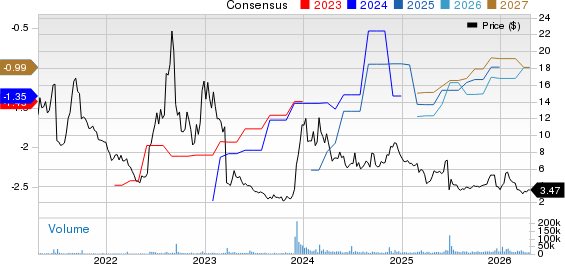
Altimmune, Inc. price-consensus-chart | Altimmune, Inc. Quote
Altimmune’s MASH Data Set That Set Up Phase III
Altimmune’s phase IIb program in MASH produced a data package that management is using to justify a move into pivotal testing. The company reported statistically significant MASH resolution without worsening of fibrosis at 24 weeks, and stated that this effect was sustained through 48 weeks.
The 48-week readout also included signals consistent with antifibrotic activity, with continued improvement in non-invasive markers of fibrosis such as Enhanced Liver Fibrosis score and liver stiffness versus placebo. The company also cited ongoing improvement in markers tied to liver damage and inflammation over time, alongside meaningful weight loss, particularly at higher dosing.
Altimmune has also said it reached alignment with the U.S. Food and Drug Administration on key parameters for a late-stage MASH study. The current plan is to initiate phase III in 2026, targeting accelerated approval at week 52 based on biopsy co-primary endpoints, with longer follow-up intended to support full approval.
ALT’s Alcohol Programs: AUD and ALD on Different Clocks
Beyond MASH, Altimmune is running separate phase II studies to explore pemvidutide in alcohol-related conditions, and the timelines are not synchronized. The RECLAIM study in AUD completed enrollment in the fourth quarter of 2025, with top-line data expected in the third quarter of 2026.
The RESTORE study in ALD began later and is expected to complete enrollment later in 2026. Management has noted that ALD enrollment can be more challenging, and has indicated that decision-making in AUD is expected to follow the RECLAIM readout without waiting for ALD results.
Altimmune’s Competitive Reality Across Three Indications
Competition is intense across all three target indications. In MASH, pemvidutide faces GLP-1 leaders and combination approaches, as well as multiple mechanism classes including fibroblast growth factor 21 therapies and thyroid hormone receptor beta agonists. Large-cap pressure matters here because companies like Novo Nordisk NVO and Eli Lilly and Company LLY have the capital and scale to run broad clinical programs and commercialize rapidly if they establish clear advantage.
It also faces MASH-focused developers such as Madrigal Pharmaceuticals, Inc. MDGL, which adds another execution bar for differentiation on efficacy, safety and durability.
In AUD, pemvidutide competes with approved options like Vivitrol and generic drugs such as naltrexone and acamprosate, while newer approaches are also in development, including GLP-1-based combinations. In ALD, the competitive field includes companies pursuing FGF-21, GLP-1 and RNA-based strategies, raising the importance of clear clinical positioning and well-timed data.
ALT’s Key Takeaway for Readers
Pemvidutide’s balanced dual agonist design and multi-indication development strategy give Altimmune multiple potential catalysts, including phase III initiation in MASH and phase II data in AUD in 2026. At the same time, this is a one-asset story in a crowded landscape, where clinical readouts and tolerability-driven persistence will likely determine whether the drug can stand out across MASH, AUD and ALD.
Altimmune’s Zacks Rank
ALT currently carries a Zacks Rank #3 (Hold). You can see the complete list of today’s Zacks #1 Rank (Strong Buy) stocks here.
Research Chief Names "Single Best Pick to Double"
From thousands of stocks, 5 Zacks experts each have chosen their favorite to skyrocket +100% or more in months to come. From those 5, Director of Research Sheraz Mian hand-picks one to have the most explosive upside of all.
This company targets millennial and Gen Z audiences, generating nearly $1 billion in revenue last quarter alone. A recent pullback makes now an ideal time to jump aboard. Of course, all our elite picks aren’t winners but this one could far surpass earlier Zacks’ Stocks Set to Double like Nano-X Imaging which shot up +129.6% in little more than 9 months.
Free: See Our Top Stock And 4 Runners UpWant the latest recommendations from Zacks Investment Research? Today, you can download 7 Best Stocks for the Next 30 Days. Click to get this free report
Novo Nordisk A/S (NVO): Free Stock Analysis Report
Eli Lilly and Company (LLY): Free Stock Analysis Report
Altimmune, Inc. (ALT): Free Stock Analysis Report
Madrigal Pharmaceuticals, Inc. (MDGL): Free Stock Analysis Report
This article originally published on Zacks Investment Research (zacks.com).