


Every 3% or 5% single-day pop in technology stocks and high-beta market darlings is being hailed by retail momentum chasers as the definitive return of the bull market. I’m a natural skeptic, hardened by decades of seeing markets cycle up and down. And I just don’t see the bull market returning in force for a while… and maybe a long, long while.
To be clear, it doesn’t prompt me to “exit the market,” no more than it would prompt me to “pile into stocks” when the coast looks clearer. To me, investing in the stock market is never about “do I” or “don’t I.” It is always about “how much do I allocate?”
More Top Stocks Daily: Go behind Wall Street’s hottest headlines with Barchart’s Active Investor newsletter.
Here are three charts to explain further what I see and why I see “dead cats” everywhere.
The Wall Street phrase “dead cat bounce” has been around for decades, likely derived from a phrase that says “even a dead cat will bounce if it falls from a great height.”
These three charts illustrate that in varying forms, supporting my belief that we are in a “sell the rips” climate, not a “buy the dips” climate.
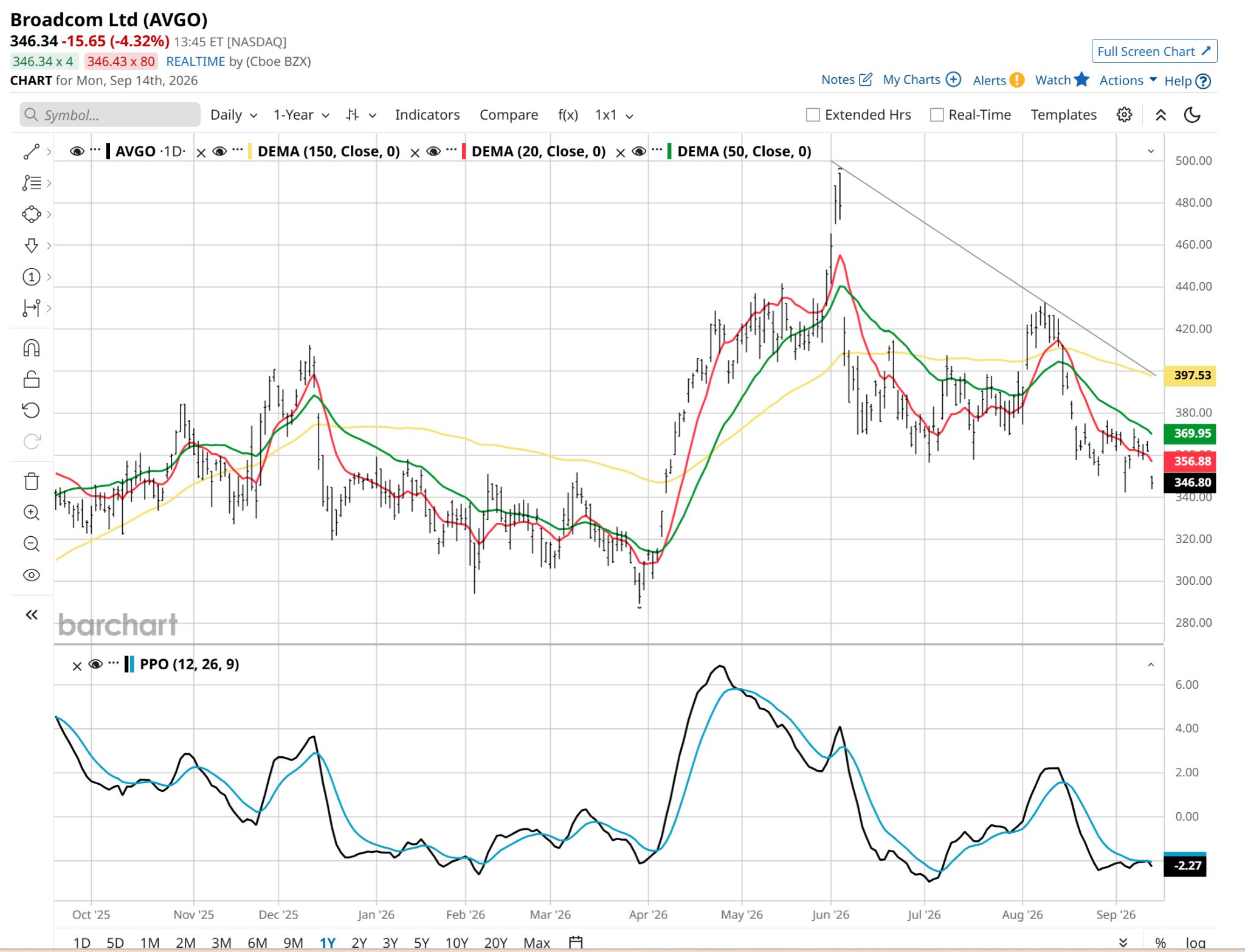
Chart #1: Broadcom
Broadcom (AVGO) was a very cool cat for a while as part of the AI mania trade. Now, it has cooled off. And that percentage price oscillator (PPO) at the bottom of this chart indicates fading momentum. Lower lows, lower highs. That’s a pattern which started innocently enough back in June. But dip-buyers are now 30% down from that peak.
 www.barchart.com
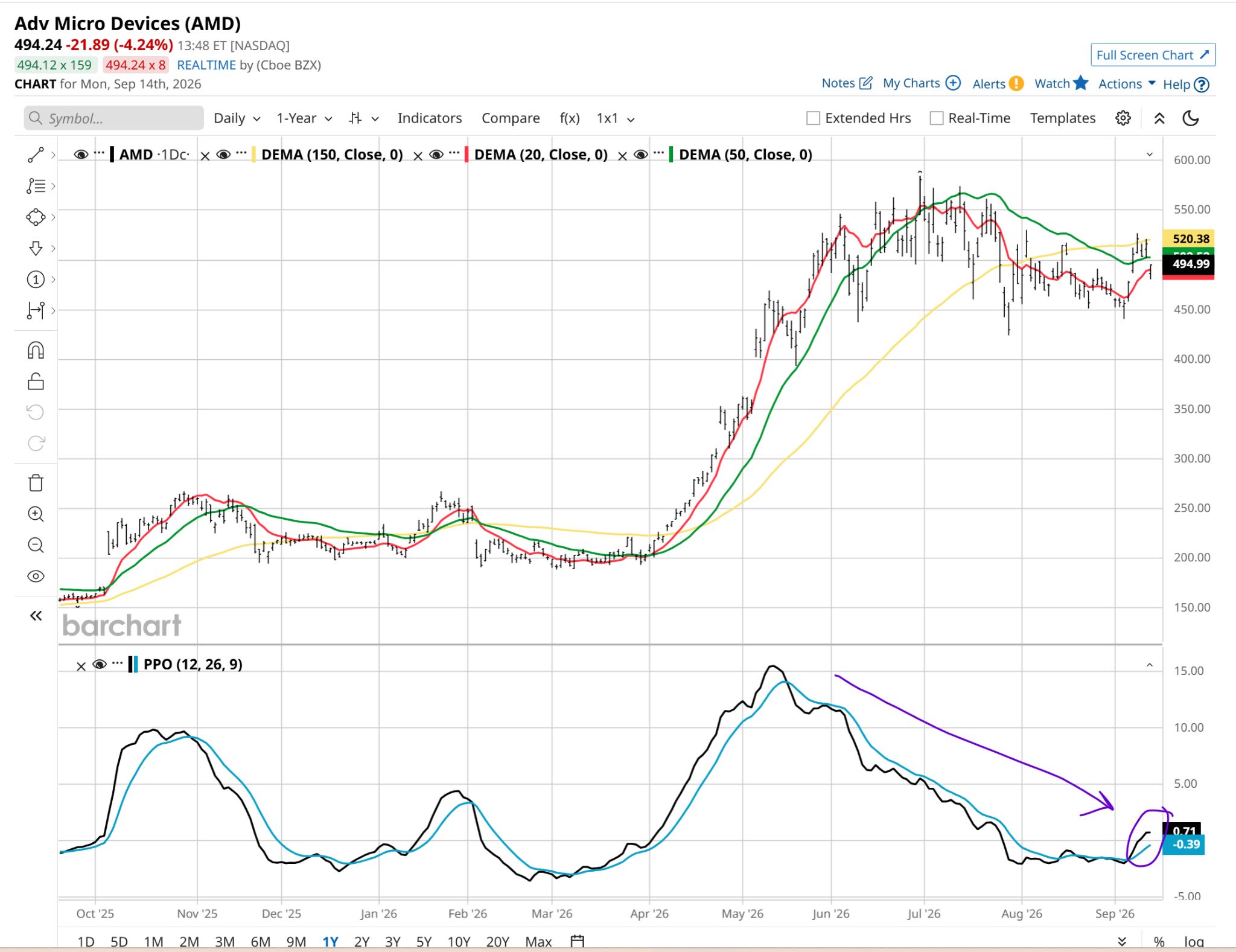
 Chart #2: Advanced Micro Devices
Next up is Advanced Micro Devices (AMD). Or should I say, next down? A different look, merely because it appears to be at an earlier stage of its decline. Since its July high, I can see no less than seven “pops” higher. That includes the last one, which actually rallied above the previous short-term high.
But again, PPO at bottom has been telling the story. One of a slow bleed lower, and a recent attempt at reversal which is already being challenged to start this week.
 www.barchart.com
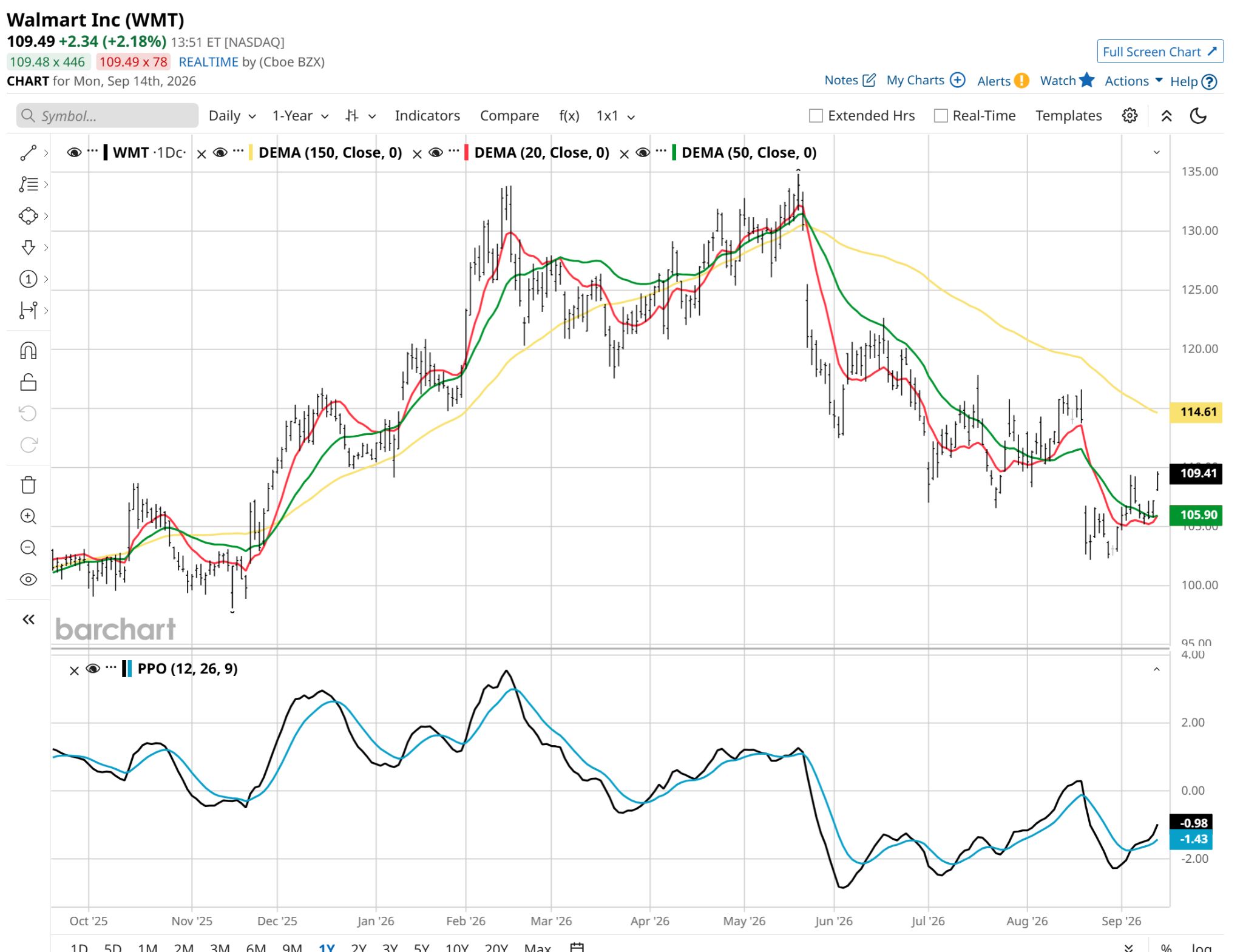
 Chart #3: Walmart
Finally, there are many stocks that look like Walmart (WMT). And while it looks as “catty” at the other two patterns, I would at least consider trading it with a very short leash.
 www.barchart.com
 The PPO is at least hinting that something could be changing direction higher. But the dominant feature here is still a bearish one. It is that series of lower lows and lower highs since May. Again, a prominent stock with a 25% decline in short order. That’s today’s market.
I continue to look for stocks that can buck this trend. In some cases, call options as a surrogate for a stock position can help control downside risk. But the path of least resistance for the stock market is still down in my view.
Note that these three stocks and many others with similar-looking charts are all part of the 20 largest S&P 500 Index ($SPX) holdings by weight. Translation: the index has a lot of work to do to get back in bull mode.
For now, a powerful triple threat is keeping a firm lid on near-term stock returns, ensuring that short-term price spikes lack the fundamental follow-through required to sustain a breakout:
First, with 10-year and 30-year Treasury yields anchored near multi-year highs, equities face fierce competition from risk-free alternatives. When investors can lock in 5% or more in Treasuries or target-maturity bond ladders, paying 30x or 40x earnings for high-duration tech stocks becomes a hard sell. Higher discount rates continue to compress growth multiples every time yields tick upward.
Second, persistent global conflicts have injected ongoing supply chain drag and energy cost volatility into corporate balance sheets.And third, the fact that the 2026 U..S midterm elections are approaching, so fiscal and regulatory uncertainty hangs heavy over Wall Street.
Until long-term bond yields ease, geopolitical tension cools, and political clarity emerges post-midterms, chasing short-term bounces remains a dangerous game. In an environment full of dead cats, it is best to not get too complacent. Investors do not often have nine lives, after all.
Rob Isbitts is a semi-retired CIO, former fiduciary investment advisor, and Barchart columnist. Check out his other work at ETFYourself.com (featuring the Fresh Charts weekly trading post), and ROAR.PiTrade.com, helping investors to better-manage their own portfolios.
On the date of publication, Rob Isbitts did not have (either directly or indirectly) positions in any of the securities mentioned in this article. All information and data in this article is solely for informational purposes. For more information please view the Barchart Disclosure Policy here.
More news from Barchart
Investors Don’t Have 9 Lives, So Stop Chasing Dead-Count Bounces in Hot Stocks Like Broadcom NVO Stock Alert: What to Know as Novo Partners With Anthropic on Drug Discovery A $10 Trillion Reason Why SpaceX Stock Is Up Today Why It’s Time to Load Up on Nvidia Stock