


While the actual coffee market was under pressure to start the week, likely due to similar factors as the selloff in soybeans, Monday morning headlines had to do with countries tied to coffee.
Reportedly, Lula won the Brazilian presidential election, though Bolsonaro refuses to concede, while violent protests continue in France.
Don’t Miss a Day: From crude oil to coffee, sign up free for Barchart’s best-in-class commodity analysis.
The Grains sector was mostly lower following clear harvest weekend, led by a solid double-digit break in soybeans.
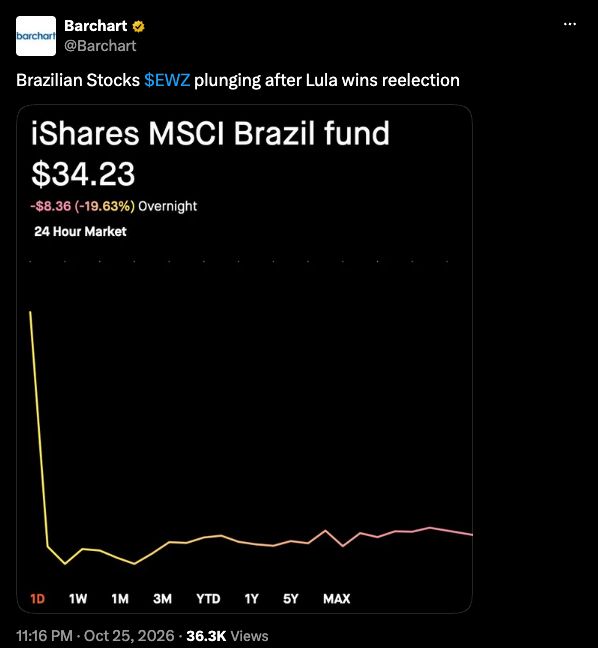
Morning Summary: For most of our lives we are told water is a necessity for life. And while that is likely true – after all, science is generally helpful, despite what we have been told the past decade[i] - I prefer my water in different forms throughout the day. Like many of you, my morning doesn’t start until the coffee pot tells me it’s time. As I sipped the first cup and perused the morning news, I found the connection of some of the key headlines to coffee interesting. Let’s start with the world’s largest producer of the commodity: Brazil. The headline/summary[ii] early Monday morning reads, “Brazil’s Lula wins historic presidential election; Bolsonaro reportedly refuses to concede”. Does this sound familiar to anyone in the US? Guess which candidate was backed by the US president. And while investors are “bracing for heightened volatility across Brazilian markets” the real (currency) is up only slightly pre-dawn. Another headline continues the story of violent protest in France, reportedly the world’s seventh largest consumer of coffee (by total volume) where locals are fed up with inflation caused by the world’s top coffee consumer – the United States[iii]. My guess is sending a less than scintillating US National Football Game to Paris this past weekend didn’t fix things.
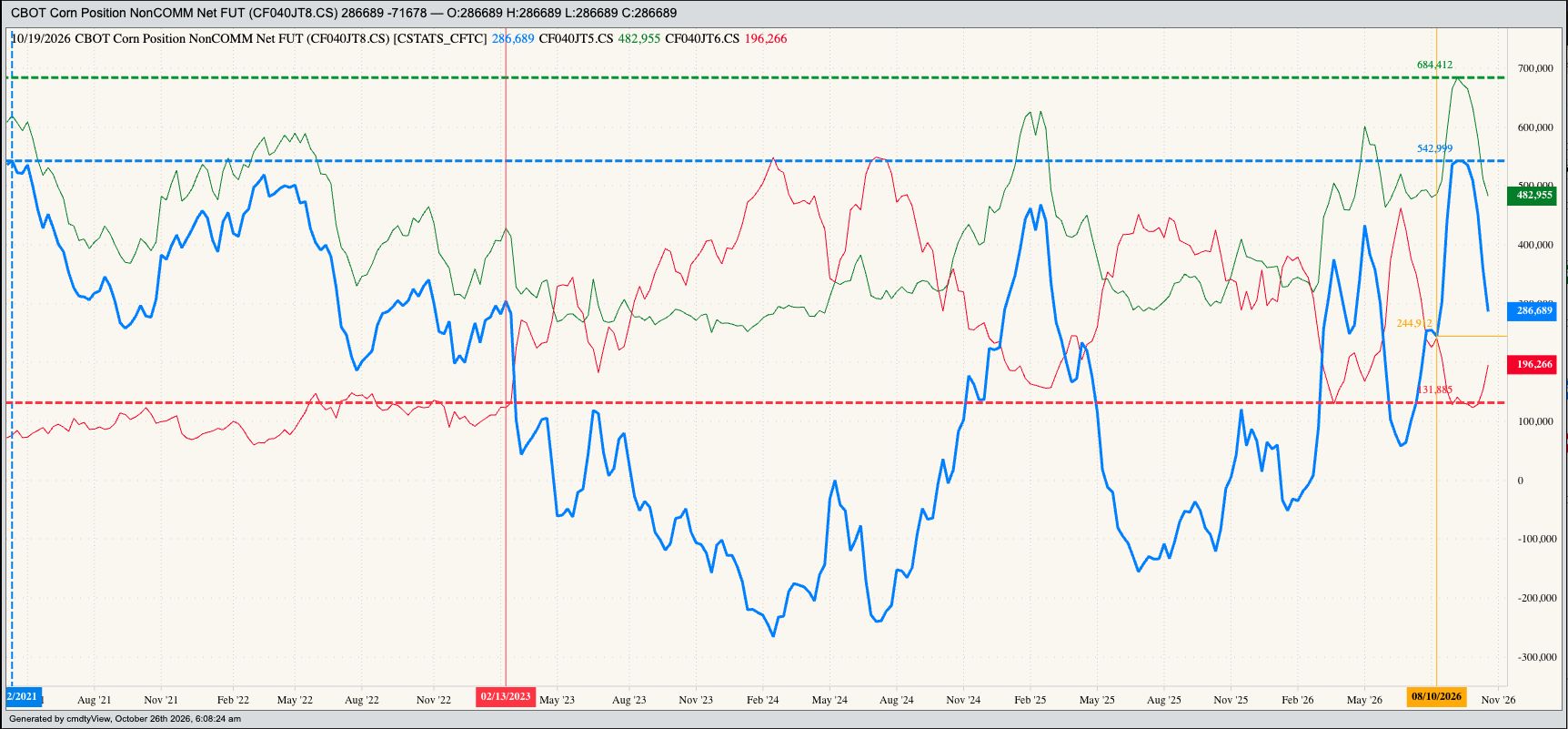
Corn: The corn market was in the red to start the week. The December issue (ZCZ26) lost as much as 5.25 cents on trade volume of about 35,000 contracts and was sitting 2.0 cents lower at this writing. For the record, the overnight high of $4.55 was still down 1.0 cent from Friday’s close. A couple things stand out to me pre-dawn: First, corn’s characteristic Round Number Reliance has come into play with Dec26 extending the intermediate-term downtrend on its weekly chart to $4.5075 before rallying. Second, based on a lack of movement in futures spreads, most of the activity coming out of the weekend is from the noncommercial side. This makes sense given producers, though harvesting madly where possible, are storing rather than selling given the almost $1.00 selloff in futures. On the other hand, the trend of noncommercial activity is toward continuing to sell. The latest Commitments of Traders report showed the noncommercial net-long futures position decreased by another 71,680 contracts, putting the 6-week selloff at a total of 256,310 contracts after hitting a record high 542,999 contracts[iv]. National average basis was calculated last Friday at 38.25 cents under December futures versus the previous week’s final 39.0 cents under December.
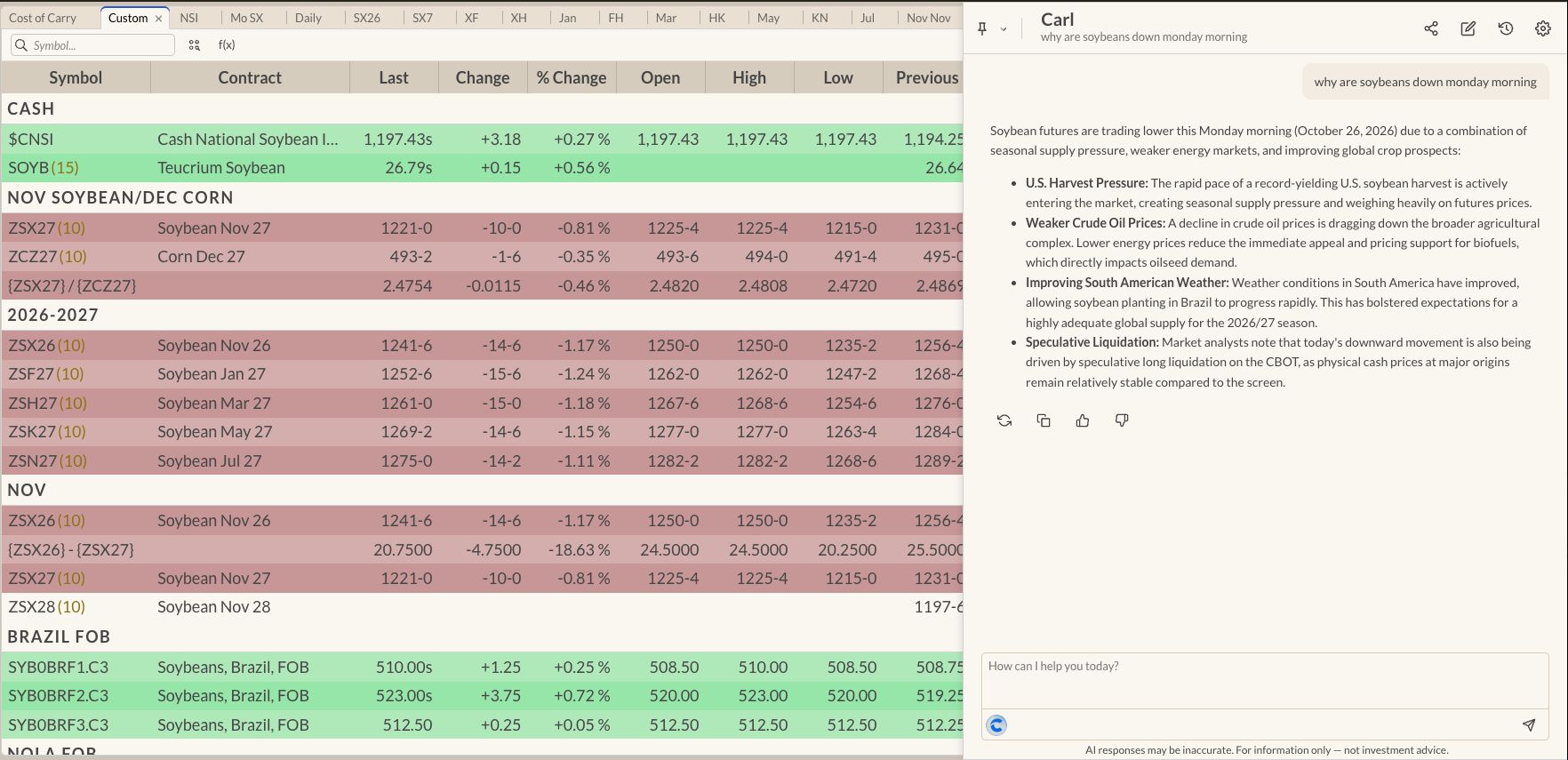
Soybeans: The soybean market was under pressure overnight through early Monday morning. Heading into delivery later this week, the November issue (ZSX26) lost as much as 21.25 cents while January (ZSF27) also fell as much as 21.25 cents overnight. Trade volume for both was solid with November showing 35,000 contracts and January approaching 50,000 contracts changing hands. Watching the open Sunday night, my Blink reaction was harvest pressure; a result of clear weather this past weekend and US producers taking soybeans to town while loading on-farm storage with corn. What’s interesting is we didn’t see anticipation of this on the commercial side heading into the weekend, putting the spotlight on both the National Soybean Index and national average basis later tonight. I wondered if the Brazilian election results had anything to do with the sharp selloff. Keep in mind Lula and the US president don’t agree on much and given the trade war between the United States and China remains in place after almost a decade, the ancient proverb, “The enemy of my enemy is my friend” could be in play. We also know Watson has been decreasing its net-long futures position in soybeans, with last Friday’s Commitments of Traders report showing a drop of 24,500 contracts from the previous week.
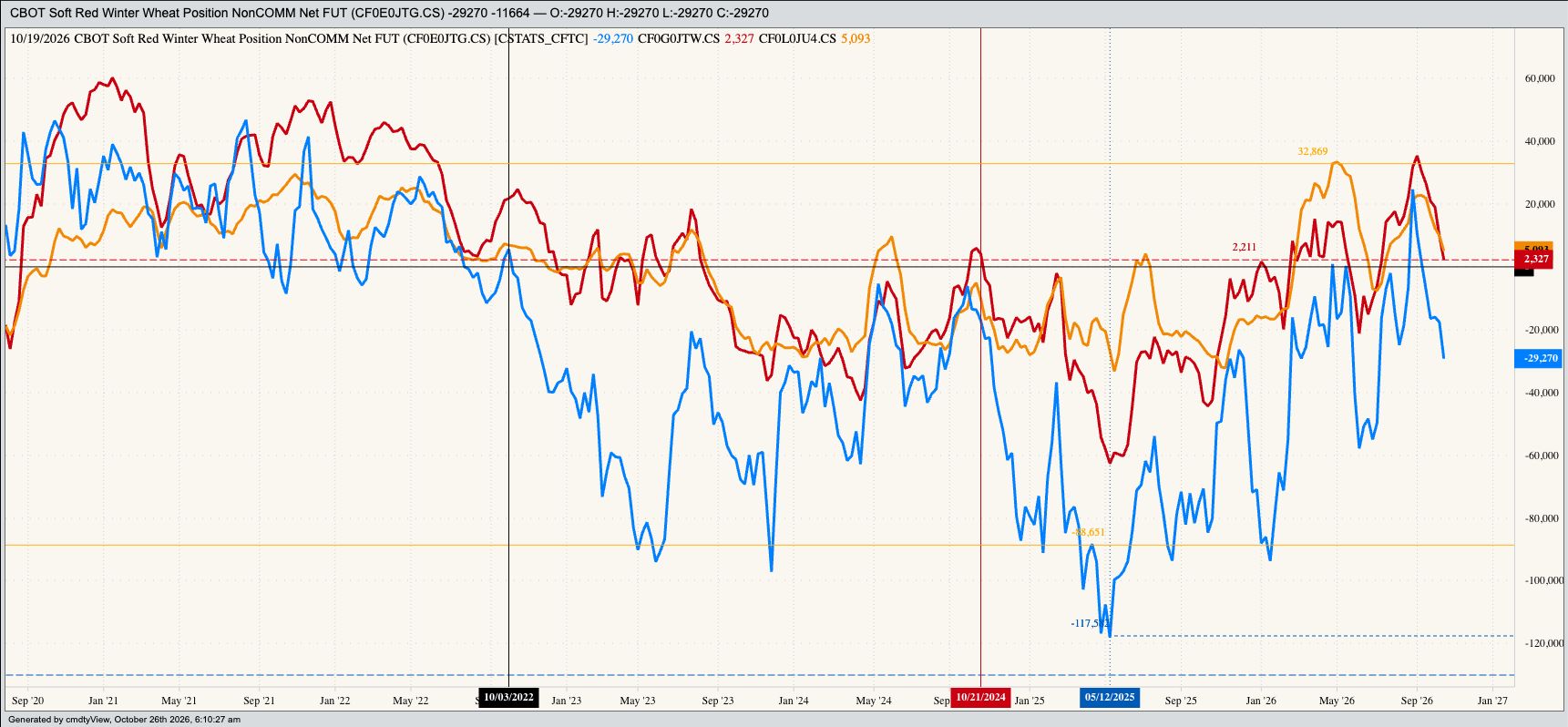
Wheat: I’ll give you one guess as to the direction of the wheat sub-sector early Monday morning, with the choices being up, down, or sideways. Whatever you guessed, you are correct with SRW in the green pre-dawn, HRW in the red again, and December HRS sitting unchanged at this writing. Let’s start with SRW where the December issue (ZWZ26) posted a 7.0-cent trading range, from down 4.5 cents to up 2.5 cents on trade volume of 10,000 contracts and was sitting 1.25 cents higher. It certainly wasn’t heavy overnight trade, but enough to be interesting. The latest Commitments of Traders report showed a noncommercial net-short futures position of 29,270 contracts, and increase of 11,660 contracts from the previous week. From last Tuesday through Friday’s close the December issue lost as much as 18.5 cents (based on daily closes only) indicating Watson continued to sell. December HRW (KEZ26) was down 1.0 cent at this writing after dropping as much as 6.25 cents overnight while registering 3,400 contracts changing hands. What I found interesting with the latest Commitments of Traders update is Watson continued to stubbornly hold onto some of its net-long futures position, this time a reported 2,325 contracts, 7,475 contracts fewer than the previous week.
[i] Bleach injections anyone? Or how about using a nuclear bomb on a hurricane?
[ii] I still miss the days of a well written headline.
[iii] It seems the only country that can’t figure out where the problem lies is – well, you know.
[iv] Imagine if that one extra contract had been bought.
On the date of publication, Darin Newsom did not have (either directly or indirectly) positions in any of the securities mentioned in this article. All information and data in this article is solely for informational purposes. For more information please view the Barchart Disclosure Policy here.
More news from Barchart
How Were Monday Morning Headlines Tied to the Global Coffee Market? Where Are Cocoa Prices Heading in 2027? Bears Are in Charge: Why Soybean Meal Prices Look Set to Head Lower Is It a Good Time to Load Up on Bread?