

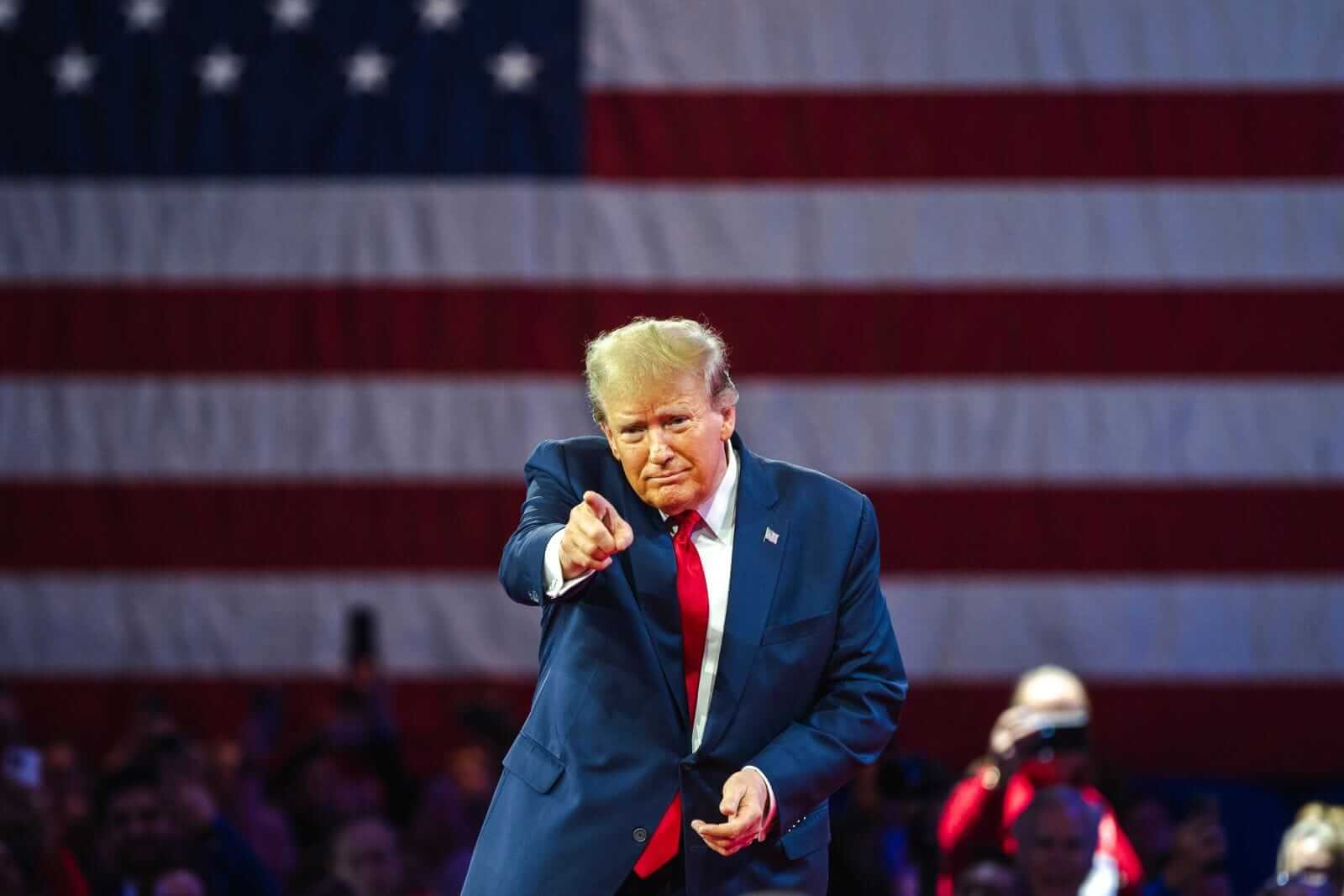
The midterm elections will be held tomorrow, Nov. 3. President Trump has repeatedly warned that if Democrats win the midterms, you'll see an economic depression like the one in 1929. The warning comes at a time when investors are already nervous. In the past month, the Nasdaq (NDAQ) fell about 5.3%, its worst month since March 2025. On the last trading day of October, the Nasdaq and the S&P 500 ($SPX) dropped 2.86% and 1.82%, respectively, their worst days since June. The main reason was investors' concerns about Big Tech's heavy AI spending and weak earnings and outlooks. So Trump's statement might further concern some investors.
What History Says About Midterms
In all 19 midterm years since 1950, the S&P 500 was higher 12 months after the end of October than it was going into the election. The average gain over those 12 months was 16.6%. This happened regardless of which party won. Around Election Day itself, from five trading days before to two days after, the S&P 500 rose in 22 of 23 midterms since 1934.
More Top Stocks Daily: Go behind Wall Street’s hottest headlines with Barchart’s Active Investor newsletter.
So historically, elections haven't decided where stocks go over the following year. But the reason investors still care is that the elections bring uncertainty. Before the vote, nobody knows which party will run Congress. This can determine things like tariffs, taxes, and government spending, all of which can affect company profits. So, many investors, and even businesses, hold off on big decisions until they know what they're dealing with. Once the results are in, they can plan again, and money starts moving back into the market. That's a big reason why stocks have usually gone up afterwards.
In my opinion, the bigger risks for investors will remain how much Big Tech is spending, especially on AI, and the federal debt continuing to climb. The interest costs on the federal debt alone have surpassed $1 trillion in fiscal 2026.
About SPY
The SPDR S&P 500 ETF Trust (SPY) lets investors buy the whole S&P 500 in a single trade, holding the same 500 large US companies as the index. If you think stocks will rise after the midterms like they usually have, this is the easiest way to invest in that. State Street launched it back in 1993, which makes it the oldest ETF in the US.
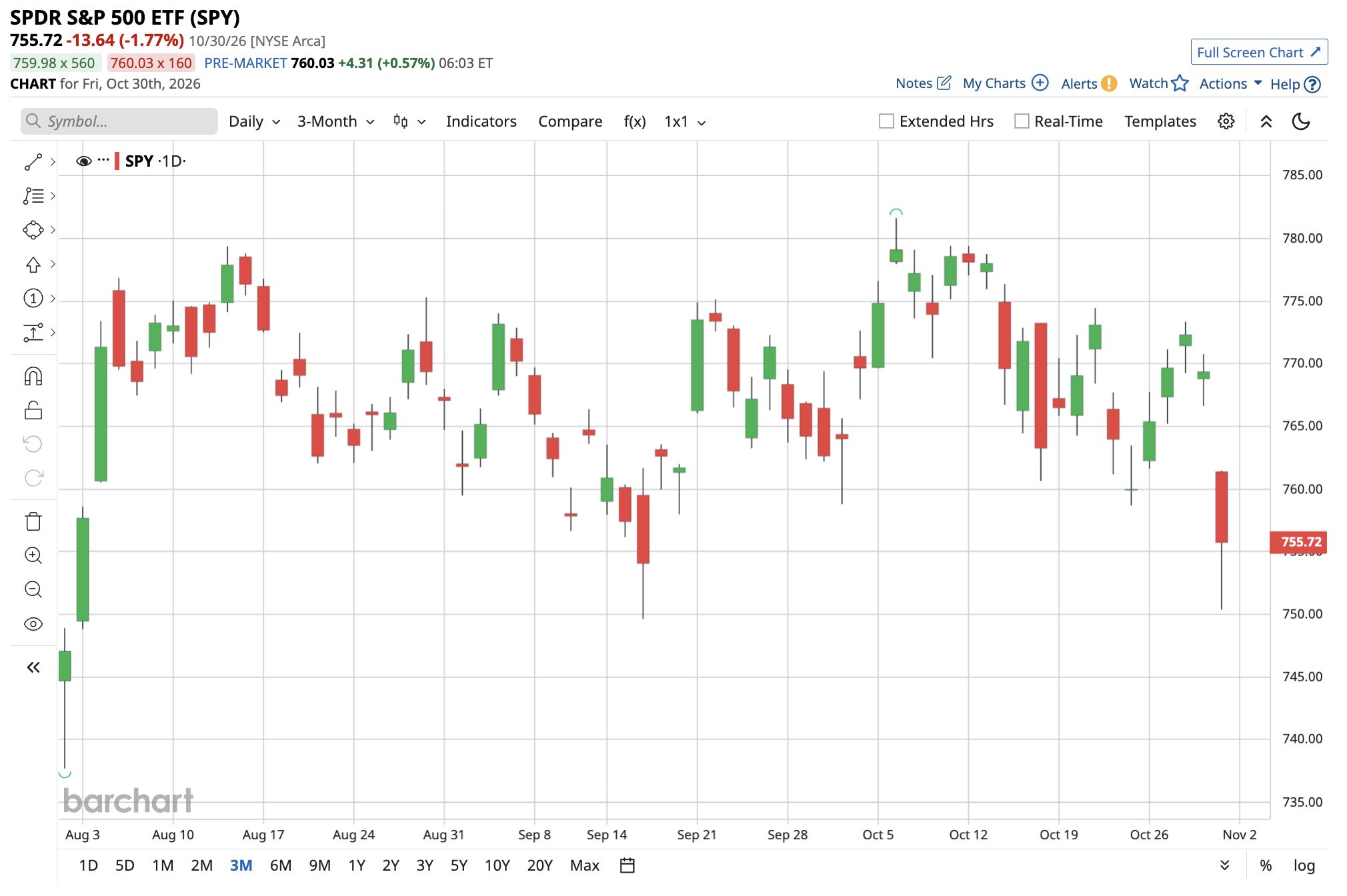
SPY is up about 11% over the past 12 months, outperforming the Nasdaq Composite's 8% gain during the same period. Even in the last month, SPY has held up much better. It slipped less than 1% while the Nasdaq dropped 5.3%, as worries about Big Tech's AI spending hit tech stocks the hardest. The S&P 500 is also only about 3% below the all-time high it recently hit.
 www.barchart.com
The S&P 500 Isn’t Expensive Right Now
Even though the S&P 500 is still near its record high, it doesn't look expensive by its own standards. According to FactSet, the index trades about 18.7x forward earnings. That's below both its five-year average of 19.8x and 10-year average of 19.1x. And the earnings are growing fast. Analysts expect S&P 500 earnings to rise about 32.9% this year, with fourth-quarter growth of around 28.4%. So the earnings outlook looks a lot stronger than the recent sentiment in the market suggests. If the usual post-midterm rally repeats itself, the current price could look even more attractive in hindsight.
Companies Are Beating Estimates, But Not by Much
The earnings season can be seen as good or bad depending on the number you choose to focus on. According to FactSet, about 60% of the S&P 500 companies have reported Q3 results so far. Out of those, 82% beat earnings estimates, which is better than the five-year average of 78%. But the companies have topped estimates by just 1.9%, way below the usual 7.5%. So companies perhaps haven't been clearing the bar as comfortably as investors are hoping they would. This partly explains why there have been some big selloffs recently, even without factoring in the elections.
On the date of publication, Jabran Kundi did not directly have a position in any of the securities mentioned in this article. All information and data in this article is solely for informational purposes. For more information please view the Barchart Disclosure Policy here.
More news from Barchart
Trump Warns of a ‘1929-Style Economic Depression’ Ahead of the Midterms. The S&P 500 Has Risen After All 19 Midterms Since 1950. Don’t Let the Anthropic IPO Turn You Into a Stock Market Sucker Ahead of Advanced Micro Devices Earnings, Here’s What Barchart Data Says Comes Next for AMD Stock eBay, Inc. Generates Strong FCF, But is EBAY Stock at a Peak?