

Amazon (AMZN) reported third-quarter earnings on Oct. 29. Net sales for Amazon Web Services (AWS) increased more than 39% and reached an annualized revenue run rate (ARR) of $184 billion. This marked AWS' fastest growth in almost five years. Meanwhile, Amazon's operating income came in at $28.1 billion with an operating margin of 13.9%, the company's highest ever.
On the Q3 earnings call, CEO Andy Jassy said that the company’s improved delivery times and wider selection are helping it capture more retail market share while improving margins. Jassy also provided a bold estimate about the company’s future. The executive said that there has never been a trillion-dollar revenue business in history, and in the next five to 10 years, two of Amazon’s businesses might reach that milestone on their own.
More Top Stocks Daily: Go behind Wall Street’s hottest headlines with Barchart’s Active Investor newsletter.
Interestingly, Amazon as a whole business has brought in about $797 billion over the past 12 months. So, to say that both AWS and Amazon’s store business might be making a trillion dollars each within the next decade is a big statement. Let's take a closer look.
Why Was Amazon Stock Still Punished?
Despite the positivity, shares of AMZN stock had already dropped 4% before the earnings release due to a wider tech selloff. There were a few reasons behind the fall, which extended into after-hours trading.
Revenue of $201.9 billion increased 12% year-over-year (YOY) but still came in below the roughly $202.3 billion analysts expected. EPS of $1.89 also missed estimates, while Q4 revenue guidance of $240 billion to $247 billion is below the Wall Street consensus.
The biggest worry remains heavy artificial intelligence (AI) spending. Free cash flow over the last 12 months was a $42.4 billion outflow, compared with a $14.8 billion inflow a year earlier. Amazon kept its 2026 capital expenditures guidance at about $220 billion, while Jassy said the company will spend "meaningfully more" in 2027.
For a company like Amazon, I don't believe this is as big of an issue as the market seems to believe. As I've covered previously, Amazon has been in similar positions where free cash flow turned negative before. It happened when Amazon was building AWS in 2010 and 2011, and again after the pandemic. The company recovered in both instances.
About Amazon Stock
Amazon started out selling books online, and today it sells almost everything while also running AWS, one of the world's biggest cloud businesses. Most of Amazon's spending is going into AWS, which seems to be paying off, with AWS growth at its fastest pace in five years. Jeff Bezos founded the company in 1994. Amazon is headquartered in Seattle, Washington, and has a market capitalization of $2.65 billion.
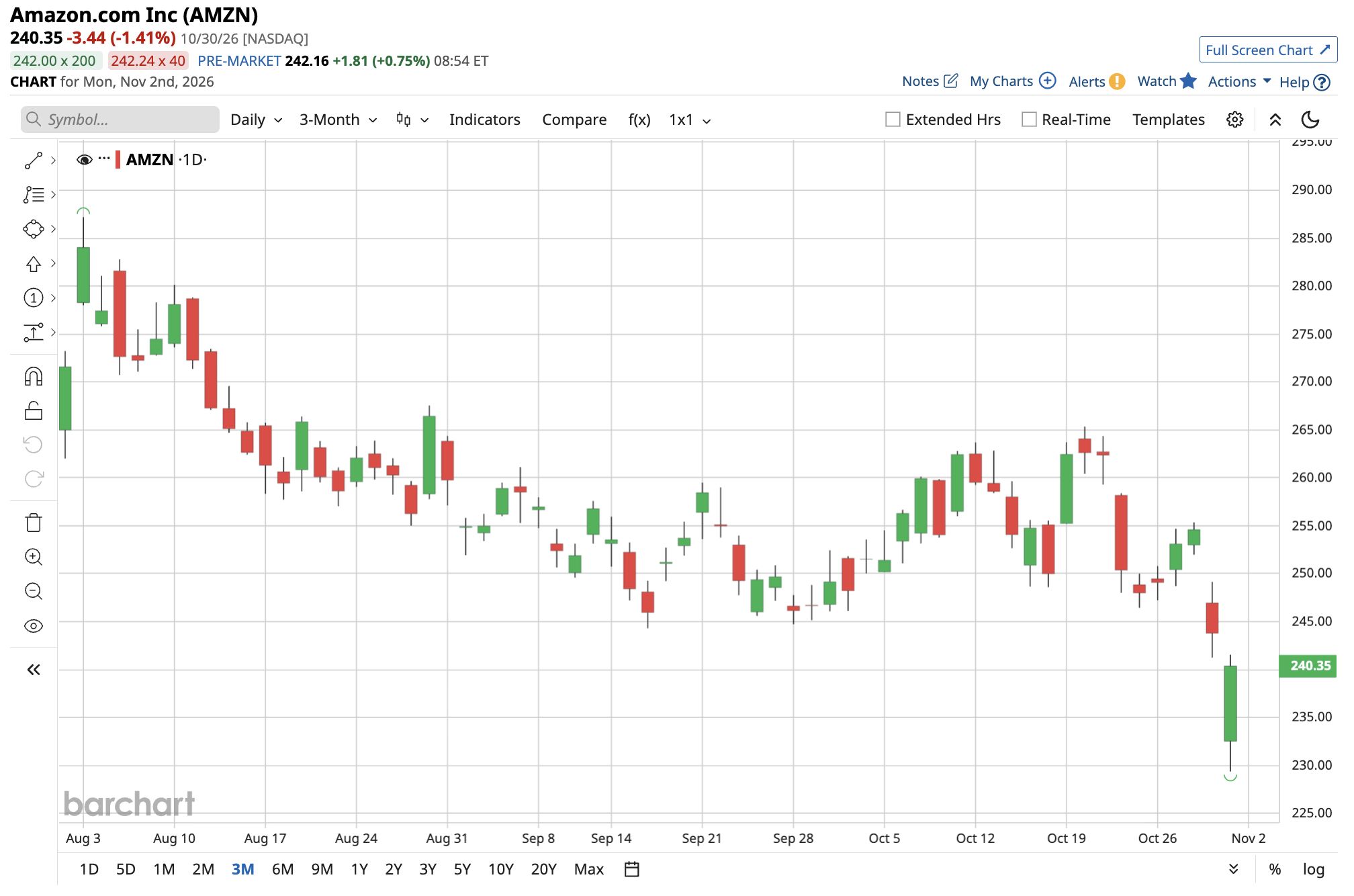
AMZN stock has had a rough year, falling about 1% over the past 12 months while the S&P 500 ($SPX) has gained about 10% over the same period. The stock did jump about 15% in a single day after its Q2 report in July, when AWS growth accelerated and sales beat expectations. In early August, AMZN stock even went on to hit a 52-week high of $287.20. Since then, though, worries about the company's huge AI spending have dragged shares back down. The latest earnings report has added to that pressure.
 www.barchart.com
On paper, Amazon stock looks relatively cheap. Its forward price-to-earnings (P/E) of 30 times is well below its five-year average, but that average is inflated by years of profits being too small. The forward price-to-sales (P/S) ratio of 3.6 times is therefore a better guide. The P/S multiple sits a bit above the five-year average of about 2.9 times.
Analysts currently expect EPS to jump about 9% in fiscal 2026 followed by 38% growth in fiscal 2027. Due to heavy AI spending, Amazon also now carries about $305 billion in debt against roughly $114 billion in cash. I think AMZN stock's next move depends on when all that spending starts turning back into cash.
What Do Analysts Expect for Amazon Stock?
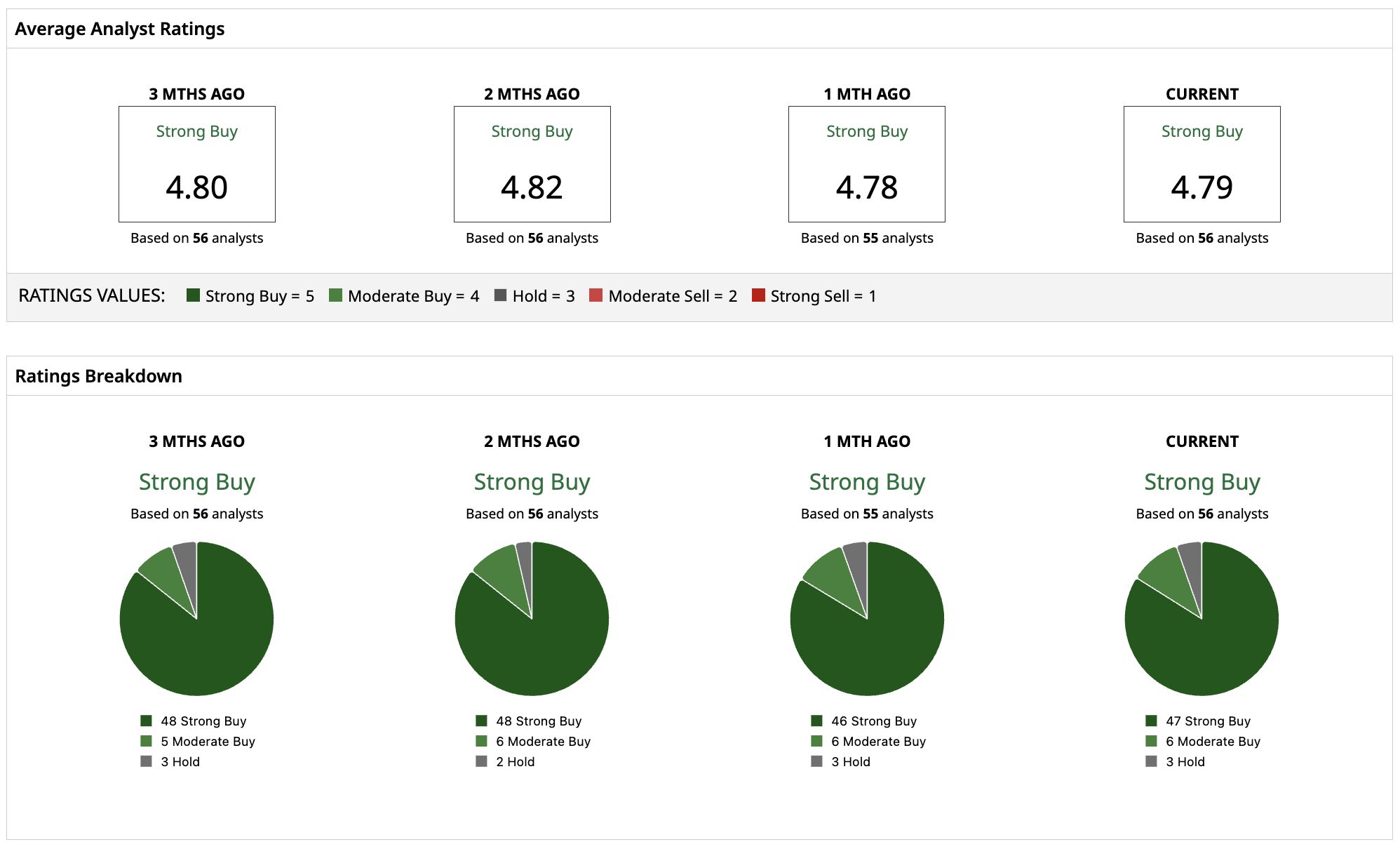
Based on 56 analysts with coverage, Amazon stock holds a consensus “Strong Buy” rating. The mean price target of $326.87 indicates potential upside of 30% from current levels. While the lowest analyst price target of $230 is slightly below the current share price, not one of the 56 analysts covering Amazon suggests selling shares. So, despite the spending worries, Wall Street appears to remain largely bullish on AMZN stock.
 www.barchart.com
On the date of publication, Jabran Kundi did not directly have a position in any of the securities mentioned in this article. All information and data in this article is solely for informational purposes. For more information please view the Barchart Disclosure Policy here.
More news from Barchart
For Those Seeking AI Stocks Poised to Soar, This Little-Known Chip-Equipment Maker Is a Good Fit Andy Jassy’s AWS Grows at the Fastest Rate in 5 Years, Yet Amazon Stock Falls After Earnings. Blame the Spending. JPMorgan Just Upgraded Cloudflare Stock. Here's Why. DIS Stock Layoffs: What to Know as Disney Plans More Layoffs