


Did you know some of AI's biggest opportunities may be hiding in plain sight, right behind Big Tech? Even as chipmakers get all the spotlight, AI still relies on networking, servers, and security to keep everything running. These businesses don't always make the biggest headlines, but they're absolutely essential to the AI buildout.
Cisco (CSCO) and Hewlett Packard Enterprise (HPE) are perfect examples. Both have their respective AI initiatives, and the best part is they pay dividends, too. Let's see where these two companies stand today
More Yield, Less Trap: Sign up free to get Barchart’s daily Dividend Investor newsletter straight to your inbox.
Cisco (CSCO): A Leader in AI Networking and Cybersecurity
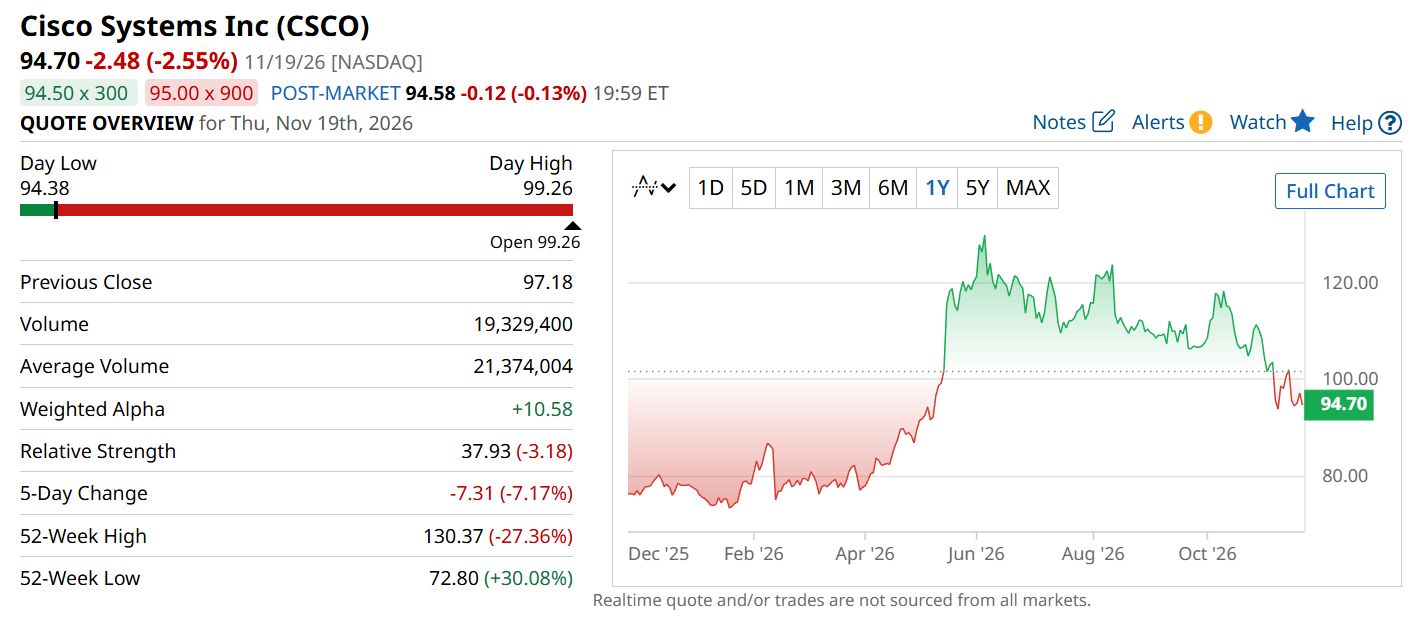 Screenshot courtesy of www.barchart.com
The aftermath of COVID-19 highlighted the critical role of video meetings, cloud-based software, and online transactions. Behind those is Cisco, one of the crucial companies that keeps those connections running.
Cisco is also adapting to the AI revolution, announcing new capabilities for its AI Defense and IQ platforms, designed to identify gaps in AI systems and threats that could arise across a business network.
Today, the company is worth $383 billion and is the larger of the two.
Hewlett Packard (HPE): Building Its Position in AI Infrastructure
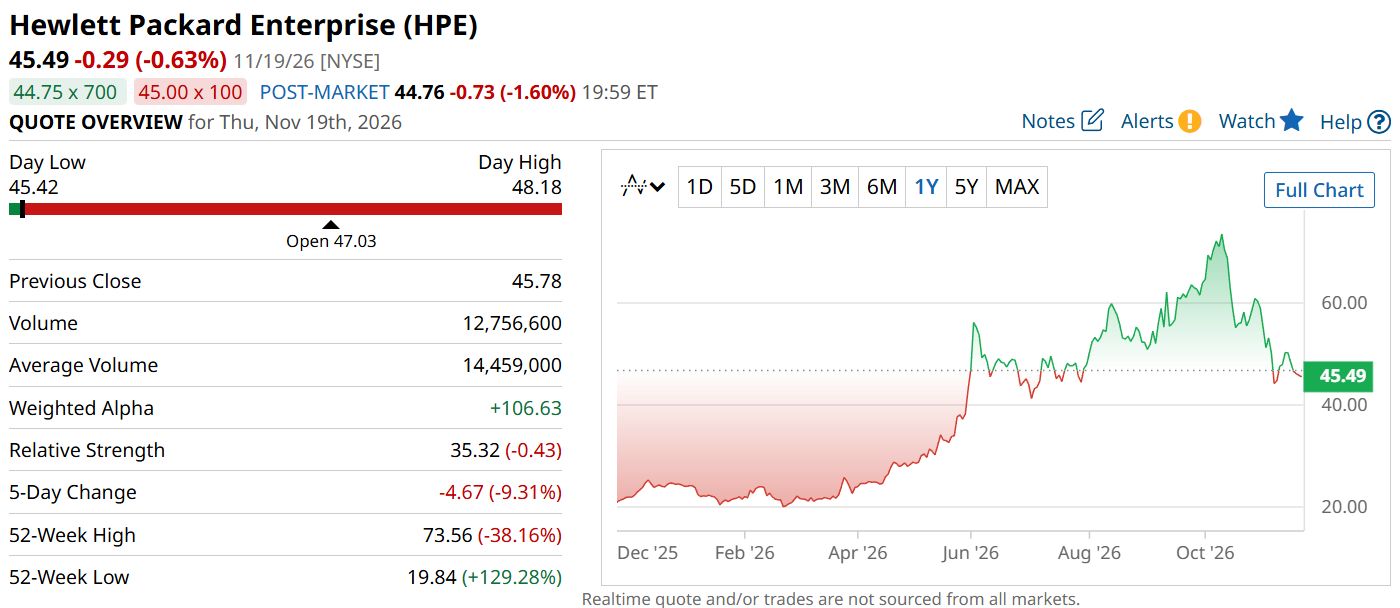
The other company worth highlighting is HP Enterprise (not the laptop and printer brand). This is often confused, as Hewlett Packard Enterprise is different from HP after its split in 2015. HPE makes servers and systems that help companies manage data.
HPE is making a huge leap forward in AI infrastructure with its latest supercomputer, which ranked 14th worldwide in November 2026. Similar to Cisco, this achievement strengthens HPE's position in large-scale AI computing.
Still, HPE is the smaller company, with a market cap of $60 billion.
Different businesses with the same interest in AI. Let's look under the hood to see how their initiatives translate into numbers.
CSCO vs. HPE: What Do the Financials Reveal?
I gathered these data from the Barchart Stock Screening Tool, and here’s how they stack up:
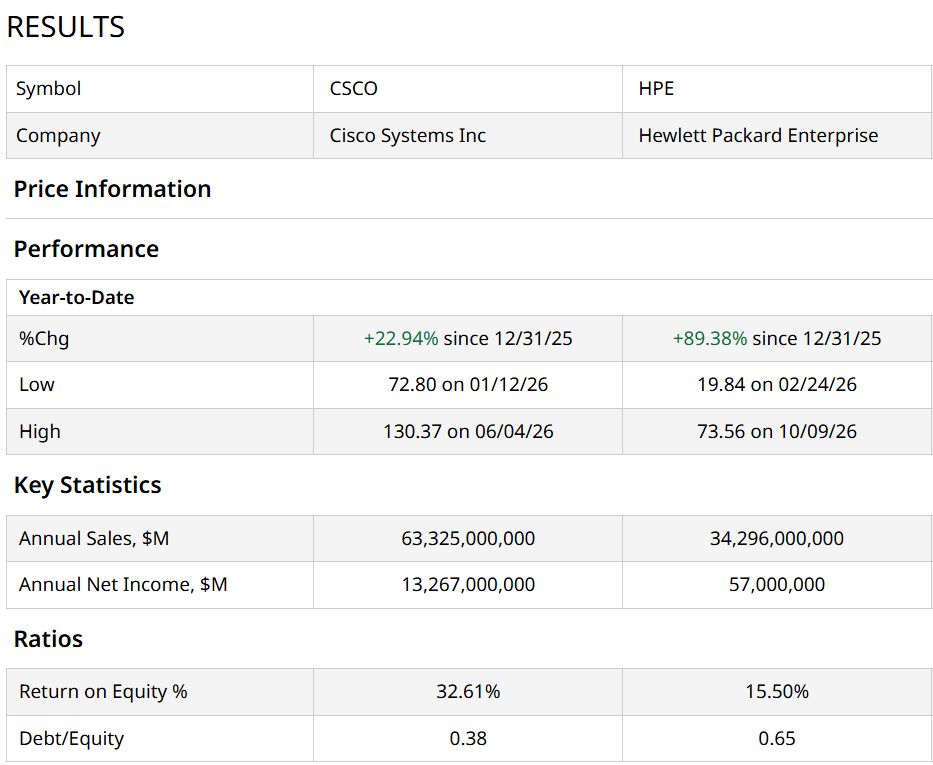
Right off the bat, Cisco takes the lead, with annual sales climbing 11.8% year over year to $63.3 billion, while HPE’s sales grew 13.8% to $34.3 billion. So HPE is growing a little faster, but Cisco still brings in nearly twice as much revenue.
That gap widens even more when we look at profitability. Cisco’s annual net income jumped 30.3% to $13.3 billion, whereas HPE’s plunged 97.8% to just $57 million, partly because of $1.6 billion in impairment charges tied to its Hybrid Cloud business.
The same pattern shows up in return on equity, where Cisco comes in at 32.6% compared with HPE’s 15.5%. Cisco lands the final blow with a debt-to-equity ratio of 0.38, lower than HPE’s 0.65, suggesting the company relies less on debt relative to shareholder equity.
So Cisco clearly wins the financial comparison, but there’s still one more important metric for income-focused investors to consider, and that’s dividends.
Cisco vs. HPE: Which Stock Pays Better Dividends?
Forget the financials for a moment; here’s what investors can expect from these two companies.
CSCO pays a forward annual dividend of $1.68, translating to a yield of approximately 1.77%, and its dividend payout ratio is at ~41%. This suggests that the majority of the earnings are reinvested in the business.
Meanwhile, HPE pays $0.57 per share annually, which translates to a yield of about 1.25%. It has a dividend payout ratio of ~19%, which is more conservative than Cisco. But it also means the company has more room to increase dividends in the future.
Cisco vs. HPE: Which Stock Does Wall Street Favor?
Now, how does Wall Street value these companies?
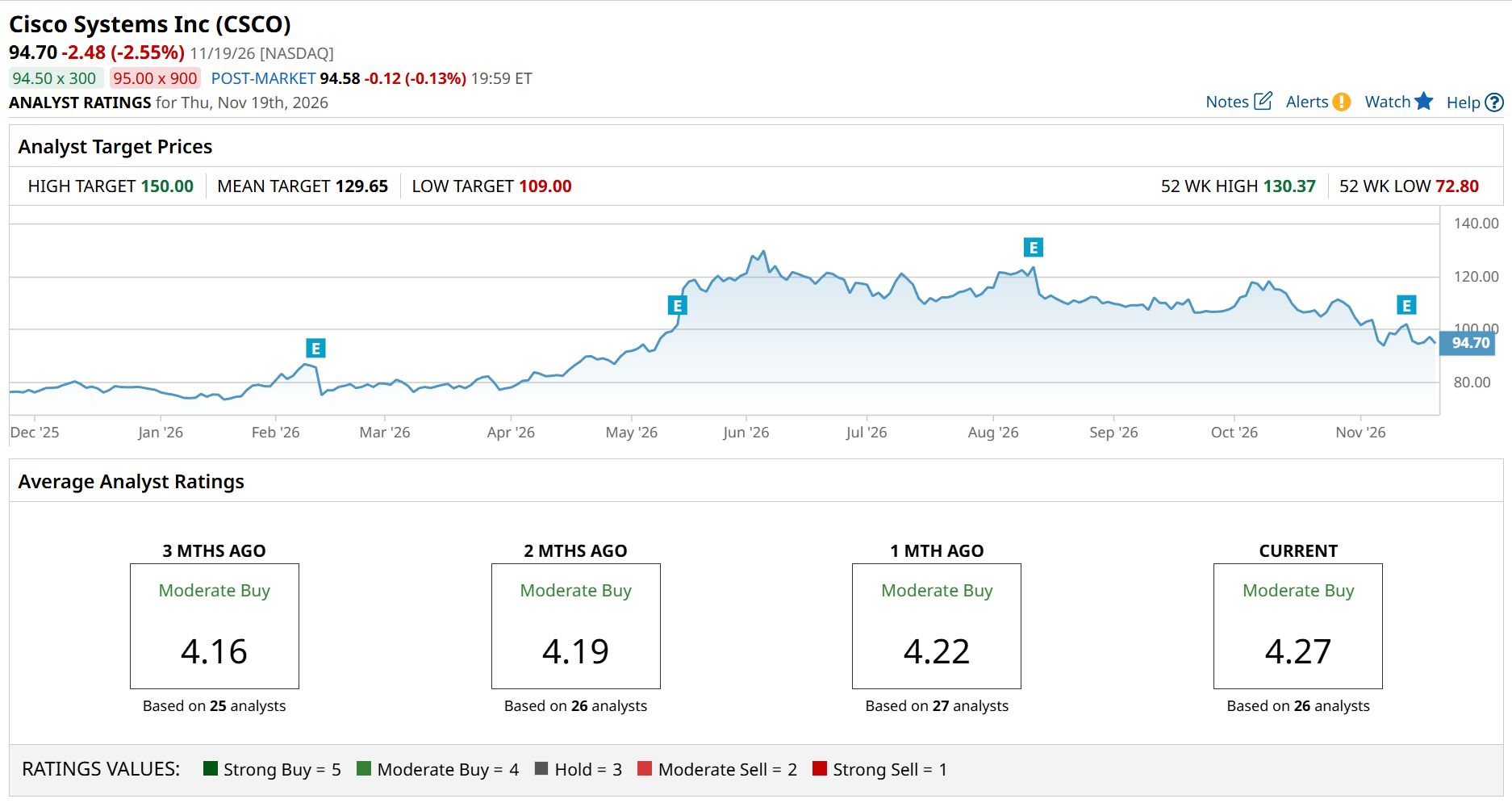
A consensus among 26 analysts rates CSCO stock a “Moderate Buy”. It has a 58% upside potential if it reaches its high target prices.
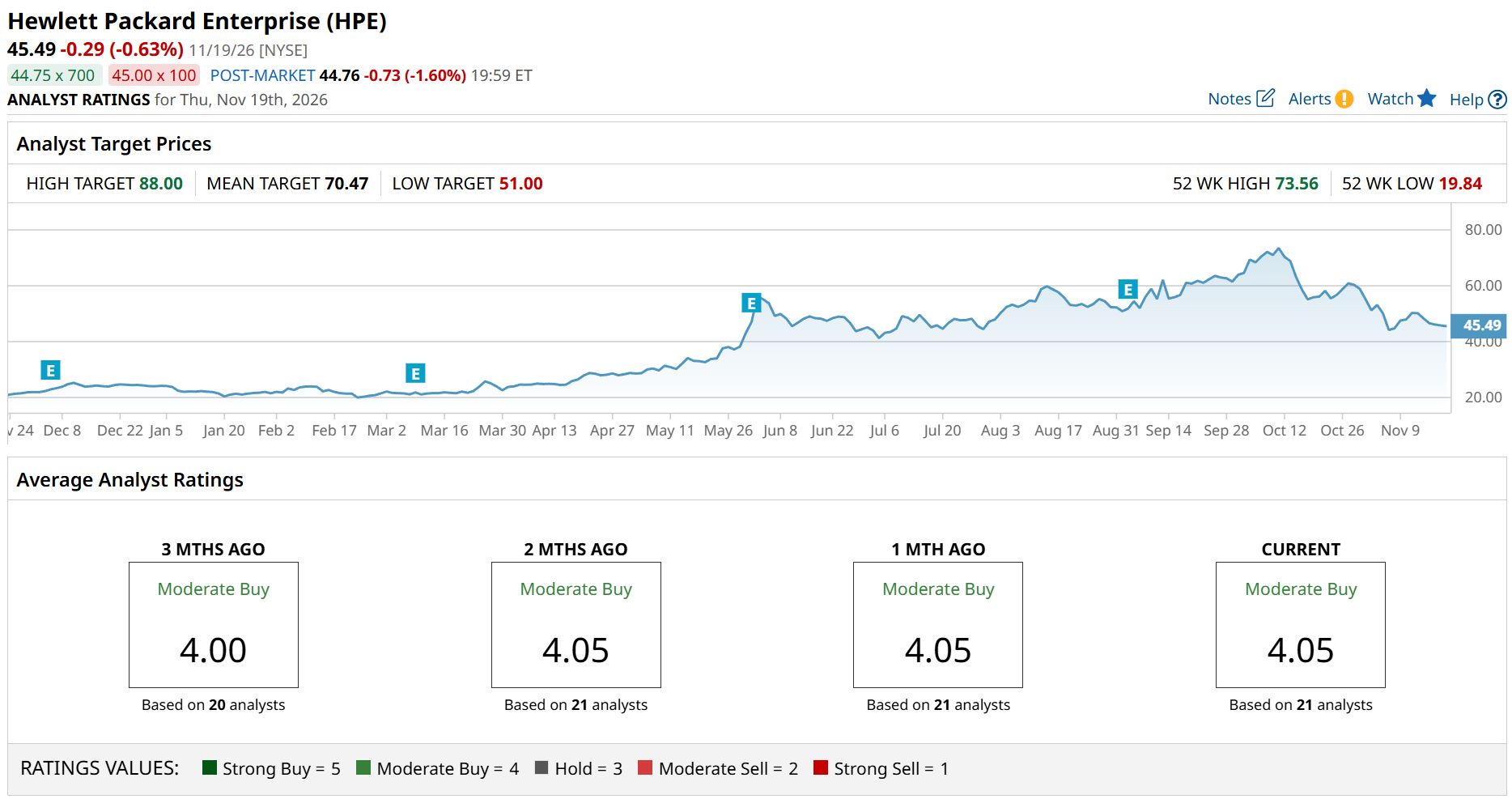
With HPE, it’s pretty even, as a consensus among 21 analysts rates HPE stock a “Moderate Buy,” too, but with a much higher upside potential of about 93% if it reaches its high target price.
Cisco vs. HPE: Which Stock Is the Better Buy Now?
Both Cisco and HPE are worth watching as they expand their positions in AI infrastructure. However, in this heavyweight-versus-challenger matchup, Goliath wins by a landslide.
Cisco's better financials and payouts today make it the better buy, at least for me. But I wouldn't count HPE out, especially with its growing sales and progress in its AI initiatives. If it regains its footing, there could be significant upside for investors willing to wait.
Cisco takes the crown today, but HPE remains a compelling case worth keeping on the radar.
On the date of publication, Rick Orford did not directly have a position in any of the securities mentioned in this article. All information and data in this article is solely for informational purposes. For more information please view the Barchart Disclosure Policy here.
More news from Barchart
Cisco vs. HPE: One Has Better Financials, the Other Has 93% Upside. Which Stock Wins? Disney Just Boosted Its Dividend by 33%. That Gives DIS Stock Investors a Real Reason to Stick Around. Berkshire Might Give Up on This High-Yielding Dividend Stock. You Maybe Should Too. This Company (10%+ Yield) Has a Giant Presence, But It Carries Giant Risks. Stay Away from the Value Trap.