

Nvidia (NVDA) has a new problem. And it is not the one you might expect.
The chip giant is reportedly defending an employee caught up in an AI chip smuggling case in Taiwan. Prosecutors claim a network shipped 74 servers packed with Nvidia chips to China. They tried to move another 56 before the Taiwanese Coast Guard stopped them in May.
More Top Stocks Daily: Go behind Wall Street’s hottest headlines with Barchart’s Active Investor newsletter.
But here is the good news. Nvidia just posted blockbuster earnings that would make most companies weep with envy. Revenue more than doubled. Profits soared. Guidance blew past expectations.
So which story matters more for investors? Let's break it down.
Why Nvidia's Stock Keeps Falling
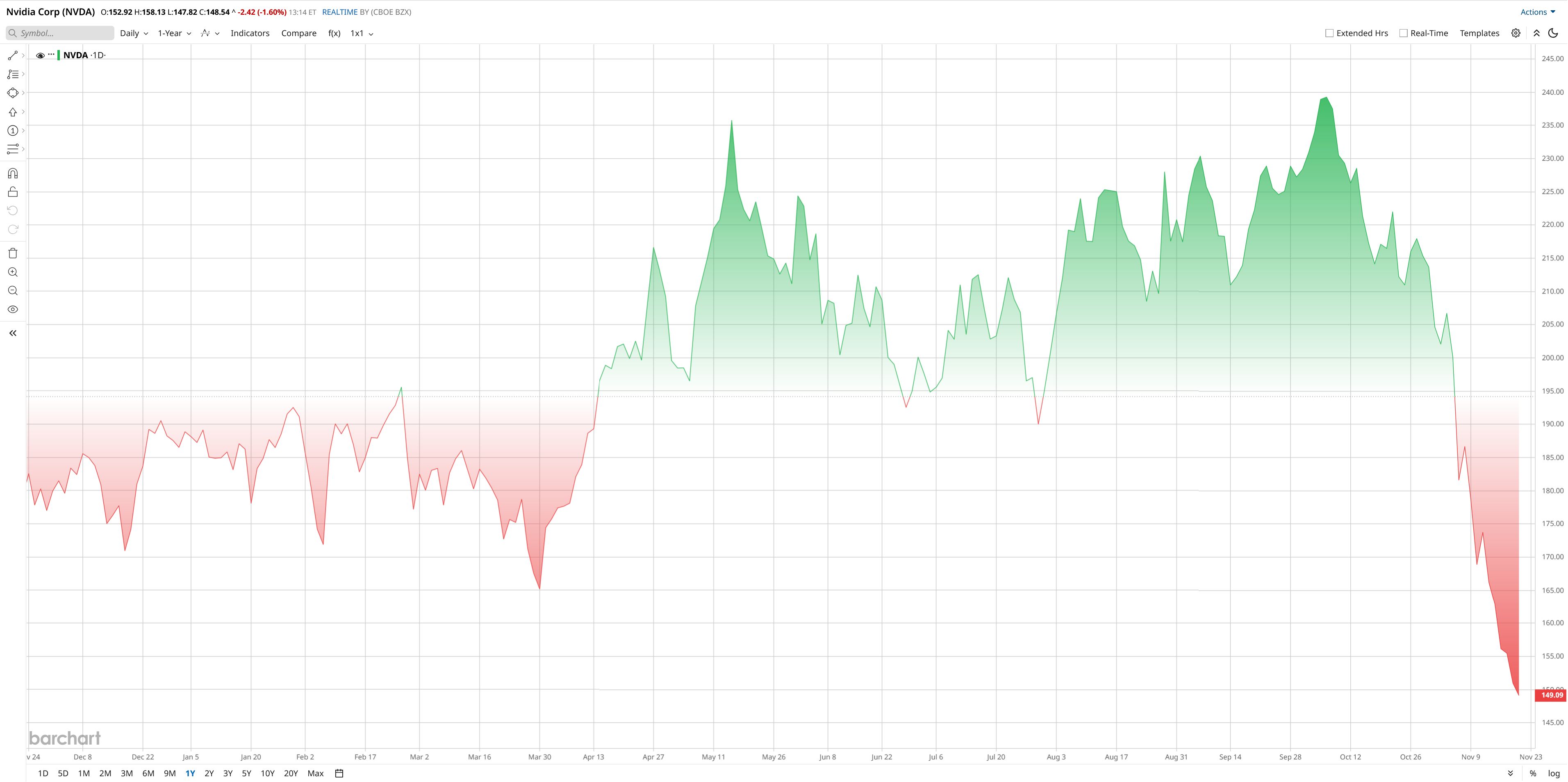
Not usual, but Nvidia's stock has been a wild ride. Shares climbed sharply in the first half of 2026 on relentless AI demand. Yet the stock is down 20% year-to-date (YTD) as former CEO Jensen Huang’s affairs and his resignation keep NVDA stock suffering along with broader chip weakness. Moreover, new U.S. export restrictions kicked in. Competition from AMD (AMD) and Broadcom (AVGO) is heating up. And the financing web around AI buildouts keeps growing.
The worst thing is NVDA stock made another 2.9% decline on Wednesday despite blockbuster earnings. However, the company has a massive cloud backlog, and the Vera Rubin platform is ramping faster than any product in company history. Hyperscaler spending stayed strong. Data Center revenue hit $107.6 billion in just one quarter.
Moreover, Nvidia's stock is trading at some of its cheapest P/E ratios. It trades at 16.7 times forward earnings. The sector median sits at 19.0 times. This can be a trap or a solid opportunity.
 www.barchart.com
The Taiwan Case Explained
According to the reports, the employee, whose surname is not revealed, is charged with forgery and breach of trust. According to prosecutors, he helped approve sales of 130 servers at a Taiwanese IT service supplier that didn't have adequate server space. He allegedly suppressed the buyer's monetary issues and financing from a Chinese entity.
Nvidia pushed back. However, the company claimed that it has been unable to establish whether Chang was aware of the alleged scheme. Nvidia requested the Taiwanese government to reconsider its treatment. That petition fell on deaf ears. Nvidia has said it will not be directly involved in judicial proceedings.
The important question for investors is, “What does this mean for the stock?” In the short term, not much. The impact on the finances is negligible. However, this is a real threat to reputation. Most of the Nvidia chips are manufactured in Taiwan. Working with its authorities is important to maintaining good relations. Likewise, Taiwan also intends to bring its export laws into closer alignment with Washington's. This translates to additional checks along the entire chain of supply.
The good news is that Nvidia turned off their sales of licensed data center products to China. Chinese data center compute revenue is excluded from guidance. So it means the concern of China has mostly been wrapped up. The bigger issue is the costs of compliance. More oversight requires more lawyers and audits. But Nvidia can absorb that easily.
The Blowout Quarter Story
Despite all the bad news surrounding the company lately, Nvidia just gave a solid rebuttal to the bears, which it absolutely needed right now. In Q3 2026, revenue hit $115.8 billion. That is more than double the prior year. It also grew 20% from the previous quarter. Analysts expected around $109 billion, which Nvidia crushed easily.
Data Center was the top seller, selling $107.6 billion. Edge Computing brought in $8.2 billion. The sector's growth was 42% year-over-year (YoY).
The net income was $43.78 billion, while the adjusted gross margin was 74.9%. That is, almost 75 cents of every dollar after direct costs goes back to Nvidia. The size of a company like this is incredible.
Nvidia repatriated the highest $28 billion to shareholders ever. That would involve selling $22 billion of its shares back and paying $6 billion in dividends. It also granted $150 billion for another buyback. The largest in history, by the way.
During the earnings call, interim CEO Colette Kress was straightforward. Total revenue rose over 20% quarterly to $116 billion, she said, more than double what they received a year ago. She also reported that the Rubin platform has earned almost $20 billion in revenue in its first quarter of production shipments.
Guidance looks even stronger. For the next quarter, Nvidia is projecting revenues of $130 billion. Gross margin will range between 71% and 72%. It was the bottom for management before closing out recoveries in fiscal 2028. Nvidia upped its guidance for full fiscal-year 2028. For the year, revenue is going to increase about 75% YoY. This is 10% higher than the 70% figure previously recorded.
What Do Analysts Say About NVDA Stock?
Wall Street analysts largely welcomed Nvidia’s fiscal third-quarter results and stronger outlook, although their post-earnings assessments showed some caution around leadership uncertainty and NVDA stock’s valuation.
Bank of America analyst Vivek Arya maintained a “Buy” rating and a $280 price target. He described Nvidia’s earnings call as reassuring, saying interim CEO Colette Kress appeared to be bringing the company together despite investor skepticism.
On the other hand, Goldman Sachs said management’s commentary should strengthen investor confidence in Nvidia’s business and the broader AI market.
Conversely, Morgan Stanley lowered its price target to $260 from $267. The bank viewed Nvidia’s forward guidance as encouraging but highlighted uncertainty surrounding regulatory actions and the CEO transition.
JPMorgan, meanwhile, raised its target to $230 from $215, saying the company’s near-term outlook remained strong while warning that the stock could remain volatile.
Leadership remains a key risk. HSBC analysts said Nvidia's shares could struggle until the company appoints a permanent CEO and demonstrates that its new leadership can execute the product roadmap.
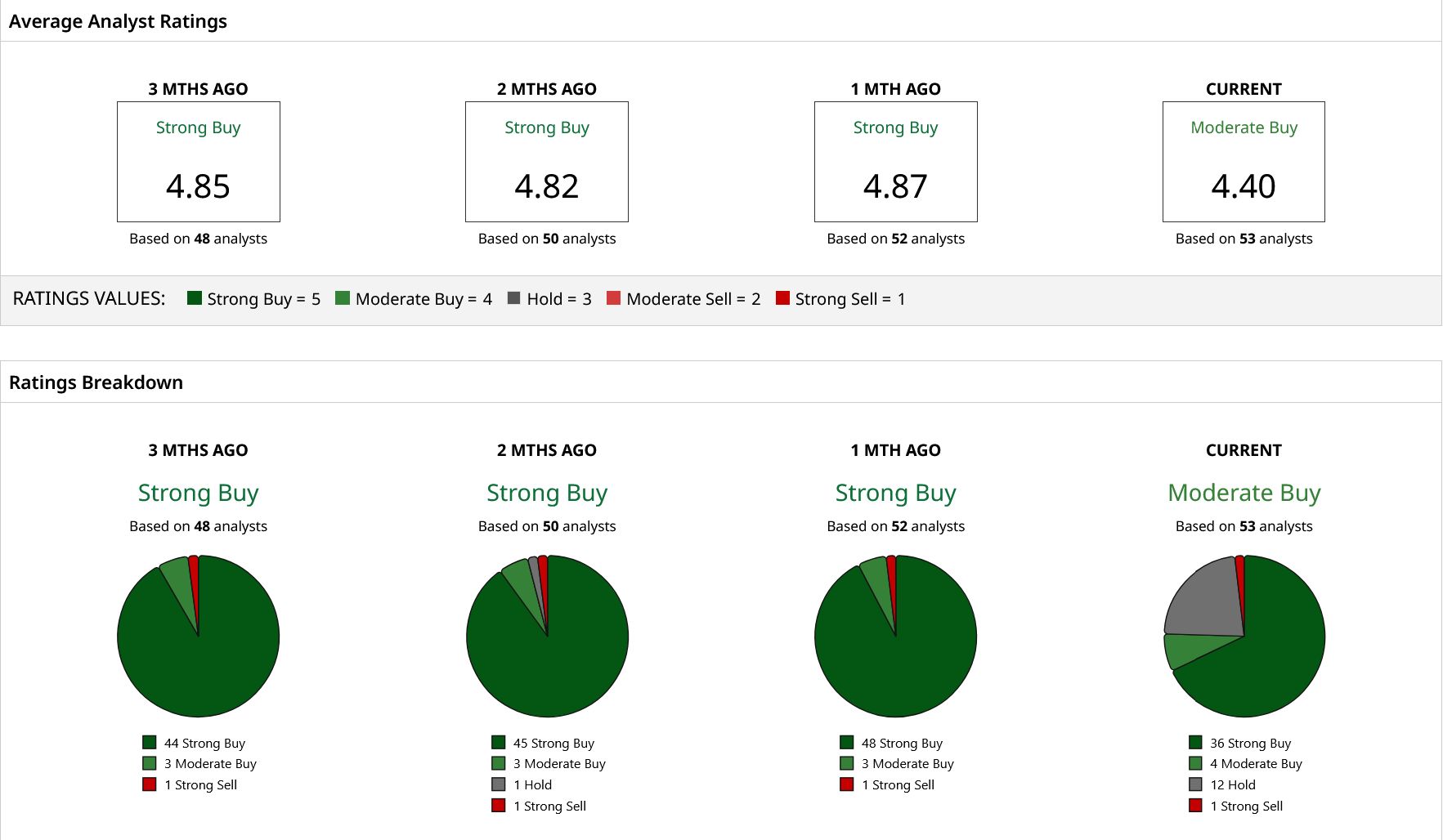
Overall, the consensus rating for NVDA stock has dipped to a “Moderate Buy” from a “Strong Buy.” The average price target sits at $246.94. That implies roughly 66% upside from current levels.
 www.barchart.com
On the date of publication, Nauman Khan did not directly have a position in any of the securities mentioned in this article. All information and data in this article is solely for informational purposes. For more information please view the Barchart Disclosure Policy here.
More news from Barchart
These Are the Top 10 Largest IPOs Following Anthropic's Historic Market Debut Nvidia Has a New Problem, And It’s Not What You Think A $150 Billion Reason to Buy the Nvidia Stock Dip Eli Lilly’s Next Weight-Loss Drug Helped Patients Lose Up to 54 Pounds. Why the FDA’s New Warning Didn’t Hurt LLY Stock.