


We sure seem to be repeating recent history, don’t we? The recent 10%-plus run up in the S&P 500 Index ($SPX), in just 11 trading days mind you, is reminiscent of 2025’s “Liberation Day” market event.
In the current climate, this vertical pop feels less like the start of a new bull leg and more like a technical head-fake. Yet at the same time, I have learned to never underestimate the power of the “passive flow.” That’s the relentless investing into 401k plans, most of which simply says “buy that S&P 500 index thing, and let me get back to what I was doing.”
More Yield, Less Trap: Sign up free to get Barchart’s daily Dividend Investor newsletter straight to your inbox.
That is one of many factors at work here. But the deed is done, and now we have a very stretched market. Or, as was the case last year at this time, the start of something very big.
When the market surges while the underlying stressors — specifically the energy-driven inflation from the Middle East and the collapsing equity risk premium — remain unresolved, it is a sign of a market trying to price in a happy ending before the script has actually been written.
Bad Breadth
A sharp move higher in an uncertain environment often lacks the participation of the broader market. If the rally is driven solely by a handful of mega-cap technology names reclaiming lost ground while the rest of the sectors remain stagnant or negative, the move is fragile. It is an accumulation of capital into a very narrow corridor, which cannot support the weight of sustained new highs.
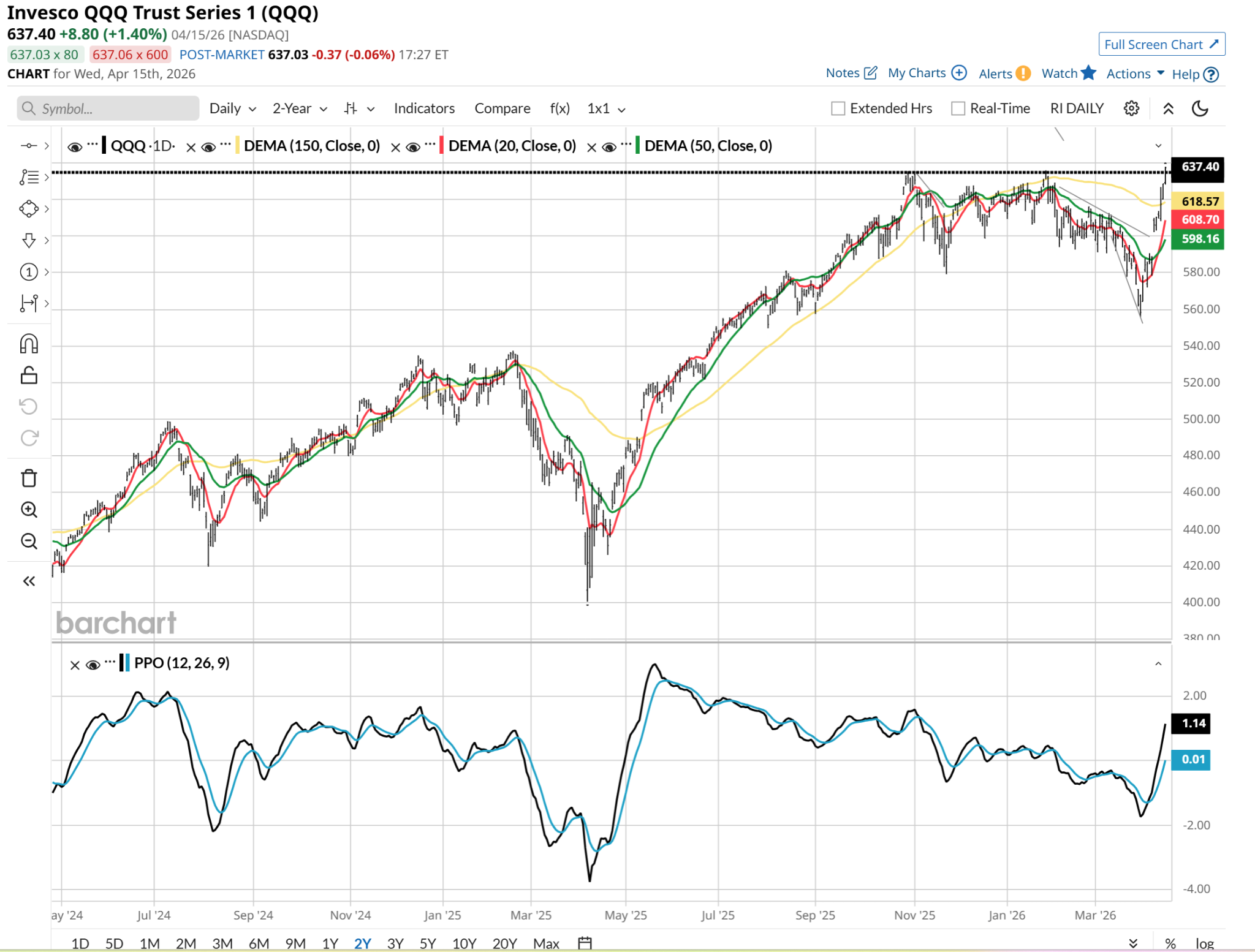
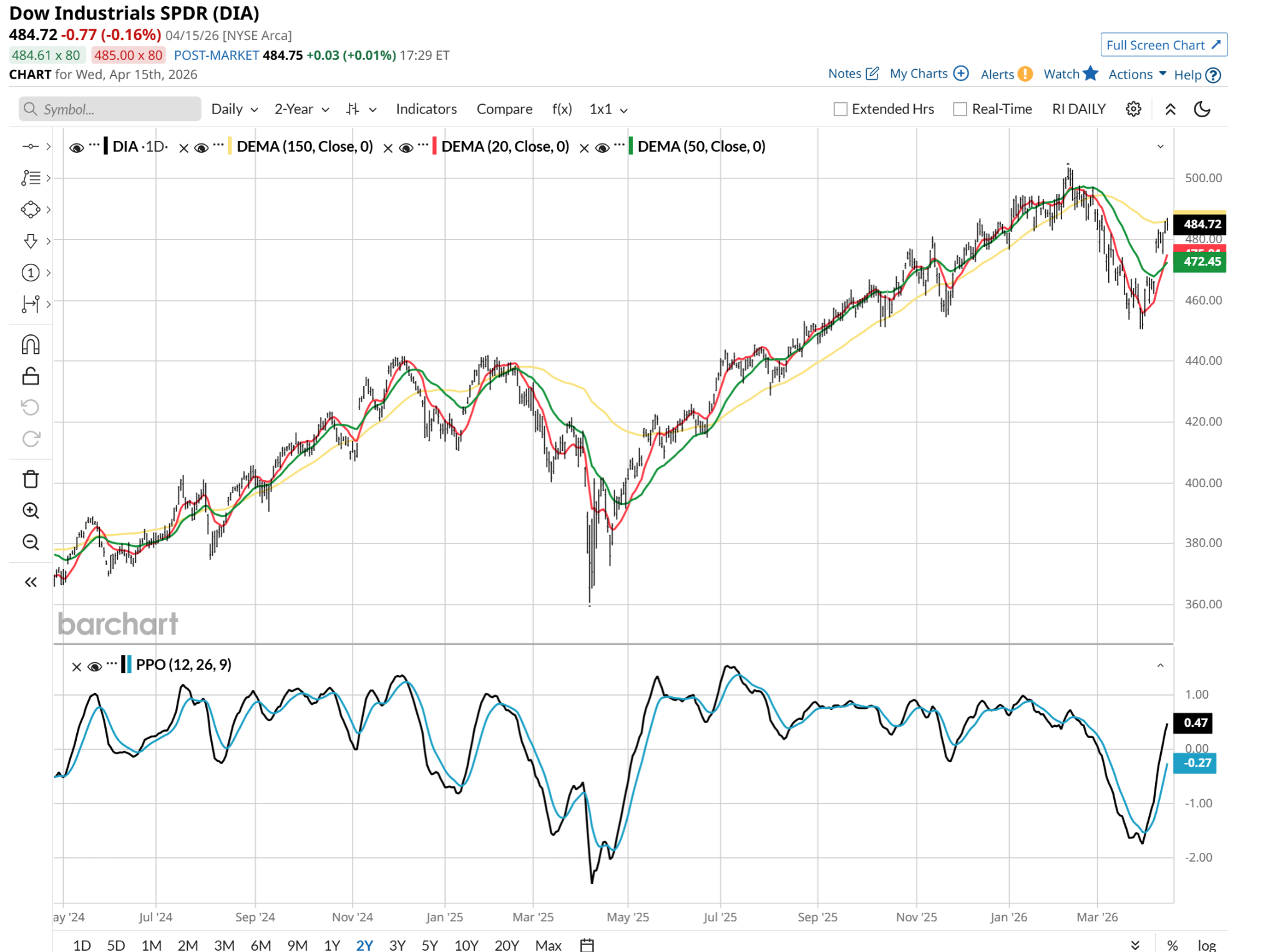
I track the Invesco QQQ Trust (QQQ) and the State Street SPDR Dow Jones Industrial Average ETF Trust (DIA) continuously. Not simply on their own, but their correlation. In this era where the SPDR S&P 500 ETF (SPY) is almost equivalent to the “stock market,” I have seen over time that QQQ plus DIA equals SPY much of the time. The corollary to that? Allocating tactically among that pair is often more fruitful than investing in SPY alone.
Here’s QQQ. Triple top, anyone? Yet this was as of Wednesday’s market close. By the time this is published and you read it, we could be half a world away. And that’s despite our crew here at Barchart having the fastest turnaround time I’ve seen in decades of writing. That’s how chaotic the stock market is in this War-infused period.
 www.barchart.com
 Here’s DIA. It is continuing its reputation as “not part of the cool kids’ table.” That said, it is earnings season, and that can turn on a dime, in the form of an earnings report from one or two major index components.
 www.barchart.com
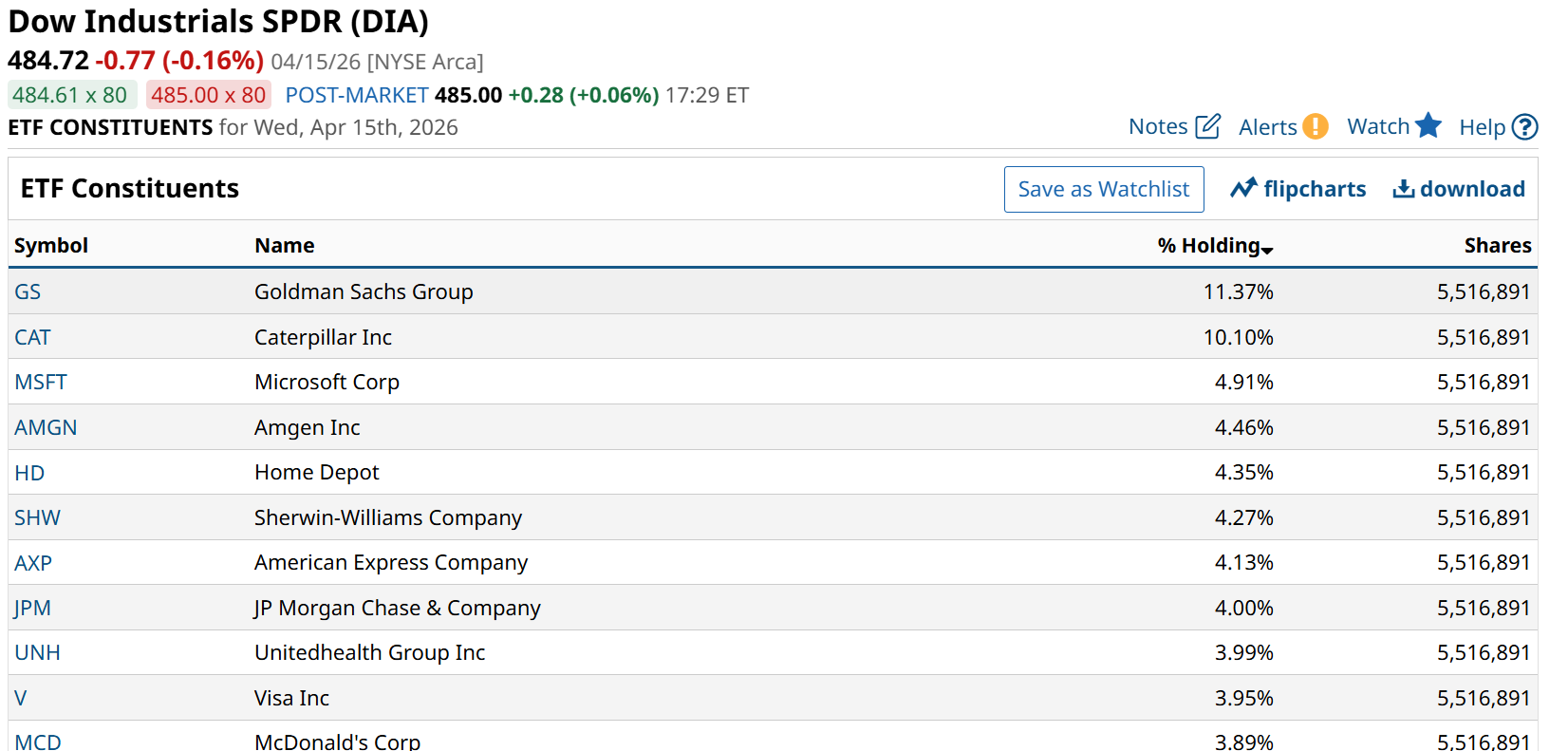
 That was the case Wednesday, as Caterpillar (CAT) fell 3% and accounted for all of DIA’s decline and then some.
 www.barchart.com
 Too Much, Too Soon for SPY, QQQ and Even DIA?
Markets that have been range-bound for months are prone to these sudden bursts. Algorithms often detect a minor easing in geopolitical tension and trigger a cascade of buying to front-run a recovery. However, without a structural shift in interest rates or a genuine cooling of energy costs, these moves frequently collide with the ceiling of the current trading range and exhaust themselves.
If there’s a time when the ROAR Score is a bit skittish, it is times like right now. The score for QQQ did transition from high risk (red) to neutral risk (yellow) and has now even touched the lower risk zone (green). But like any technical system, we have to remind ourselves that whipsaws do happen.
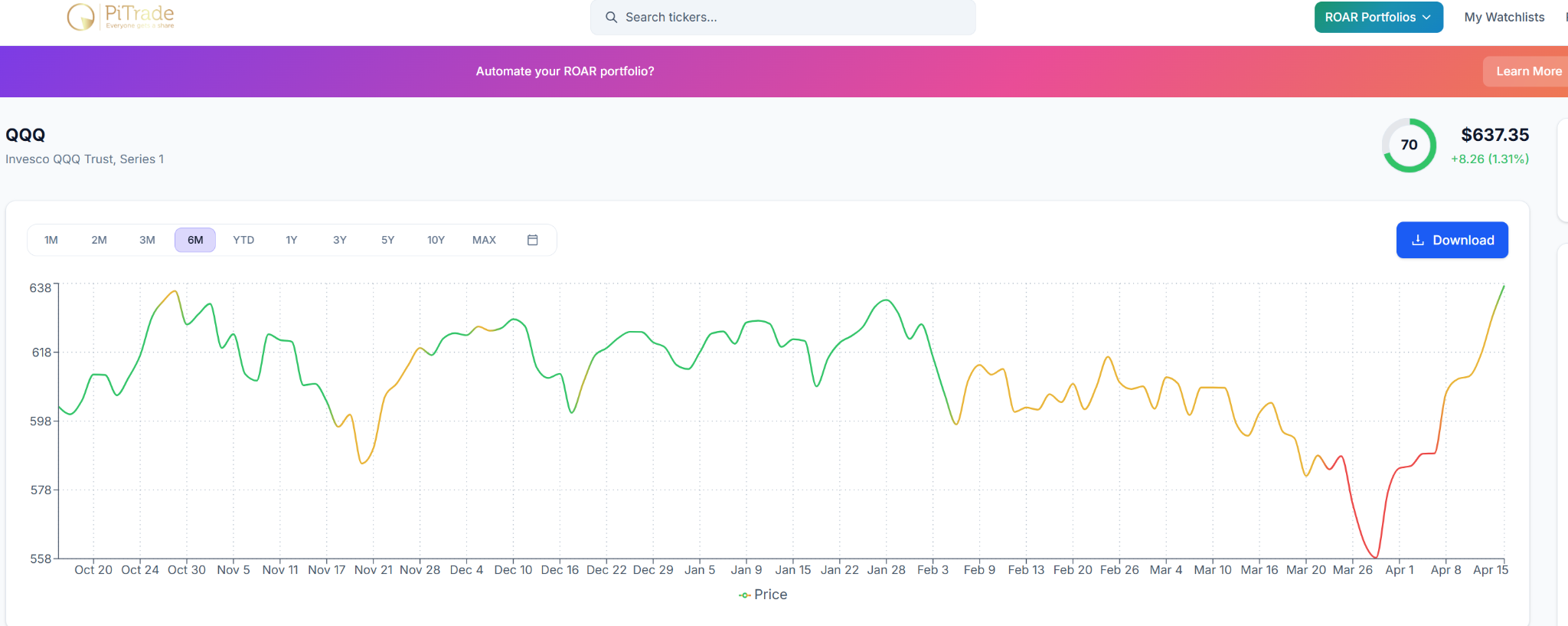 Chart courtesy of Rob Isbitts via PiTrade.com
 So this is one of those times I see 70, and say, “yeah, but...” That doesn’t mean ignoring the signal, just keeping position size low, and using call options as a surrogate for full-capital long positions.
When the market pinballs like it has recently, literally anything can happen. When a war that has been brewing for nearly 50 years, compounded by looming midterm elections, inflation, wealth disparity, international friends drifting apart, a Federal Reserve in transition, stubbornly high bond rates, and a continued habit of non-tech stocks to be laggards, what can I say?
Buckle up. Strap in. And manage risk tightly. This is an environment where position sizing matters (smaller is better, I say) and where every sharp move in either direction should be viewed first with skepticism. Once the obligation to look both ways (bull and bear) has been completed, these market climates can truly reward the nimble.
Rob Isbitts created the ROAR Score, based on his 40+ years of technical analysis experience. ROAR helps DIY investors manage risk and create their own portfolios. For Rob's written research, check out ETFYourself.com.
On the date of publication, Rob Isbitts did not have (either directly or indirectly) positions in any of the securities mentioned in this article. All information and data in this article is solely for informational purposes. For more information please view the Barchart Disclosure Policy here.
More news from Barchart
Does the QQQ ETF Have a Bad Case of Premature Accumulation? Turbine Season for Tech: John Rowland on the Next Era of AI Data Center Investments The Bulls Are Back in Control: Buy These 3 ETFs Now Dire Straits: This ETF Is a Must-Watch As Rare Earths Become the Real Boondoggle of the Iran War