

Florida-based energy company NextEra (NEE) is on its way to becoming the world's largest regulated electric company, as it is set out to acquire Virginia-based Dominion Energy (D) on May 18. The combined entity will possess a power generation capacity of 110 GW across multiple renewable and non-renewable energy sources, with a geographic footprint across states such as Florida, Virginia, North Carolina, and South Carolina, and a customer base of about 10 million.
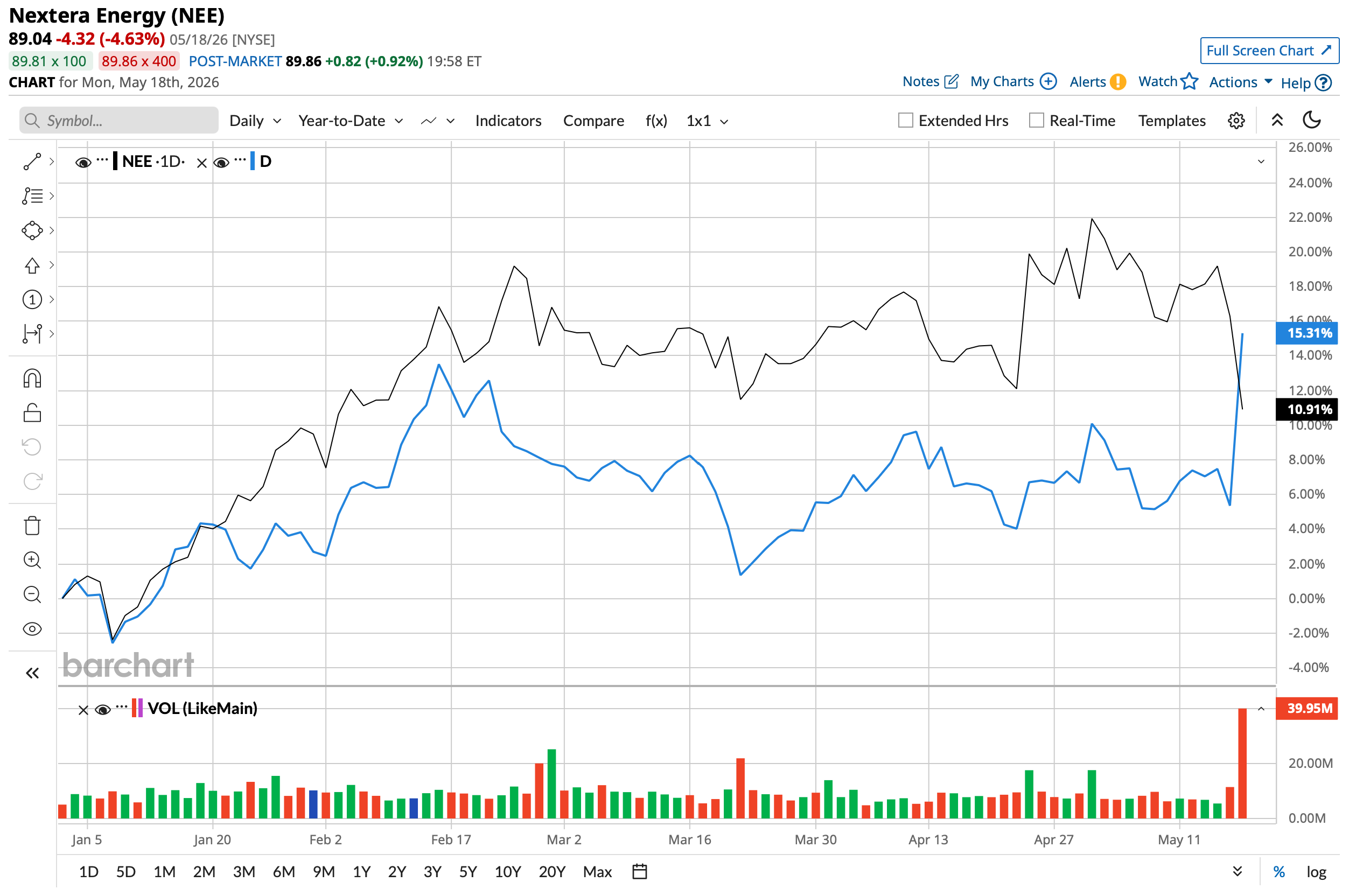
For every share of Dominion Energy held, its shareholders will receive 0.8138 shares of NextEra. Overall, NextEra and Dominion will own 74.5% and 25.5% of the new company, respectively. Shares of the respective companies responded within the typical contours of an event-based M&A deal, with shares of Dominion ending 9.44% higher on May 18's trading session. In contrast, shares of NextEra were down 4.63%.
Don’t Miss a Day: From crude oil to coffee, sign up free for Barchart’s best-in-class commodity analysis.
Overall, both D and NEE stocks had almost mirrored each other so far this year, rising 10.9% and 15.3%, respectively, as illustrated in the comparison below.
 www.barchart.com
 Now, what's in store for the investors, and how should the deal be looked at? Let's find out.
An Electric Behemoth In The AI Era
Analysts at Wedbush, led by Dan Ives, have always been vocal proponents of the AI trade. And some of the points they have put forth regarding this deal have certainly been pertinent.
The firm stated that not only would the merger create the world's largest regulated electric utility, but it would also create the world's largest energy entity in renewables and battery storage, and the largest in the U.S. in total generation and gas generation, as well as the second-largest in the U.S. in nuclear generation.
However, the strategic logic of this deal goes well beyond size, and understanding why requires thinking about what hyperscalers actually need from a power partner rather than what most utilities traditionally offer. Amazon (AMZN), Microsoft (MSFT), Alphabet's (GOOGL), and Meta Platforms (META) are not simply looking for cheap electrons. They want a single counterparty that can package baseload power, renewable energy with strong carbon credentials, battery storage, and transmission access into one coherent long-term supply arrangement, and do it fast enough to match their aggressive data center deployment timelines.
NextEra CEO John Ketchum articulated this directly, saying the paradigm has changed to serve the hyperscaler, and that winning the AI power game now requires assembling solutions that combine renewables, batteries, gas power, gas transmission, and nuclear, all put together as quickly and cheaply as possible. No single utility in the country currently has all of those pieces under one roof at a meaningful scale.
The geographic combination here is genuinely difficult to replicate. Dominion's Virginia business serves more than 450 data centers from over 50 customers, including the largest hyperscalers, within the single most concentrated data center market on earth, with Northern Virginia hosting nearly 35% of all hyperscale data centers in the world.
Meanwhile, what makes the combined entity structurally unique is the ability to offer something Ketchum has called data center hub complexes, a concept that no single utility has yet been able to execute at a national scale.
NextEra plans to construct more than 30 of these data center hubs across the United States, and the company has indicated it can develop at least 30 GW of new generation for data center power supply hubs by 2035. These hubs will operate as integrated energy environments that combine generation, storage, and transmission in a configuration that provides hyperscalers with the reliability guarantees they need for 24/7 AI workloads while also meeting their sustainability commitments.
Thus, the combination of existing customer relationships, geographic positioning in the world's top data center market, an integrated multi-source energy portfolio, and a clear hub development strategy is what separates this deal from a straightforward consolidation play.
Too Big?
However, my skepticism with leading me to question whether the deal is “Too Big?” is based not just on competitive position, it has a basis in history as well.
Notably, the transaction requires approvals from shareholders of both companies, the Federal Energy Regulatory Commission under Section 203 of the Federal Power Act, the Nuclear Regulatory Commission, the Virginia State Corporation Commission, the North Carolina Utilities Commission, and the Public Service Commission of South Carolina, meaning five separate regulatory bodies, each with their own public interest standards, timelines, and political pressures. The merger agreement itself reflects how seriously management takes this risk. The deal includes a $4.83 billion termination fee payable by NextEra if the transaction fails specifically due to a failure to obtain regulatory clearances, which is a notable acknowledgment from both boards that the regulatory path is the primary source of deal risk rather than financial or operational concerns.
Also, the Virginia State Corporation Commission will likely be the most consequential single regulator. Virginia has historically been protective of its ratepayers when out-of-state utilities have sought to acquire Dominion, and advocacy groups will almost certainly argue that a Florida-headquartered company cannot be trusted to prioritize Virginia grid reliability over its own financial interests. The companies have tried to preempt that pushback by offering $2.25 billion in bill credits to Dominion customers in Virginia, North Carolina, and South Carolina over the first two years of the deal, with roughly 79% of those credits earmarked for Virginia.
Moreover, the clearest cautionary tale from recent utility merger history is the Exelon (EXC) acquisition of Pepco Holdings, a 6.8 billion dollar deal announced in April 2014. The District of Columbia Public Service Commission voted unanimously in August 2015 to reject the merger, saying the companies had not met the burden of showing it would benefit the public, throwing the deal into deep uncertainty even though it had already been approved by regulators in New Jersey, Delaware, Virginia, Maryland, and by FERC itself.
Analyst Opinion
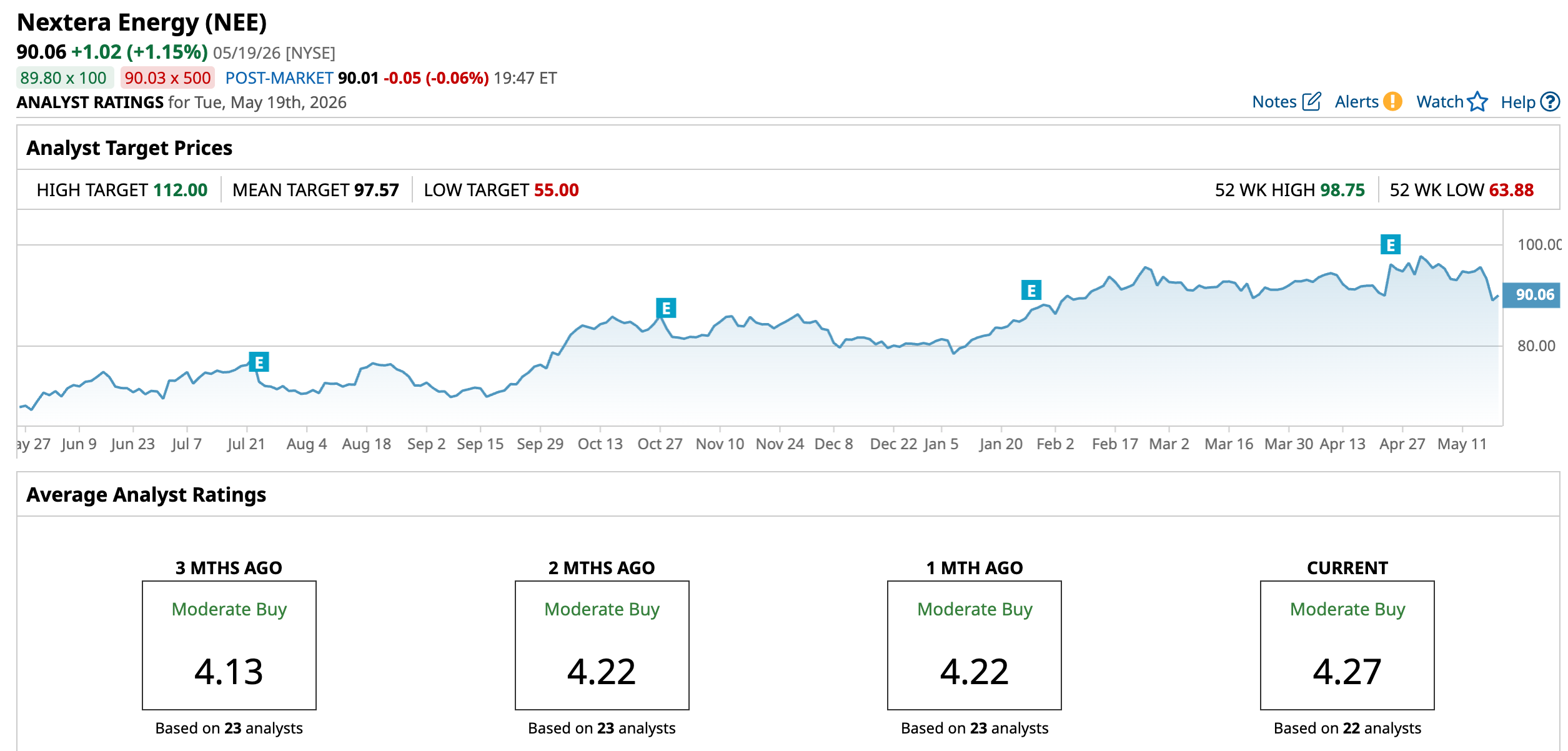
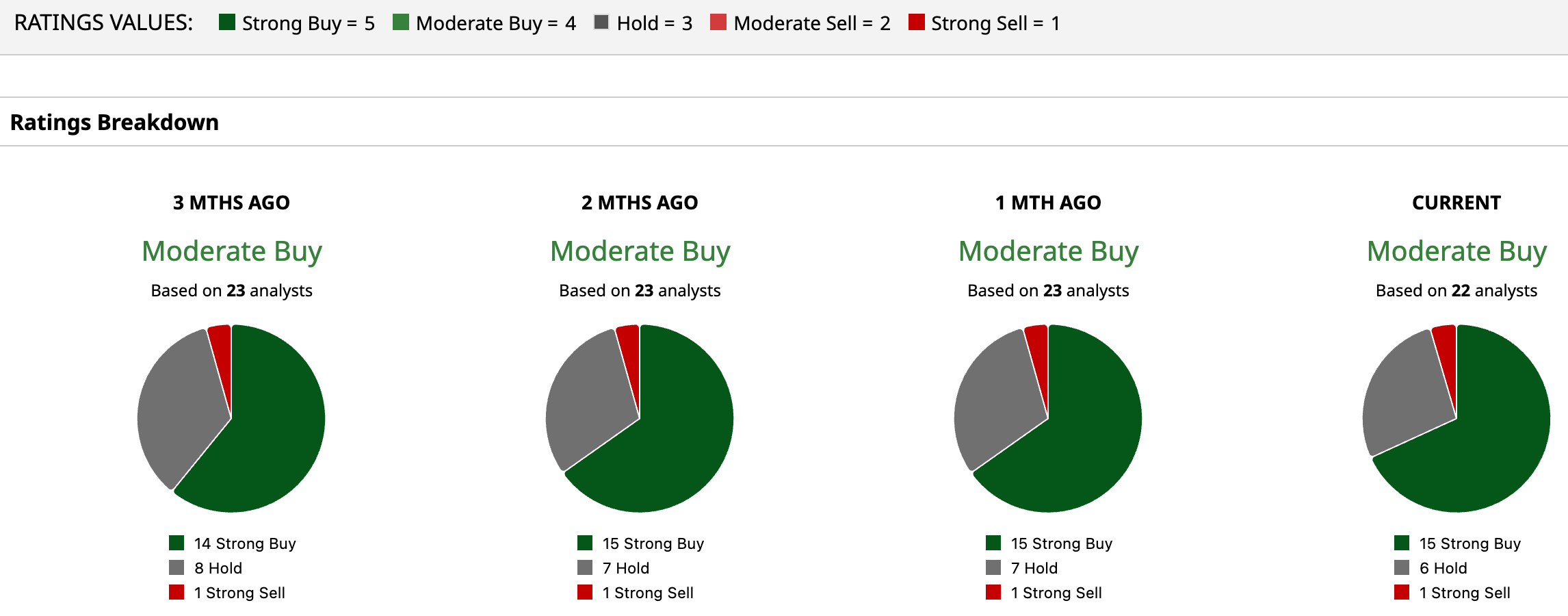
Overall, analysts have deemed NEE stock a “Moderate Buy”, with a mean target price of $$97.57. This denotes an upside potential of 8.34% from current levels. Out of 22 analysts covering the stock, 15 have a “Strong Buy” rating, six have a “Hold” rating, and one has a “Strong Sell” rating.
 www.barchart.com
  www.barchart.com
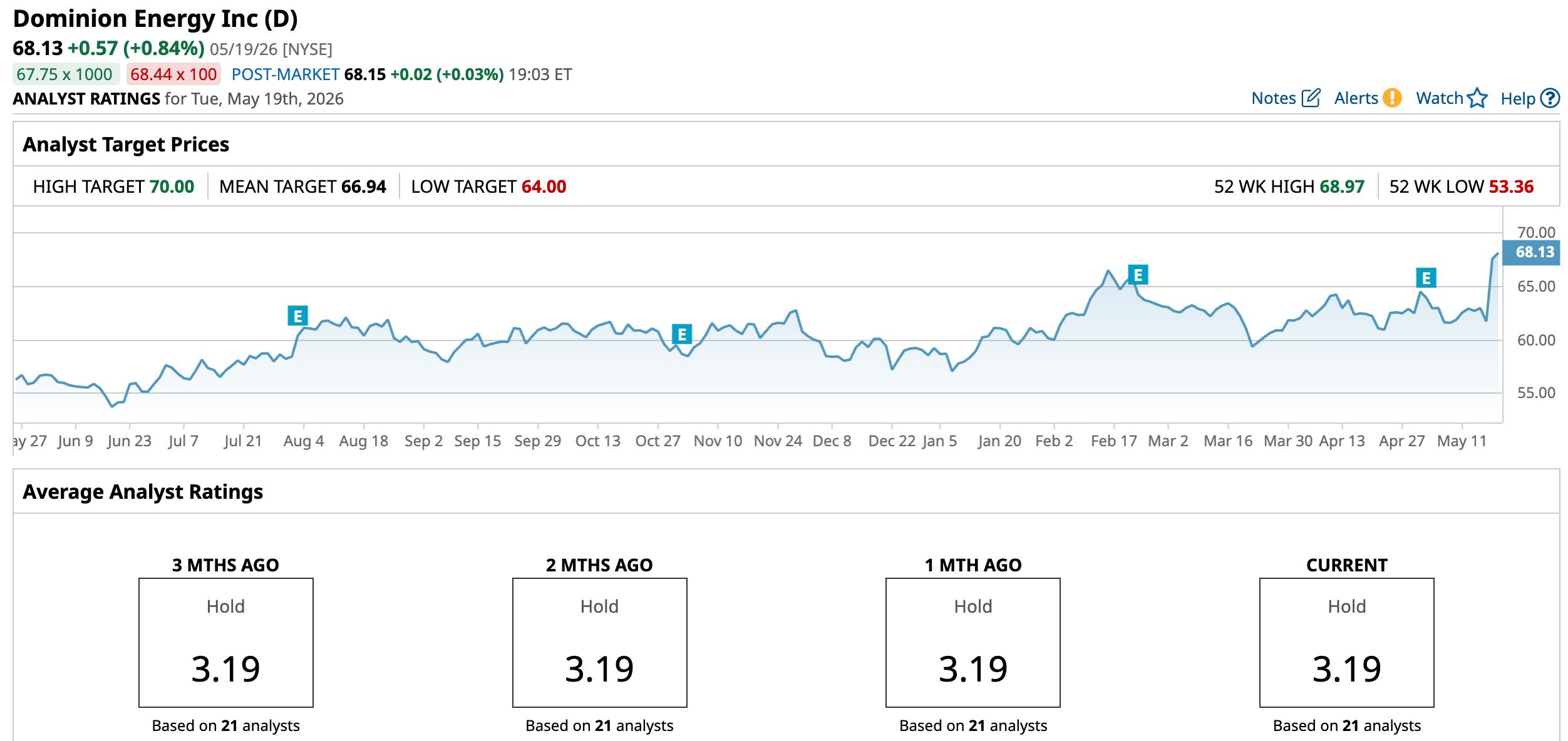
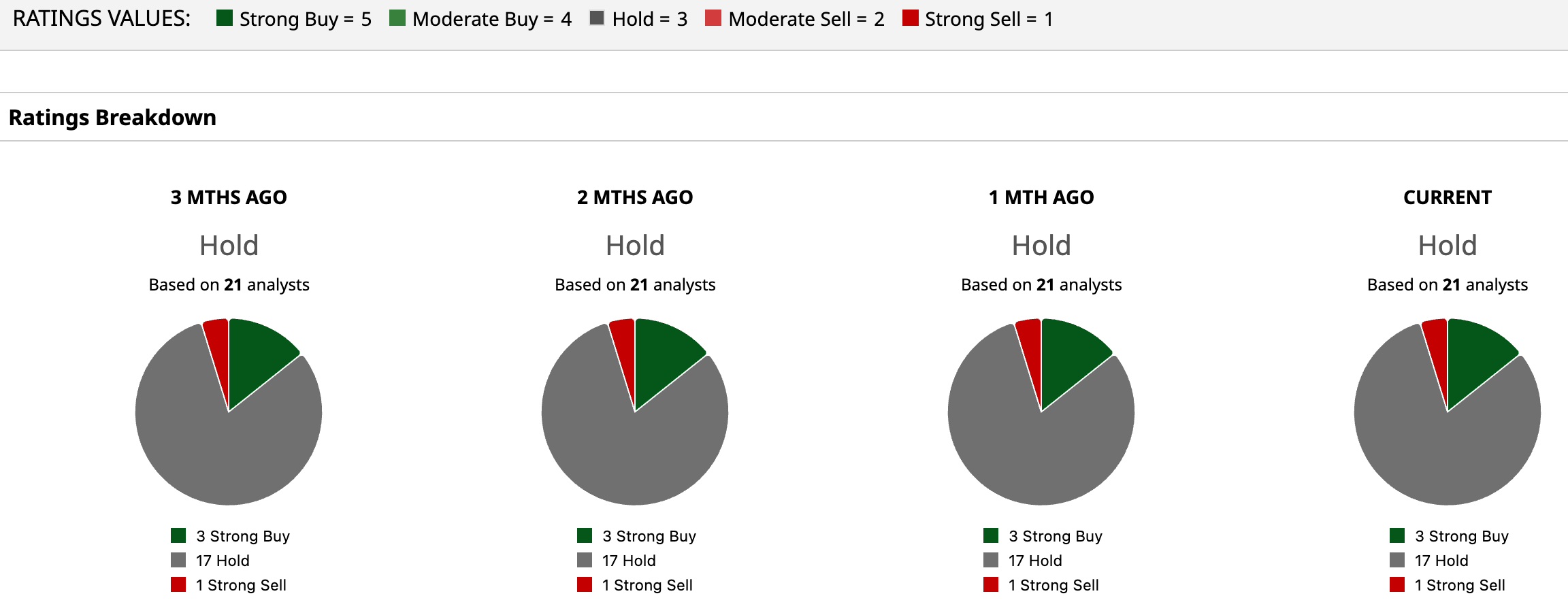
 For Dominion stock, on the other hand, analysts have attributed an overall rating of “Hold” with a mean target price of $66.94 which has already been surpassed. Out of 21 analysts covering the stock, three have a “Strong Buy” rating, 17 have a “Hold” rating, and one has a “Strong Sell” rating.
 www.barchart.com
  www.barchart.com
 On the date of publication, Pathikrit Bose did not have (either directly or indirectly) positions in any of the securities mentioned in this article. All information and data in this article is solely for informational purposes. For more information please view the Barchart Disclosure Policy here.
More news from Barchart
Dominion, NextEra Merge to Create a $67 Billion Electric Behemoth. History Tells Us This Is a Cautionary Tale. Were There Any Surprises in the Commodity Complex Pre-Dawn Wednesday? What is Backwardation in the Crude Oil Futures Market Telling Us? EagleRock Land Just Went Public at a $3 Billion Valuation. Take Your Time With EROK Stock Before Buying.