

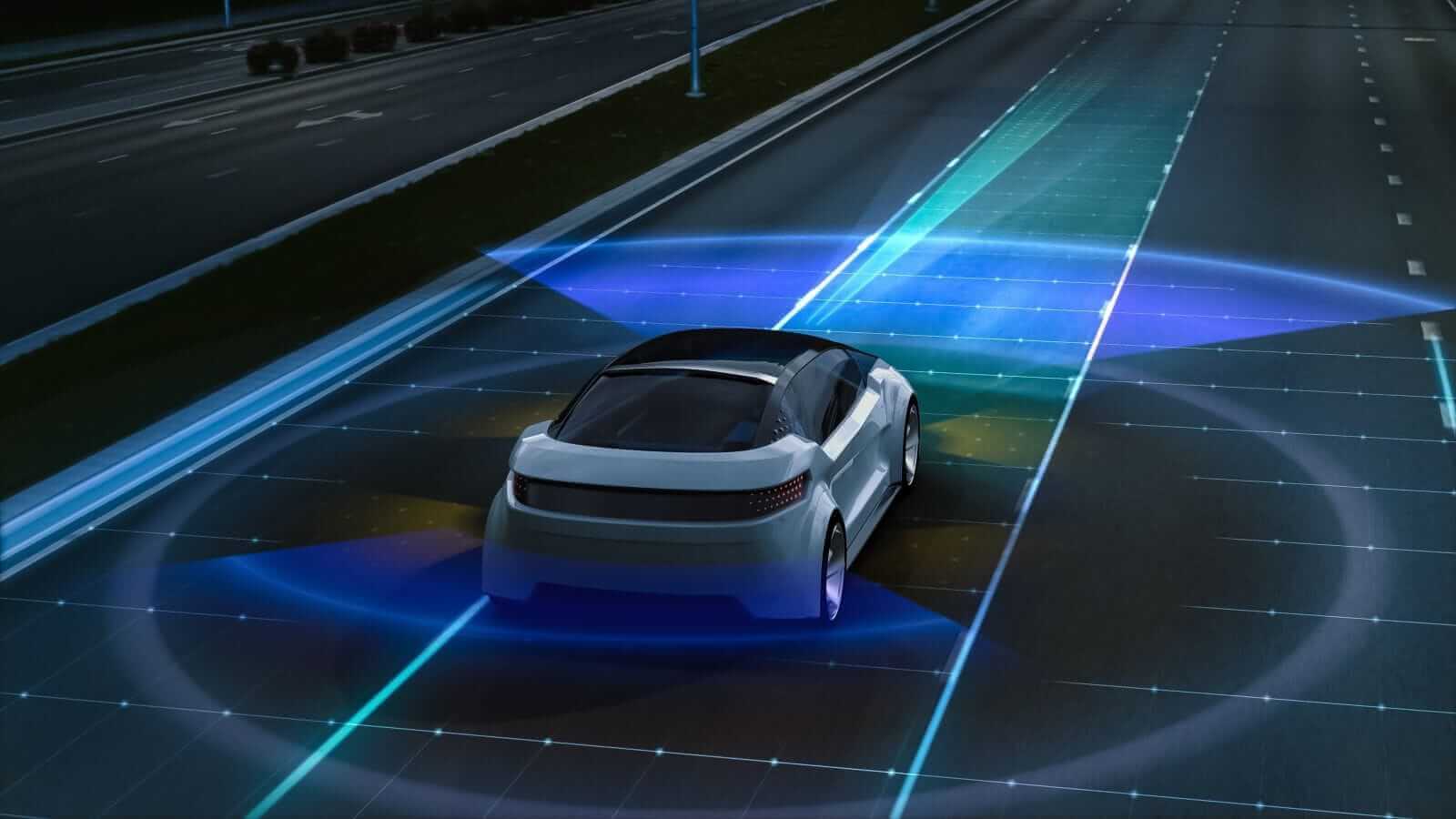
For years, the LiDAR (Light Detection and Ranging) investment story revolved around one idea: autonomous vehicles (AVs). Capital poured into the space through special purpose acquisition vehicles (SPACs) and early-stage listings, all tied to the long-dated promise of self-driving cars.
But the market has shifted – quietly at first, as it often does, and then all at once. Today, LiDAR is evolving into the core perception layer for robotics, drones, and physical AI systems, expanding far beyond automotive and creating a broader, more immediate set of investment opportunities in publicly traded markets.
More Top Stocks Daily: Go behind Wall Street’s hottest headlines with Barchart’s Active Investor newsletter.
The Inflection Point: Robotics Overtakes Automotive
The most important structural change in LiDAR is a shift in unit volume leadership.
Recent industry data shows that robotics-related LiDAR shipments now exceed automotive ADAS volumes, accounting for more than half of total units shipped and growing at triple- to quadruple-digit rates year-over-year.
This matters from an investment perspective because automotive remains a long-cycle, design-win-driven revenue stream, while robotics represents a high-volume, faster adoption curve.
For investors, this transition reframes LiDAR from a “future optionality” trade into a current-cycle growth theme tied to automation, logistics, and AI deployment in the physical world.
The Technology Shift: Cost Compression Meets Performance
The second major catalyst is technological.
Early LiDAR systems were expensive, mechanical, and difficult to scale. The transition toward solid-state architectures and FMCW (Frequency-Modulated Continuous Wave) technology has changed that dynamic, with systems now featuring:
Reduced size, weight, and power requirements Lower production costs enabling mass deployment Detection ranges exceeding 300 meters Integrated velocity tracking (4D LiDAR capabilities)This evolution is critical for robotics and drones, where form factor and efficiency constraints are non-negotiable.
Public companies leading this charge include those focused on digital LiDAR, MEMS-based scanning, and software-defined sensing. These are all areas where differentiation is increasingly shifting from hardware to data processing and perception software.
The Drone Economy: Expanding Use Cases
LiDAR’s role in drones has expanded well beyond mapping into active infrastructure and industrial applications, where the technology is now being applied across several key verticals.
Infrastructure & Energy ExpansionLiDAR-equipped drones are being used in power grid development, enabling both mapping and physical infrastructure deployment. With global electricity demand rising, particularly from AI data centers, this application is becoming a meaningful growth driver.
Precision Agriculture & ForestryLiDAR enables canopy penetration and terrain modeling that traditional imaging cannot replicate, allowing for precise measurement of biomass, soil conditions, and crop health.
Industrial Inspection & MiningIn hazardous or GPS-denied environments, LiDAR enables real-time mapping and navigation, unlocking automation in sectors that were previously inaccessible to drones.
How to Invest: John’s LiDAR Watchlist
From an investor’s standpoint, the LiDAR ecosystem can be considered as three primary categories:
#1. Pure-Play LiDAR Manufacturers (High Growth, High Volatility)
Companies in this category offer the most direct exposure to LiDAR adoption across automotive, robotics, and drones.
Hesai Group (HSAI): Vertically integrated, cost-focused manufacturer scaling across automotive and industrial markets RoboSense Technology (RBSTF): Dual exposure to automotive ADAS and rapidly growing robotics demand Ouster (OUST): Digital LiDAR architecture with expanding industrial footprint Innoviz Technologies (INVZ): Automotive-focused with established OEM partnerships Aeva Technologies (AEVA): Differentiated FMCW/4D LiDAR platform MicroVision (MVIS): MEMS-based systems targeting automotive and industrial autonomy AEye (LIDR): Software-defined LiDAR with adaptive sensing capabilitiesThese names provide investors with the most direct leverage to volume growth, but face pricing pressure and margin compression as hardware becomes increasingly commoditized.
#2. Industrial & Geospatial Leaders (Diversified, Lower Beta)
In this category, companies benefit from LiDAR adoption across infrastructure, construction, and mapping.
Trimble (TRMB): Exposure to agriculture, construction tech, and geospatial data ecosystems Hexagon AB (HXGBY): Global leader in precision measurement and mapping (via Leica Geosystems)For investors, these firms offer more stable revenue profiles, with LiDAR integrated into broader enterprise and infrastructure solutions.
#3. Semiconductor & Tier-1 Enablers (Picks-and-Shovels)
Finally, these companies provide the underlying components and systems that power LiDAR ecosystems.
Analog Devices (ADI): Signal processing and sensing components critical to LiDAR performance Valeo (FR.FP): Early mover in automotive-grade LiDAR deployment Continental AG (CON.D.DX): Sensor fusion and automotive electronics integrationInvestors will find that these names represent indirect exposure with stronger margins, benefiting regardless of which LiDAR architecture or vendor ultimately dominates.
Get John’s LiDAR Watchlist
Risks: Growth Comes With Friction
Despite strong demand trends, the sector faces several challenges. Investors should consider these risks before proceeding.
Margin Compression: Increasing competition is pushing hardware pricing lower Supply Chain Complexity: Optical components and semiconductors remain globally fragmented Tariffs & Trade Dynamics: Geopolitical factors are influencing cost structures and regional deployment Crowded Competitive Landscape: Not all early entrants will survive consolidationThe Bottom Line: From Optionality to Infrastructure
LiDAR is no longer just a bet on autonomous driving. It’s becoming a foundational technology for machines interacting with the physical world.
The key difference investors need to remember is this one:
Automotive LiDAR (then) = long-term optionality Robotics and drones (now) = near-term demand and scaling volumeFor investors, the opportunity lies in identifying where LiDAR transitions from a component into mission-critical infrastructure, and then aligning with those companies that are best positioned to scale alongside that shift – bearing in mind your personal risk tolerance, time frames, and investing goals, as always.
Footnote: Private Market Context
One last thing: Several influential players in robotics and drone deployment remain private or are not directly investable, including Boston Dynamics, DJI, Flyability, and Infravision. While they are important drivers of LiDAR demand, public market exposure is best captured through the suppliers, component makers, and system integrators outlined above.
– John Rowland, CMT, is Barchart’s Senior Market Strategist and host of Market on Close.
On the date of publication, Barchart Insights did not have (either directly or indirectly) positions in any of the securities mentioned in this article. All information and data in this article is solely for informational purposes. For more information please view the Barchart Disclosure Policy here.
More news from Barchart
Robots, Drones, and Physical AI: How to Invest in LiDAR’s Second Act WIX Stock Alert: What to Know About the Latest Layoffs at Wix Qualcomm Stock Just Hit New Record Highs. Investors Can Thank a ByteDance Deal. ARM Stock Is Valued for Eternity, But Silicon Has an Expiration Date