

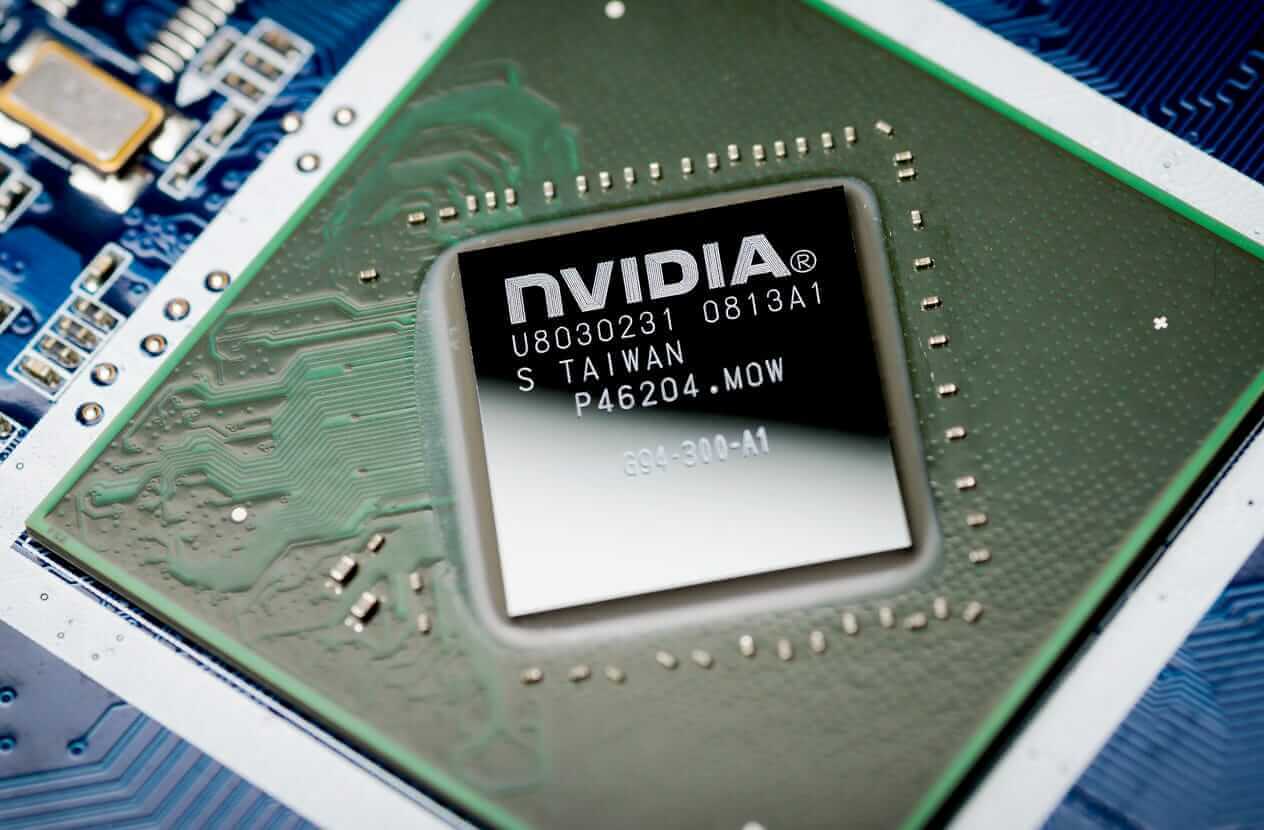
Nvidia (NVDA) is a tech giant that makes graphics processing units (GPUs) that power much of the world's AI. The company's portfolio of data center products is in high demand, allowing the chipmaker to benefit from elevated profit margins.
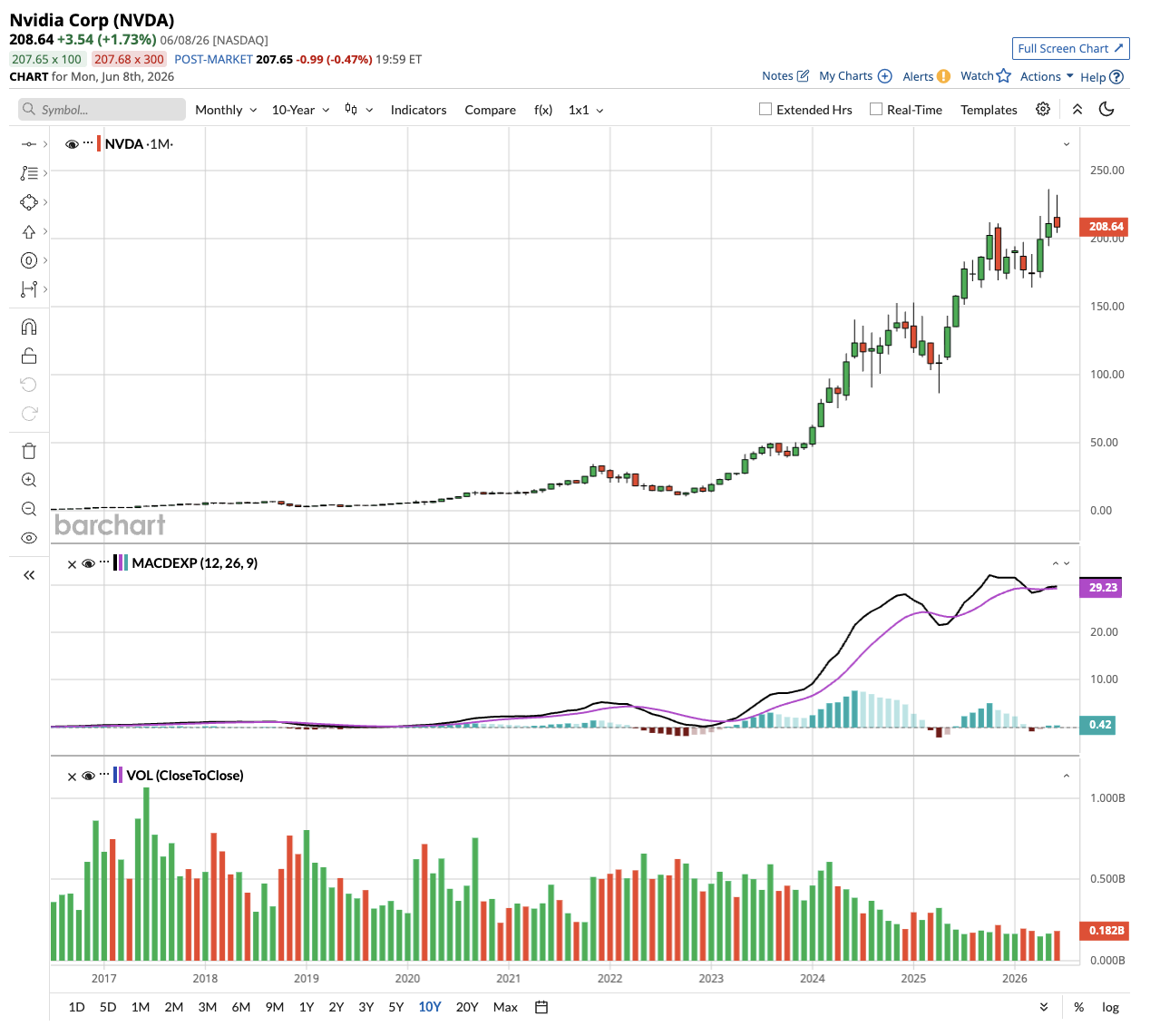
Now valued at a market capitalization of more than $5 trillion, NVDA stock has returned more than 1,000% in the last five years, easily crushing broader market returns. However, the growth story for the world’s most valuable company is far from over. Let’s take a closer look.
More Top Stocks Daily: Go behind Wall Street’s hottest headlines with Barchart’s Active Investor newsletter.
 www.barchart.com
Why Nvidia's AI Chip Supply Chain Is Key
Modern AI runs on massive data centers packed with specialized chips, and Nvidia builds the GPUs that train and run these models. The company recently topped $215 billion in annual revenue, which was more than 65% higher year-over-year (YOY).
Two things are driving the growth. First, the big cloud companies — what the industry calls hyperscalers — keep pouring money into AI infrastructure. Second, a new wave of so-called AI clouds are building out data centers to serve businesses, industries, and even entire countries.
Nvidia CFO Colette Kress described this split at the Bank of America 2026 Global Technology Conference. Kress said roughly half of data center revenue comes from hyperscalers, with the other half coming from AI-focused clouds, which she called one of the fastest-growing parts of the business.
Kress also explained why customers keep choosing Nvidia over cheaper custom chips known as ASICs. "It does take a full end-to-end data system," Kress said at the conference. A single fixed chip, she argued, cannot adapt the way Nvidia's full platform can.
In short, the demand is real, the buildout is enormous, and Nvidia is the main supplier. That is the backdrop for what Wedbush just flagged.
Wedbush Flags Nvidia Blackwell Shortage as AI Demand Surges
Nvidia continues to see strong demand for its Grace Blackwell systems, including the GB300 and B300 accelerators, which Wedbush has been told are getting harder to source.
What makes this notable is the timing. "We do not recall availability issues this late in an NVDA accelerator cycle since Ampere/Hopper, a result that […] suggests demand is lifting at a more rapid pace than previously expected," wrote Wedbush analysts Matt Bryson and Antoine Legault.
The supply of chips generally normalizes as the product cycle matures. So, the fact that these accelerators are reportedly getting harder to source suggests demand is much higher than estimates. Building AI systems requires huge amounts of DRAM and high-bandwidth memory (HBM), and that supply is tight across the industry.
Notably, Wedbush argued that Nvidia is “the best situated of the entire technology ecosystem in terms of current supply chain positioning.” Nvidia locked up DRAM and HBM supply for 2026 ahead of rivals and has likely done the same for 2027, according to analysts.
Wedbush maintained an “Outperform” rating on NVDA stock with a $330 price target. Currently, NVDA stock trades closer to $202 per share.
That confidence lines up with what Nvidia's own finance chief told investors. Kress said the company holds about $124 billion in purchase commitments and has spent years working with suppliers to lock in capacity.
What the Memory Crunch Means for the Broader AI Trade
The supply story does not stop at Nvidia. Wedbush expects the memory shortage to impact other companies, pointing to Everpure (P) as one way investors could play rising NAND and DRAM prices.
Memory pricing has already jumped 70% and may climb further as the year goes on, according to Wedbush. The firm believes Everpure will benefit because it uses both less memory and cheaper memory than rivals, which helps in a higher-priced environment. Wedbush has an “Outperform” rating on P stock with a $105 price target.
When a top product is hard to buy this deep into its cycle, that is a sign of robust demand. Nvidia Senior Vice President of Marketing, Gilad Shainer, made a similar point about how tightly these systems are built. Speaking at TD Cowen's technology conference on May 28, Shainer said that Nvidia designs an entire AI factory as "a single unit of computing," then sells the pieces individually. That deep integration is hard for rivals to copy quickly.
Alternatively, supply shortages can ease, demand can cool, and prices already reflect a lot of optimism. Memory constraints could also slow shipments in the near term.
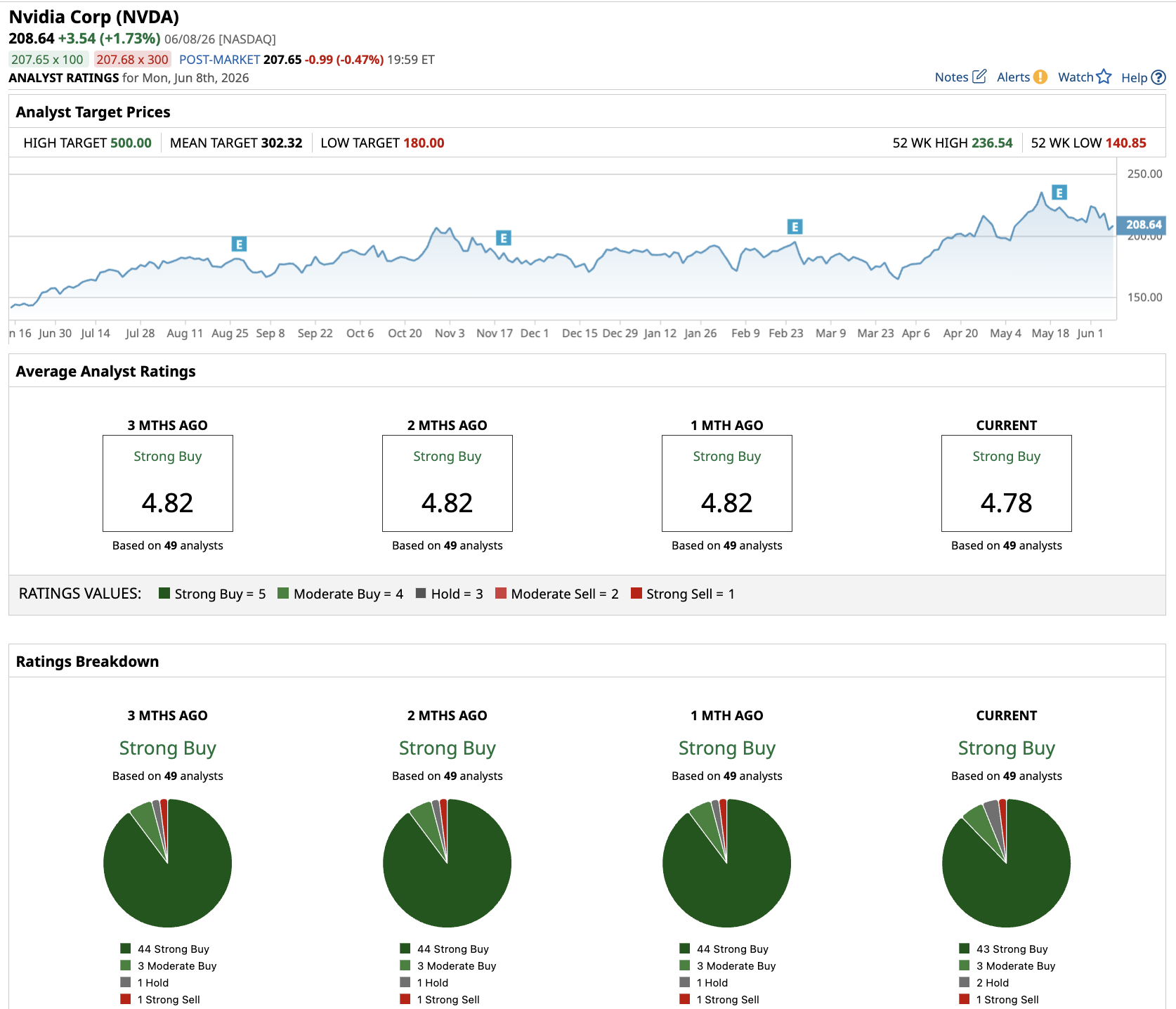
Out of the 49 analysts covering NVDA stock, 43 recommend a “Strong Buy,” three recommend a “Moderate Buy” rating, two recommend a “Hold,” and one analyst recommends a “Strong Sell” rating. The average price target of $303.71 implies potential upside of 52% from current levels.
 www.barchart.com
 On the date of publication, Aditya Raghunath did not have (either directly or indirectly) positions in any of the securities mentioned in this article. All information and data in this article is solely for informational purposes. For more information please view the Barchart Disclosure Policy here.
More news from Barchart
Wedbush Says Nvidia Blackwell Demand Spikes Amid Tight Tech Supply A $550 Billion Reason to Buy Cerebras Stock SpaceX IPO Demand Is Huge. That May Be The Warning. Dear Marvell Technology Stock Fans, Mark Your Calendars for June 22