

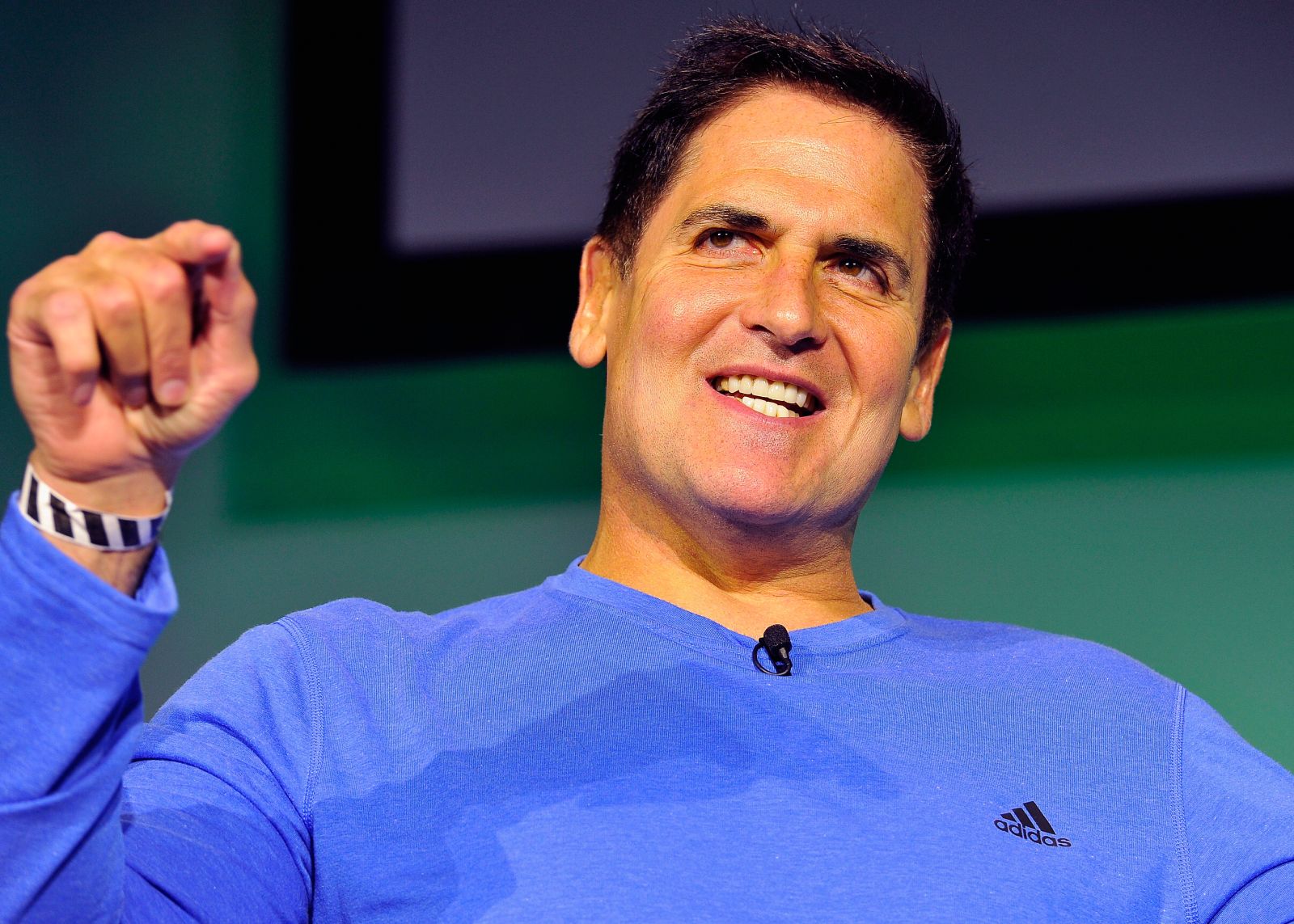
In a recent social media exchange, billionaire entrepreneur and healthcare reform advocate Mark Cuban discussed some of the complex, multilayered issues that are preventing major U.S. corporations from cutting insurance costs on an individual basis.
Responding to a user who asked why even “sophisticated” businesses seem to “ignore” this massive line item on their balance sheet, Cuban cited factors such as understaffed HR departments, healthcare continuity concerns, and a lack of C-suite knowledge about healthcare cost reporting requirements, such as the Form 5500.
Join 200K+ Subscribers: Find out why the midday Barchart Brief newsletter is a must-read for thousands daily.
However, Cuban’s Twitter post suggests that a quick workaround for maxed-out CEOs could be just one quick chatbot prompt away.
Mark Cuban’s Quick Healthcare Hack for Busy CEOs
After enumerating the various challenges and operational layers that can lead to “lack of change,” Cuban then proposed a simple solution in this extended X post:
What I told a ceo today ? Take a off of all of your healthcare contracts and put it in your Claude, ChatGPT, grok, Gemini, whatever and use this prompt
“Where are they ripping me off “
They are always shocked.
At least, it seems like a simple solution – and it carries the authority of billionaire businessman Mark Cuban, founder of Cost Plus Drug Company.
But is feeding your company’s confidential healthcare and insurance information into a platform like Claude, Google’s (GOOG) (GOOGL) Gemini, or SpaceX (SPCX) unit Grok really a time-saving hack… or is it the start of a wider HR headache?
Grok, Is This True?
Cuban's advocacy for using ChatGPT and similar chatbots to analyze healthcare contracts and identify corporate spending waste represents a provocative intersection of artificial intelligence (AI) capabilities and executive decision-making that deserves careful scrutiny.
The proposition taps into a broader trend of business leaders exploring AI as a tool for cost containment and operational efficiency, particularly in the notoriously opaque healthcare spending arena where contracts often contain buried inefficiencies and unfavorable terms.
The fundamental appeal of Cuban's suggestion is clear: healthcare spending represents one of the largest line items for most corporations, and contracts in this space are dense, jargon-heavy documents that few executives have time to parse thoroughly.
AI tools like ChatGPT excel precisely at digesting large volumes of complex text, identifying patterns, and surfacing anomalies that human reviewers might miss due to time constraints or fatigue. For busy CEOs managing dozens of competing priorities, the idea of deploying AI to flag potential waste in these contracts is intuitively attractive.
However, the limitations of relying on AI for such consequential financial analysis are substantial and well-documented. Financial experts consistently emphasize that AI tools produce confident-sounding outputs that may lack the contextual judgment required for high-stakes business decisions.
To that point, the technology cannot account for the full picture of a company's relationships with healthcare providers, negotiating history, regulatory constraints, or strategic priorities that inform contract structures. Information generated by AI is fundamentally different from the judgment needed to act on that information in a corporate healthcare context.
Additional Risks to Consider with ‘Dr. Claude’
Research demonstrates that AI outputs can vary significantly depending on how questions are framed, and the same query posed at different times may yield different conclusions. This variance problem is particularly dangerous in contract analysis, as Cuban suggests in his tweet – where a misidentified clause or misunderstood provision could lead to costly renegotiation errors or damaged vendor relationships.
Given that, CEOs who treat AI analysis as definitive rather than preliminary risk making decisions based on incomplete or inconsistent interpretations.
The most prudent approach for executives appears to be using AI as an accelerant for initial contract review rather than a replacement for expert human analysis. It’s true that AI can serve as a powerful screening tool that identifies areas warranting deeper investigation by healthcare procurement specialists, benefits consultants, or legal teams who understand the nuances of provider networks, formulary structures, and regulatory compliance.
However, the technology simply changes where the real analytical work happens, rather than eliminating the need for that work entirely.
Final Points to Consider Before ChatGPTing It
Corporate leaders exploring Cuban’s DIY approach to chatbot-led healthcare review should also consider the legal and fiduciary implications of relying on AI-generated contract analysis.
Businesses remain legally responsible for decisions made based on AI outputs, and fine-print contractual terms require expert interpretation that current language models cannot reliably provide.
Plus, the healthcare sector's regulatory complexity adds another layer of risk that automated tools may not adequately navigate without human oversight.
For CEOs genuinely committed to reducing healthcare spending waste, the optimal strategy likely combines AI's speed and pattern-recognition capabilities with human expertise in negotiation, compliance, and strategic relationship management.
As usual, the nuance is quite a bit more shaded than what can be captured in a single tweet, although Cuban’s cage-rattling continues to be an interesting conversation-starter in the national conversation on insurance costs.
This article was created with the support of automated content tools from our partners at Sigma.AI. Together, our financial data and AI solutions help us to deliver more informed market headline analysis to readers faster than ever.
On the date of publication, Sarah Holzmann did not have (either directly or indirectly) positions in any of the securities mentioned in this article. All information and data in this article is solely for informational purposes. For more information please view the Barchart Disclosure Policy here.