

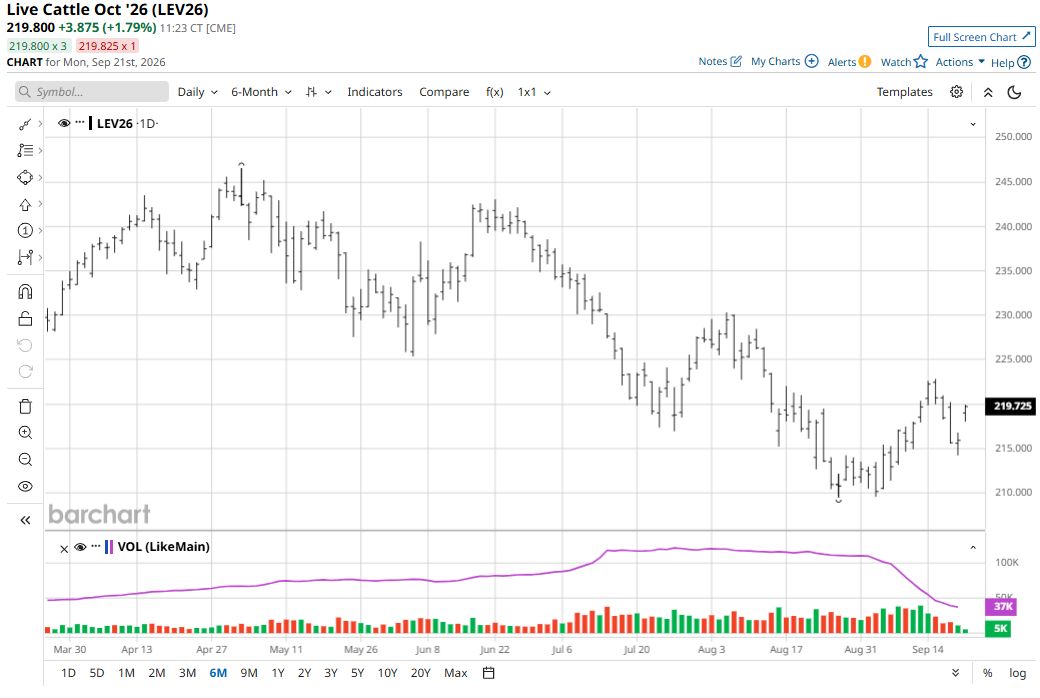
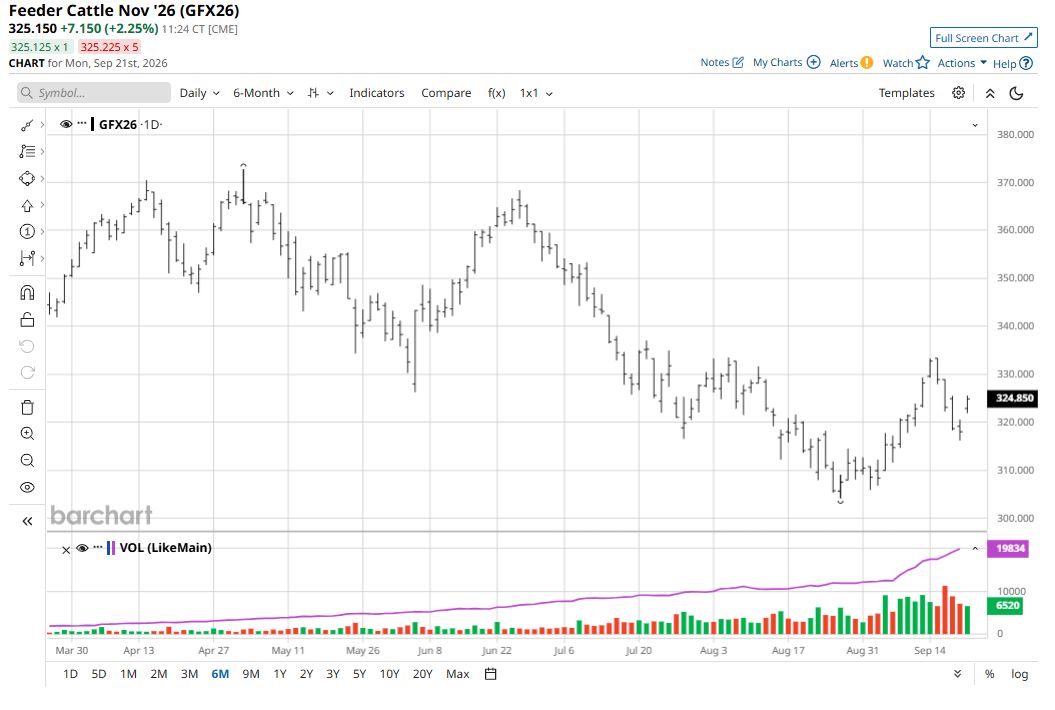
October live cattle (LEV26) futures on Friday rose $0.275 to $215.925 and for the week were down $3.75. November feeder cattle (GFX26) futures lost $0.65 to $318.00 and for the week were down $10.175. The cattle futures bears were in command last week, including a technically bearish weekly low close in November feeders on Friday. The near-term technical postures for both markets have deteriorated over the past few weeks, which has the speculative bulls mostly standing on the sidelines.
However, the cattle bulls did get some good news late Friday afternoon.
Don’t Miss a Day: From crude oil to coffee, sign up free for Barchart’s best-in-class commodity analysis.
The USDA’s monthly cattle-on-feed report showed cattle and calves on feed for the slaughter market in the U.S. for feedlots with capacity of 1,000 or more head totaled 11.2 million head on Sept. 1. The inventory was 1% above Sept. 1, 2025. Placements in feedlots during August totaled 1.62 million head, 9% below 2025. Net placements were 1.57 million head. Placements were the lowest for August since the series began in 1996. During August, placements of cattle and calves weighing less than 600 pounds were 320,000 head, 600-699 pounds were 240,000 head, 700-799 pounds were 355,000 head, 800-899 pounds were 387,000 head, 900-999 pounds were 230,000 head, and 1,000 pounds and greater were 85,000 head. Marketings of fed cattle during August totaled 1.52 million head, 3% below 2025. Marketings were the lowest for August since the series began in 1996. Other disappearances totaled 52,000 head during August, 2% above 2025. The report did favor the bullish camp of cattle futures traders. However, it can be argued the report contained no major surprises.
 www.barchart.com
 www.barchart.com
The USDA at midday Friday reported more active cash cattle trading late last week, with steers averaging $222.17 and heifers $222.32. The agency reported average cash cattle trading the week prior was $222.82.
On the bearish side for cattle futures, uninspiring boxed beef trade has failed to keep pace with firmer cash cattle prices, leaving packer demand questionable and prompting futures traders to take a more bearish lean. Rising input costs, especially record-high diesel and higher interest rates, are also weighing on producer margins and on bids for replacement cattle. As near-term supplies remain tight, traders will continue to weigh beef import numbers and consumer demand.
Meantime, the stock and financial markets have trended sideways to lower over the past month. September and October are historically the two most turbulent months of the year for stock and financial markets. Any bigger setbacks in the stock indexes would likely dent consumer confidence, which may produce less demand for beef at the meat counter. Last week’s FOMC interest rate hike and recent inflation readings that are still running warm are not good developments for better consumer confidence. Also, demand for beef could also be crimped with gasoline prices averaging around $4.25 a gallon, or more, at the pumps.
Lean Hog Futures See Another Train-Wreck
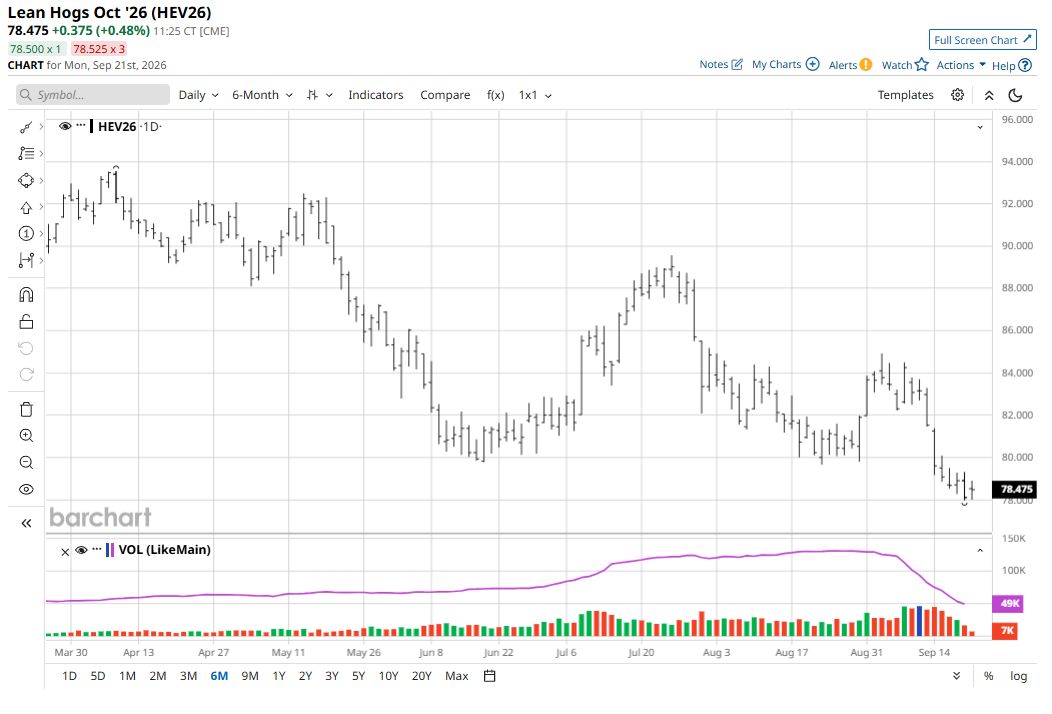
October lean hog (HEV26) futures on Friday fell $0.80 to $78.10, hit a 15-month low, and for the week were down $3.425. The hog futures market saw another dreadful week, including Friday’s technically bearish weekly low close. Recent heavy profit-taking and weak long liquidation from the shorter-term speculative traders have the bulls running for cover. The selloffs in the cattle futures markets last week are also bearish for hog futures.
 www.barchart.com
The latest CME lean hog index is down 79 cents to $85.02. Today’s projected CME index price is down $1.00 at $84.02. The national direct five-day rolling average cash hog price quote for Friday was $84.14.
Lean hog futures have fallen to their lowest level in more than a year as wholesale pork values dropped to multi-year lows. The CME cash hog index also slid to a seven-month low. Hog slaughter has outpaced year-ago levels and average hog weights have edged higher, leaving the market with ample pork supplies. Meanwhile, ample chicken supplies have provided consumers with a cheaper alternative protein source at the meat counter.
U.S. pork exports remain a bright spot for the industry but have not been strong enough to stabilize cash and futures prices in the near term. Bullish hog traders can still argue that historically elevated retail beef prices at the mean better substitution demand for pork, especially with retail gasoline prices rising above $4.25 a gallon and the Federal Reserve raising interest rates last week, both of which could sap consumer confidence and prompt better demand for more economical pork cuts at the meat counter.
Let me know what you think. I enjoy hearing from my valued Barchart readers all around the globe. Email me at jim@jimwyckoff.com.
On the date of publication, Jim Wyckoff did not have (either directly or indirectly) positions in any of the securities mentioned in this article. All information and data in this article is solely for informational purposes. For more information please view the Barchart Disclosure Policy here.
More news from Barchart
Livestock Futures Bears Are Growling with Lean Hog Prices Leading the Downside High Beef Prices and High-Protein Diets Create This Bullish Trade in Lean Hogs Now Bulls Are Working to Forge Bottoms in Cattle and Hog Prices Lean Hog Prices Are Rebounding. How to Trade Them Here.