


The U.S. homebuilding market has had a tough 2026, and Lennar (LEN) has felt the pressure. Mortgage rates near 7% have kept many buyers on the sidelines. At the same time, slower demand, lower average selling prices, and heavier use of buyer incentives have hurt Lennar’s margins.
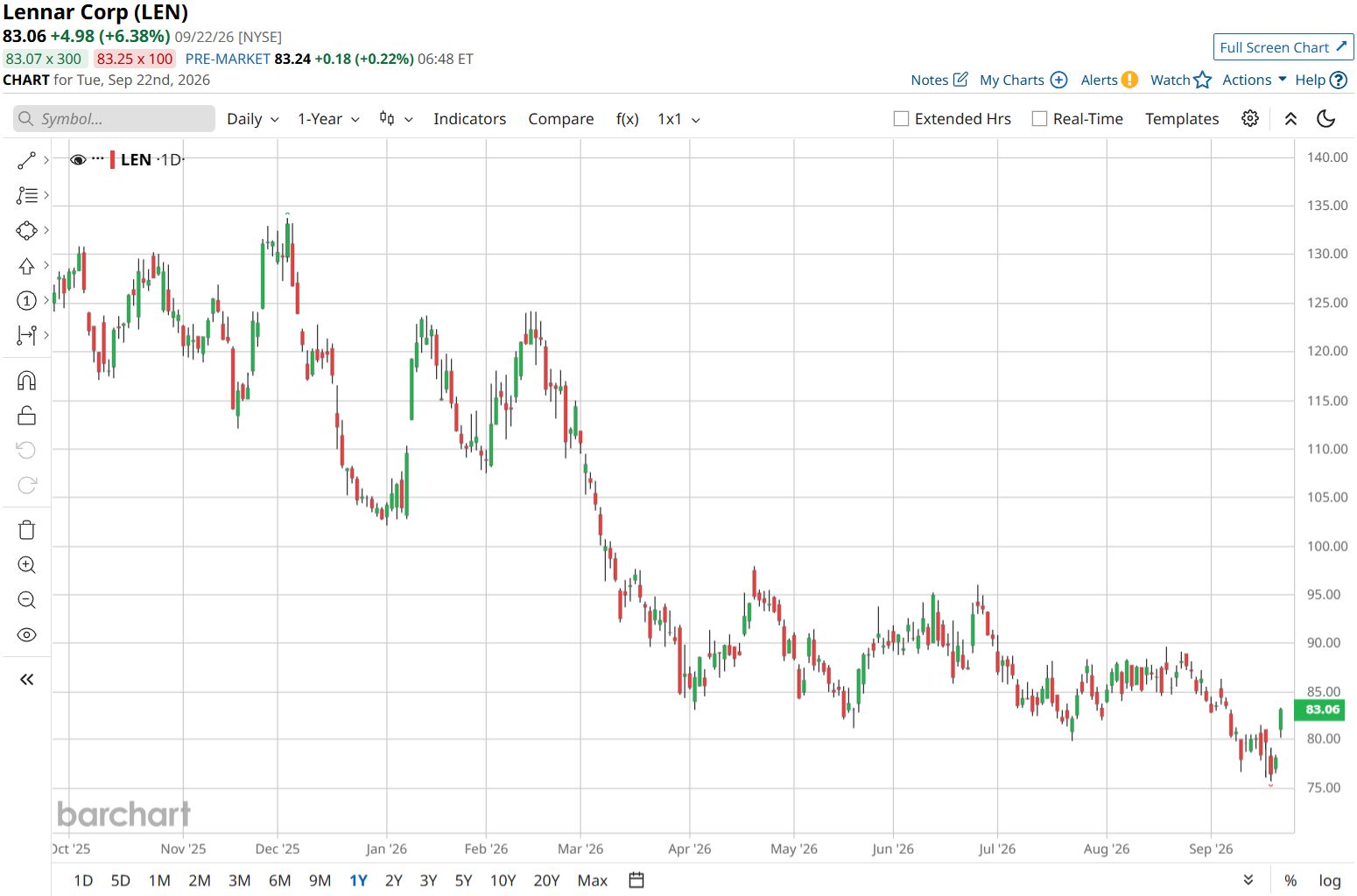
Analyst downgrades have also added to the negative mood around LEN stock. Lennar started the year near $102 per share but has fallen about 20% to roughly $81 per share, or roughly 39% below its 52-week high of $133.76.
More Top Stocks Daily: Go behind Wall Street’s hottest headlines with Barchart’s Active Investor newsletter.
That is why the stock's late September move stands out. Lennar shares climbed more than 6% on Sept. 22 after Berkshire Hathaway (BRK.A) disclosed a $212.38 million purchase, adding to its existing stake of about $1.2 billion. The purchase became public because Berkshire crossed the 10% ownership threshold, requiring it to report changes in its Lennar holdings to the U.S. Securities and Exchange Commission (SEC).
Is Berkshire Hathaway spotting long-term value that other investors have overlooked? Let’s take a closer look.
 www.barchart.com
 A Closer Look at Berkshire’s Bet
Berkshire Hathaway was already a Lennar shareholder, so this was not a new bet. In the second quarter of 2026, Berkshire raised its combined stake in Lennar’s two share classes by nearly 30%, to 13.4 million shares worth about $1.2 billion at the time. Still, the position made up only about 0.4% of Berkshire Hathaway’s portfolio, so it was far from one of its biggest holdings.
Berkshire Hathaway later bought about 2.74 million more Lennar shares. The purchase was valued at $212.38 million, adding to its roughly $1.2 billion position. The purchase became public after Berkshire crossed the 10% ownership mark, which means it must report future changes in its Lennar stake to the SEC instead of waiting for its next quarterly 13F filing.
Lennar shares rose about 6% on the news, as investors took Berkshire Hathaway’s buying as a positive sign. But the position is still small compared with Berkshire’s overall portfolio. It shows more confidence in Lennar’s long-term value, but it does not solve the company’s near-term problems with housing demand and profit margins.
Can Lennar Sustain Its Momentum?
Lennar’s latest results show why Berkshire’s purchase does not fix its near-term problems. Revenue fell 9% to $8.05 billion in the third quarter, while net income dropped to $284 million, or $1.19 per share, from $591 million a year earlier, or $2.29 per share. Deliveries slipped 3% to 20,840 homes, while new orders fell 9% to 20,879. The company's backlog stood at 16,857 homes worth $6.3 billion. Lower home prices and higher land costs also pushed its home-sales gross margin down to 15.8% from 17.5%. Lennar now expects 80,000 to 81,000 deliveries for the full year, down from its earlier forecast of 82,000 to 83,000.
There were some positives, though. Lennar’s even-flow approach, which keeps homes moving through construction and sales at a steady pace, helped cut construction costs per square foot by 6% year-over-year (YOY). Build time also improved to a record 116 days. Lennar owned less than 2.5% of its roughly 488,000 controlled homesites, limiting the cash it has tied up in land. The firm's deal with Millrose Properties (MRP) supports that setup. Millrose received $567 million from Lennar homesite sales in Q2 and put $566 million back into land purchases and development. That arrangement could help Lennar keep its land costs and risk lower if demand picks up later this year.
Analysts See Opportunity and Housing Risks
Lennar’s next earnings report is set for Dec. 15, 2026. For the quarter ending in November, analysts expect earnings of $1.45 per share, down 29% from $2.03 a year ago. For the full fiscal year, EPS is expected to drop 40% to $4.85 from $8.06 per share.
Wall Street’s mood matches that caution. Bank of America recently kept its “Underperform” rating on LEN stock and cut its price target from $77 to $70, pointing to continued weakness in the company’s return on tangible equity. Wells Fargo held its “Equal-Weight” rating but trimmed its target from $85 to $80, while Truist kept its “Hold” rating and lowered its target from $90 to $80.
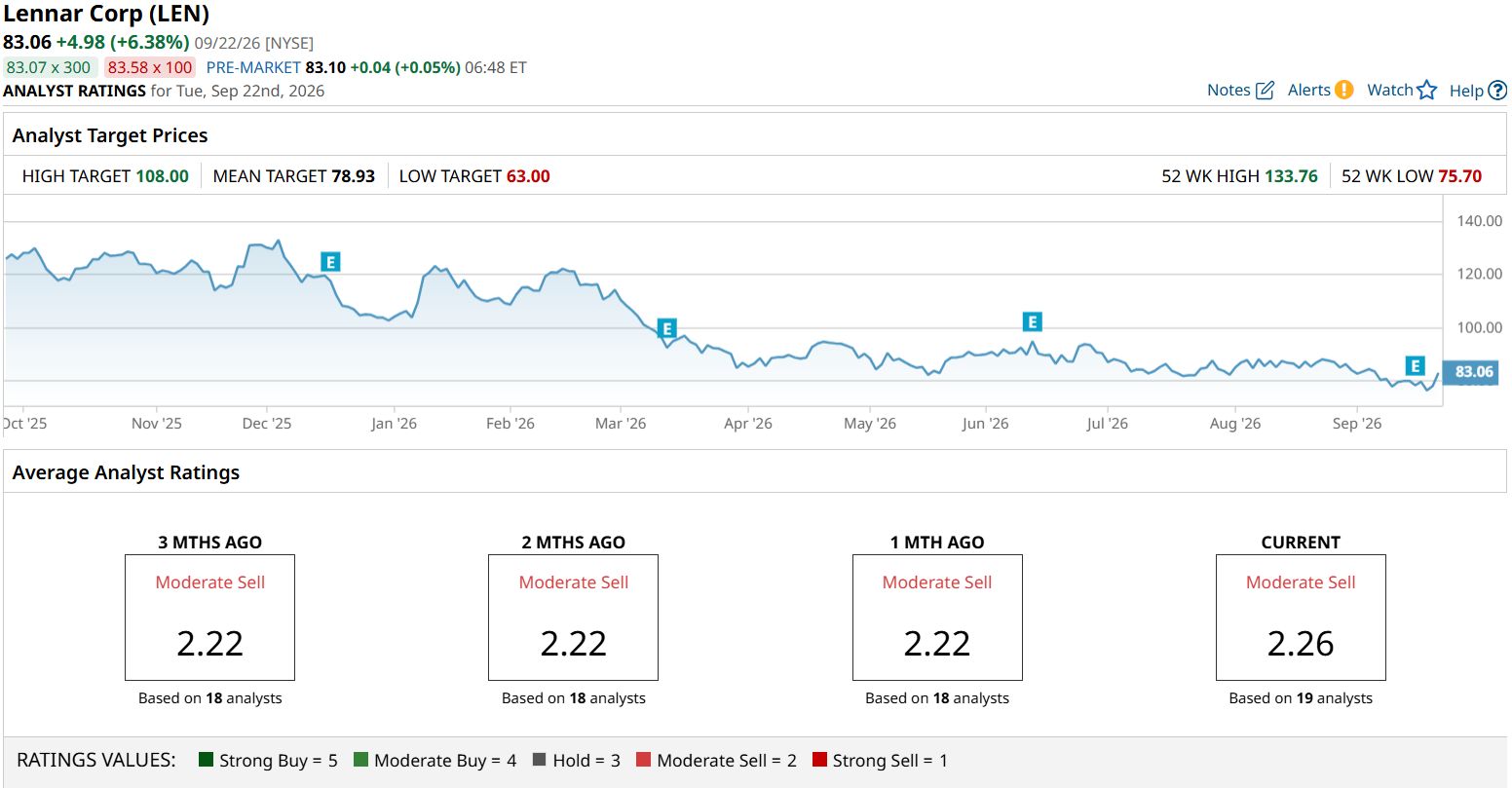
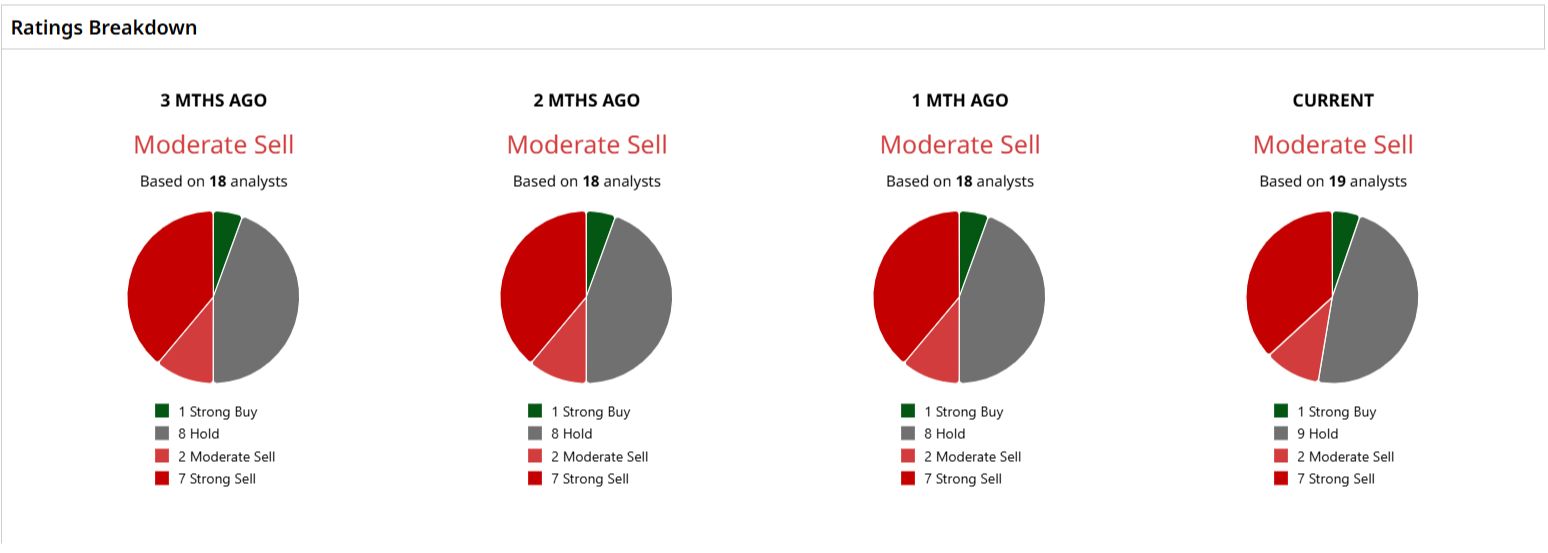
Overall, Lennar stock has a consensus “Moderate Sell” rating on Wall Street. The average price target of $78.93 represents potential downside of 3% from current levels.
 www.barchart.com
  www.barchart.com
 Conclusion
Berkshire Hathaway’s larger Lennar stake is a meaningful vote of confidence, but it does not suddenly remove the pressures facing the business. Lennar is still dealing with weak affordability, softer orders, lower selling prices, and margin pressure, while Wall Street remains cautious. Its leaner land strategy and cost improvements give it a better chance of emerging stronger when housing demand recovers, but that recovery likely depends on mortgage rates moving lower.
On the date of publication, Ebube Jones did not have (either directly or indirectly) positions in any of the securities mentioned in this article. All information and data in this article is solely for informational purposes. For more information please view the Barchart Disclosure Policy here.
More news from Barchart
PYPL Stock Alert: What to Know as PayPal Takeover Rumors Restart How to Play VRT Stock as Vertiv Acquires King Environmental Services Unusual Options Activity in Microsoft Stock Is Already Paying Off (and 3 Other Stocks to Watch) Ford Is Expected to Lose Market Share in Q3. Don’t Panic-Sell F Stock on the News.