

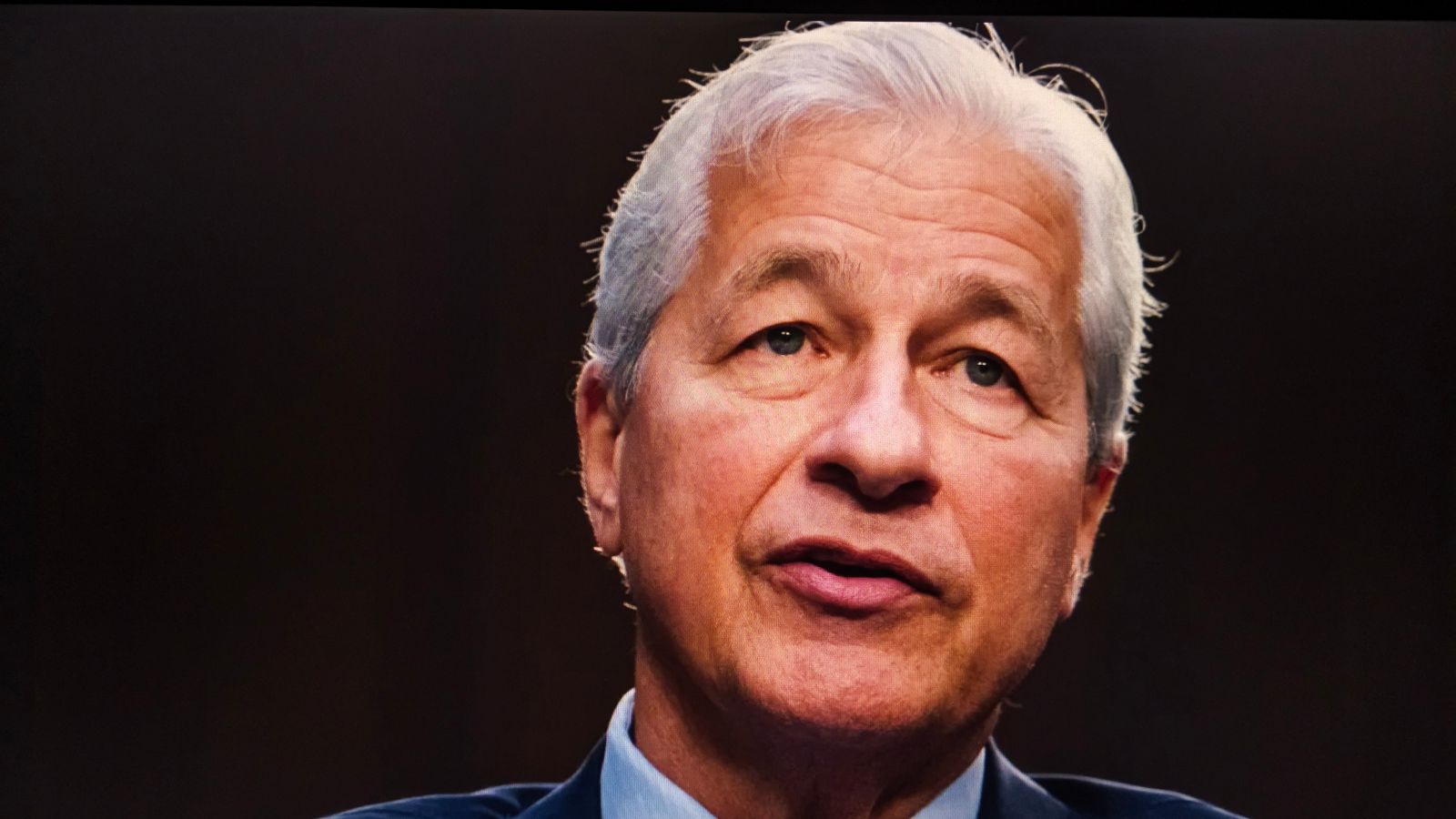
Jamie Dimon, the longtime chief executive of JPMorgan Chase (JPM), published a sweeping proposal on September 29, 2026, in the Wall Street Journal for a comprehensive US-Europe free trade agreement — one that conditions American market access on Europe completing deep structural reforms to its capital markets, banking system, and defense infrastructure.
The proposal represents a striking counterpoint to the Trump administration's protectionist tariff strategy, effectively reframing trade liberalization not as a concession but as a strategic lever to force allied nations into becoming more competitive and militarily credible partners.
Can’t Get Enough Options?: Join the list for Barchart’s daily unusual options report, delivered free.
Dimon's Grand Bargain Comes With Conditions
At the core of the plan is a requirement that Europe complete its long-stalled Capital Markets Union and Banking Union, implement the recommendations of the Draghi report on competitiveness, and meaningfully strengthen its defense, manufacturing, and energy independence before receiving the benefits of a comprehensive trade pact.
Dimon has repeatedly warned European leaders — most notably at an event in Ireland last year — that their continent is losing ground to both the United States and Asia in generating globally competitive companies and mobilizing capital efficiently. The bluntness of that critique now serves as the intellectual foundation for a formal policy proposal that would tie trade access to measurable economic reform.
A Direct Challenge to Washington's Tariff Playbook
The proposal stands in notable contrast to the current trajectory of US trade policy, which has pursued a more protectionist approach through tariffs and aggressive negotiating tactics that have deteriorated relationships with major trading partners, including the European Union and Canada.
Dimon positions liberalization as a strategic incentive rather than a giveaway, arguing that a reformed Europe capable of scaling innovative companies, consolidating defense production, and reducing strategic dependencies would become a far more capable security and economic partner for the United States. He frames the agreement explicitly as a mechanism to bind Western democracies together economically in the face of geopolitical competition — particularly from Beijing.
Beyond Europe: A Democratic Trade Bloc
Dimon's vision extends well beyond the transatlantic corridor, suggesting the agreement could eventually encompass Canada, Mexico, Japan, South Korea, Australia, and the Philippines — effectively creating a broad democratic trade bloc capable of setting global rules. He argues that many of the current disputes between the US and Europe are minor relative to the potential benefits of such a comprehensive pact, a framing that implicitly minimizes the significance of the tariff battles that have dominated headlines.
Seamless trade ties among allied democracies would, in his view, allow the West to present a unified front against authoritarian regimes while locking in economic advantages for a generation.
The Counterpoint: Can Reform Precede the Deal?
However, Dimon's proposal carries a fundamental tension. It asks Europe to undertake politically painful structural reforms as a precondition for a deal, when the economic incentive of guaranteed US market access is precisely what might motivate those reforms in the first place.
Europe's Capital Markets Union has been discussed for over a decade with limited progress, and the Draghi report's ambitious competitiveness agenda faces deep resistance from member states protective of national prerogatives. Washington's current confrontational posture toward allies also raises the question of whether any US administration would embrace a framework that trades leverage for long-term partnership.
Dimon's Evolving Role on the Global Stage
Dimon has framed the renewed commitment to Western alliances and bold European reforms as what he calls a generational opportunity — one that could, in his words, guarantee “the Western world’s strength for the next 250 years.”
His willingness to stake out such expansive geopolitical positions reflects a notable evolution in his public role from banking executive to influential voice on matters of global economic architecture and security strategy, a shift that carries significant weight given JPMorgan's position as the largest US bank by assets.
What Comes Next
Whether the proposal gains traction in Washington or Brussels remains an open question, but Dimon has now placed a concrete — if ambitious — framework on the table at a moment when US trade policy is under intense scrutiny from markets and allies alike, giving both sides something specific to negotiate around or reject.
JPMorgan investors should stay tuned when the investment bank kicks off the upcoming Q3 earnings season before the market opens on Tuesday, October 13. Options traders are currently pricing in a 4% post-event move for JPM, which is roughly double the stock’s average earnings reaction over the past four quarters.
This article was created with the support of automated content tools from our partners at Sigma.AI. Together, our financial data and AI solutions help us to deliver more informed market headline analysis to readers faster than ever.
On the date of publication, Sarah Holzmann did not have (either directly or indirectly) positions in any of the securities mentioned in this article. All information and data in this article is solely for informational purposes. For more information please view the Barchart Disclosure Policy here.
More news from Barchart
Jamie Dimon Proposes Sweeping US-Europe Free Trade Deal — But Only If Europe Fixes Its Capital Markets First If You Have $30 to Spare, Consider Betting on Aurora Innovations Stock Nvidia Price Targets Are Higher as Analysts Up Their Forecasts - What's the Best NVDA Play Here? Oracle Bear Call Spread Could Net 20% in Under Two Months