


Jensen Huang just gave Germany’s factories a wake-up call. At a recent investment conference in Berlin, the Nvidia (NVDA) CEO pushed the country’s industrial giants to move fast on artificial intelligence (AI). Huang believes the next phase of AI will happen in the real world — inside the robots, cars, and production lines for which Germany is famous. He doesn’t see software taking over manufacturing, saying that “electrons will never replace atoms.” To him, AI can instead make skilled manufacturers even better. Huang even described Germany’s decades of factory data as something that belongs to the nation, and said this moment is too big to miss.
When I think about who benefits from physical AI, the obvious names come to mind first. Nvidia sells the chips and software that train and run these systems. Tesla (TSLA) is building its Optimus humanoid robots alongside its self-driving cars, and Alphabet’s (GOOGL) Waymo already runs driverless taxis in several U.S. cities. Amazon (AMZN) also uses robots across its warehouses, while Germany’s Siemens (SIEGY) supplies much of the factory automation Huang is talking about. But if AI is going to work with atoms, it needs machines that can see and move.
More Top Stocks Daily: Go behind Wall Street’s hottest headlines with Barchart’s Active Investor newsletter.
That’s why I’m focusing on two less obvious names: Cognex (CGNX) and Symbotic (SYM). Cognex builds the vision systems that act as eyes for factory machines, while Symbotic builds robots that act as hands inside some of the largest warehouses in the United States.
Physical AI Stock #1: Cognex (CGNX)
Cognex makes machine vision systems, which are cameras and software that let machines see. Factories and warehouses use them to spot defects, read barcodes, and guide robots. Its customers include carmakers, electronics firms, and packaging companies, with much of its business coming from the U.S. and Europe. Founded in 1981, the company is based in Natick, Massachusetts, and led by CEO Matt Moschner.
Cognex caught my attention with its push into physical AI. The company recently agreed to buy RealSense for about $500 million. RealSense makes depth cameras that help robot arms, warehouse robots, and even humanoid robots understand their surroundings. The firm has also already worked with Nvidia on physical AI. Cognex expects the robotic perception market to “grow more than 25% annually to approximately $1.6 billion by 2030.”
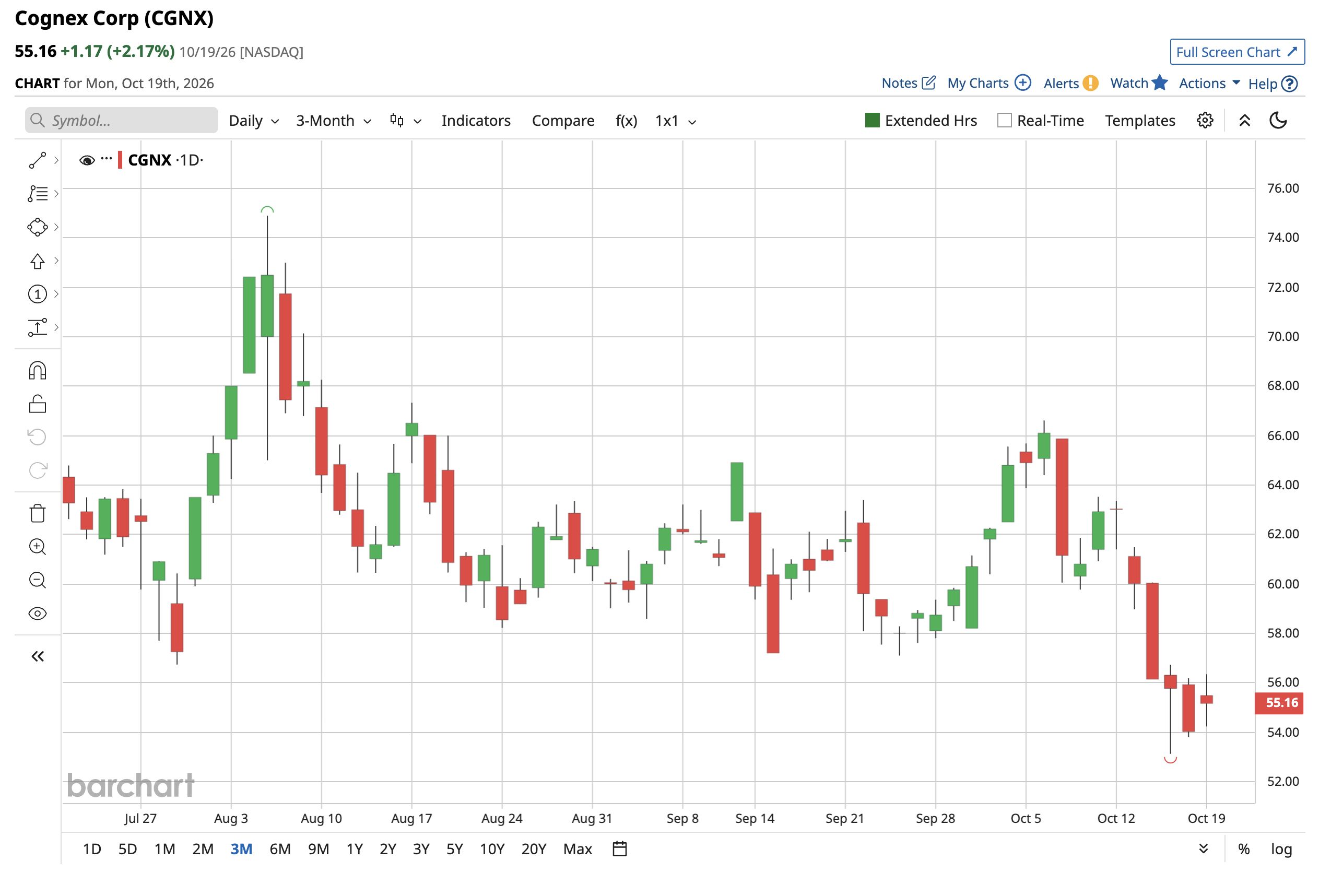
Year-to-date (YTD), CGNX stock is up 61%, far ahead of the Global Robotics and Automation ETF’s (ROBO) gain of 12% over the same period. Over the last five days, though, the stock has climbed just 1%. Interest rates recently rose after inflation came in higher than expected, which hit pricier tech and automation stocks.
 www.barchart.com
In its second quarter, Cognex grew revenue 17% year-over-year (YOY) to $291 million, which came in marginally short of estimates. Adjusted EPS jumped 80% YOY to $0.45, beating the $0.42 consensus estimate. For the third quarter, management expects revenue of $300 million to $320 million and adjusted EPS of $0.50 to $0.54. For the full year, it also guided adjusted EPS of $1.64 to $1.68, representing about 63% YOY growth.
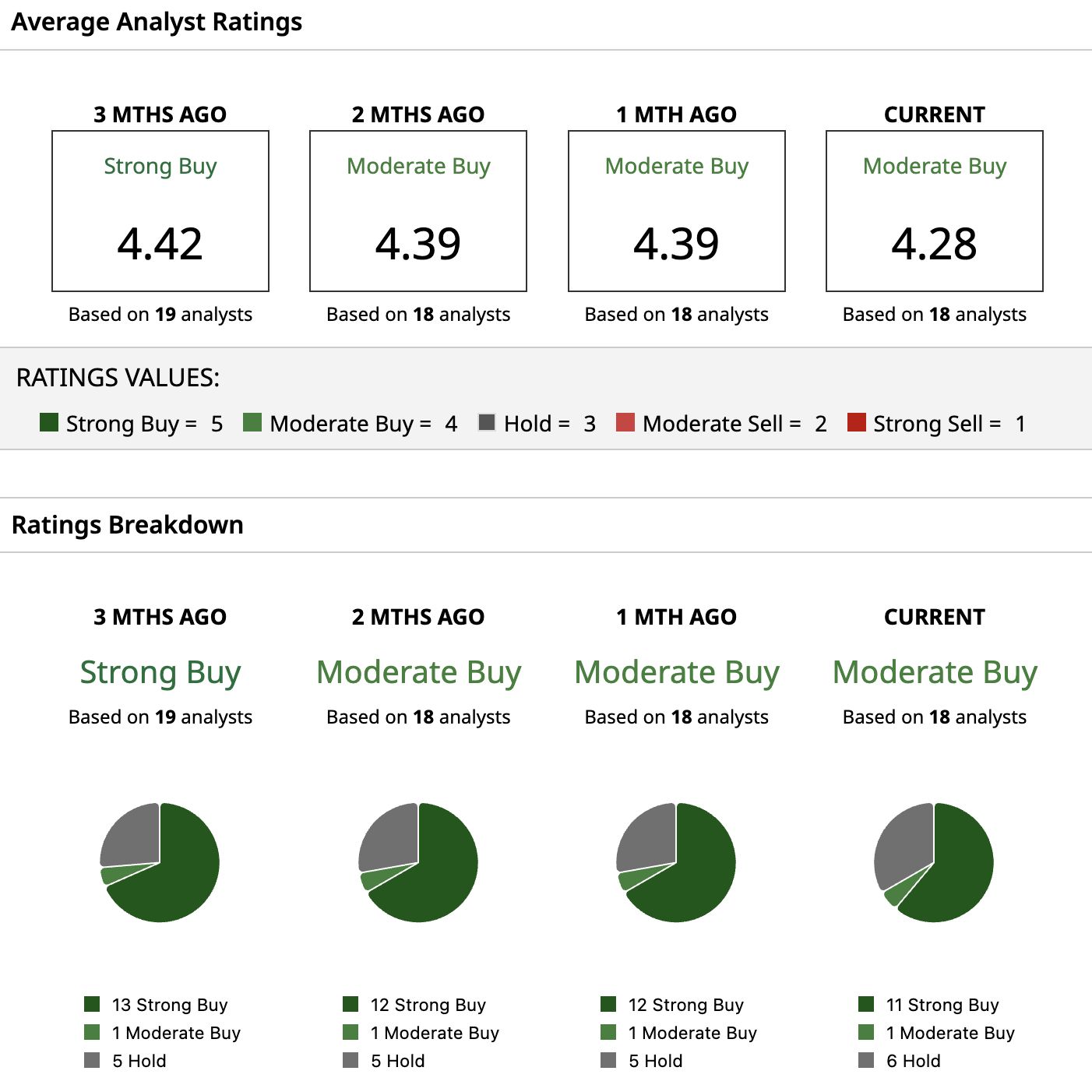
Based on 18 Wall Street analysts with coverage, CGNX stock holds a consensus “Moderate Buy” rating with a mean price target of $77.94, implying about 34% potential upside from current levels. The lowest price target of $65 is still higher than the current share price, which indicates that analysts remain largely bullish.
 www.barchart.com
Physical AI Stock #2: Symbotic (SYM)
Symbotic builds AI-powered robotic systems that run warehouses and distribution centers. Its robots move, sort, and stack cases of goods at high speed, while its software decides where everything should go. That’s physical AI at work, with the AI directing machines that handle real products all day. Its customers include Walmart (WMT), Target (TGT) and Medline (MDLN), with Walmart making up most of the company's revenue. Walmart’s commitment runs deep, too. Last year, Symbotic completed its purchase of Walmart’s advanced robotics business and signed a new commercial agreement. The company is based in Wilmington, Massachusetts, and led by founder and CEO Rick Cohen. Symbotic's backlog currently stands at about $22.5 billion.
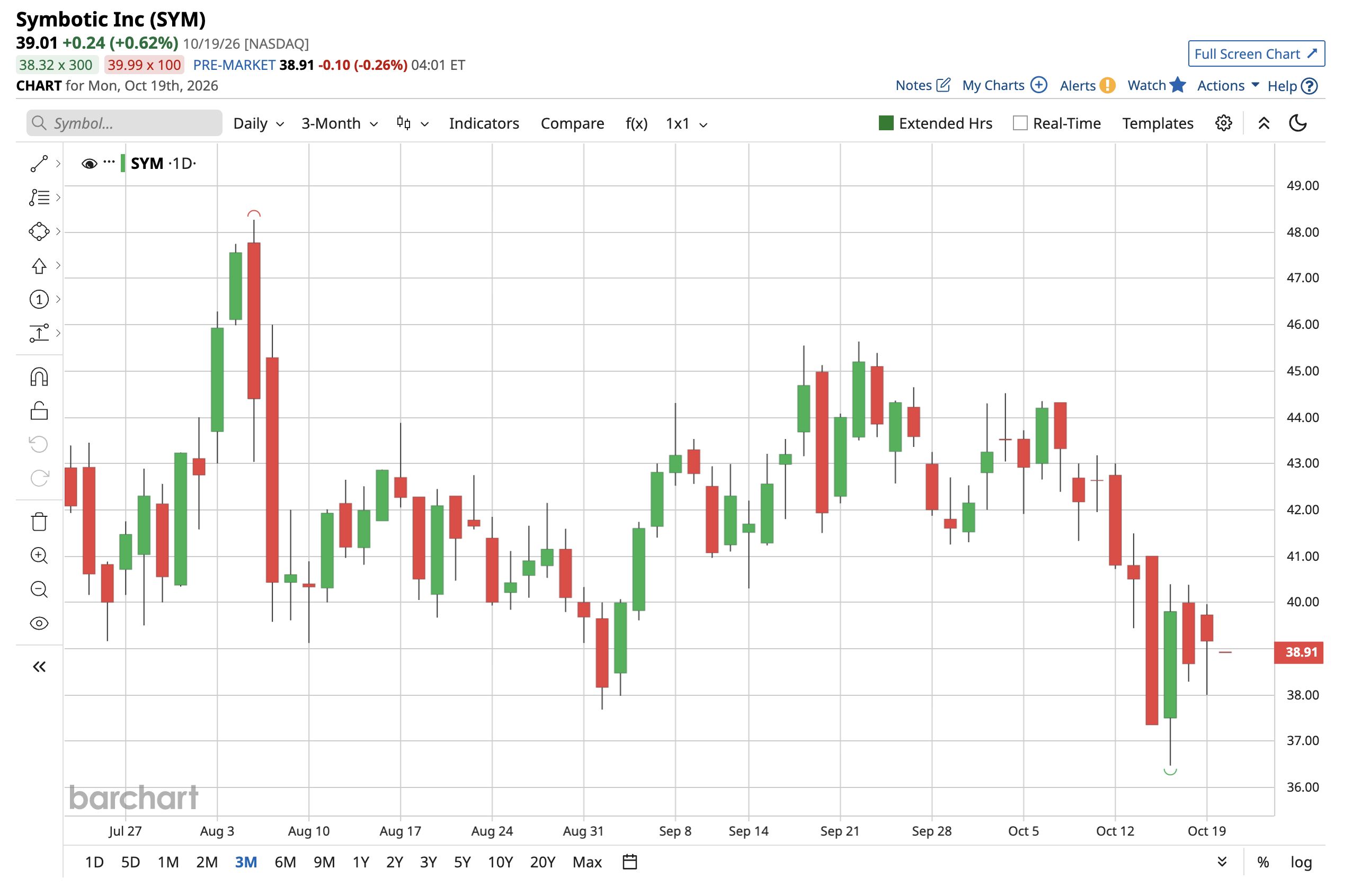
Compared to Cognex’s YTD gain, Symbotic stock has performed far worse this year. The stock is down 30% YTD, well behind the Global Robotics and Automation ETF. At around $42 per share, it sits far below its 52-week high of $87.88 and close to its 52-week low of $36.47. Profit fell short of expectations in the spring, and SoftBank (SFTBY), a major backer, sold millions of shares in May. SYM stock also dropped about 15% in a single day after its latest results, as some new product rollouts were pushed further out.
 www.barchart.com
In the fiscal third quarter, Symbotic grew revenue 22% YOY to $721 million. The company also earned $55 million in net income, compared with a $21 million loss a year earlier. For Q4, management expects revenue of $760 million to $780 million and adjusted EBITDA of $100 million to $105 million.
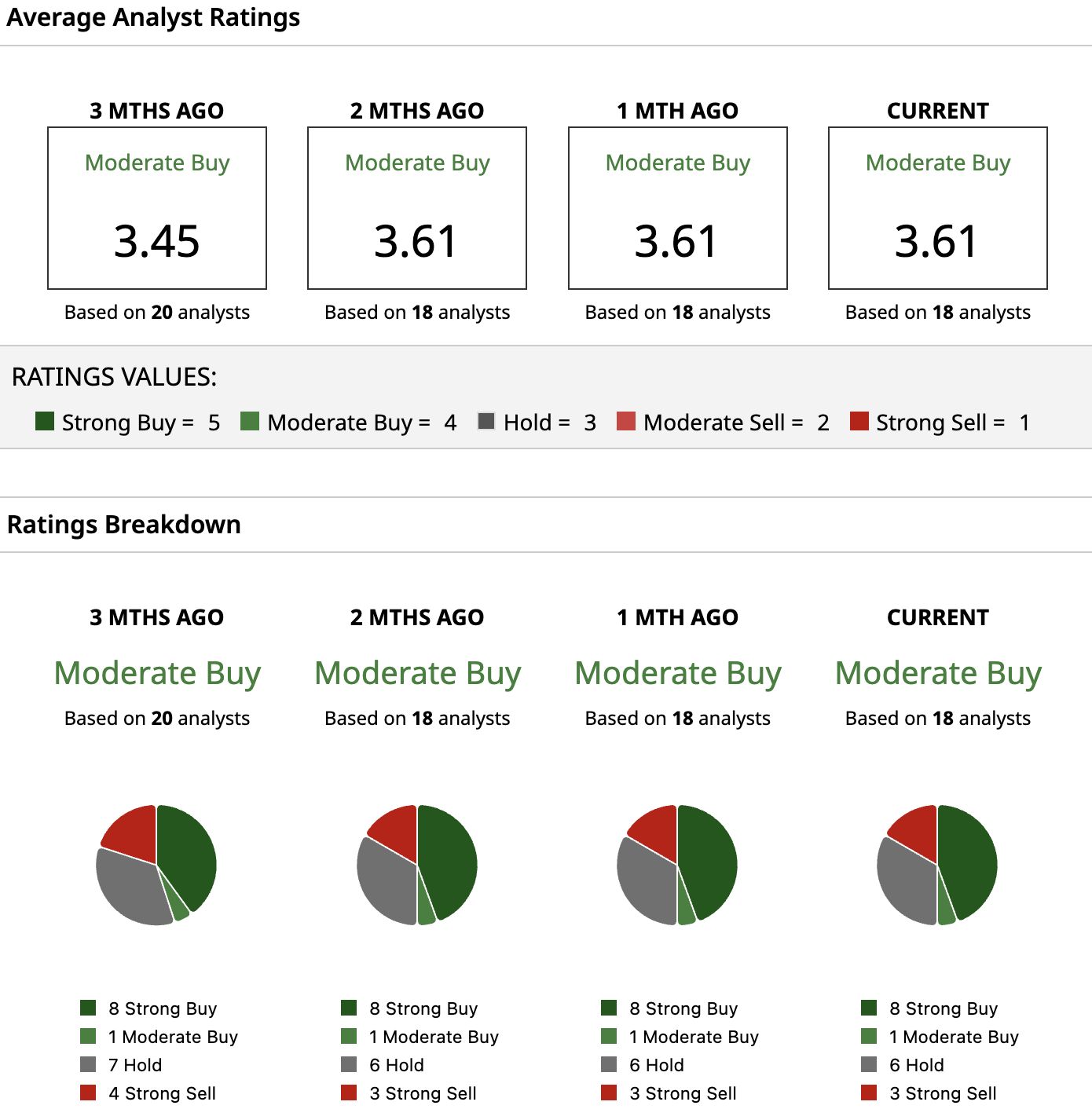
Based on 18 analysts with coverage, Symbotic holds a consensus “Moderate Buy” rating with a mean price target of $61.67, implying roughly 48% potential upside from current levels.
 www.barchart.com
On the date of publication, Jabran Kundi did not have (either directly or indirectly) positions in any of the securities mentioned in this article. All information and data in this article is solely for informational purposes. For more information please view the Barchart Disclosure Policy here.