

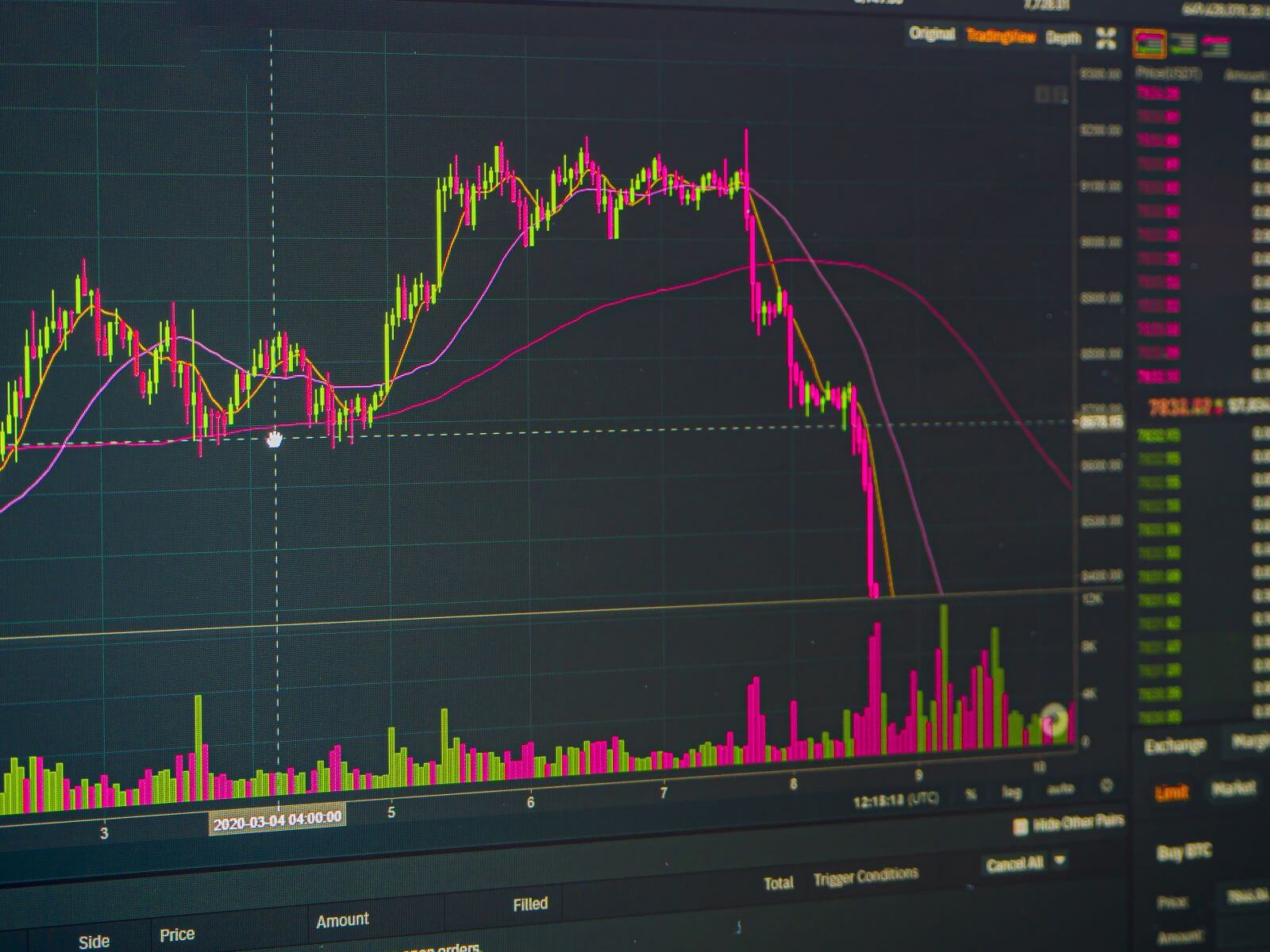
The S&P 500 and Nasdaq Composite both ended lower yesterday, the third consecutive day of losses, as investors pushed the 30-year Treasury yield to its highest level since early 2025.
Here in Halifax, where I live, gas prices are nearing $2 a liter (~$5.45 a gallon) with no Strait of Hormuz solution in sight -- although some tankers are getting through -- and should remain high throughout the summer, the peak driving season.
More Top Stocks Daily: Go behind Wall Street’s hottest headlines with Barchart’s Active Investor newsletter.
Meanwhile, consumer-focused companies like Walmart (WMT) and Amer Sports (AS) deliver strong earnings, continuing the trend of record corporate profits, while a very despondent consumer tries to stay afloat.
Yesterday, 69 stocks hit new 52-week highs, compared to 122 that hit new 52-week lows. Over on the Nasdaq, the number of new 52-week highs was 96 compared to 267 new 52-week lows.
Is this the end of the melt-up? Who knows? What we do know is that pockets of strength and weakness continue in the markets.
Among the new lows yesterday were 19 ADRs (American Depositary Receipts). The one that stands out for me is Brazilian pulp producer Suzano (SUZ). The Latin American company not only hit its 11th new 52-week low at $8.11, but also its lowest point in three years.
If you’re a value investor, it is the ADR to consider among the 19 new 52-week lows.
Here’s why.
The Business Is Solid
As I said in the introduction, Suzano stock had a 3-year low yesterday, and sits perilously close to a 5-year low at $7.46.
Yet it remains quite profitable. I’ll get to that shortly.
The company was founded in 1924 by Ukrainian immigrant Leon Feffer in Salvador, part of Brazil’s Bahia province. Originally established as a paper-trading firm, Feffer entered the paper manufacturing business in 1939 due to wartime difficulties in importing the material.
Fast forward to June 2023. The company acquired Kimberly-Clark’s (KMB) Brazilian tissue business, which included the Neve brand, the largest by market share in Brazil.
In June 2025, the two companies announced a joint venture that will see KMB combine most of its International Family Care and Professional business, which includes the Kleenex business in over 70 countries outside the U.S., with Suzano’s tissue business. Suzano will own 51% of the JV, with KMB owning 49%. The enterprise value at the time of the announcement was $3.4 billion.
On May 11, the EU cleared the transaction of any antitrust issues. The two companies await approval from the UK.
Suzano only entered the tissue business in 2018, so it has come a long way in this consumer-focused part of its pulp-and-paper business.
The company finished Q1 2026 with trailing 12-month revenue of $9.1 billion, adjusted EBITDA (earnings before interest, taxes, depreciation and amortization), an EBITDA margin of 43%, and net debt of $13.0 billion, a reasonable 3.3 times EBITDA.
Its Greatest Strength
Suzanno's biggest strength as the world’s largest pulp producer is its vertical integration. It controls everything from tree cultivation to manufacturing the finished product to shipping it across the world.
For example, it has 1.6 million hectares of sustainably grown eucalyptus trees. These provide the raw materials to produce paper products such as toilet paper, tissue paper, and diapers. Suzano has eight pulp plants in Brazil with an annual capacity of 13.4 million tonnes. It has four paper plants (2 in Brazil, 2 in the U.S.) with a capacity to produce 1.7 million tonnes annually. It also has eight factories in Brazil that produce its hygiene products such as tissues, toilet paper and diapers. It even owns four export terminals to send its pulp and paper overseas.
It was the first company to use eucalyptus fiber on an industrial scale to produce pulp and paper. It’s been innovating ever since. The best part about eucalyptus-based pulp production is that it offers a 15-20% cost advantage over its peers. In these tariff-heavy times, that’s a significant advantage.
One thing it can’t escape is currency volatility. In the first quarter, its net sales fell by 5%, due in large part to a 10% depreciation of the U.S. dollar against the Brazilian real. About 85% of its revenue is invoiced in U.S. dollars. Ultimately, however, it’s a good thing that it collects most of its revenue in U.S. dollars.
Despite a drop in revenue, which led to lower income in the quarter, it still generated 8.73 billion Brazilian real ($1.73 billion) in the trailing 12 months ended March 31. That’s a healthy free cash flow margin of 17.6%.
The Bottom Line on Suzano Stock
Based on Suzano’s enterprise value of 126.04 billion Brazilian real ($25.03 billion) and free cash flow of 8.73 billion Brazilian real ($1.73 billion), its current free cash flow yield is 6.9%. I consider anything over 8% to be in value territory, so it’s very close.
However, when you consider its growth possibilities in China in the next few years -- it expects to grow its BHKP (bleached hardwood kraft pulp) demand by 3% annually over the next four years to 20.2 Mt (metric tons) from 17.8 Mt -- along with the positive aspects of its yet-to-close joint venture with KMB, it’s hard not to view Suzano stock as anything but undervalued. To what extent it’s undervalued is up to Mr. Market.
With a 2.7% dividend yield, you get paid to wait for its stock to recover to its April 1, 2024, 5-year high of $12.98. Suzano is one stock under $10 worth a closer look.
On the date of publication, Will Ashworth did not have (either directly or indirectly) positions in any of the securities mentioned in this article. All information and data in this article is solely for informational purposes. For more information please view the Barchart Disclosure Policy here.
More news from Barchart
Greg Abel Sells Berkshire Hathaway Stake in UnitedHealth Triggering Stock Slide. Bet on UNH Here for a Turnaround. This AI Biotech Stock Landed a $10.4 Million Nvidia Investment Value Investors Should Snatch Up This Deep-Value Stock at Fresh Lows B. Riley Upgrades Zscaler Stock to ‘Buy.’ So Much for Software Apocalypse Fears.