

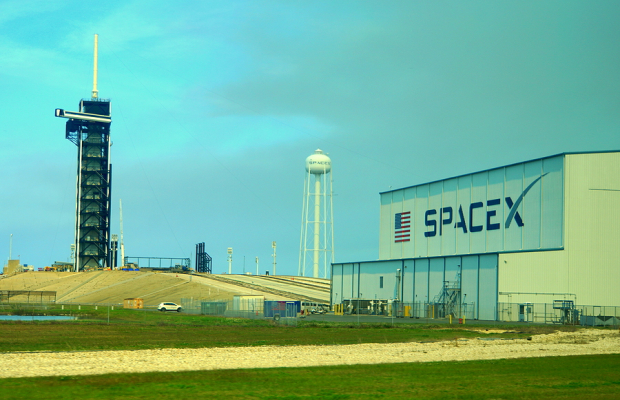
SpaceX is preparing to go public at a valuation of roughly $1.75 trillion— making it one of the most anticipated IPOs in recent history. For investors, the question is familiar but the stakes are new. Are they buying into a business, or into a vision?
When Tesla TSLA went public in 2010, it was a loss-making electric vehicle (EV) maker with big ambitions but little proof it could achieve them. Few people could have imagined that the company would eventually become one of the world's most valuable businesses. Just last week, Musk noted that Tesla's market capitalization at its IPO was only a tiny fraction of what it is today. Currently, Tesla’s market cap is more than $1.5 trillion. That’s around a 1000-fold increase since its debut.
Tesla turned many early believers into millionaires and became one of the greatest wealth-creation stories in market history. As SpaceX prepares to enter the public markets, investors are asking if it's another Tesla moment, or if expectations are running too far ahead of reality.
SpaceX Is Not Tesla But Investors See Familiar Themes
In one important aspect, SpaceX's upcoming IPO looks nothing like Tesla's 2010 debut. When Tesla went public, EVs were still largely viewed as an experiment, and the company was a relatively small, loss-making automaker trying to prove its business model.
SpaceX, by contrast, is already a global leader in space launch services and one of the world's most valuable private companies.SpaceX had revenues of $18.7 billion in 2025, up 33% from the previous year. It is not just a rocket launch provider. Through Starlink, it is building a global communications network. Through Starship, it hopes to dramatically lower the cost of accessing space. Investors are also factoring in opportunities tied to artificial intelligence infrastructure following the merger with xAI. That puts SpaceX in conversations that extend beyond aerospace and communications, drawing comparisons with AI beneficiaries such as NVIDIA NVDA.
Yet comparisons to Tesla continue. Much like Tesla, SpaceX is built around Musk's ability to pursue ambitious goals that many once considered unrealistic. Tesla sought to transform transportation through electric vehicles, while SpaceX is aiming to reshape space access, global communications and potentially AI infrastructure.
More importantly, investors in both companies are being asked to look beyond what the businesses are today and focus on what they could become. Tesla's valuation has long reflected expectations tied to future technologies and markets. The same argument is now being made for SpaceX, as investors attempt to estimate the value of opportunities that may take years, or even decades, to fully materialize.
Investors are not debating whether SpaceX has a real business. The debate centers on how much larger that business can become. That is a far different starting point from where Tesla stood in 2010.
Can SpaceX Deliver Tesla-Like Returns?
SpaceX is targeting an IPO price of $135 per share, implying a valuation of roughly $1.75 trillion. At that level, the company would instantly rank among the world's most valuable publicly traded businesses.
This is where the comparison with Tesla becomes more complicated. Tesla generated extraordinary returns not only because the company executed well, but also because investors were able to buy in when expectations were far lower. Much of Tesla's future success was not reflected in its valuation at the time.
SpaceX is entering public markets under very different circumstances. Its proposed valuation already appears to reflect leadership in commercial launch services, the long-term growth potential of Starlink, expanding government and defense relationships, AI-related opportunities and the possibility of a much larger space economy in the future.
Supporters argue that such a premium is justified. SpaceX is no longer just a launch provider. Some analysts view it as a combination of a telecom company, a defense contractor, a communications infrastructure provider and an AI platform. This unique mix makes it difficult to value using traditional financial models. This also helps explain why SpaceX is difficult to compare with publicly traded peers such as Rocket Lab RKLB.
Meanwhile, skeptics argue that investors may already be paying for years, if not decades, of future success. Ambitious projects such as Starship, AI infrastructure expansion and broader space-based services still require significant investment and execution.
Final Thoughts
Like Tesla, SpaceX is led by Elon Musk, operates in enormous markets, and asks investors to think in decades rather than quarters. But the biggest risk is SpaceX's valuation. Few would question SpaceX's long-term potential. The real question is whether a company approaching a $2 trillion valuation can still deliver the kind of outsized returns that made Tesla one of the greatest wealth-creation stories in market history.
For investors hoping to find the next Tesla, the irony is that SpaceX may be arriving too late. At $1.75 trillion, SpaceX is already priced as though it has won. It could become one of the world's most important companies and still fail to deliver the kind of returns that made Tesla a once-in-a-generation investment.
Radical New Technology Could Hand Investors Huge Gains
Quantum Computing is the next technological revolution, and it could be even more advanced than AI.
While some believed the technology was years away, it is already present and moving fast. Large hyperscalers, such as Microsoft, Google, Amazon, Oracle, and even Meta and Tesla, are scrambling to integrate quantum computing into their infrastructure.
Senior Stock Strategist Kevin Cook reveals 7 carefully selected stocks poised to dominate the quantum computing landscape in his report, Beyond AI: The Quantum Leap in Computing Power .
Kevin was among the early experts who recognized NVIDIA's enormous potential back in 2016. Now, he has keyed in on what could be "the next big thing" in quantum computing supremacy. Today, you have a rare chance to position your portfolio at the forefront of this opportunity.
See Top Quantum Stocks Now >>Want the latest recommendations from Zacks Investment Research? Today, you can download 7 Best Stocks for the Next 30 Days. Click to get this free report
NVIDIA Corporation (NVDA): Free Stock Analysis Report
Tesla, Inc. (TSLA): Free Stock Analysis Report
Rocket Lab Corporation (RKLB): Free Stock Analysis Report
This article originally published on Zacks Investment Research (zacks.com).