

The AI race isn't just about which company can say "artificial intelligence" the most. It's about which ones turn it into real growth, and which ones share that growth with shareholders.
That last part is easy to forget when a stock is riding AI hype. But Microsoft and Nvidia, two of the defining names of today's boom, are both dividend payers, which makes them worth lining up side by side through an income lens. Now let's be clear. Neither will make you rich on dividends alone. NVIDIA pays roughly 0.5% and Microsoft about 1%. So for a dividend investor, the more useful question isn't who yields more today, but which AI giant has the stronger case to keep raising its payout for years to come. Microsoft has already done it for 21 straight years, and Nvidia is just getting started.
More Yield, Less Trap: Sign up free to get Barchart’s daily Dividend Investor newsletter straight to your inbox.
Microsoft Corp (MSFT)
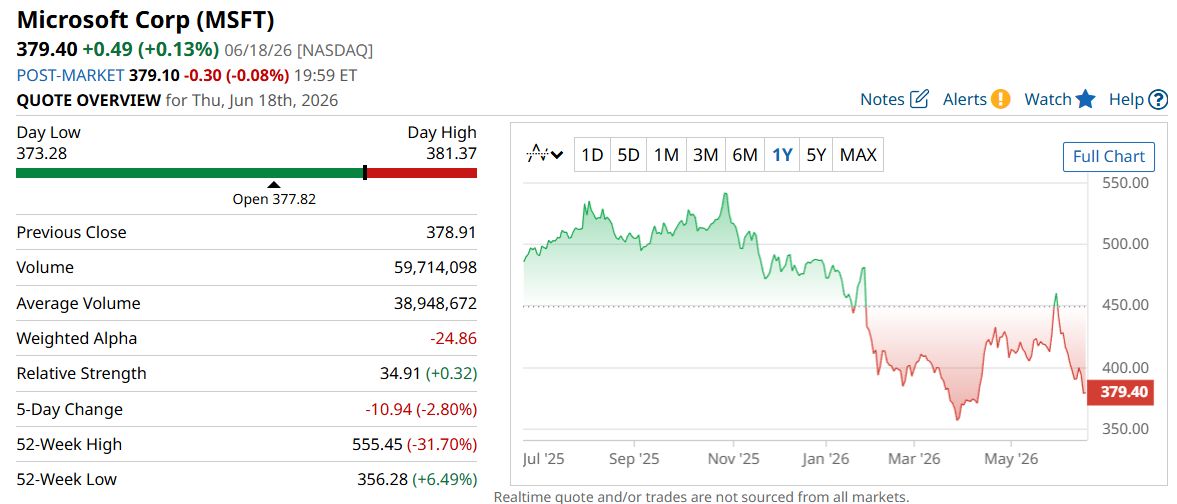
Microsoft is a global technology titan known for its software, cloud computing, and, of course, artificial intelligence. Its Azure cloud platform powers many businesses, while Copilot brings AI features into Microsoft products that people already use every day.
MSFT stock has traded between $356 and $555 over the past 52 weeks and, at the time of writing, is priced near the lower end of that range. It is also one of the world's largest companies, with a market cap of around $2.8 trillion.
NVIDIA Corp (NVDA)
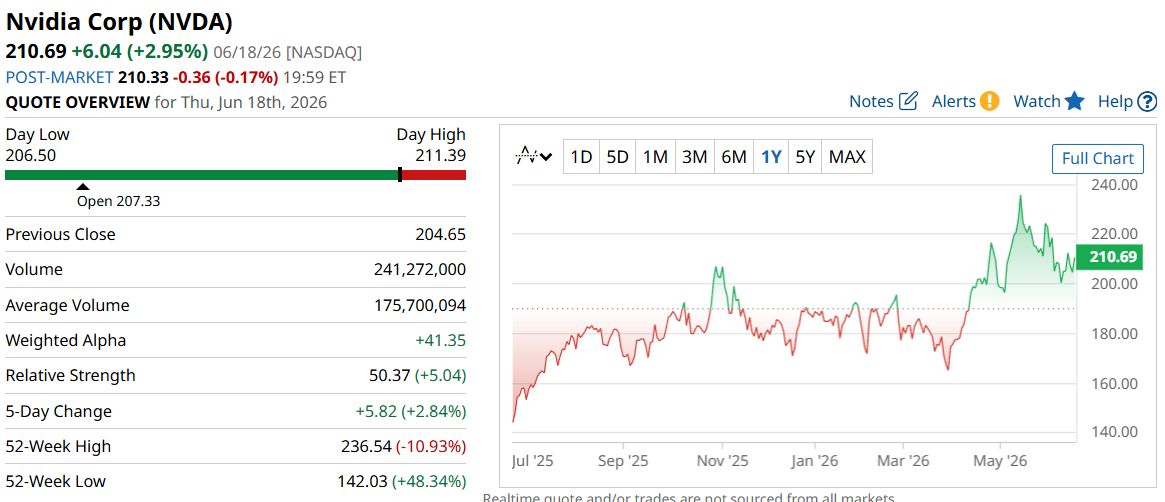
Against it is another tech giant, NVIDIA, a company known for its Graphics Processing Units (GPUs), which have become a vital component of AI innovation, making GPUs NVIDIA's biggest growth driver.
NVIDIA is the bigger company in this comparison, with a market cap of around $5 trillion. And over the past 52 weeks, NVDA stock ranged between $142 and $237. At the time of publication, it's trading near the upper end of that range.
So, is the bigger company automatically the better buy? Not necessarily.
Business model comparison
No one will deny that Microsoft and NVIDIA are at the forefront of artificial intelligence innovation, but how they do it is not exactly the same.
Microsoft is more diversified. It earns money from software subscriptions, which it has been known for since the beginning. Today, it earns money through its cloud services, business tools, gaming, and AI features added to products people already use. Its strength is its ability to sell more services to a large base of existing customers.
Meanwhile, NVIDIA is comparably much more focused. It makes most of its money from chips and related tech and systems used in data centers, and now in AI as well. This setup gives the company stronger, more direct exposure to the AI boom, but it also makes the business more dependent on continued demand for advanced chips.
Simply put, Microsoft is the broader and more balanced business, while NVIDIA is the more direct bet on AI infrastructure.
Financial positions
Now let’s look at their latest reported numbers.
| Metric | Microsoft | NVIDIA |
| Sales | $82.9 billion (+18.3% YOY) | $81.6 billion (+85.2% YOY) |
| Net Income | $31.8 billion (+23.1% YOY) | $58.3 billion (+210.6% YOY) |
| Forward P/E | 23.50x | 23.97x |
| Price/Sales Ratio | 10.38x | 23.24x |
Financially, both companies performed well, but NVIDIA has faster growth, with sales up 85.2% year-over-year to $81.6 billion and net income up 210.6% to $58.3 billion, underscoring the continued demand for its AI chips, especially in data centers.
Meanwhile, Microsoft has delivered strong performance, with sales rising 18.3% year over year to $82.9 billion and net income increasing 23.1% to $31.8 billion. It may not be as much as NVIDIA, but it’s still pretty impressive considering the difference in size.
The same trend holds for valuation, where Microsoft looks more reasonable. Microsoft trades at 24x forward earnings and 10x sales, while NVIDIA trades at 24x forward earnings and 23x sales. Both are below the tech sector’s median forward P/E ratio of 33x, but NVIDIA’s much higher ratios suggest it’s (slightly) more expensive than Microsoft.
That said, NVIDIA wins on growth and profitability momentum, while Microsoft looks stronger in valuation.
Dividend story
Financial health reflects a company’s performance, but dividends usually draw income investors' attention, especially for blue-chip companies like NVIDIA and Microsoft.
NVIDIA pays a forward annual dividend of $1.00 per share, translating to a yield of almost 0.5%.
Meanwhile, Microsoft has raised its dividends for 21 straight years. At the time of writing, it pays $3.64 yearly, translating to a yield of just under 1%.
Analyst rating
What’s Wall Street’s take?
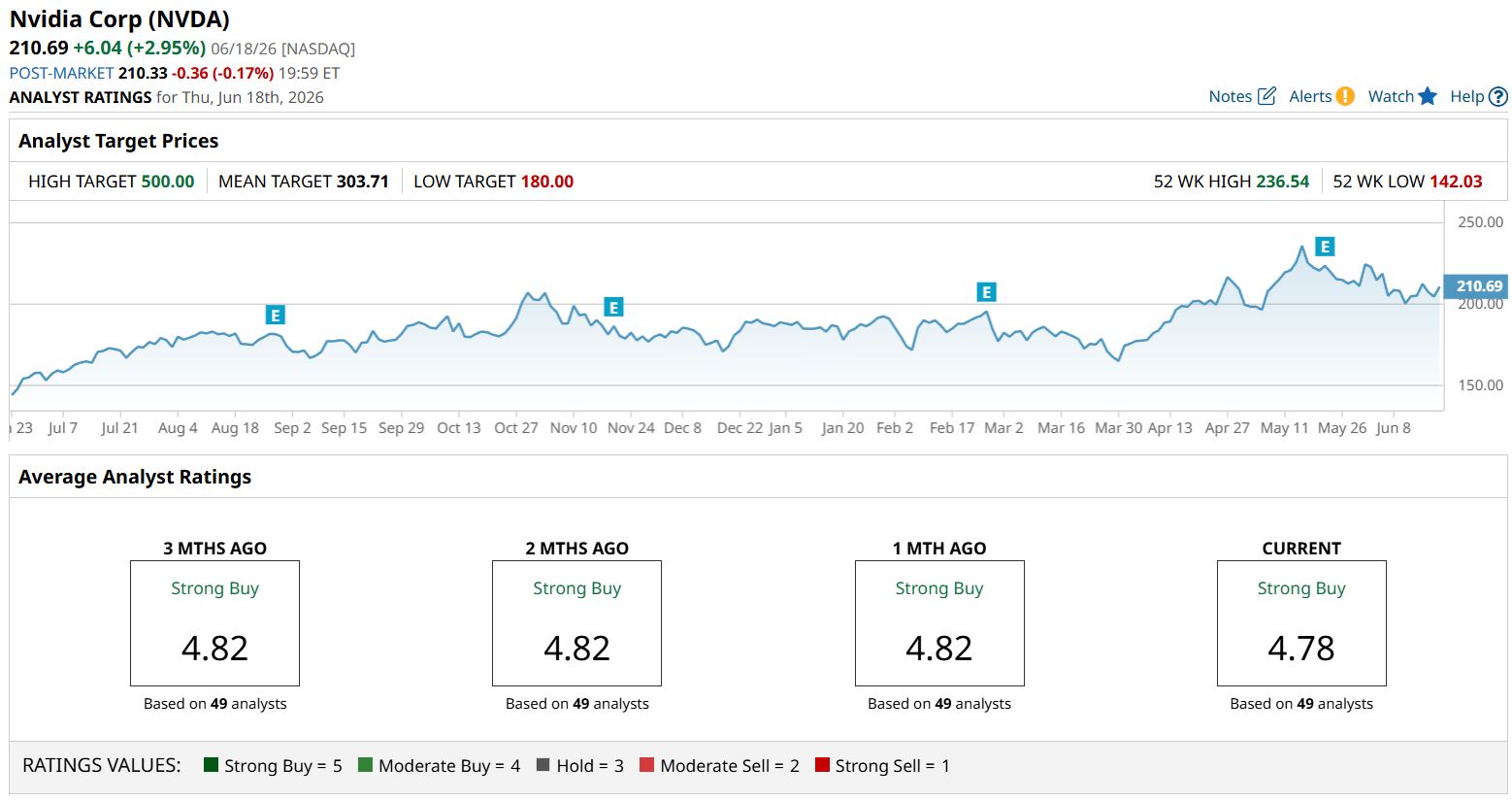
A consensus among 49 analysts rates NVDA stock a “Strong Buy”. That conviction is impressive because NVIDIA is not some overlooked stock but already one of the most-watched companies in the market, yet Wall Street remains highly bullish on it. Its target prices suggest investors could expect up to 137% upside over the next year.
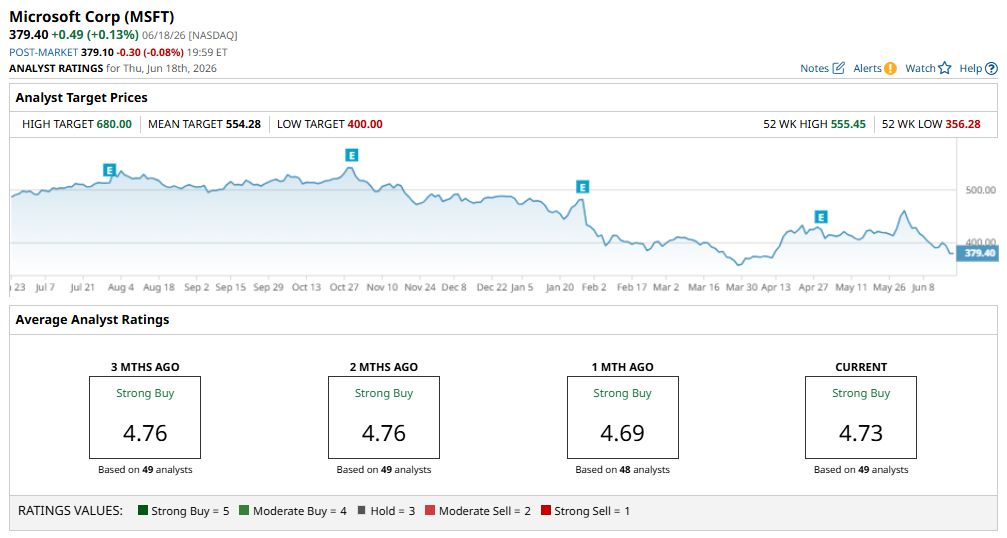
Meanwhile, Microsoft is on the same wavelength, as 49 analysts also rate the stock a “Strong Buy”. Its low-to-high target prices suggest between 5% and 79% potential upside if achieved.
Verdict
Microsoft and NVIDIA are two of the largest tech companies, both well-positioned for the rise of artificial intelligence. But with any large company, at some point, management will (often) need to trade growth for income to keep investors interested. Microsoft learned this two decades ago. With that, if I were to pick one, NVIDIA looks like the more direct bet on AI infrastructure. Its leadership in GPUs and data centers gives it a stronger upside.
That said, Microsoft is also a good buy, backed by its financial health, fair valuation, and increasing dividend.
On the date of publication, Rick Orford had a position in: MSFT . All information and data in this article is solely for informational purposes. For more information please view the Barchart Disclosure Policy here.
More news from Barchart
Microsoft vs. Nvidia: Which AI Giant Is the Better Dividend Stock for the Long Haul? Billionaire Barry Diller Is Making a $18M Bet on MGM Stock. Here’s What It Means for Investors. How to Hunt for Mega-Cap Value After the SpaceX IPO PayPal Stock Trades at 7.7x Earnings. Michael Burry Thinks That’s an Opportunity.